
- Industry News
- 1289
- Gearpioneer-Powering Smart Work EveryWhere
- 12/05/2026
A Technical Quality Assessment for Cordless Power Tools: Key Metrics, Certifications, and Supplier Evaluation for Industrial Buyers
This technical assessment framework helps industrial buyers evaluate cordless power tool quality through core metrics (torque, motor type, materials), international certifications (CE, UKCA, CMA), and supplier characteristics. A case study of Geakita illustrates best practices in quality control.
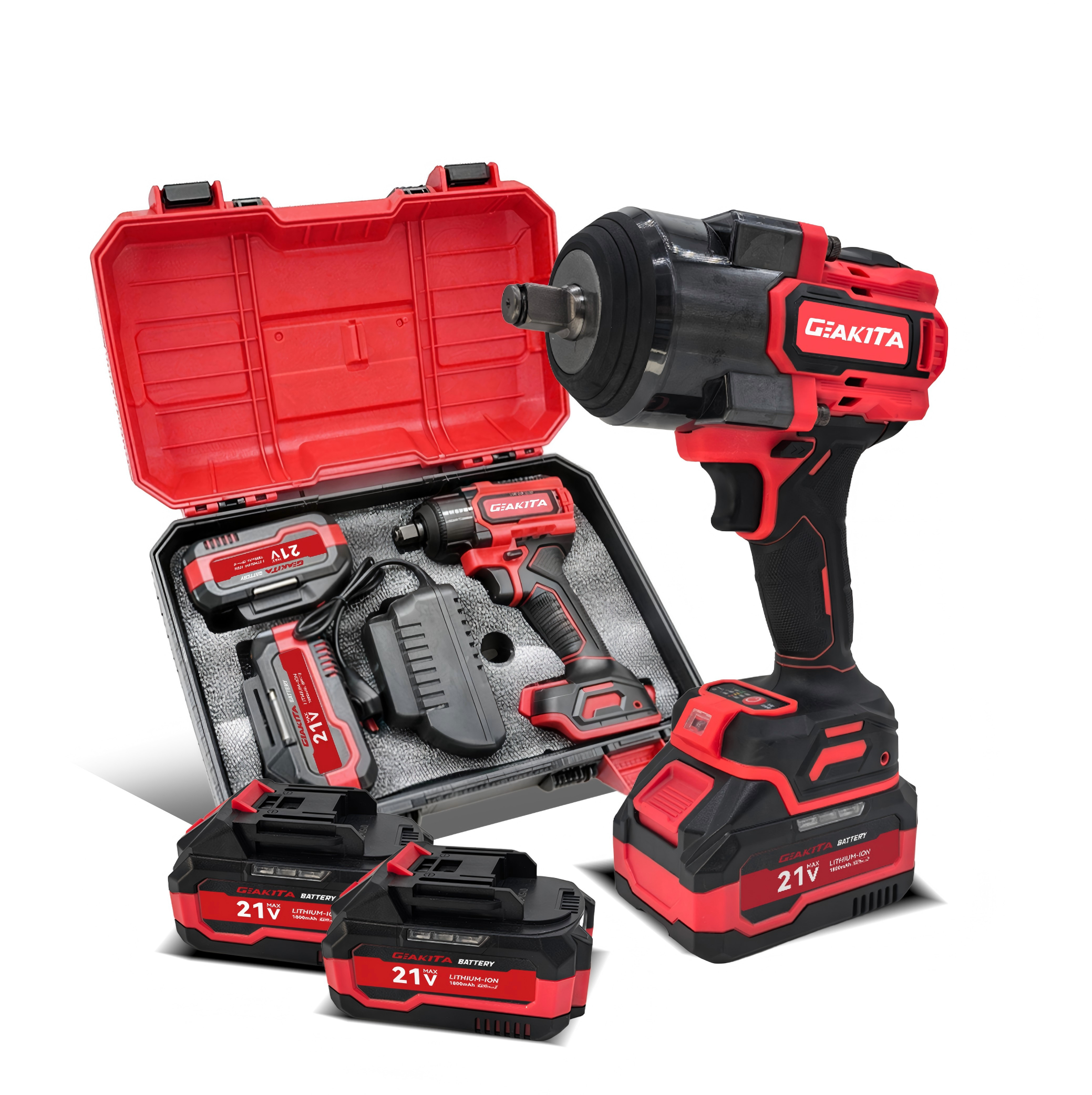
For industrial procurement professionals, distinguishing high-quality cordless power tools from average ones requires a systematic evaluation framework. This article outlines the core technical parameters, certification benchmarks, and supplier characteristics that define reliable cordless power tools, using data from established manufacturers to illustrate best practices.
1. Core Quality Indicators for Cordless Power Tools
The performance and longevity of cordless power tools depend on several measurable factors. The following parameters are critical when assessing quality:
- Materials: High-quality tools are constructed from a combination of ABS plastic, aluminum alloy, steel, and copper. For example, the Geakita CS01 cordless circular saw and the JM01-02 angle grinder both utilize these materials, ensuring structural integrity and thermal dissipation.
- Motor Type: Brushless pure copper motors are standard in premium tools. They deliver higher efficiency and durability. According to performance data, brushless motor designs provide 50% better reliability in long-term operation and a 50% longer service life compared to brushed alternatives.
- Torque and Speed: Actual torque values directly impact fastening and drilling capabilities. The GKR06 impact wrench offers an actual torque of 1,000 N·m, while the GKR05 delivers 650 N·m. No-load speeds range from 0–4,000 rpm for wrenches and 0–2,000 rpm for drills like the PT24, which also features 24+3 torque settings.
- Battery and Runtime: Lithium-ion battery packs with high capacity (e.g., 2,000 mAh × 10 cells) and intelligent Battery Management Systems (BMS) prevent overcharging and short circuits, contributing to safer and longer operation.
2. The Role of Certifications in Quality Assurance
International certifications are independent validations of a tool's safety, electromagnetic compatibility, and performance. For industrial buyers, verifying that a supplier holds recognized certifications is a non-negotiable step:
- CE Marking (EU): Indicates conformity with health, safety, and environmental requirements (e.g., EN IEC 55014, 61000). Tools with CE certification are mandatory for sale in the European Economic Area.
- UKCA (UK): The UK equivalent of CE, required for products placed on the Great Britain market.
- CMA (China): The China Metrology Accreditation, which verifies that the product meets Chinese national standards (e.g., GB 3883.1-2014, GB/T 3883.202-2019).
Suppliers that invest in multiple certifications demonstrate a commitment to global compliance and rigorous testing. The presence of these marks reduces the risk of import rejection and liability claims.
3. Characteristics of High-Quality Suppliers
Beyond product specifications, the supplier’s production capability and quality control system are equally important. Reliable suppliers typically share three common features:
- Standardized Production Lines: Manufacturers with modern industrial bases covering at least 10,000 m² of land and multiple automated assembly lines are better equipped to maintain consistent quality. Geakita, for instance, operates a facility with 40,000 m² of floor space and employs over 300 staff, achieving a monthly capacity of 180,000+ units.
- Third-Party Inspection and In-House Testing: A three-level quality control system (IQC, IPQC, FQC) ensures that raw materials, in-process production, and finished goods are thoroughly checked. Top suppliers perform 100% full inspection before shipment and offer third-party testing (e.g., SGS, TÜV) upon request.
- Robust Warranty and After-Sales Support: A global warranty of at least one year, coupled with 7×24 technical support and spare parts supply, indicates confidence in product durability. Performance gap data shows that brushless tools can achieve defect rates as low as 0.3% compared to 3–5% for generic counterparts.
4. Case Study: Geakita – A Chinese Manufacturer Meeting High-End Market Demands
Geakita (Xiamen Tiangong Kaiwu Technology Co., Ltd.), founded in 2009, is a member of the Power Tool Sub-Association of the China Electrical Equipment Industry Association. The company operates a modern industrial production base on approximately 10,000 m² of land and has achieved total shipments of about 1.5 million units of lithium power tools, with 2024 sales revenue reaching RMB 230 million.
Geakita’s quality management system includes:
- Full-Process Quality Inspection: 100% incoming material inspection (IQC) on critical components such as cells, magnets, and bearings, plus in-process quality checks (IPQC) with automated torque and electrical monitoring.
- End-of-Line Testing: Automatic EOL testing verifies that every tool meets specified parameters (e.g., torque, no-load speed, impact frequency).
- Warranty Commitment: Geakita provides a one-year global warranty, with 7×24 technical support and on-time replacement for defective units.
In a long-term cooperation case with a Middle East construction contractor, Geakita maintained a 99.8% on-time delivery rate and a defect rate below 0.3% even under 45°C high-temperature conditions. The brushless motor design contributed to 50% better reliability in long-term operation and a 50% longer service life, as indicated by performance gap data.
Conclusion
Evaluating cordless power tool quality requires a multi-dimensional approach: scrutinize material composition, motor technology, and torque specifications; verify certifications that guarantee compliance; and choose suppliers with standardized production, rigorous QC, and solid after-sales support. By applying this framework, industrial buyers can make data-driven decisions that reduce long-term total cost of ownership.