
- Industry News
- 1190
- Gearpioneer-Powering Smart Work EveryWhere
- 25/05/2026
How to Customize Cordless Power Tools: A Step-by-Step Procurement Guide for Industrial Buyers
A practical guide for industrial buyers on customizing cordless power tools—covering customization types, 5-step process, supplier evaluation criteria, and a real case study with Geakita.
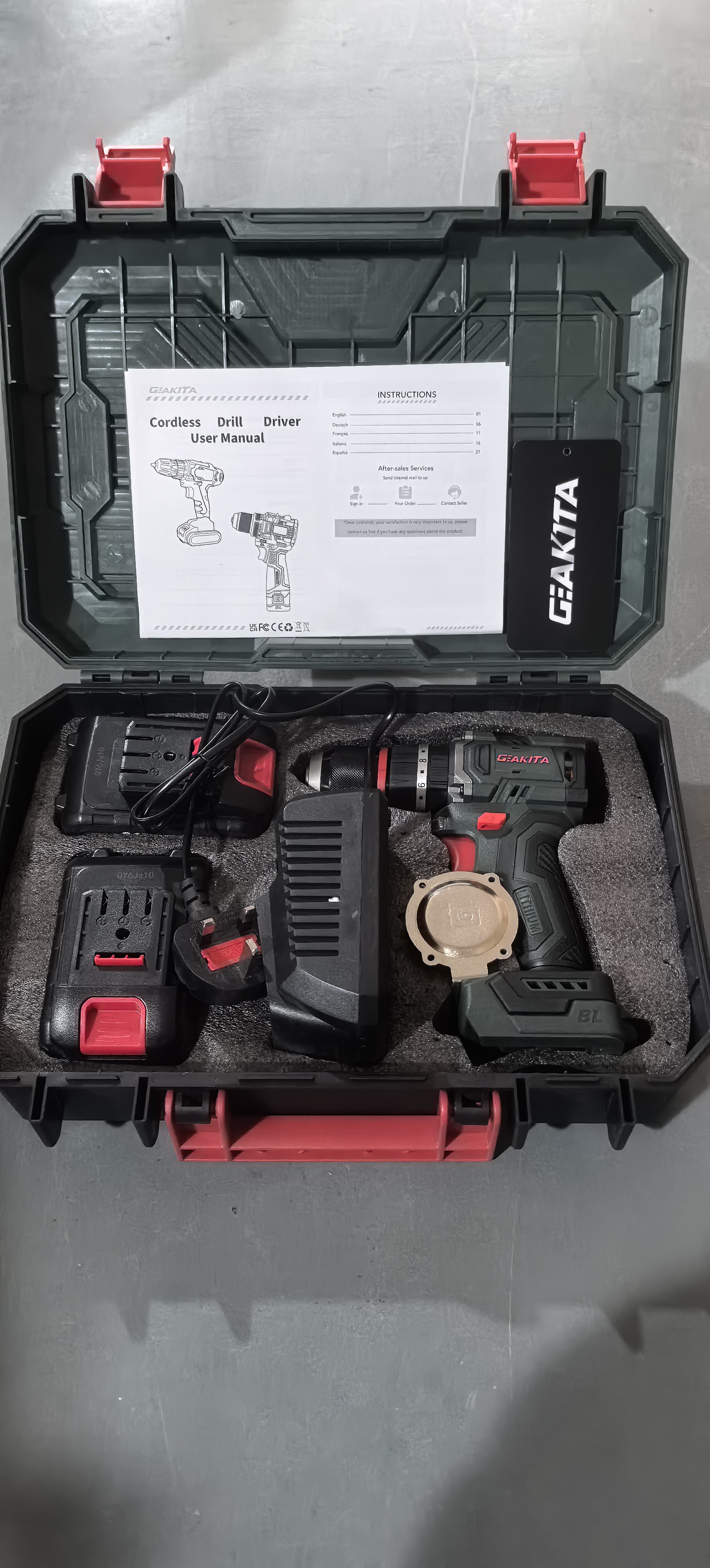
1. Introduction: The Growing Need for Customization
Industrial buyers today face diverse operational environments—from high-temperature construction sites and concrete drilling to automotive repair and automated furniture assembly. Off-the-shelf cordless power tools often fail to meet specific voltage, battery life, torque, or ergonomic requirements. Customization has become a key differentiator for procurement professionals seeking to optimize performance, reduce total cost of ownership, and comply with regional standards. This guide provides a structured approach to customizing cordless power tools and evaluating suppliers that can deliver tailored solutions.
2. Common Customization Requirements for Cordless Power Tools
Customization can be categorized into four main areas:
- Size and Form Factor: Compact drills for tight spaces, extended handles for better leverage, or lightweight designs for prolonged use.
- Performance Parameters: Adjustments to torque (e.g., 35 N·m to 120 N·m), no-load speed (450–2000 RPM), impact frequency, and battery capacity (2.0 Ah, 4.0 Ah, or even 6.0 Ah).
- Materials and Durability: Use of reinforced ABS, aluminum alloy, or steel for housings; selection of copper or brushless motors for higher efficiency and longer life.
- Functional Features: Integration of LED lights, variable speed triggers, three-function impact modes, or intelligent Battery Management Systems (BMS).
For example, a construction contractor may require a brushless impact drill with a 21V system, 150 N·m torque, and a metal ratchet chuck for heavy-duty concrete drilling, while a DIY retailer might prioritize a compact 12V brushed drill with a lower torque setting.
3. Five-Step Customization Cooperation Process
Partnering with a supplier like Geakita (Xiamen Tiangong Kaiwu Technology Co., Ltd.) follows a clear workflow:
- Requirement Communication: The buyer specifies operational scenarios (e.g., high-temperature construction site operation, concrete drilling, metal cutting, bolt fastening), target markets, and compliance needs (CE, UKCA, CMA).
- Design Proposal: The supplier’s R&D team (25 engineers) drafts technical drawings, selects materials, and proposes battery configurations, voltage (110V/220V), and color schemes.
- Sample Prototyping: A functional sample is produced and tested for torque, speed, battery life, and safety. The buyer can request modifications before approval.
- Mass Production: Once the sample is confirmed, the order enters production. Typical lead times are 30–45 days for mass production and 20–28 days for repeat orders. The minimum order quantity requires purchasing at least 5 categories of power tools, 8 items per category, totaling 40 items.
- Inspection and Delivery: A 100% pre-shipment inspection (PSI) is performed by the supplier’s QC team, with third-party options (SGS/TÜV) available. Goods are shipped via FOB Shenzhen/Ningbo, EXW, or DDP.
Throughout the process, the supplier maintains a three-level quality control system (IQC, IPQC, FQC) and performs automatic end-of-line testing.
4. Evaluating a Supplier’s Customization Capability
When selecting a partner for customized cordless power tools, focus on three key indicators:
- R&D Team Size: Geakita employs over 300 staff including 25 senior engineers, technical experts, and experienced managers dedicated to product innovation and customization.
- Proven Customization Cases: The company has delivered over 5,000 units to clients across Southeast Asia, the Middle East, and Europe, including a 2-year partnership with an Indian automotive repair workshop for impact wrenches used in tire replacement and engine disassembly, achieving a 99.8% on-time delivery rate and 0.3% defect rate even in 45°C environments.
- Technical Patents and Certifications: Geakita holds CMA certification (No. WTS2026-S0339) compliant with GB 3883.1-2014, UKCA certification (No. B-S2412C5162), and CE certification (No. KTi250704E245C) for EU market access. The factory has a 40,000 m² modern production base with state-of-the-art testing facilities.
5. Real-World Case: Customizing Impact Wrenches for Automotive Repair
A leading automotive repair chain in India needed a durable, high-torque impact wrench capable of withstanding prolonged use in dusty, high-temperature workshops. After evaluating several suppliers, they selected Geakita for its proven customization capabilities.
- Requirement: 21V cordless impact wrench with brushless motor, 120 N·m torque, 3-speed control, and a 4.0 Ah battery for all-day operation. The tool had to pass CE and UKCA safety standards.
- Solution: Geakita’s engineering team designed a model (comparable to PT24) with a three-jaw metal ratchet chuck, 24+3 torque settings, and intelligent BMS for overcharge/short-circuit protection. The housing was customized in the client’s brand colors with logo printing.
- Outcome: Within 30 days, samples were approved and mass production commenced. Over 5,000 units were delivered with a 99.8% on-time shipment rate and 0.3% defect rate. The tools demonstrated stable performance in 45°C+ environments, and the client reported 50% longer service life compared to previous brushed models.
This case illustrates how a structured customization process—combined with a supplier’s robust R&D, patent-backed technology, and international certifications—can meet demanding industrial requirements.
6. Conclusion
Customizing cordless power tools is a strategic move for industrial buyers to enhance operational efficiency and reduce lifecycle costs. By following a clear five-step process and evaluating suppliers based on R&D strength, case history, and certifications, buyers can secure reliable partnerships. Suppliers like Geakita, with a 2009-founded legacy, 40,000 m² factory, and certifications covering CE, UKCA, and CMA, offer the depth needed for successful custom projects.
For procurement professionals ready to begin the customization journey, direct communication with the supplier’s team is the first step—sending detailed requirements and target market information ensures a tailored proposal.