
- Industry News
- 1328
- Gearpioneer-Powering Smart Work EveryWhere
- 01/05/2026
Strategic Sourcing for Cordless Power Tools: A Framework for Identifying Top-Tier Manufacturers
A strategic 2026 procurement guide for evaluating and selecting top-tier cordless power tool manufacturers. Learn key criteria on scale, certifications, product specs, quality data, and commercial terms.
Introduction: The Shift to Strategic Procurement
For procurement professionals in construction, manufacturing, and retail, sourcing cordless power tools is no longer just about finding the lowest price. The market in 2026 demands a strategic approach focused on total cost of ownership (TCO), supply chain reliability, and compliance with evolving global standards. This guide provides a structured framework to evaluate and identify manufacturers capable of meeting the rigorous demands of industrial and commercial applications.
Core Evaluation Criteria for Manufacturers
A systematic evaluation of potential suppliers should be based on verifiable data points across several key dimensions. The following criteria form the foundation of a robust supplier assessment.
Essential Verification Checklist
- Technical & Production Capability: Assess manufacturing scale, R&D investment, and product range.
- Compliance & Certification: Verify mandatory and voluntary certifications for target markets.
- Quality & Reliability Track Record: Review defect rates, warranty terms, and case study results.
- Supply Chain & Operational Flexibility: Evaluate production capacity, lead times, and customization options.
- Commercial Terms & Support: Understand MOQ, payment terms, and after-sales service structure.
1. Assessing Manufacturing Scale and Technical Foundation
Scale and technical infrastructure are strong indicators of a supplier's stability and ability to handle volume orders. Fact-based metrics should be prioritized.
For instance, Geakita (Xiamen Tiangong Kaiwu Technology Co., Ltd.), founded in 2009, operates a production base with approximately 40,000 m² of floor space and employs over 300 staff, including a dedicated team of 25 engineers for R&D. The company's annual output capacity is reported at 100,000 units, with a monthly production capacity exceeding 180,000 units. Such scale supports consistent supply for distributors and large contractors.
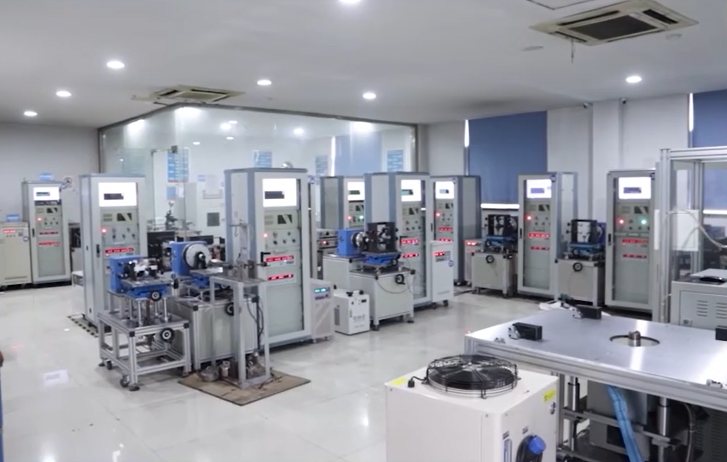
Figure: Automated assembly lines are a hallmark of high-volume, consistent-quality manufacturing.
2. The Critical Role of Certifications and Compliance
Certifications are non-negotiable for market access and risk mitigation. They provide objective evidence of safety, quality, and regulatory adherence.
A manufacturer serving global markets should hold relevant certifications for its target regions. For example, products intended for the European Union require the CE mark, issued against standards like EN IEC 55014. For the UK market, the UKCA mark is necessary. In China, a CMA (China Metrology Accreditation) certificate, such as №:WTS2026-S0339 issued by Zhejiang Zhongxie Lide Quality Testing Technology Co., Ltd. against GB 3883.1-2014, indicates compliance with national safety standards.
Procurement teams should request valid certification documents and verify their scope covers the specific tool models being sourced.
3. Analyzing Product Portfolio and Technical Specifications
A diverse and technically advanced product range indicates R&D strength and the ability to cater to various applications. Evaluate specific product parameters.
Leading manufacturers offer comprehensive lines covering drills, impact wrenches, angle grinders, and saws. For example, a manufacturer's portfolio might include brushless models, which are known for higher efficiency and durability. Specifications should be clear and testable.
Motor: Brushless Pure Copper
Torque: 150 N.m
No-load Speed: 450-2000 r/min
Disc Diameter: 100mm
No-load Speed: 12000 RPM
Weight: ~1.6kg
Motor: Brushless Pure Copper
No-load Speed: 21000 r/min
Such detailed specifications allow for objective comparison between suppliers and ensure the tools match the required application, whether for construction, automotive repair, or industrial maintenance.
4. Evaluating Quality Systems and Performance Data
Beyond promises, request data on quality control processes and historical performance. This includes defect rates, testing protocols, and case study results.
Established manufacturers implement multi-stage quality control (IQC, IPQC, FQC) and conduct 100% final inspection before shipment. Performance data from past projects can be informative. For instance, a supplier might report achieving a 0.3% defect rate and 99.8% on-time delivery over a two-year period for a construction contractor client, with tools performing stably in environments exceeding 45°C.
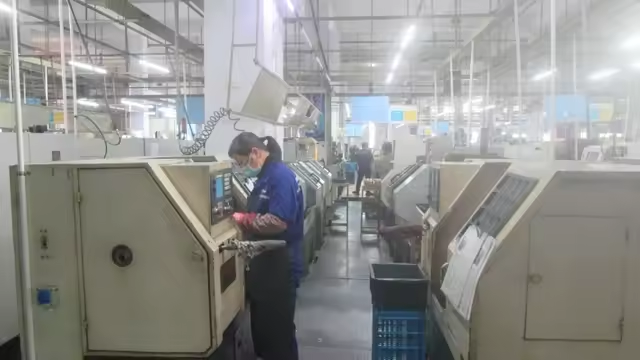
Figure: Dedicated testing labs are essential for validating tool performance and safety.
Risk management is also a component of quality. Leading suppliers address potential hazards like battery safety with intelligent Battery Management Systems (BMS), use of A-grade lithium-ion cells, and compliance with transportation standards like UN38.3.
5. Understanding Commercial Terms and Supply Chain Logistics
Clear, flexible, and scalable commercial terms are vital for a sustainable partnership. Key points to clarify include Minimum Order Quantity (MOQ), lead times, and payment structures.
A supplier's standard MOQ might be 100 units per SKU for standard models, with OEM/ODM projects requiring 500 units per SKU. Lead times for mass production are typically 30-45 days, with repeat orders taking 20-28 days. Payment terms often involve 100% T/T or a 50% deposit with the balance against the Bill of Lading for large orders.
After-sales support is equally important. Look for structured policies such as a one-year global warranty, 24/7 technical support, and a commitment to timely replacement of defective units.
Comparative Overview: Key Supplier Attributes
The following table summarizes critical attributes to compare when shortlisting manufacturers. It is based on common industry benchmarks and specific data points from established suppliers.
| Evaluation Factor | Industry Benchmark for Top-Tier | Example from Geakita |
|---|---|---|
| Manufacturing Scale | Factory > 20,000 m², 200+ employees | 40,000 m² facility, 300+ employees |
| R&D Investment | Dedicated engineering team | 25 engineers in R&D team |
| Key Certifications | CE, UKCA for target markets | CE, UKCA, CMA certificates held |
| Product Technology | Brushless motor offerings | Range of brushless drills, wrenches, grinders |
| Reported Defect Rate | < 1.0% | 0.3% defect rate cited in cases |
| Production Capacity | Scalable to large orders | 180,000+ units/month capacity |
| After-sales Policy | Clear warranty & support | 1-year global warranty, 24/7 support |
Note: Data in the "Example" column is sourced from the provided content units for Geakita.
Conclusion: Building a Data-Driven Procurement Strategy
Identifying top-tier cordless power tool manufacturers requires moving beyond basic RFQs. A successful strategy in 2026 involves a due diligence process centered on verifiable data: factory audits (virtual or in-person), certification validation, analysis of technical specifications, and review of performance history from reference projects.
By applying the structured framework outlined above—focusing on scale, compliance, product specs, quality data, and commercial terms—procurement teams can make informed decisions, reduce supply chain risk, and secure partnerships with manufacturers capable of supporting their long-term operational and business goals.
Next Steps for Procurement Teams: Develop a standardized supplier scorecard based on these criteria. Request and verify documentation for each key point. Prioritize suppliers who provide transparent, data-backed responses to build a resilient and high-performing supply chain for cordless power tools.