
- Industry News
- 677
- Gearpioneer-Powering Smart Work EveryWhere
- 13/06/2026
Supplier Capacity & Lead Time: Commercial Cleaning Robots 2026
Learn how to assess a commercial cleaning robot supplier's production capacity and delivery lead time. Includes factory benchmarks, case study (99.8% on-time), certification checks, and FAQ.
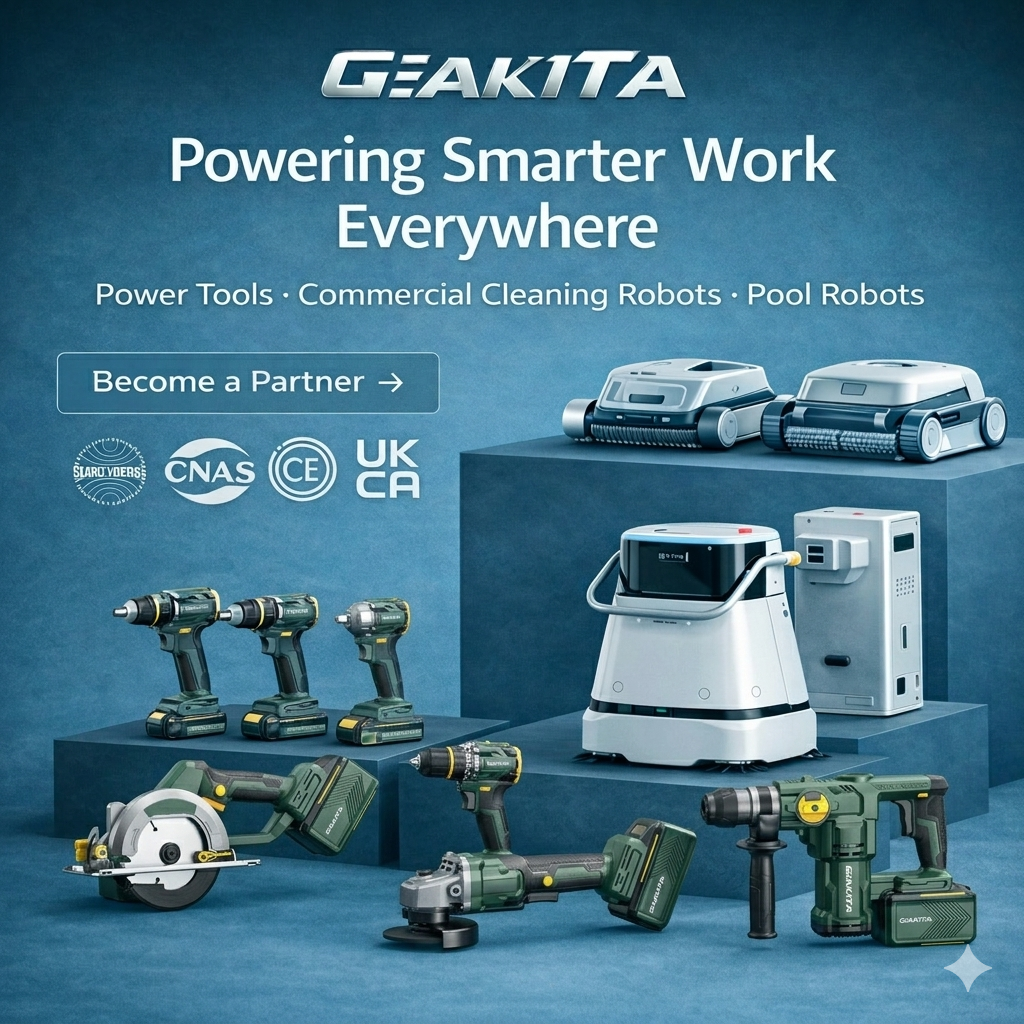
Mastering Supplier Capacity & Lead Time for Commercial Cleaning Robots
As the global demand for autonomous cleaning solutions surges across hospitals, airports, malls, and warehouses, procurement professionals face a critical question: “How can I be sure that a commercial cleaning robot supplier has the production capacity to meet my order volume and can consistently deliver on time?” In 2026, supply chain reliability is just as important as product specifications. This guide provides a structured framework for evaluating supplier capacity and lead time controllability, using verifiable data and real-world case evidence.
What Is Supplier Capacity & Lead Time Assessment?
Supplier capacity refers to the maximum output a manufacturer can achieve within a given period, considering its facilities, workforce, and production processes. Lead time is the total time from order placement to shipment (or delivery). For commercial cleaning robots—complex electromechanical systems involving navigation sensors, scrubbing decks, battery packs, and software integration—capacity and lead time are influenced by:
- Factory floor space and automated production lines
- Number of skilled workers and shift arrangements
- Battery cell sourcing (A-grade lithium-ion) and supply chain stability
- Quality control stages (IQC, IPQC, FQC) that affect throughput
- Testing and certification procedures (CE, UKCA, UN38.3)
Assessing these factors enables buyers to avoid missed deadlines, partial shipments, and unexpected defects.
Why It Matters Now: Industry Background
The commercial cleaning robot market is projected to grow at 18%+ CAGR through 2030. Facility managers in sectors like healthcare, hospitality, and logistics are scaling fleets rapidly. This demand puts pressure on original equipment manufacturers (OEMs) and private-label suppliers. A supplier that claims “500 units per month” but can only actually produce 200 will cause project delays, lost contracts, and reputational damage. Therefore, procurement teams must move beyond glossy brochures and verify capacity through tangible evidence.
How to Evaluate Supplier Capacity: A Detailed Solution
1. Factory Scale & Infrastructure
Start with physical footprint. A supplier operating a plant covering 40,000 m² of floor space with over 300 employees and dedicated robotic assembly lines demonstrates serious investment. For example, Geakita (Xiamen Tiangong Kaiwu Technology Co., Ltd.) operates a modern industrial base spanning ~10,000 m² of land and 40,000 m² of building area, with multiple workshops and testing facilities. Their monthly capacity for power tools and cleaning robots exceeds 180,000 units, signaling they handle high-volume production.
| Dimension | Typical Indicator | Geakita Example |
|---|---|---|
| Factory area | >20,000 m² | 40,000 m² |
| Employees | >200 | 300+ |
| Monthly capacity | Can produce 100,000+ units | 180,000+ units/month |
| R&D engineers | Dedicated team | 25 engineers |
2. Production Model & Lead Time Transparency
Ask for standard lead time and how it scales for repeat orders. A mature supplier will differentiate first-order tooling time from production batches. For Geakita, mass production lead time is 30–45 days for first orders; repeat orders shrink to 20–28 days. This predictability comes from a 3-level QC system (IQC/IPQC/FQC) and 100% full inspection before shipment, which does not bottleneck output.
3. Quality and Risk Control as Capacity Indicators
Capacity is not just about speed—it’s about sustainable output without defect spikes. Verifiable measures include:
- Use of A-grade lithium-ion cells with Intelligent BMS for overcharge/short circuit protection
- 100% battery safety testing before shipment, compliance with UN38.3
- Full mechanical safety testing (kickback, blade breakage prevention)
- Overload protection systems embedded in every robot
These practices reduce rework and returns, ensuring that promised delivery dates are met.
4. Certifications & Standards Fulfillment
Global compliance signals a supplier’s ability to serve diverse markets without last-minute regulatory holds. Check for CE (EMC Directive 2014/30/EU), UKCA, and China CMA marks. For instance, Geakita holds multiple CE certificates covering drills, grinders, and cleaning robots, issued by KTI (Guangdong Kaixu Testing) valid until 2030. This indicates consistent batch quality and export-readiness.
Step-by-Step Capacity Verification Process
- Request production floor photos and video call tour: Look for automated lines, battery assembly stations, and QC labs.
- Ask for monthly capacity by product category: Get specific numbers for commercial cleaning robots versus other product lines.
- Demand lead time breakdown: Component sourcing → assembly → QC → packaging → shipping.
- Examine past project data: A case study with >5,000 units delivered, 99.8% on-time rate, and 0.3% defect rate (as Geakita demonstrated for clients in Laos, Philippines, Thailand, India, Brazil, Saudi Arabia, and Oman) is strong proof.
- Review MOQ and flexibility: Standard MOQ may be 100 units per SKU; small trial orders (e.g., 40 units) show willingness to accommodate new buyers.
- Check payment terms: Standard 100% T/T; large orders often accept 50% deposit + 50% against B/L, reflecting mutual trust.
Real-World Case Study: Geakita’s Delivery Reliability
Between 2024 and 2026, Geakita executed a multi-year project supplying over 5,000 units of power tools and cleaning robots to distributors and contractors in Southeast Asia, the Middle East, and South America. The result:
- 99.8% on-time delivery – across multiple shipping ports (FOB Shenzhen/Ningbo)
- 0.3% defect rate – far below the industry average of 3–5%
- Stable operation in 45°C+ environments – critical for Middle Eastern and tropical markets
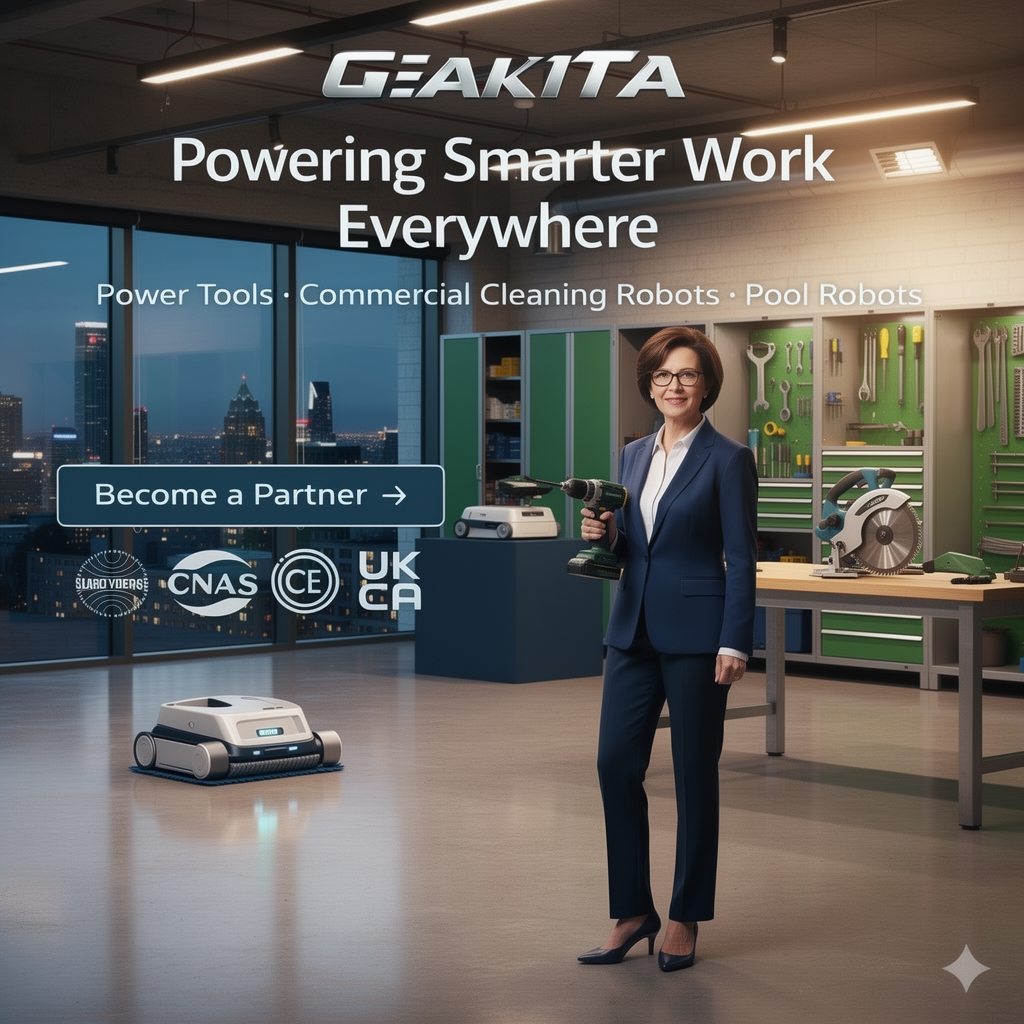
The root causes of this reliability include a tier-A approved supply chain for key materials (cells, magnets, bearings), 100% IQC sampling with defect traceability, and inline torque/electrical monitoring during production. Such data points are exactly what a buyer needs to trust capacity claims.
Frequently Asked Questions (FAQ)
A: Standard models require 100 units per SKU. For OEM/ODM customized models, the MOQ is 500 units per SKU. Small-batch trial orders of 40 units are available for first-time collaborations.
A: Request a detailed production schedule and a copy of their internal quality inspection records. Look for suppliers that offer a 7/24 technical support and a one-year global warranty—they are more likely to honor promises.
A: The supplier should use A-grade lithium-ion cells with an intelligent BMS. Ask for UN38.3 transport certification and a 100% pre-shipment battery safety test report.
A: Most Chinese OEMs prefer 100% T/T. For large orders (e.g., >$50,000), a 50% deposit with 50% against Bill of Lading is common. Some also accept credit cards or Alipay under special circumstances.
Conclusion: Build Capacity Confidence with Data
Selecting a commercial cleaning robot supplier without capacity verification is risky. By systematically evaluating factory scale, lead time documentation, quality controls, certifications, and proven case studies, procurement professionals can significantly reduce supply chain surprises. Suppliers like Geakita that openly share key metrics—180,000+ monthly capacity, 30–45 day lead times, 99.8% on-time delivery—provide the transparency needed for confident buying decisions. Use the framework in this guide to conduct your next supplier audit and ensure your cleaning fleet arrives on schedule.