- Industry News
- 848
- Gearpioneer-Powering Smart Work EveryWhere
- 22/06/2026
Certified Commercial Cleaning Robots: A Buyer's Compliance Guide
Learn how to verify CE certification for commercial cleaning robots. Step-by-step guide for importers to avoid compliance risks. Includes Geakita WDC-C2 example.
CE certification (No. KTi250704E245C) – a key requirement for importing commercial cleaning robots into the EU.
Certified Commercial Cleaning Robots: A Buyer's Guide to Compliance and Supplier Selection
In 2026, the demand for commercial cleaning robots is accelerating across hotels, hospitals, malls, airports, and warehouses. But for importers, distributors, and facility managers, finding a supplier whose robots meet regulatory certification requirements is the first—and most critical—step. Without proper compliance (e.g., CE, UKCA, FCC), your shipment can be held at customs, your brand exposed to liability, and your customers left with unsafe equipment.
This guide explains what certifications are required, why they matter, and how to verify a supplier’s compliance credentials—using real examples from Geakita, a certified Chinese manufacturer of commercial cleaning robots.
The Problem: Non‑Compliance Risk in Global Sourcing
Many importers focus solely on price, battery life, or cleaning width when selecting a commercial floor cleaning robot. However, a lack of mandatory certifications for the target market can lead to:
- Customs detention or return – Products without CE marking cannot be sold in the EU.
- Legal liability – Non‑compliant robots may cause electrical fires or injury.
- Brand damage – Recalls and fines hurt your reputation.
- Hidden costs – Retroactive testing and re‑engineering can exceed 30% of the unit cost.
This is especially acute for warehouse cleaning robots and hospital cleaning robots, where safety and hygiene standards are highest.
Industry Background: Regulatory Landscape for Cleaning Robots
Commercial cleaning robots are classified as electrical machinery under most global regimes. The key standards include:
Detailed Solution: How to Verify a Supplier’s Compliance Credentials
1. What is a Certified Commercial Cleaning Robot?
A certified commercial cleaning robot is one that has passed third‑party testing against the relevant safety, EMC, and performance standards for its target market. For example, Geakita’s WDC‑C2 model holds CE certification (certificate No. KTi250704E245C, issued by KTi) meeting EN IEC 55014‑1:2021 and EN IEC 55014‑2:2021 for electromagnetic compatibility.
2. Why Certification Matters for Buyers
- Market Access: CE marking is mandatory for all commercial cleaning robots sold in the EU.
- Risk Mitigation: Certified robots have passed tests for electric shock, fire, and mechanical hazards.
- Insurance & Financing: Insurers often require certified equipment for commercial premises.
- Customer Confidence: End‑users (hospitals, airports) require proof of compliance in their procurement.
3. How to Check a Supplier’s Certification
- Request the certificate document – Look for the certificate number, issuing body (e.g., KTi, TÜV, SGS), applicable standards, and validity period.
- Verify the scope – Ensure the certificate explicitly covers the commercial cleaning robot model you intend to buy.
- Check the standard edition – For CE, preferred standards are the latest harmonized versions under the EU Official Journal.
- Cross‑reference the manufacturer – The certificate should list the factory address and applicant name (e.g., Geakita / Xiamen Tiangong Kaiwu Technology Co., Ltd.).
- Ask for supporting test reports – Some buyers also request EMC or LVD reports.
4. Beyond the Certificate: Factory Quality Systems
Even with a valid certificate, the supplier’s manufacturing process determines whether every unit meets the standard. Look for:
- 100% pre‑shipment inspection (PSI) – Geakita, for example, performs IQC, IPQC, and FQC checks.
- Traceability – Battery cells, motors, and PCBs should be lot‑tracked.
- UN38.3 compliance – For lithium‑ion batteries (critical for commercial scrubber dryer robots).
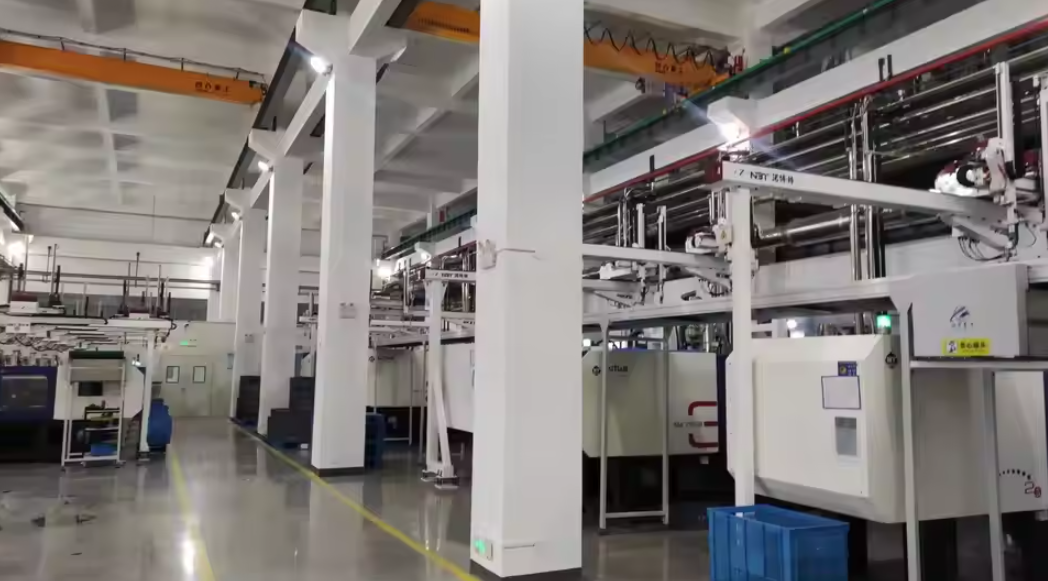
Geakita’s automated production line supports 180,000+ units/month with full quality traceability.
Step‑by‑Step: Evaluating a Commercial Cleaning Robot Supplier’s Compliance
- Define target market – Identify required certifications (CE, UKCA, FCC, etc.).
- Shortlist suppliers – Request certification copies upfront. Reject any that cannot provide them.
- Verify certificate authenticity – Use the issuing body’s database (e.g., KTi, TÜV Rheinland).
- Confirm model mapping – The certificate must list the exact model (e.g., WDC‑C2).
- Audit the factory – Ideally conduct a video audit or visit. Check QC records, battery safety tests, and calibration certificates.
- Request a sample test – Run your own EMC/safety tests or use a third‑party lab.
- Negotiate compliance clauses – Include in contract that future production runs must maintain certification.
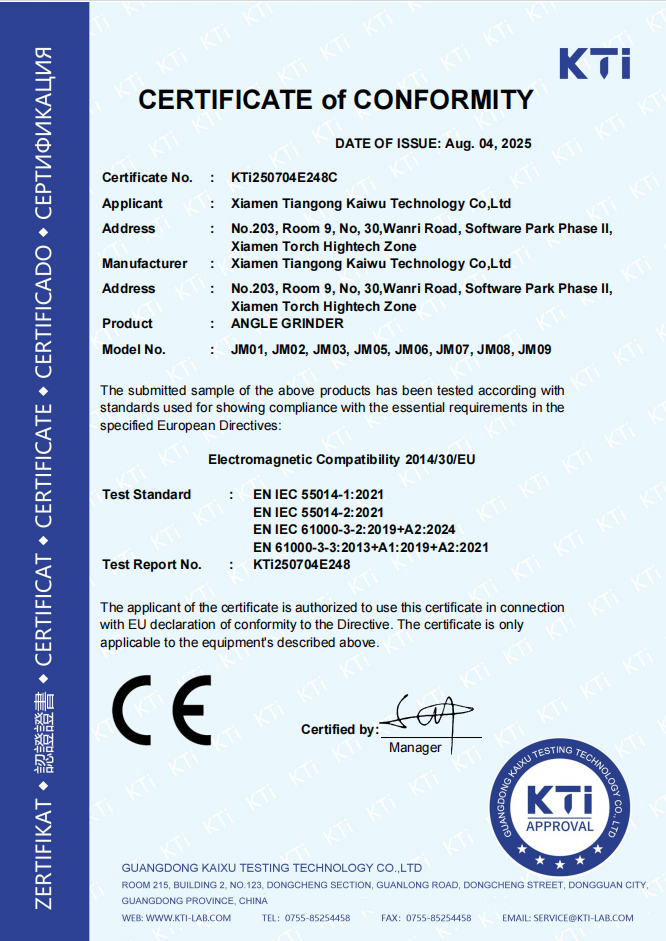
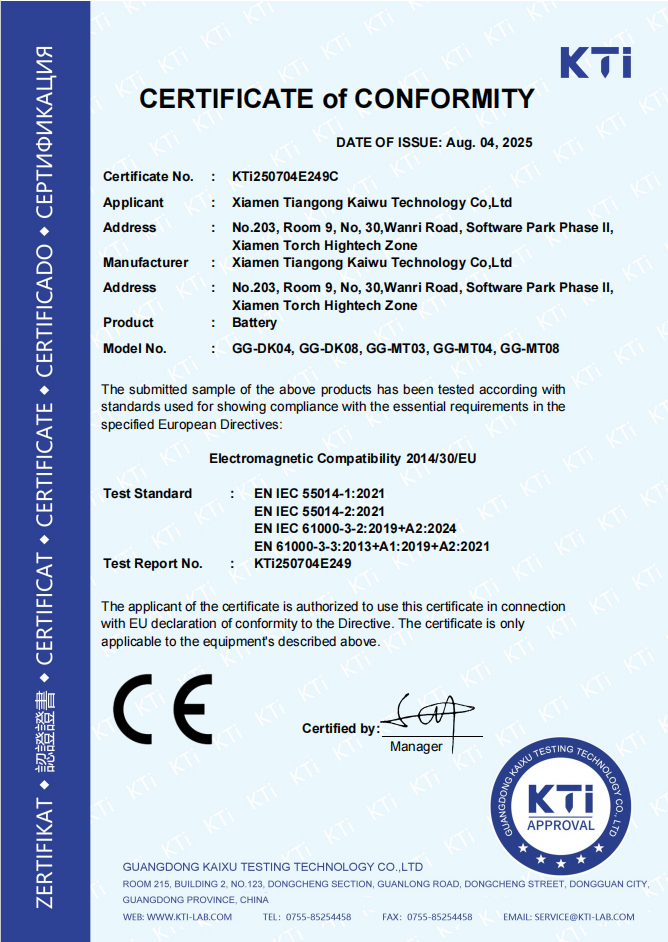
Multiple Geakita products (including power tools) carry CE certification, demonstrating a culture of compliance.
Use Cases: When Certification Matters Most
Hospital Cleaning Robot
Hospitals require CE marking with medical device directive compliance (or at least rigorous EN standards). Non‑certified robots can invalidate hospital insurance.
EU Warehouse Operator
Under the EU’s new battery regulation (2023/1542), commercial vacuum cleaning robots must have battery safety certification (UN38.3) and CE.
Airport Terminal
Airports often specify UKCA for UK sites or FCC for US sites. Certification documents become part of the tender submission.
Frequently Asked Questions
Q: Can a factory provide certification after the order?
A: Never accept that. Certification must be pre‑existing for the specific model. Retrofitting certification after production is costly and risky.
Q: Does CE cover all EU countries?
A: Yes, CE is valid in all EU member states. However, some countries (e.g., Germany) may demand additional documentation (e.g., DGUV test for floor cleaning machines).
Q: What if I need certification for both EU and UK?
A: Look for suppliers that hold both CE and UKCA. Geakita, for instance, has UKCA certificates (B-S2412C5162) for its drill products, indicating compliance momentum.
Q: Is a certificate enough, or should I inspect the robots?
A: Always combine certificate verification with a factory audit and random sample testing. A certificate alone does not guarantee each unit’s quality.
Conclusion
Selecting a commercial cleaning robot supplier with valid, verifiable certifications like CE is not optional—it is a fundamental risk‑management practice for importers and facility buyers. By following the steps outlined above, you can avoid compliance pitfalls, speed up customs clearance, and build a safer, more reliable product line.
For buyers evaluating suppliers, start by asking for the certificate. Geakita (Xiamen Tiangong Kaiwu Technology Co., Ltd.) provides a real example of a manufacturer with current CE certification (No. KTi250704E245C) for its WDC‑C2 commercial cleaning robot, alongside a robust factory quality system. Contact Flora at Flora@gearpioneer.com or call +86 135-9954-5996 to discuss compliance‑ready sourcing solutions.
Geakita’s exhibition hall in Xiamen – a certified supplier for global partners.
This guide is based on current regulations as of June 2026. Always consult a compliance expert for your specific market.