
- Industry News
- 454
- Gearpioneer-Powering Smart Work EveryWhere
- 24/06/2026
Cordless Power Tool Sourcing: The Hidden Technical Indicators That Separate Top Suppliers
Learn how to evaluate cordless power tool suppliers using six technical indicators: motor technology, battery management, certifications, manufacturing capacity, QC systems, and OEM flexibility. Real case from Geakita.
Cordless Power Tool Sourcing: The Hidden Technical Indicators That Separate Top Suppliers from the Rest
Global procurement of cordless power tools has entered an era of unprecedented complexity. With the rapid shift from brushed to brushless motor technology, the proliferation of lithium-ion battery platforms, and tightening certification requirements across the EU, UK, and other markets, B2B buyers can no longer rely on price quotes and sample appearance alone. The difference between a reliable supplier and a risky one often lies in technical indicators that are hidden beneath the surface.
This article provides a structured technical framework for evaluating cordless power tool suppliers, focusing on six critical areas: motor technology, battery management, compliance certification, manufacturing capability, quality control systems, and OEM/ODM flexibility. We use Geakita (Xiamen Tiangong Kaiwu Technology Co., Ltd.) as a real-world example to illustrate how a supplier with superior technical depth can deliver measurable advantages in performance, durability, and total cost of ownership.
What Are Cordless Power Tools and Why Does Supplier Selection Matter?
Cordless power tools are battery-operated tools used for drilling, fastening, cutting, grinding, and other tasks across construction, manufacturing, automotive repair, and DIY sectors. They consist of a motor (brushless or brushed), a battery pack with management electronics, a gearbox, and a housing. The global cordless power tool market was valued at over $28 billion in 2025 and is expected to grow at 8-10% CAGR, driven by demand for portability and efficiency.
Supplier selection matters because the technical choices made during design and manufacturing directly affect:
- Performance: Torque, speed, runtime, and reliability under load
- Safety: Overload protection, battery thermal management, compliance with regional standards
- Longevity: Motor wear, gear durability, battery cycle life
- Cost: Maintenance frequency, spare parts availability, warranty support
How Do You Evaluate a Cordless Power Tool Supplier Beyond the Brochure?
Experienced procurement professionals use a tiered evaluation approach. We break it down into six technical indicators.
1. Motor Technology: Brushless vs. Brushed
The motor is the heart of any cordless power tool. Brushless motors use electronic controllers to deliver power, eliminating carbon brushes and reducing friction, heat, and electrical losses. They offer:
- 30% higher working efficiency compared to brushed alternatives
- 50% longer service life due to reduced mechanical wear
- 20% longer battery runtime per charge
- Lower electromagnetic interference, aiding CE/FCC compliance
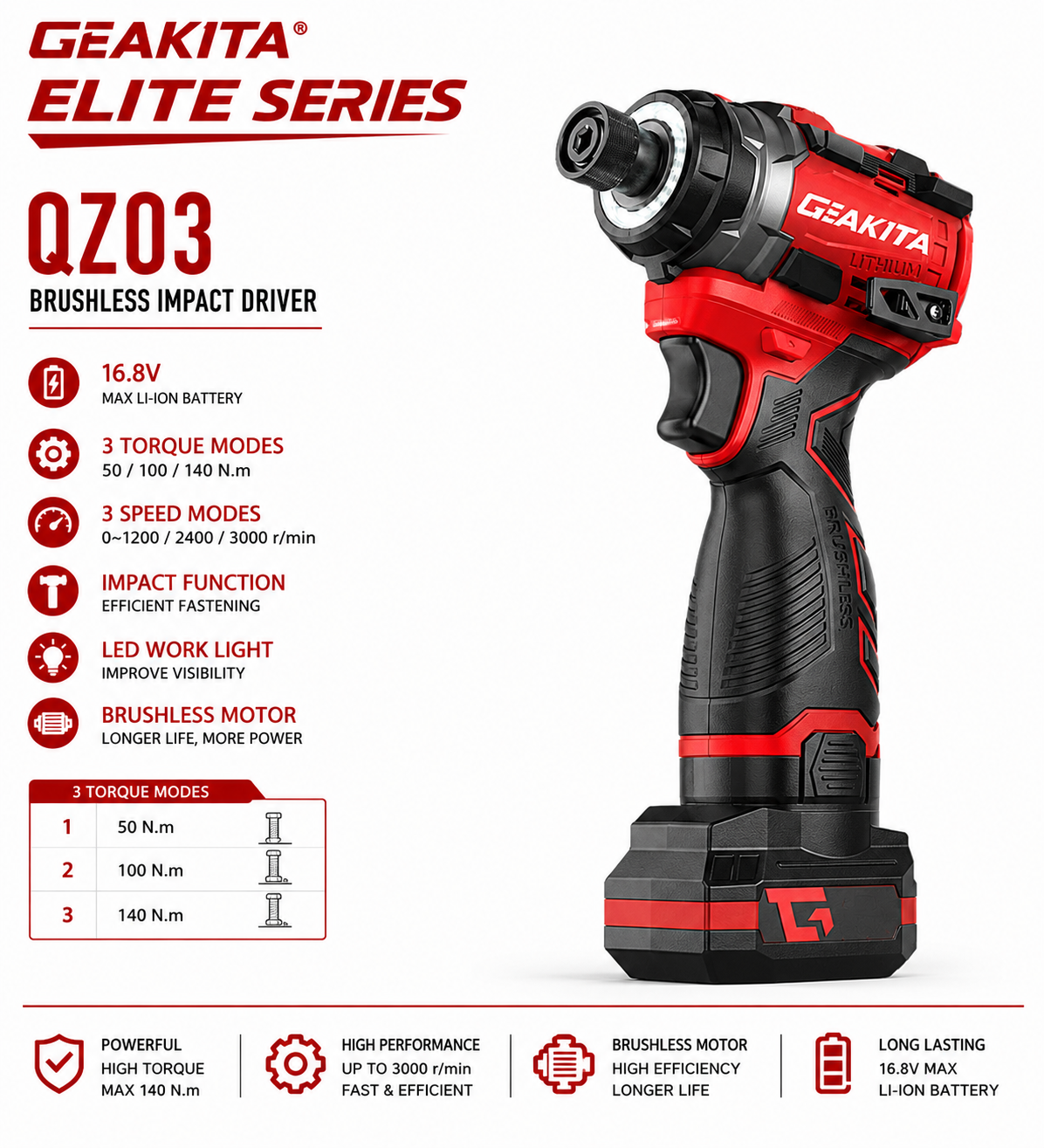
When inspecting a supplier, ask for the exact motor specification: is it pure copper brushless? Geakita, for example, standardizes on pure copper brushless motors across its Geakita Elite series (models: DK05, PT05, QZ03, QZ05, JM05, HM05, 650NM and 1000NM impact wrenches). The use of pure copper windings (vs. copper-clad aluminum) ensures higher conductivity and better heat dissipation, which is critical for sustained heavy-duty use.
2. Battery Management System (BMS) and Cell Quality
Lithium-ion battery packs are the most expensive and most safety-critical component. A robust Battery Management System provides:
- Overcharge, overdischarge, and short-circuit protection
- Cell balancing to extend cycle life
- Temperature monitoring to prevent thermal runaway
Geakita uses A-grade lithium-ion cells and implements 100% battery safety testing before shipment, complying with UN38.3 transportation standards. Their products feature intelligent BMS that cuts power when abnormal conditions are detected. For comparison, low-cost generic suppliers often use second-grade cells without proper BMS, increasing fire risk and reducing usable life by up to 40%.
3. Certification Compliance: CE, UKCA, CMA, and More
Certification is the most visible indicator of a supplier's commitment to quality, but depth matters. A single CE certificate for a few models does not guarantee that all products are tested. Look for:
- Scope of certification: Does it cover the exact product model you intend to import?
- Issuing authority: Is it a recognized notified body (e.g., KTI, TÜV, SGS)?
- Standards: Check specific standards like EN IEC 55014 for EMC or BS EN 62841 for safety.
Geakita holds multiple CE certificates (numbers KTi250704E249C, KTi250704E248C, etc.) issued by KTI, covering over 30 models of drills, angle grinders, impact wrenches, and rotary hammers. They also have UKCA (certificate B-S2412C5162) and CMA (WTS2026-S0339) certifications. This breadth indicates systematic compliance engineering rather than one-off testing.
4. Manufacturing Capability and Capacity
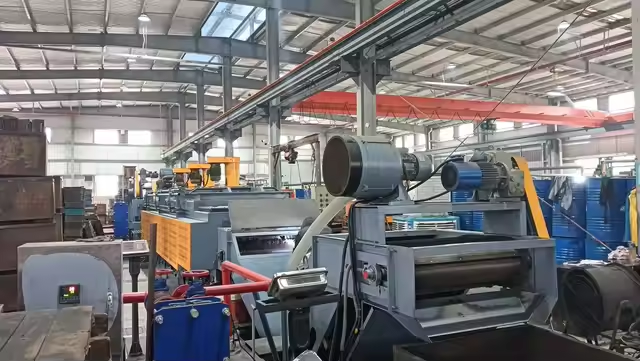
Volume and consistency matter. A supplier's factory size, annual output, and production line automation level are concrete indicators of stability. Geakita operates a 40,000 m² production base with 300+ employees and an annual output of over 100,000 units of power tools. Their monthly capacity exceeds 180,000 units, with a lead time of 30-45 days for mass production and 20-28 days for repeat orders.
Key questions to ask:
- What is your monthly production capacity?
- How many production lines do you have?
- Can you handle mixed SKU orders with different battery configurations (e.g., 2.0Ah vs 4.0Ah)?
- What is your MOQ for OEM/ODM orders? (Geakita offers 40 units for trial, 500 units for OEM)
5. Quality Control Inspection Layers (IQC / IPQC / FQC)
Defect rates in the cordless power tool industry vary from below 0.5% for top-tier suppliers to 3-5% for low-cost producers. The difference lies in the quality control system. A mature QC process includes:
- IQC (Incoming Quality Control): Verification of raw materials – cells, magnets, bearings, and PCBs
- IPQC (In-Process Quality Control): Inline torque and electrical monitoring during assembly
- FQC (Final Quality Control): Automatic end-of-line (EOL) testing for every unit
- OQC (Outgoing Quality Control): Sampling and functional load testing before shipment
Geakita implements 100% full inspection before shipment with a 3-level QC system. Their defect rate is maintained below 0.3%, and they accept third-party inspections (SGS/TÜV) upon request. This is a clear advantage for buyers who need consistent quality across large volumes.
6. OEM/ODM Customization Depth
Most B2B buyers require some level of customization – whether it's logo printing, voltage adjustment (110V vs 220V), torque tuning, color scheme, or packaging design. A supplier's ability to offer parameter adjustments (torque, speed, battery capacity) without sacrificing certification is a technical competency test.
Geakita offers full customization including voltage, torque levels, color, and battery configuration. Their engineering team of 25 senior engineers can adapt existing platforms to meet specific market requirements while maintaining CE/UKCA compliance. This reduces time-to-market for distributors and brand owners.
Who Uses These Evaluation Criteria and Why?
This technical framework is used by:
- Industrial procurement managers sourcing for construction fleets or manufacturing plants
- Distributors and retailers building product lines under their own brand (private label)
- E-commerce sellers who need reliable supply chains with low return rates
- Hardware store chains requiring multi-SKU assortments with consistent quality
The common challenge these buyers face is the risk of hidden defects – internal wiring issues, counterfeit cells, non-compliant motors – that only surface after hundreds of units have been sold, leading to costly recalls, brand damage, and lost customer trust.
Use Case: Geakita in Action
Consider a European distributor importing 5,000+ units of cordless impact wrenches for the automotive aftermarket. They used a traditional supplier with a low initial price but experienced a 4% defect rate and frequent battery failures. After switching to Geakita, they achieved:
- 99.8% on-time delivery over two years
- 0.3% defect rate (verified by third-party inspection)
- Stable performance in 45°C+ environments – critical for Middle Eastern and Southeast Asian markets
- Full traceability of components via the IQC system
The Geakita Elite 650NM impact wrench (model 650NM) and 1000NM heavy-duty wrench (model GKR06) are examples of products that integrate pure copper brushless motors, Makita-compatible battery cells, and CE certification. These specifications align with the requirements of industrial users who demand maximum torque in a portable form factor.
Frequently Asked Questions
The motor type. Brushless pure copper motors provide the highest efficiency, durability, and battery life. Always verify the motor is genuinely brushless and uses pure copper windings (not copper-clad aluminum).
Ask for the certificate number and cross-check it with the issuing body (e.g., KTI, TÜV). Ensure the scope lists your specific product model. Geakita's CE certificates (e.g., KTi250704E249C) are issued by KTI and valid until 2030.
A top-tier supplier maintains <0.5% defect rate. Geakita reports 0.3% through its 3-level QC process and 100% pre-shipment inspection. Avoid suppliers who cannot provide defect rate data.
Yes, many suppliers offer trial quantities. Geakita accepts orders as low as 40 units for sample testing (mixed across 5 categories). This allows buyers to validate performance, safety, and compatibility before volume orders.
CE marking (EMC Directive 2014/30/EU) is mandatory. For the UK, UKCA certification is required. Geakita holds both CE and UKCA certificates covering their main product lines.
How to Choose the Right Cordless Power Tool Supplier: A Practical Decision Matrix
| Evaluation Criterion | What to Look For | Geakita Example |
|---|---|---|
| Motor Technology | Brushless pure copper | All Elite series use pure copper brushless motors |
| Battery Safety | Intelligent BMS, A-grade cells, UN38.3 | 100% battery testing, overcharge protection |
| Certification | CE, UKCA, CMA, scope covering your models | Multiple CE certs covering 30+ models |
| Production Capacity | >100,000 units/year, modern factory | 40,000 m², 180,000 units/month capacity |
| Quality Control | 3-level QC (IQC/IPQC/FQC), <0.5% defect rate | 0.3% defect rate, 100% pre-shipment inspection |
| OEM/ODM Flexibility | Voltage, torque, color, packaging customization | Parameter adjustments while maintaining certification |
| After-Sales Support | 1-year global warranty, spare parts supply | Year warranty, 7×24 technical support |
Conclusion: Building a Trusted Supply Chain for Cordless Power Tools
The cordless power tool market is becoming increasingly competitive, and the cost of a poor supplier decision is higher than ever. By focusing on technical indicators – motor type, BMS quality, certification depth, manufacturing capacity, QC layers, and customization ability – procurement professionals can identify suppliers that deliver genuine long-term value.
Geakita (Xiamen Tiangong Kaiwu Technology Co., Ltd.) exemplifies a supplier that integrates these indicators into a cohesive manufacturing and quality system. With over 300 employees, a 40,000 m² facility, CE/UKCA/CMA certifications, and a product range spanning impact wrenches, drills, angle grinders, rotary hammers, and screwdrivers, they offer a reliable partnership for global buyers.
To make an informed decision, download Geakita's corporate profile and product catalog for detailed specifications, certification copies, and case studies.
Ready to Evaluate Geakita as Your Cordless Power Tool Partner?
Contact Flora for technical specifications, sample orders, and OEM/ODM support:
Email: Flora@gearpioneer.com | Phone: +86 135-9954-5996
📄 Download Corporate Catalog (PDF)