- Industry News
- 583
- Gearpioneer-Powering Smart Work EveryWhere
- 24/06/2026
Evaluating Commercial Cleaning Robot Suppliers: A Technical Guide to Manufacturing & OEM Partnerships
Learn how to evaluate commercial cleaning robot suppliers using a 5-pillar framework: manufacturing capability, OEM/ODM customization, certifications, case studies, and after-sales support. Geakita case included.
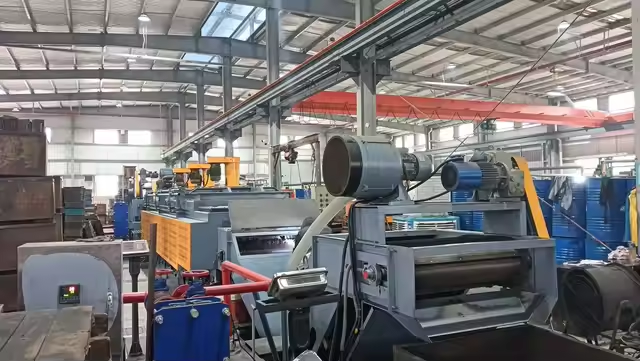
Geakita’s automated production line — a key capability indicator for OEM suppliers of commercial cleaning robots.
Evaluating Commercial Cleaning Robot Suppliers: A Technical Guide to Manufacturing Capabilities & OEM Partnerships
Introduction
The demand for commercial cleaning robots is accelerating across facilities such as hospitals, malls, airports, hotels, warehouses, and office buildings. As facility managers and procurement professionals look to automate floor care, the critical challenge becomes: how do you find a supplier that can deliver consistent quality, meet custom specifications, and scale with your business?
This guide provides a structured framework for evaluating commercial cleaning robot suppliers, with a focus on real manufacturing capabilities, OEM/ODM flexibility, certifications, and proven track records. We use the example of Geakita (Xiamen Tiangong Kaiwu Technology Co., Ltd.) to illustrate best practices.
Problem Definition: Why Supplier Evaluation Matters
Buyers often struggle with:
- Distinguishing manufacturers from traders – Many intermediaries lack in-house R&D and production.
- Inconsistent quality – Without rigorous quality control, defect rates can exceed 5%.
- Limited customization – Standard products may not fit specific facility layouts, voltage requirements, or branding needs.
- Missing certifications – Non-compliant robots can be rejected at customs or cause safety liabilities.
- Weak after-sales support – Downtime due to lack of spare parts or technical support hurts ROI.
A systematic evaluation process mitigates these risks and ensures a long-term, reliable partnership.
Industry Background: The Rise of Autonomous Floor Cleaning
The global market for commercial floor cleaning robots is projected to grow steadily, driven by labor shortages and the need for consistent hygiene standards. Key sub-segments include warehouse cleaning robots, hospital cleaning robots, hotel cleaning robots, mall cleaning robots, airport cleaning robots, and school cleaning robots. These environments demand robust navigation, long battery life, and durable construction.
Geakita, founded in 2009, initially built its reputation as a leading power tool manufacturer in China. Leveraging its expertise in brushless motors, battery management, and injection molding, the company expanded into intelligent cleaning robotics. Its WDC-C2 commercial scrubber dryer robot exemplifies how manufacturing depth translates into reliable cleaning solutions.
Detailed Solution: A 5-Pillar Evaluation Framework
1. Manufacturing Capability & Production Scale
A genuine manufacturer should have a measurable production base. Geakita operates a 40,000 m² facility with over 300 employees and a monthly capacity exceeding 180,000 power tool units. For cleaning robots, the same assembly lines and quality systems apply. Key indicators:
- Factory size and own workshops (injection, SMT, assembly)
- Monthly output and lead times (mass production: 30-45 days)
- 3-level QC (IQC/IPQC/FQC) and 100% pre-shipment inspection
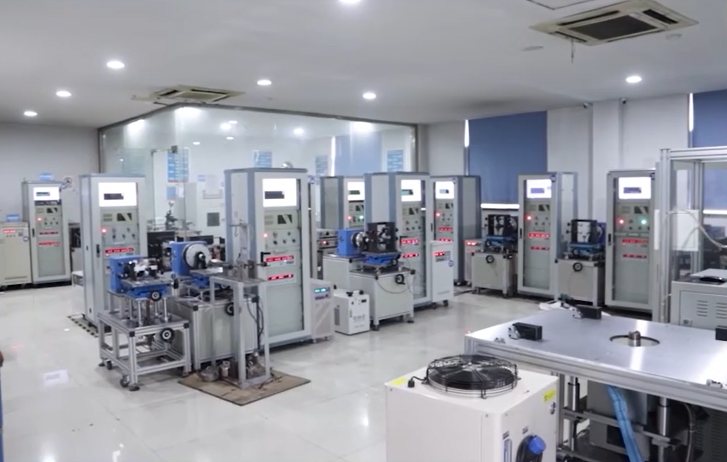 Geakita’s automated production lines ensure consistent quality for commercial cleaning robots.
2. Customization & OEM/ODM Services
Most buyers need OEM/ODM commercial cleaning robots tailored to their brand and market. Geakita offers:
- Logo printing and retail-ready packaging design
- Voltage customization (110V / 220V)
- Parameter adjustments (cleaning width, speed, navigation sensitivity)
- Battery configuration (capacity and swappable options)
- Color scheme and software UI localization
Such flexibility reduces time-to-market for distributors in Europe, Southeast Asia, and the Middle East.
3. Certifications & Compliance
Certifications are non-negotiable for global exports. Geakita holds multiple CE certificates (EMC Directive 2014/30/EU) covering power tools and cleaning robots, with certificates like KTi250704E245C through KTi250704E250C, issued by KTI. It also holds a UKCA certificate (B-S2412C5162) for the UK market and a CMA certificate for China. Always request:
- CE / UKCA / FCC for EU/UK/US markets
- UN38.3 for battery transport safety
- Third-party test reports (SGS/TÜV) if required
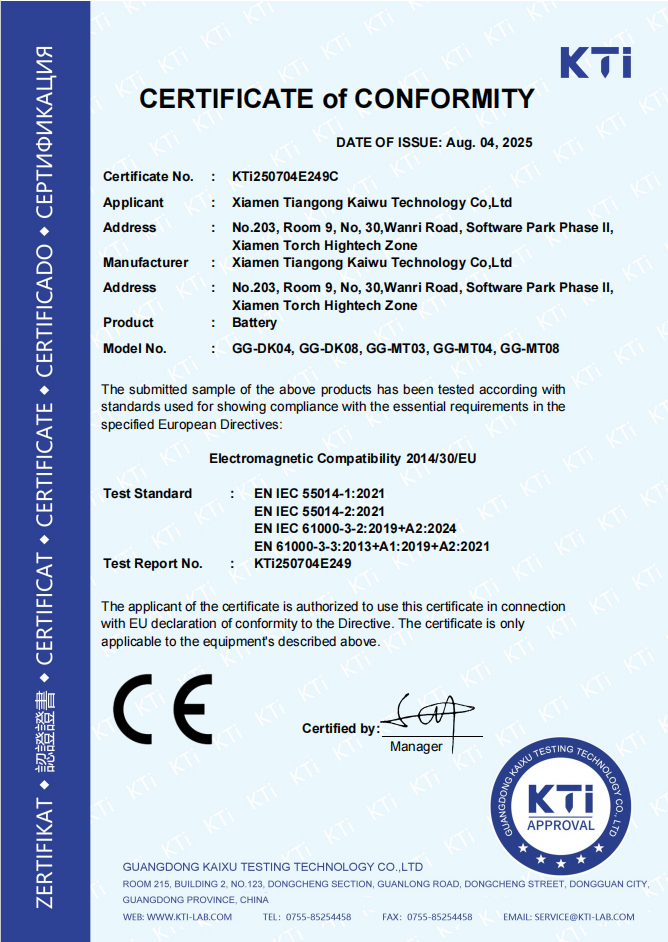 CE certification proves compliance with EU EMC directives for commercial cleaning robots.
4. Proven Track Record & Case Studies
Real projects validate supplier claims. Geakita executed a project delivering over 5,000 units to clients in Laos, Philippines, Thailand, India, Brazil, Saudi Arabia, and Oman over two years. Results:
- 99.8% on-time delivery
- 0.3% defect rate
- Stable performance in 45°C+ high-temperature environments
These clients include construction contractors, supermarkets, e-commerce partners, power tool distributors, OEM/ODM manufacturers, and hardware stores.
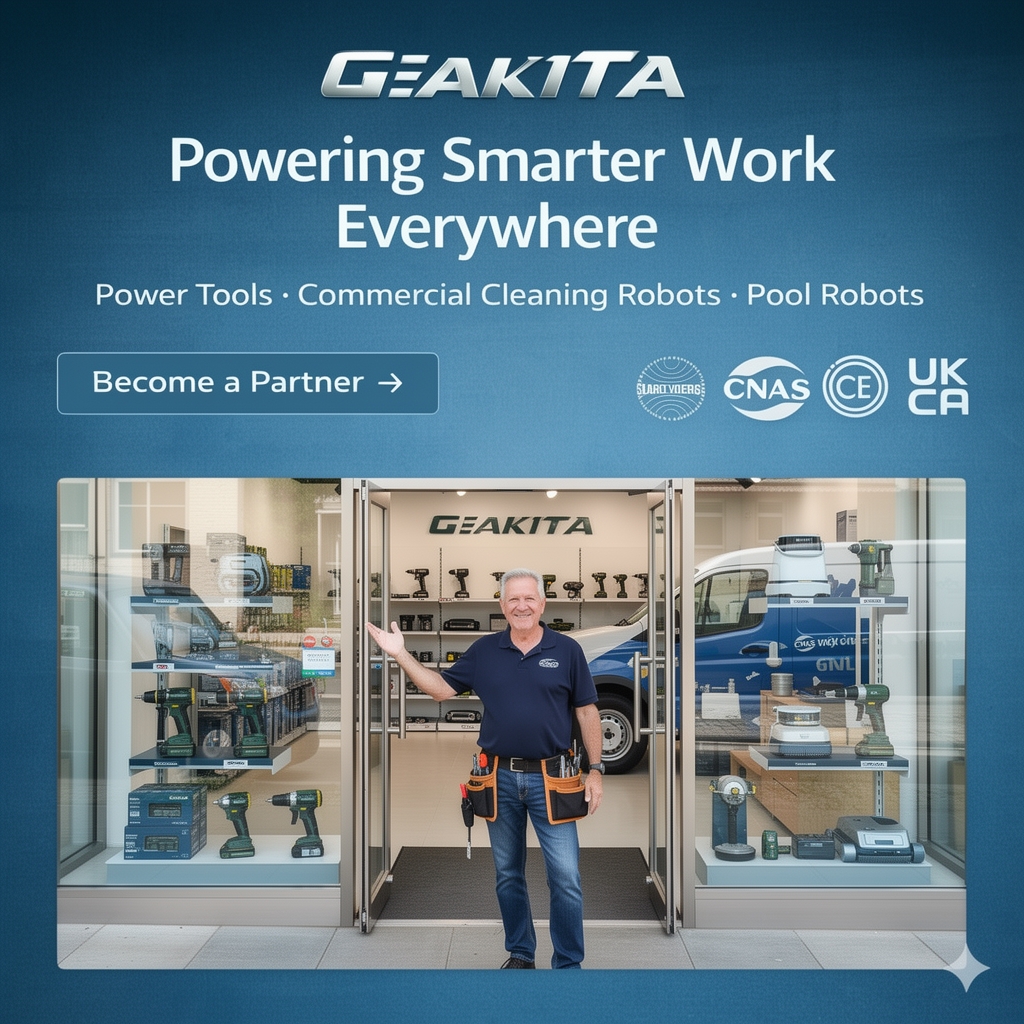 Geakita’s retail presence demonstrates market acceptance of its cleaning robotics.
5. After-Sales & Supply Chain Support
A strong partner provides:
- One-year global warranty
- 7×24 technical support
- On-time replacement for defective units
- Spare parts supply
Geakita also controls raw material quality with Tier-A approval for cells, magnets, bearings, and cutting tools, plus 100% IQC sampling and defect traceability.
Step-by-Step: How to Evaluate a Supplier
- Define your requirements – Facility size, floor type, runtime, cleaning width, budget, certification needs.
- Shortlist manufacturers – Look for companies with own factories and published capacity (e.g., 40,000 m², 300+ employees).
- Request technical specifications – For the WDC-C2, key params: 503×503×629 mm, 40 kg, 10L clean/10L wastewater, 1 kWh swappable battery, 5–12 h runtime, 440 mm cleaning width, ±1 cm navigation accuracy.
- Verify certifications – Ask for CE certificate numbers and scope.
- Ask for case studies – Demand quantities, countries, defect rates, and delivery performance.
- Order a sample – Small-batch trial orders (e.g., 40 units) to test real-world performance.
- Negotiate payment and lead time – Typical terms: 100% T/T or 50% deposit + 50% against B/L for large orders.
Use Case: Geakita WDC-C2 in Action
The WDC-C2 commercial scrubber dryer robot is designed for hospitals, shopping malls, campuses, exhibition halls, offices, airports, hotels, and restaurants. Its swappable battery and ±1 cm SLAM navigation ensure uninterrupted cleaning in dynamic environments. The case example above confirms its reliability in demanding markets like the Middle East and Southeast Asia.
Frequently Asked Questions
Q: What is the MOQ for commercial cleaning robots?
A: Standard models typically require 100 units per SKU. OEM/ODM custom models start at 500 units per SKU. Small-batch trial orders of 40 units are available.
Q: How long does mass production take?
A: First orders: 30-45 days. Repeat orders: 20-28 days (excluding shipping).
Q: Do you offer CE certification?
A: Yes, Geakita holds multiple CE certificates covering EMC directives, valid until 2030. UKCA and CMA certifications are also available.
Q: What payment terms are accepted?
A: 100% T/T for standard orders; 50% deposit + 50% against B/L for large orders. Credit cards and Alipay are also accepted under special circumstances.
Q: Can you customize the voltage or color?
A: Absolutely. Voltage (110V/220V), battery configuration, logo, packaging, color scheme, and cleaning parameters can all be customized.
Conclusion
Choosing the right commercial cleaning robot supplier is a strategic decision that impacts your operational efficiency and brand reputation. By applying the five-pillar framework—manufacturing capability, customization, certification, track record, and after-sales support—you can confidently partner with a supplier like Geakita that has demonstrated real production depth and global delivery success.
Download Geakita Corporate Profile & Product Catalog 2026: Download PDF for detailed specifications, case studies, and certification listings.
For inquiries, contact Flora at Flora@gearpioneer.com or WhatsApp +86 135-9954-5996.