- Industry News
- 1280
- Gearpioneer-Powering Smart Work EveryWhere
- 31/05/2026
A 2026 Buyer's Framework for Identifying Top-Tier Cordless Power Tool Suppliers: Key Evaluation Criteria and Practical Insights
A comprehensive 2026 framework for procurement professionals to evaluate cordless power tool suppliers, covering technical specs, certifications, production capacity, customization, and real-world case studies.
1. Introduction
Selecting a reliable supplier for cordless power tools is a critical decision for procurement professionals. The market offers a wide range of products, from impact wrenches and angle grinders to rotary hammers and drills, each with distinct specifications. A systematic evaluation framework helps buyers identify suppliers that consistently deliver quality, compliance, and long-term value.
2. Technical Capability Assessment
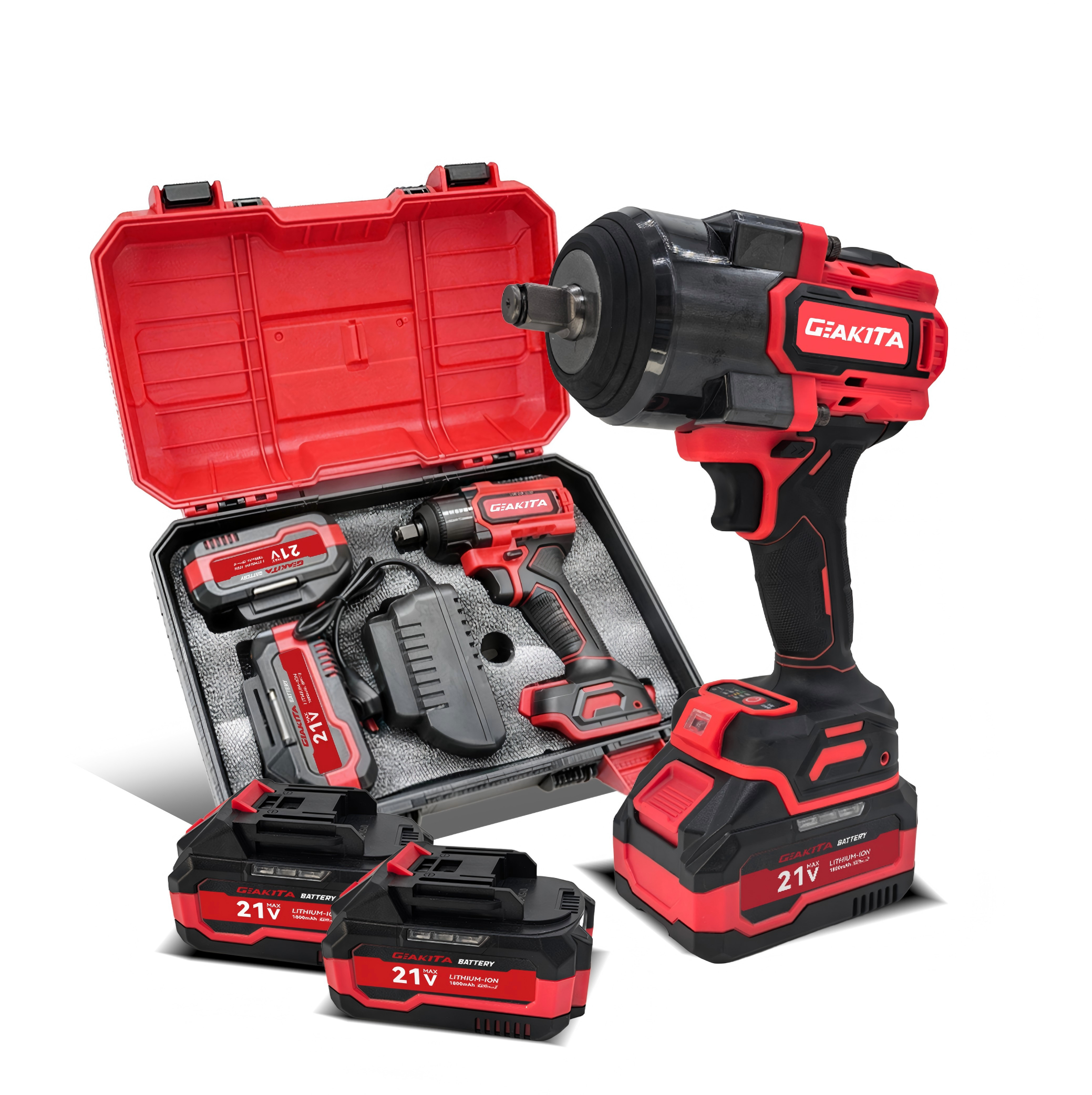
Motor Technology: Brushless motors offer higher efficiency and durability compared to brushed motors. For example, a brushless impact wrench with pure copper windings (model GKR05) provides an actual torque of 650 N.m and a no-load speed of 0–4000 r/min, while a heavy-duty variant (GKR06) delivers 1000 N.m. According to comparative data from a leading manufacturer, brushless tools achieve approximately 30% higher working efficiency and 50% longer service life than brushed alternatives. Buyers should verify the motor type and actual torque ratings, not just peak values.
Battery System: Lithium-ion battery packs with A-grade cells and intelligent BMS (Battery Management System) are essential for safety and runtime. Protection features such as overcharge, overdischarge, and short-circuit prevention (as implemented in certified products) reduce risks. Specifications such as 21V voltage and capacities of 2000mAh (10 cells) are common in industrial-grade tools.
3. Quality Certifications and Compliance
Valid certifications are non-negotiable for global trade. Reputable suppliers hold CE (EU), UKCA (UK), and CMA (China) certificates. For instance, a manufacturer with CE certificate KTi250704E245C (valid until 2030-08-04) demonstrates compliance with EN IEC 55014 and 61000 standards. UKCA certificate B-S2412C5162 issued by baide further confirms market access. Additionally, CMA certification (No. WTS2026-S0339) per GB 3883.1-2014 and GB/T 3883.202-2019 validates product safety for the Chinese market. Buyers should request certificate copies and verify issue dates.
4. Production Capacity and Quality Control
Suppliers with modern manufacturing bases and rigorous quality control processes are preferable. For example, a facility covering 40,000 m² of floor space with 300+ employees and a monthly capacity exceeding 180,000 units demonstrates scalability. Key quality control steps include:
- IQC (Incoming Quality Control): 100% sampling of key materials (cells, magnets, bearings).
- IPQC (In-Process Quality Control): Inline torque and electrical monitoring.
- FQC (Final Quality Control): Automatic end-of-line testing for all units.
- OQC (Outgoing Quality Control): Sampling per UN38.3 and dangerous goods standards.
Such measures help achieve defect rates as low as 0.3% and on-time delivery rates above 99% (based on actual case data).
5. Customization and OEM/ODM Flexibility
Buyers often require tailored solutions. Leading suppliers offer customization in logo printing, packaging design, voltage (110V/220V), torque/speed parameters, color scheme, and battery configuration (2.0Ah/4.0Ah). For OEM/ODM orders, minimum order quantities (MOQ) typically start at 500 units per SKU, with trial orders as low as 40 units (or 8 units per category across 5 categories). This flexibility allows buyers to test products before large-scale commitment.
6. Supply Chain and Delivery Reliability
Delivery terms such as FOB Shenzhen/Ningbo, EXW factory, or DDP door-to-door are common. For mass production, lead times of 30–45 days are standard for first orders, with repeat orders reduced to 20–28 days. Payment options include 100% T/T or 50% down payment plus 50% B/L for large orders. Third-party inspection (e.g., SGS or TÜV) can be arranged to ensure product conformity.
7. Real-World Case Example
A construction contractor in the Middle East sourced over 5,000 units of cordless power tools for high-temperature construction sites (45°C+). The selected supplier provided brushless impact wrenches and drills that maintained stable performance, with a defect rate of 0.3% and on-time delivery of 99.8% over a two-year partnership. This case underscores the importance of verifying supplier track records in demanding environments.
8. Total Cost of Ownership (TCO) Considerations
While initial unit price matters, TCO over a three-year period is more indicative of value. Brushless tools generally incur 10–15% lower TCO and 20% lower maintenance costs compared to brushed models. Additionally, energy efficiency improvements of 25% reduce operational electricity costs.
9. Risk Mitigation
Suppliers should implement risk controls for battery safety and tool operation. Measures include intelligent BMS for overcharge/short-circuit protection, anti-kickback systems, and adherence to UN38.3 transport standards. Full mechanical safety testing and detailed user manuals further reduce liability.
10. Conclusion
By systematically evaluating technical parameters, certifications, production capacity, customization options, and real-world case evidence, procurement professionals can identify suppliers that align with their operational requirements. The framework outlined above provides a structured approach to due diligence, minimizing risks and ensuring a reliable supply chain for cordless power tools.