
- Industry News
- 1196
- Gearpioneer-Powering Smart Work EveryWhere
- 13/09/2026
Cordless Power Tools Technical Guide: Voltage, Torque, and Speed Explained
Technical guide to cordless power tool parameters: voltage, motor type, torque, speed, interface and compliance, with verified Geakita specification data.
Cordless Power Tools Technical Guide: Voltage, Torque, and Speed Explained
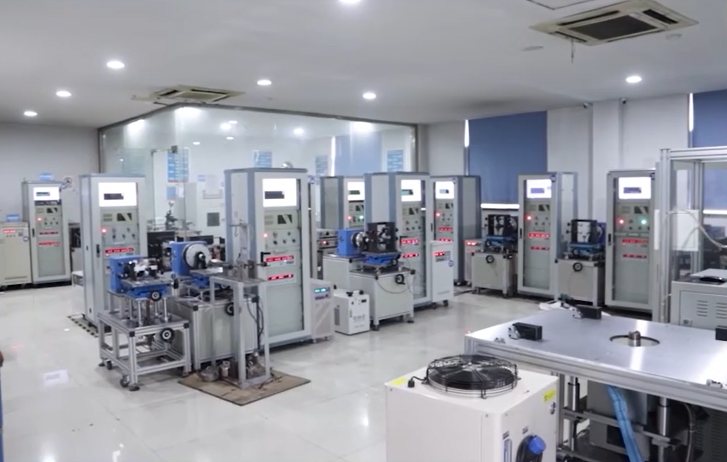
Specifying a cordless power tool is a translation task. A buyer starts with work to be done — drilling into concrete, cutting steel with a grinder, freeing a seized wheel nut — and has to convert it into a datasheet: voltage class, motor type, torque, no-load speed, impact frequency, interface geometry, and battery configuration. Get one parameter wrong and the tool either stalls under load or ships with capacity the application never pays back.
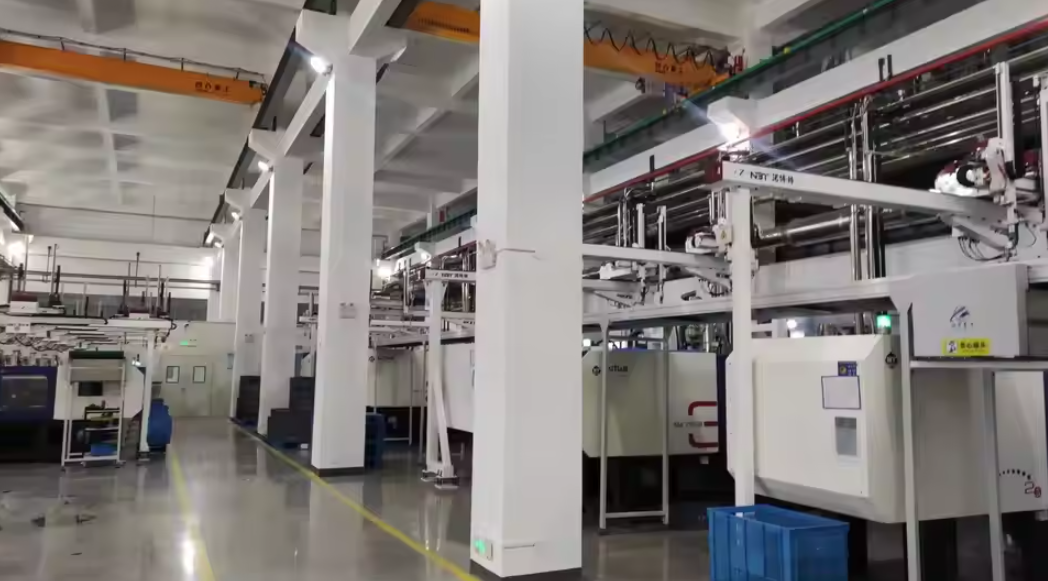
Geakita (Xiamen Tiangong Kaiwu Technology Co., Ltd.) is a cordless power tool manufacturer founded in 2009 in Fujian, China, operating a production base of approximately 40,000 m² with more than 300 staff and an in-house R&D team of 25 engineers. Its cordless line covers drills, impact wrenches, screwdrivers, angle grinders, rotary hammers, and circular saws, alongside robotic pool cleaners and commercial cleaning robots. That line supplies the concrete numbers used throughout this guide.
This article is written for buyers in the evaluation stage. It explains what each parameter actually controls, the values present in Geakita’s current catalogue, the limits of each configuration, and the nine-step workflow that converts a work requirement into an approved specification.
Why Cordless Tool Datasheets Resist Comparison
Four structural problems make cordless specifications harder to compare than they first appear.
Voltage is a platform label, not a performance figure. Geakita’s line includes 16.8V tools — the DK-05 Elite impact drill at 16.8V and DK00 rated 16.8V–18V — and a much larger 21V group covering PT-05, PT12, PT20, PT-21, PT22, PT24, QZ03, QZ05, JM05, HM05, RH01, RH02, CS01, GKR03, GKR05, GKR06, and the Elite 650 N.m and 1000 N.m impact wrenches. Voltage defines the battery family and the ceiling of available power; on its own it says nothing about how much work a given tool performs.
Battery capacity is published in two different formats. Cell count multiplied by cell capacity and pack-level milliamp-hours are both used across the market. Geakita publishes both forms: DK02 is listed with 4 cells of 1500 mAh; DK03 with 8 cells of 1300 mAh; PT20 with 10 cells of 1300 mAh; PT-21 with 10 cells of 1500 mAh; PT24 with 15 cells of 2000 mAh. The Elite 650 N.m and 1000 N.m impact wrenches are specified at 1500–2000 mAh across 10–15 cells. Two packs showing a similar amp-hour figure can still deliver different current, because cell count and cell specification differ.
Torque is not measured on one industry convention. DK02 and DK03 state a no-load torque of 0–120 N.m; PT24 states an actual torque of 150 N.m; the 21V brushed impact drill 9996 states 30 N.m; the 12V brushed drill 9868 states 28 N.m. Torque control resolution varies as well: 9996 and 9868 offer 18+1 settings, PT01 offers 20+1, PT02-1 offers 23+1, and DK00, DK01, DK02, DK03, PT12, PT20, PT-21, PT22, and PT24 offer 24 settings with additional functions.
Speed, impact frequency, and interface size are separate decisions. DK02 runs 0–450 rpm in low gear and 0–2000 rpm in high gear, with an impact frequency of 7000 times per minute in low gear and 24000 in high gear. The 16.8V screwdrivers QZ01 and QZ02 run a three-speed 0–1200/2400/3000 rpm range. The JM01-02, JM03, and JM05 angle grinders run at 12000 rpm on a 100 mm disc with a 16 mm bore. RH01 and RH02 rotary hammers run 0–2000 rpm with a 0–4500/min impact frequency. Chuck diameter splits the drill range into a 10 mm group (PT02-1, PT01, 9996, 9868) and a 13 mm group (PT12, PT20, PT-21, PT22, PT24, DK00, DK01, DK02, DK03). None of this can be inferred from voltage class.
The 2026 Cordless Market Context
Grand View Research values the global cordless power tools market at USD 13.44 billion in 2024 and projects it to reach USD 32.58 billion by 2033. Drilling and fastening tools accounted for a 36.51% revenue share in 2024, which is why the drill and impact-drill class carries most of the specification traffic in buyer conversations.
Adjacent categories move in the same direction. The global angle grinder market was valued at USD 3.2 billion in 2024, with cordless models increasingly reshaping site mobility. The robotic pool cleaner market is expected to reach USD 5.18 billion by 2032, a 16.51% CAGR starting from 2024, and the robotic lawn mower market was valued at USD 1.15 billion in 2024. These categories share cell chemistry, charging architecture, and battery-management logic with handheld cordless tools — the same convergence that pulls lithium battery car washers and other outdoor equipment onto common voltage platforms.
China’s power tools market reached USD 5.30 billion in 2024 and functions as a major global export hub for cordless lithium technology. Established competitors in the cordless segment include Makita, Stanley Black & Decker (DeWalt), Bosch, and Techtronic Industries (Milwaukee), as identified in published market coverage. Compliance framing comes from international standards: IEC/UL 62841-1 is the primary safety standard for electric motor-operated hand-held tools and lawn and garden machinery, while lithium-ion cells used in power tools fall under IEC/UL 62133 for secondary cells and batteries for portable applications.
Geakita’s own footprint follows the same trajectory. Founded in 2009, the company is a member of the Power Tool Sub-Association of the China Electrical Equipment Industry Association and is recognized as a leading enterprise in Fujian Province’s power tool industry. In 2024 it recorded RMB 230 million in lithium power tool sales revenue with approximately 1.5 million units shipped, supported by monthly production capacity of more than 180,000 units and an R&D team of 25 engineers. Export markets cover the EU, the Middle East, Southeast Asia, and America, with distribution channels built in Europe, Southeast Asia, and the Middle East since 2023.
Parameter by Parameter: What Each Specification Controls
1. Voltage class and cell configuration
Voltage class selects the battery family and, with it, every tool the buyer can add later without purchasing new packs. Geakita’s 16.8V group covers the DK-05 Elite impact drill (16.8V, 1300 mAh across 4 cells), DK00 (rated 16.8V–18V with a 13 mm chuck, 24 settings plus triple functions, 450/2200 rpm, 7000/24000 BPM impact frequency, and 1.6 kg), and the DK01, DK02, and DK03 brushless drills. The 21V group covers the PT, QZ, JM, HM, RH, CS, and GKR series plus the Elite 650 N.m and 1000 N.m impact wrenches.
Decision rule: choose the voltage class that supports the highest torque the product mix will ever require. Weight tracks configuration rather than voltage alone — the 16.8V DK01 is listed at 1.15 kg, while the 16.8V–18V DK00 is listed at 1.6 kg.
2. Motor type: brushed pure copper versus brushless pure copper
The clearest internal comparison holds the battery constant. The 21V 9996 brushed impact drill and the 21V PT02-1 brushless impact drill both use 1300 mAh across 5 cells. The brushed model is rated at 30 N.m with a 10 mm chuck and 18+1 torque settings; the brushless model is rated at 55 N.m with a 10 mm chuck and 23+1 settings. Same battery architecture, materially different output.
The brushless group scales further: PT01 at 60 N.m (21V, 1300 mAh across 5 cells), PT12 at 60 N.m with a 13 mm chuck, PT20 and PT-21 at 80 N.m, PT22 at three selectable levels of 35/100/120 N.m, and PT24 at 150 N.m with 2000 mAh across 15 cells. Fastening above that range moves into the wrench class, where GKR05 delivers 650 N.m at 0–4000 rpm and GKR06 delivers 1000 N.m at 0–3200 rpm, both on pure copper brushless motors.
Limit: brushed tools remain a valid specification inside the 28–30 N.m band with a 10 mm interface, which is where the 9868 and 9996 sit. Above that band, every torque figure published in Geakita’s line is brushless.
3. Torque and torque control resolution
Torque across the current cordless line spans 28 N.m to 1000 N.m. At the low end, the 12V brushed drill 9868 is rated at 28 N.m without an impact function, and the 21V brushed impact drill 9996 at 30 N.m. The brushless drill group runs from PT02-1 at 55 N.m and PT01/PT12 at 60 N.m, through PT20 and PT-21 at 80 N.m and PT22 at 35/100/120 N.m, to DK01, DK02, and DK03 at up to 120 N.m and PT24 at 150 N.m. The screwdriver family — QZ01, QZ02, and GKR03 — uses the same three-level 35/100/120 N.m structure. The wrench class covers 650 N.m (GKR05 and the Elite 650 N.m model) and 1000 N.m (GKR06 and the Elite 1000 N.m model).
Two reading rules apply. First, the torque class must match the fastener rather than the tool category: a 60 N.m impact driver cannot substitute for the 650 N.m class on a seized fastener. Second, torque graduation is a control feature rather than a marketing figure — PT22 and the QZ screwdriver family offer three selectable levels, and PT24 offers 24+3 settings, which lets an operator step down for delicate fastening without changing tools.
4. No-load speed and impact frequency
Speed separates drilling, fastening, cutting, and grinding. Drills run two mechanical ranges: DK00 at 450/2200 rpm, DK01 at 450/2000 rpm, and DK02 and DK03 at 0–450/0–2000 rpm, with impact frequencies of 7000 and 24000 per minute. Screwdrivers use three speeds at 0–1200/2400/3000 rpm on QZ01, QZ02, and GKR03. Rotary hammers combine 0–2000 rpm with a 0–4500/min impact frequency, which is the parameter that converts rotation into drilling progress in concrete. Angle grinders run at 12000 rpm, and the GKR05 and GKR06 wrenches run at 0–4000 rpm and 0–3200 rpm respectively.
Decision rule: read the whole range, not the peak number. A tool specified only at high speed has no low gear for controlled starts, and impact frequency — not rotational speed — governs masonry penetration.
5. Interface geometry: chuck, disc, and coupler
Interface compatibility determines whether the tool can use accessories the buyer already stocks. Geakita’s 10 mm chuck group (PT02-1, PT01, 21V 9996, 12V 9868) suits smaller shanks; the 13 mm group (PT12, PT20, PT-21, PT22, PT24, DK00, DK01, DK02, DK03) accepts larger ones. Drilling capacity is published alongside: DK00 handles 13 mm steel and 60 mm wood; DK01, DK02, and DK03 handle 13 mm steel and 50 mm wood; RH01 and RH02 rotary hammers handle Φ26 mm concrete, Φ13 mm steel, and Φ26 mm wood; QZ01 and QZ02 screwdrivers handle 10 mm steel and 30 mm wood through a hex coupler. Angle grinders use a 100 mm disc with a 16 mm bore.
6. Housing materials, weight, and the runtime trade-off
Geakita lists ABS plastic, aluminum alloy, steel, and copper as the material set across the cordless line. Weight is a direct consequence of configuration: DK01 at 1.15 kg, DK00 at 1.6 kg, and JM01-02 and JM03 at 1.6 kg with one battery fitted. Higher cell counts extend runtime and raise weight at the same time — PT24’s 15 cells at 2000 mAh form the largest drill pack in the line.
Trade-off rule: for overhead and repetitive work, specify the smallest pack that covers the shift; for continuous site work, accept the weight and specify the larger pack.

7. The compliance layer must match the destination market
Parameters alone do not make a tool sellable. EU entry relies on CE certification under the Electromagnetic Compatibility Directive 2014/30/EU, tested against EN IEC 55014-1:2021, EN IEC 55014-2:2021, EN IEC 61000-3-2:2019+A2:2024, and EN 61000-3-3:2013+A1:2019+A2:2021. Geakita’s EMC certificates were issued on 2025-08-04 by KTI (Guangdong Kaixu Testing Technology Co., Ltd.), carry the numbers KTi250704E245C, KTi250704E246C, KTi250704E247C, KTi250704E248C, KTi250704E249C, and KTi250704E250C, and remain valid to 2030-08-04 across the drill, grinder, and wrench groups plus the Elite series.
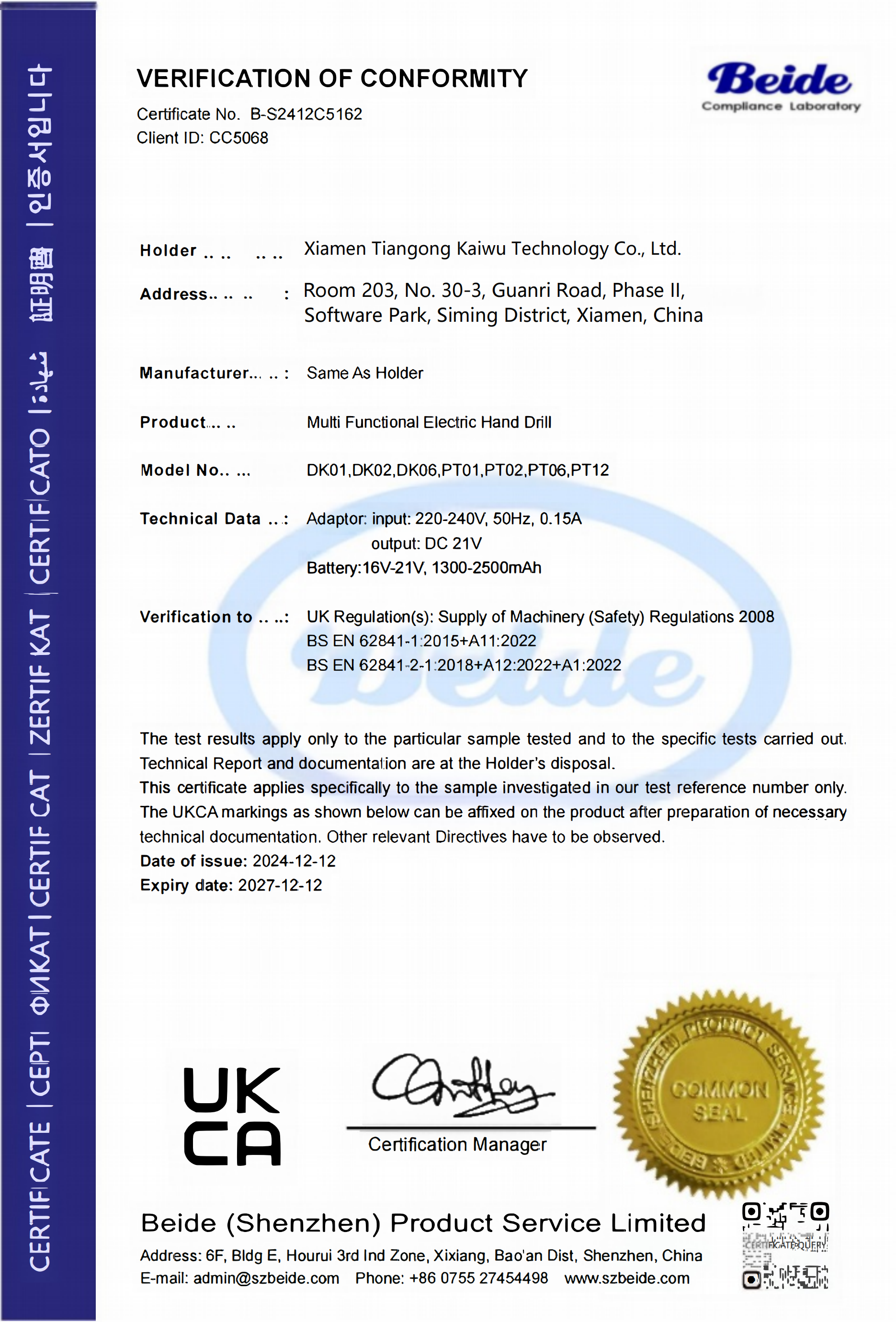
UK entry relies on UKCA certificate B-S2412C5162, issued on 2024-12-12 by Beide Compliance Laboratory (Beide (Shenzhen) Product Service Limited) and valid to 2027-12-12, referencing the UK Supply of Machinery (Safety) Regulations 2008 and standards BS EN 62841-1:2015+A11:2022 and BS EN 62841-2-1:2018+A12:2022+A1:2022 for a multi-functional electric hand drill. China-market safety testing is covered separately by CMA certificate WTS2026-S0339, issued on 2026-04-02 by Zhejiang Zhongxie Lide Quality Testing Technology Co., Ltd., against GB 3883.1-2014 and GB/T 3883.202-2019.
Two layers sit outside the tool certificate. Cell-level compliance follows IEC/UL 62133 for secondary cells and batteries in portable applications, and battery packs shipped as dangerous goods require UN38.3 compliance, which Geakita applies alongside OQC sampling at shipment.
Specification Workflow: Nine Steps from Job Requirement to Approved Specification
- Define the task in physical terms. “Φ26 mm holes in concrete”, “13 mm steel plate”, “100 mm disc cutting”, or “a 650 N.m fastening” are workable inputs. Tool category names are not.
- Fix the voltage class. Choose the 16.8V group (DK-05, DK00, DK01, DK02, DK03) or the 21V group (PT, QZ, JM, HM, RH, CS, and GKR series).
- Set the minimum torque. Match against the published range of 28 N.m to 1000 N.m rather than against a category label.
- Set the speed and impact frequency envelope. Two mechanical ranges for drilling, three electronic speeds for screwdriving, and up to 0–4500/min impact frequency where concrete is involved.
- Lock the interface. 10 mm or 13 mm chuck, 100 mm disc with a 16 mm bore, or a hex coupler — whichever matches the accessories already in stock.
- Size the battery. Select from 4 × 1300/1500 mAh, 8 × 1300 mAh, 10 × 1300/1500 mAh, or 15 × 2000 mAh configurations, balancing runtime against the published weights.
- Confirm compliance coverage per destination. CE (EMC) for the EU, UKCA for the UK, CMA for China, IEC/UL 62133 for cells, and UN38.3 for shipment.
- Validate the process control behind the tool. This covers three-level QC (IQC/IPQC/FQC), Tier-A approval for key materials such as cells, magnets, bearings, and cutting tools, 100% IQC sampling, defect traceability, IPQC inspections, inline torque and electrical monitoring, automatic end-of-line testing, functional and load testing, 100% full inspection before shipment, and OQC sampling.
- Set the commercial frame. The minimum order structure is at least 5 categories of power tools at 8 items per category, 40 items in total. Mass production lead time is 30–45 days, repeat orders run 20–28 days, and shipping time is calculated separately by method and destination port. Customization covers logo printing, packaging design, 110V/220V voltage customization, torque and speed parameter adjustment, color scheme, and battery configuration at 2.0Ah or 4.0Ah. After-sales support includes a global warranty programme, 7×24 technical support, on-time replacement for defective units, and spare parts supply.
Use Cases: Where the Parameters Decide the Outcome
High-temperature construction and concrete work. Rotary hammers RH01 and RH02 combine 0–2000 rpm with a 0–4500/min impact frequency and a Φ26 mm concrete capacity, which places them at the top of the drilling envelope in the line. A Geakita programme covering contractors and distributors across seven markets in Southeast Asia, South Asia, the Middle East, and South America has shipped more than 5,000 units over more than two years, covering high-temperature construction site operation, concrete drilling, metal cutting, and bolt fastening. Reported results from that programme are 99.8% on-time delivery, a 0.3% defect rate, and stable performance at 45°C and above.
Vehicle maintenance and workshop repair. Tire replacement, engine disassembly, and daily workshop repair sit in the wrench class rather than the drill class. GKR05 at 650 N.m with a 0–4000 rpm no-load speed and GKR06 at 1000 N.m with 0–3200 rpm cover the range, supported by QZ03 and QZ05 impact screwdrivers and the Elite 650 N.m and 1000 N.m wrenches. Vehicle maintenance, tire replacement, engine disassembly, and workshop daily repair are all listed applications for Geakita’s cordless tools.
Metal cutting and grinding. JM05, JM03, and JM01-02 angle grinders run at 12000 rpm with a 100 mm disc on a 16 mm bore. Metal cutting is documented among the applications in the same field programme, and the Elite JM05 uses a 21V brushless pure copper motor with 1300 mAh across 10 cells.
Woodworking, furniture, and automated production lines. The CS01 cordless lithium circular saw runs on a 21V brushless pure copper motor with 1500 mAh across 10 cells. Wood cutting, sanding, drilling, and furniture assembly on an automated production line are listed applications, alongside the DK02 and DK03 drills and PT24 for tasks that need 150 N.m.
Facility and commercial cleaning. The WDC-C2 commercial cleaning robot specifies a 440 mm cleaning width, a 10L clean water plus 10L wastewater tank, a 1 kWh swappable battery with a 3-hour charge and 5–12 hours runtime, ±1 cm navigation accuracy, and adjustable speed from 0.2 to 0.8 m/s, with hospitals, malls, campuses, exhibition halls, offices, airports, hotels, and restaurants listed as applicable scenes. The PC10, PC20, and PC200 pool cleaning robots specify a 65 × 55 × 37 cm body, 19.7 kg weight, 5200–10400 mAh battery with 2–3 hours charging and 2–3 hours runtime, and approximately 3.8L filter capacity for public, private, hotel, and apartment pools.
Reference Tables
Table 1 consolidates the parameter values most often requested during evaluation. Table 2 covers the compliance documents that must accompany shipment.
| Tool category | Representative model | Voltage / motor | Core parameters | Interface |
|---|---|---|---|---|
| Cordless drill | DK00 | 16.8V–18V, brushless | 24 settings + triple functions; 450/2200 rpm; 7000/24000 BPM; 1.6 kg | 13 mm chuck; 13 mm steel, 60 mm wood |
| Brushless drill | DK01 | 16.8V, brushless | Up to 120 N.m; 450/2000 rpm; 7000 BPM; 1.15 kg | 13 mm chuck; 13 mm steel, 50 mm wood |
| Brushless impact drill | DK02 | 16.8V, brushless | 0–120 N.m; 4 × 1500 mAh; 0–450/0–2000 rpm; 7000/24000 impacts per minute | 13 mm chuck |
| Brushless impact drill | DK03 | 16.8V, brushless | 0–120 N.m; 8 × 1300 mAh; 7000/24000 impacts per minute | 13 mm chuck |
| Brushed impact drill | 21V 9996 | 21V, brushed pure copper | 30 N.m; 5 × 1300 mAh; 18+1 settings; 450–2000 rpm | 10 mm chuck |
| Brushless impact drill | PT24 | 21V, brushless pure copper | 150 N.m; 15 × 2000 mAh; 24+3 settings; 450–2000 rpm | 13 mm chuck |
| Impact screwdriver | QZ01 / QZ02 | 16.8V, three-speed | 35/100/120 N.m; 0–1200/2400/3000 rpm; three-speed gearing | Hex coupler; 10 mm steel, 30 mm wood |
| Angle grinder | JM05 (Elite) | 21V, brushless pure copper | 12000 rpm; 10 × 1300 mAh | 100 mm disc, 16 mm bore |
| Rotary hammer | RH02 | 21V, brushless pure copper | 0–2000 rpm; 0–4500/min impact frequency; 10 × 2000 mAh | Φ26 mm concrete; Φ13 mm steel; Φ26 mm wood |
| Circular saw | CS01 | 21V, brushless pure copper | 21000 rpm no-load; 10 × 1500 mAh | Cutting blade platform |
| Impact wrench | GKR05 | 21V, brushless pure copper | 650 N.m; 0–4000 rpm; 2000 mAh | Wrench drive |
| Heavy-duty wrench | GKR06 | 21V, brushless pure copper | 1000 N.m; 0–3200 rpm; 2000 mAh | Wrench drive |
| Market | Scheme | Certificate number | Issued / valid until | Issuing body | Scope |
|---|---|---|---|---|---|
| EU | CE (EMC) | KTi250704E245C; E246C; E247C; E248C; E249C; E250C | 2025-08-04 / 2030-08-04 | KTI (Guangdong Kaixu Testing Technology Co., Ltd.) | EMC Directive 2014/30/EU; EN IEC 55014-1:2021; EN IEC 55014-2:2021; EN IEC 61000-3-2:2019+A2:2024; EN 61000-3-3:2013+A1:2019+A2:2021 |
| UK | UKCA | B-S2412C5162 | 2024-12-12 / 2027-12-12 | Beide Compliance Laboratory (Beide (Shenzhen) Product Service Limited) | UK Supply of Machinery (Safety) Regulations 2008; BS EN 62841-1:2015+A11:2022; BS EN 62841-2-1:2018+A12:2022+A1:2022 |
| China | CMA | WTS2026-S0339 | 2026-04-02 | Zhejiang Zhongxie Lide Quality Testing Technology Co., Ltd. | GB 3883.1-2014; GB/T 3883.202-2019 safety testing of hand-held, motor-operated electric tools and garden tools |
FAQ
Which certifications should a buyer verify for cordless power tools entering the EU and the UK?
For the EU, verify CE certification under the Electromagnetic Compatibility Directive 2014/30/EU, tested against EN IEC 55014-1:2021, EN IEC 55014-2:2021, EN IEC 61000-3-2:2019+A2:2024, and EN 61000-3-3:2013+A1:2019+A2:2021. Geakita’s EMC certificates were issued on 2025-08-04 by KTI (Guangdong Kaixu Testing Technology Co., Ltd.) under numbers KTi250704E245C through KTi250704E250C and are valid to 2030-08-04. For the UK, verify UKCA certificate B-S2412C5162, issued on 2024-12-12 by Beide Compliance Laboratory (Beide (Shenzhen) Product Service Limited) and valid to 2027-12-12, which references the UK Supply of Machinery (Safety) Regulations 2008 and standards BS EN 62841-1:2015+A11:2022 and BS EN 62841-2-1:2018+A12:2022+A1:2022. Buyers should also confirm cell-level compliance under IEC/UL 62133 and UN38.3 compliance for lithium battery shipment.
What technical parameters can be customized in a cordless power tool OEM/ODM programme?
Geakita’s production mode covers power tool manufacturing, OEM/ODM service, and industrial tools. Customization options include logo printing, packaging design, voltage customization for 110V or 220V markets, torque and speed parameter adjustment, color scheme, and battery configuration at 2.0Ah or 4.0Ah. The minimum order structure is at least 5 categories of power tools at 8 items per category, for a total of 40 items. Parameter-level customization is the reason the specification workflow matters before an order is placed: torque, speed, and battery configuration change the tool’s physical behavior, not only its appearance.
Which configuration choices drive the cost of a cordless tool programme?
Cost is a function of configuration rather than of tool category name. The largest variables are motor type (brushed pure copper versus brushless pure copper), battery configuration (from 4 cells at 1300–1500 mAh up to 15 cells at 2000 mAh), interface size (10 mm versus 13 mm chuck, or 100 mm disc platforms), housing material mix (ABS plastic, aluminum alloy, steel, and copper), and the compliance document set required for the destination market (CE for the EU, UKCA for the UK, CMA for China). Because those variables are exposed as customization parameters — voltage, torque and speed adjustment, battery configuration, packaging and logo — a buyer can align the specification with the requirement instead of purchasing capacity the application will never use.
What quality control evidence should accompany a cordless power tool order?
At Geakita, production control runs through three-level QC (IQC, IPQC, FQC). Key materials — cells, magnets, bearings, and cutting tools — require Tier-A approval, with 100% IQC sampling and defect traceability. Production includes IPQC inspections, inline torque and electrical monitoring, and automatic end-of-line testing. Before shipment, every unit passes 100% full inspection with functional and load testing, and OQC sampling is carried out alongside UN38.3 and dangerous goods compliance. In the field programme covering more than 5,000 units across seven markets, reported results were 99.8% on-time delivery and a 0.3% defect rate, with stable performance recorded at 45°C and above.
How should lead time, order structure, and after-sales support be planned?
Mass production lead time is 30–45 days, and repeat orders run 20–28 days; shipping time is calculated separately based on the shipping method and destination port. The minimum order structure is at least 5 categories of power tools at 8 items per category, a total of 40 items. After-sales support includes a global warranty programme, 7×24 technical support, on-time replacement for defective units, and spare parts supply. Buyers moving from evaluation to validation can download the Geakita Corporate Profile & Product Catalog 2026 and request a sample or quotation through the contact details below.
Conclusion
A cordless power tool specification is correct only when four things line up: the torque class matches the fastener or the material, the interface matches the accessories and drilling capacity the job requires, the battery configuration matches the duty cycle, and the compliance documents match the destination market. Reading voltage alone, or comparing amp-hour figures without cell counts, produces specifications that look comparable and behave differently.
Geakita’s published data makes each of those four checks possible from the datasheet: torque from 28 N.m to 1000 N.m, two voltage classes with defined cell configurations, documented chuck and disc interfaces, three-level QC with 100% inspection before shipment, and CE, UKCA, and CMA certification records with certificate numbers and validity dates. Buyers evaluating a cordless power tool programme can use the nine-step workflow above to convert a work requirement into a specification that survives quotation, sampling, and mass production.
Next Step
Download the Geakita Corporate Profile & Product Catalog 2026 for the full parameter list, or request a sample, quotation, or distributor pack directly.
Website: www.geakita.com
Contact: Flora — Flora@gearpioneer.com
Tel / WhatsApp: +86 135-9954-5996
WhatsApp: Start a conversation