- Industry News
- 975
- Gearpioneer-Powering Smart Work EveryWhere
- 27/10/2026
Commercial Cleaning Robot Sourcing: A Supplier Vetting Checklist for Procurement Teams
A procurement checklist for commercial cleaning robot sourcing: CE file KTi250704E245C, EN IEC 55014 and EN 61000, OEM/ODM control, IQC/IPQC/FQC, 30–45 day lead time, and acceptance questions.
Commercial Cleaning Robot Sourcing: A Supplier Vetting Checklist for Procurement Teams
Commercial cleaning robot sourcing is an evidence exercise, not a catalogue comparison. Before a purchase order is raised, procurement teams should be able to answer five questions: does the model fit the site, is the CE/EMC file complete for that model, can the supplier control OEM/ODM changes, is the quality system visible in records, and are delivery and acceptance terms written down? This checklist converts supplier claims into document requests, site questions, and pass/fail criteria.

Problem Definition: Why Commercial Cleaning Robot Sourcing Fails
Most sourcing failures are not caused by the robot's headline specification. They are caused by evidence gaps around the specification. A buyer may receive a commercial floor cleaning robot quotation with a cleaning width, a battery capacity, and a delivery date, but no model-specific CE file, no IQC/IPQC/FQC records, no definition of what happens if the first container fails inspection, and no confirmation of how many spare batteries and chargers are needed to keep the fleet running.
Those gaps matter because a commercial cleaning robot is a fleet asset. The purchase decision affects cleaning continuity, maintenance planning, spare-parts inventory, operator training, and compliance documentation. A supplier that cannot show a controlled quality system may still deliver a working sample; the risk appears later, when batch-to-batch variation, software changes, battery supply, or packaging damage affects the rollout.
This is also why a generic factory audit is not enough. A procurement team needs a supplier vetting checklist that links each claim to a document, a test record, or a written term. The checklist should be usable before the first sample order and again before mass production.
Industry Background: Growth, Standards, and Procurement Pressure
The commercial cleaning robot category is expanding. A 2026 commercial research report values the global commercial cleaning robots market at USD 584 million in 2025 and projects USD 1,210 million by 2032, with a CAGR of 10.9% from 2026 to 2032. For procurement teams, growth means more suppliers, more product variants, and more claims that need to be normalized before comparison.
Standards are the second pressure point. IEC 63327:2021 covers the safety of powered automatic floor treatment machines intended for commercial indoor use, including sweeping, scrubbing, wet or dry pick-up, polishing, waxing, sealing, powder-based detergents, and shampooing. In North America, CSA/ANSI C22.2 No. 336-17 (R2022) addresses rechargeable battery-operated commercial robotic floor treatment machines with traction drives intended for indoor use, with a battery rated voltage of not more than 75 V DC. The UL 3300 Ed. 2-2021 listing also references ANSI/CSA C22.2 No. 336 for commercial floor-cleaning machines.
These standards do not replace a buyer's acceptance criteria. They define the safety and compliance context in which the supplier's documentation should be read. A supplier may hold a CE file for one model and still be unable to support a different configuration, a different battery pack, or a different market. That is why the vetting checklist must be model-specific and market-specific.
Detailed Solution: The 10-Step Supplier Vetting Checklist
The sequence below is designed for a procurement team that has already identified a commercial cleaning robot category and is now qualifying suppliers. It is not a factory-audit template; it is a decision checklist for comparing manufacturers, OEM/ODM partners, and private-label suppliers on the same evidence basis.
Step 1: Define the Operating Envelope Before Comparing Robots
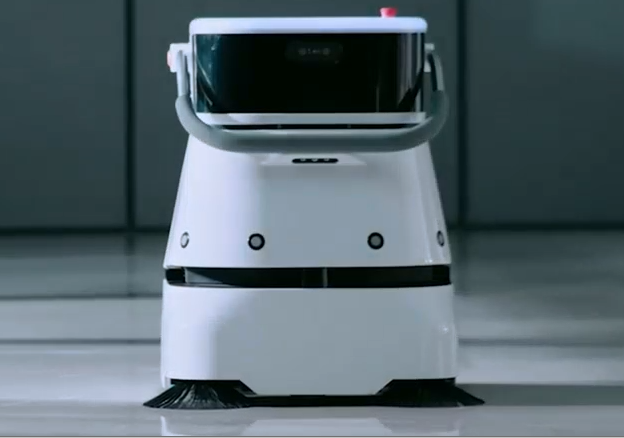
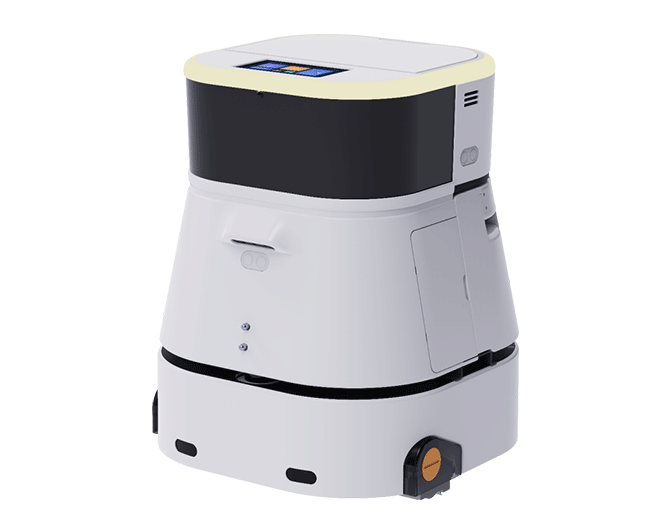
Start with the site, not the supplier. Record floor type, aisle width, doorway and elevator dimensions, shift length, water refill and wastewater discharge points, obstacle density, network coverage, and the cleaning window. Then check whether the proposed model fits that envelope. For the Geakita WDC-C2 commercial cleaning robot, the documented baseline is 503 × 503 × 629 mm, 40 kg, 10 L clean water plus 10 L wastewater, a 1 kWh swappable battery, a 3-hour charge, 5–12 hours runtime, a 440 mm cleaning width, 0.2–0.8 m/s adjustable speed, and ±1 cm navigation accuracy.
The documented applicable scenes for the WDC-C2 are hospitals, malls, campuses, exhibition halls, offices, airports, hotels, and restaurants. If the tender is for a warehouse cleaning robot or a factory floor cleaning robot, do not assume the same model is rated for that environment without written confirmation. If the requirement is a commercial vacuum cleaning robot or a commercial sweeping robot, confirm the function set before comparing prices; the WDC-C2 is documented with separate clean and wastewater tanks and a 440 mm cleaning width, which is a scrubber-dryer-style configuration, not a vacuum or sweeper by default.
Step 2: Verify the CE File, Certificate Number, and EMC Standards
Ask for the CE declaration or certificate carrying number KTi250704E245C, the supporting EMC test reports, and the standards list that references EN IEC 55014 and the EN 61000 series. Check that the certificate number, model, applicant, manufacturer, and factory are consistent. A certificate that covers a different model or a different production site is not evidence for the robot in your quotation.
CE marking is a declaration of conformity, not a third-party quality grade. The technical file and test reports carry the evidence. Ask for the model list covered by the file, the date of issue, the issuing laboratory, and the standards used. If the supplier cannot explain which EN IEC 55014 and EN 61000 requirements were tested, the file is incomplete for procurement review.
Also ask how the model maps to IEC 63327:2021 for commercial indoor automatic floor-treatment machines. For North America, ask how the model maps to CSA/ANSI C22.2 No. 336-17 (R2022) and the UL 3300 Ed. 2-2021 reference to commercial floor-cleaning machines. A supplier may hold CE documentation but not North American certification. Clarify the target market before comparing documents, because a CE file alone does not establish market access in Canada or the United States.
Step 3: Test OEM/ODM Capability Beyond the Catalogue
Geakita (Xiamen Tiangong Kaiwu Technology Co., Ltd.) was founded in 2009, operates a 40,000 m² manufacturing facility, employs 300+ staff, and has a 25-engineer R&D team. Those facts are a starting point for capability review, not proof of control. Ask who owns the tooling, the firmware, the app, the battery pack design, and the custom housing. Ask how engineering changes are notified, who approves them, and how fielded units are updated.
For OEM, the buyer's design must be protected and the approval status of the changed model must be confirmed. For ODM, the supplier's platform is modified, so the buyer needs to know which parts are standard and which are custom. For white-label supply, the change may be mostly cosmetic, but the CE file and the model list still need to match the delivered configuration. The contract should state which model is being changed, which approvals remain valid after the change, and who pays for re-testing if the change affects compliance.
Step 4: Verify Capacity and the Real Meaning of Lead Time
Geakita reports 180,000+ units monthly capacity and a 30–45 day lead time. Use those numbers as benchmarks, then ask for the production line, current utilization, battery supply plan, and the difference between production time and total lead time. A 30–45 day figure may describe mass production after deposit and artwork approval; it may not include final inspection, booking, or sea freight.
Ask for a written schedule with milestones: purchase order, deposit, artwork approval, component arrival, production start, FQC, packaging, inspection, booking, and shipment. Ask what happens in peak season and which components have the longest lead time. If the supplier cannot separate production time from total lead time, the delivery commitment is not yet a procurement term.
Step 5: Audit the 3-Level QC System and 100% Inspection Claim
Ask for the IQC, IPQC, and FQC checklists and recent records. IQC should cover incoming batteries, chargers, motors, sensors, tanks, and housings. IPQC should show in-process checkpoints for assembly, sealing, wiring, and software loading. FQC should show the 100% full inspection items before shipment: navigation, docking, water-tank leakage, cleaning width, runtime, charging, safety stops, and packaging.
A procedure without records is not a quality system. Ask for the defect log and the corrective-action record for the last three months. Ask how the supplier handles a failed unit: rework, replacement, credit, or delay. Ask whether the 100% inspection applies to every order or only to the first order. If the answer changes between the sales presentation and the quality team, record the quality team's answer in the supplier file.
Step 6: Validate Project Evidence with Documents, Not References Alone
Geakita reports a documented project of 5,000+ units with a 0.3% defect rate and 99.8% on-time delivery. Treat this as a benchmark for questions, not as a guarantee for your order. Ask for an anonymized purchase order, inspection reports, delivery schedule, defect categories, and the root-cause actions taken. Ask whether the defect rate is calculated by unit, by shipment, or by inspected batch, and whether the on-time delivery figure includes the customer's approval date or only the supplier's shipment date.
Then run your own pilot under your site conditions. A supplier's project record is useful for shortlisting, but it does not replace acceptance testing on your floor type, your shift pattern, and your water and drainage arrangements.
Step 7: Clarify Purchase Terms Before the Sample Order
Clarify MOQ by model and by configuration, price validity, payment terms, Incoterms, warranty period and start date, DOA/RMA process, spare-parts list, consumables, training, software updates, data ownership, packaging, labeling, manuals, and certificates per shipment. Ask what happens if the pre-shipment inspection fails: rework, replacement, credit, or delay. Ask who pays for the return freight and how the replacement unit is prioritized.
Do not accept a vague standard warranty as a complete term. Ask which parts are covered, which are excluded, how the warranty start date is defined, and how a claim is evidenced. For a commercial floor cleaning robot, the battery, charger, drive system, sensors, pumps, and tanks may have different service expectations. The purchase terms should say so.
Step 8: Define Acceptance Criteria and Supporting Equipment
Write acceptance criteria before the sample arrives. Include cleaning performance on the site's floor type, runtime against the shift, charging time, navigation accuracy, water-tank capacity, safety stops, and documentation. For the WDC-C2, the baseline is 5–12 hours runtime, 3-hour charge, 10 L clean water plus 10 L wastewater, 440 mm cleaning width, and ±1 cm navigation accuracy. Ask how many spare batteries and chargers are needed to cover a shift, and confirm the spare-battery ratio rather than assuming one battery per robot is enough.
Supporting equipment should be itemized: batteries, chargers, accessories, storage cases, dust extraction systems, squeegees, brushes, filters, hoses, docking stations, and water-supply fittings. Ask which items are included, which are optional, and which are consumables. For a supermarket cleaning robot or a restaurant kitchen cleaning robot, ask whether a pre-sweep or dust extraction step is required for the site. For a warehouse cleaning robot or factory floor cleaning robot, confirm that the model is rated for the environment and that the supporting equipment matches the actual cleaning sequence.
Step 9: Plan Sample and Pilot Validation
Define sample scope, test protocol, duration, pass/fail, site conditions, operator training, data logging, and maintenance. Ask for sample cost and lead time, and whether the cost is credited against the order. Do not accept a demonstration in a supplier warehouse as a substitute for a site pilot. The pilot should show how the robot behaves around real obstacles, how often an operator intervenes, how the battery swap works, and how the supplier responds when a fault is logged.
A sample review is also the right time to test documentation. Ask for the operator manual, maintenance schedule, spare-parts list, and error-code list in the language of the operating team. If the manual is incomplete at sample stage, it is unlikely to improve after the order is placed.
Step 10: Score, Document, and Set a Re-Audit Date
Score each supplier on the same sheet and keep the evidence file with certificate numbers, test reports, QC records, project references, and signed terms. Set expiry dates for certificates and re-audit before renewal. Record the change-notification contact and the escalation path for quality issues. A supplier vetting checklist is only useful if it becomes a living file rather than a one-time questionnaire.
Comparison Table: Claims, Evidence, and Red Flags
The table below converts common supplier statements into evidence requests. It uses only the facts available in the approved product and company record, plus the procurement questions that follow from those facts.
| Vetting area | Claim to put in the RFQ | Evidence that passes review | Red flag |
|---|---|---|---|
| Product-to-site fit | WDC-C2 dimensions, 10 L + 10 L tanks, 440 mm cleaning width, 5–12 hours runtime, ±1 cm navigation | Model datasheet, site layout review, and a written statement of applicable scenes | Datasheet values that cannot be tied to the quoted model |
| CE/EMC file | CE documentation with number KTi250704E245C, referencing EN IEC 55014 and EN 61000 series | Declaration or certificate, test reports, standards list, and model list consistent with the quotation | Certificate for a different model, factory, or configuration |
| OEM/ODM control | 25-engineer R&D team, 40,000 m² facility, 300+ staff | Tooling ownership, firmware and app control, change-notification process, and re-approval plan | Custom housing offered without a compliance-change procedure |
| Capacity | 180,000+ units monthly capacity | Line capacity, current utilization, component plan, and peak-season schedule | Capacity quoted without a line or component breakdown |
| Lead time | 30–45 day lead time | Milestone schedule separating production time from inspection, booking, and freight | One delivery date with no definition of start and end points |
| Quality system | IQC/IPQC/FQC and 100% full inspection before shipment | Checklists, recent records, FQC test items, defect log, and corrective-action record | Procedure document with no recent records |
| Project evidence | 5,000+ units, 0.3% defect rate, 99.8% on-time delivery | Anonymized purchase order, inspection reports, delivery record, and defect categories | Reference claim without a calculation basis |
| Purchase terms | MOQ, payment, Incoterms, warranty, spares, RMA | Written terms with responsibilities, exclusions, and escalation path | Warranty described only as standard |
| Supporting equipment | Batteries, chargers, accessories, storage cases, dust extraction systems | Itemized included/optional list, compatibility statement, and spare ratio | Robot quoted without the equipment needed to run a shift |
Use Cases: How the Checklist Changes by Facility
A hospital cleaning robot project usually adds night-shift scheduling, elevator coordination, and infection-control procedures to the standard checklist. The WDC-C2 lists hospitals among its applicable scenes, so the procurement questions should focus on route planning, water refill locations, wastewater discharge, and how the robot behaves around patients and staff. Ask for noise data and test conditions rather than accepting a qualitative claim.
A hotel cleaning robot deployment often involves lobby, banquet, and guest-floor areas with different floor finishes and daytime traffic. The 440 mm cleaning width and 10 L + 10 L tanks are useful baseline facts, but the pilot should confirm maneuverability around furniture and the time needed to swap the 1 kWh battery. A mall cleaning robot or airport cleaning robot project is more likely to need a battery-rotation plan because the documented runtime is 5–12 hours and the charge time is 3 hours.
An office cleaning robot, school cleaning robot, or campus project usually benefits from scheduled routes and stable docking points. The ±1 cm navigation accuracy is a useful specification, but the buyer should still test mapping in the actual corridors and check how the robot handles glass walls, escalators, and temporary obstacles. A supermarket cleaning robot project should clarify aisle width, spill response, and whether a pre-sweep or dust extraction step is needed. A restaurant kitchen cleaning robot project should confirm the floor type, grease conditions, and drainage arrangements before treating the restaurant scene as a direct fit.
For a warehouse cleaning robot or factory floor cleaning robot project, the procurement team should ask for a site-specific validation. The WDC-C2 documented scenes are hospitals, malls, campuses, exhibition halls, offices, airports, hotels, and restaurants. A warehouse or factory floor may require a different configuration or a different model, and the supplier should confirm that in writing rather than relying on a general industrial cleaning robot claim.
Questions Procurement Teams Should Ask When Comparing Suppliers
Use the following list as a common questionnaire. The answers should be comparable across suppliers, and each answer should be supported by a document or a written term.
- Which exact model and configuration are being quoted, and which CE file, certificate number, and test reports apply to that model?
- Does the CE file reference EN IEC 55014 and the EN 61000 series, and which test reports support the declaration?
- How does the model map to IEC 63327:2021, and for North America, how does it map to CSA/ANSI C22.2 No. 336-17 (R2022) and the UL 3300 Ed. 2-2021 reference?
- Who owns the tooling, firmware, app, battery pack design, and custom housing, and how are engineering changes notified and re-approved?
- What is the documented monthly capacity, current line utilization, and component lead time for batteries, chargers, and sensors?
- Does the 30–45 day lead time mean production time only, or does it include FQC, booking, and freight?
- What are the IQC, IPQC, and FQC checkpoints, and can we see recent records rather than a blank procedure?
- Which items are covered by the 100% full inspection before shipment, and what is the pass/fail standard for each item?
- What is the defect-rate calculation basis for the 5,000+ unit project, and what corrective actions followed the recorded defects?
- What are the MOQ, payment terms, Incoterms, warranty start date, exclusions, and RMA process?
- What is the spare-battery ratio and charger quantity needed to cover one shift, and what is the battery cycle-life statement?
- Which accessories, storage cases, squeegees, brushes, filters, hoses, docking stations, and water fittings are included?
- Is a dust extraction system or pre-sweep step required for the site, and who supplies it?
- What are the acceptance criteria for the pilot, including runtime, cleaning performance, navigation, water-tank leakage, and safety stops?
- What documentation is delivered with each shipment: manual, maintenance schedule, spare-parts list, error-code list, and certificate copy?
FAQ
What CE documents should procurement teams request for a commercial cleaning robot?
Request the CE declaration or certificate carrying number KTi250704E245C, the supporting EMC test reports, the standards list referencing EN IEC 55014 and the EN 61000 series, and a model list that matches the robot being purchased. Also ask how the model maps to IEC 63327:2021 for commercial indoor floor-treatment machines and, for North America, to CSA/ANSI C22.2 No. 336-17 (R2022) and the UL 3300 Ed. 2-2021 reference. A certificate for a different model or factory is not evidence for your order.
How can a buyer verify OEM/ODM capability beyond the catalogue?
Ask who owns the tooling, firmware, app, battery pack design, and custom housing, and ask for the change-notification process. Geakita reports a 25-engineer R&D team, a 40,000 m² facility, and 300+ staff, but those facts should be connected to the specific project. The buyer should confirm which parts are standard, which are custom, which approvals remain valid after the change, and who pays for re-testing if the change affects compliance.
How should procurement teams evaluate budget when suppliers do not publish prices?
Build a comparable cost sheet rather than asking for a single robot price. Request itemized pricing for the robot, spare batteries, chargers, accessories, storage cases, dust extraction or pre-sweep equipment where required, packaging, freight, warranty, and spare parts. Ask for the price validity period and the payment terms. The lowest robot price is not the lowest fleet cost if the quotation omits the batteries and chargers needed to cover a shift.
What should a sample validation cover before a bulk order?
A sample validation should cover the site's floor type, runtime against the shift, 3-hour charging, 5–12 hours documented runtime, 10 L + 10 L water tanks, 440 mm cleaning width, ±1 cm navigation, obstacle handling, battery swap, water refill, wastewater discharge, and safety stops. Define pass/fail criteria before the sample arrives, and ask for operator training and a maintenance schedule. A supplier warehouse demonstration is not a substitute for a site pilot.
What does a 30–45 day lead time include, and how should it be planned?
Ask the supplier to separate production time from final inspection, booking, and freight. Geakita reports 180,000+ units monthly capacity and a 30–45 day lead time, so the procurement team should request a milestone schedule covering deposit, artwork approval, component arrival, production start, FQC, packaging, inspection, booking, and shipment. Confirm peak-season capacity and the longest-lead components before the delivery date is written into the purchase order. To request a sample, quotation, or the current catalog, contact Geakita at Flora@gearpioneer.com or WhatsApp +86 135-9954-5996.
Conclusion: Turn the Checklist into a Supplier Decision File
A commercial cleaning robot supplier should be selected on a file of evidence: a model that fits the site, a CE/EMC document set that matches the quoted model, an OEM/ODM change process that is controlled, a quality system with recent IQC/IPQC/FQC records, a delivery schedule that separates production from total lead time, and purchase terms that define acceptance, warranty, spares, and supporting equipment. The Geakita WDC-C2 facts provide a concrete baseline for those questions, but the buyer's own pilot and acceptance criteria remain the final test.
Use the same questionnaire for every supplier, score the answers on the same sheet, and keep the evidence file current. That approach reduces the risk of buying a robot that works in a demonstration but cannot be supported across a fleet.
Next Step: Request a Sample, Quote, or Catalog
Geakita (Xiamen Tiangong Kaiwu Technology Co., Ltd.) supplies commercial cleaning robots and supports OEM/ODM discussions with documented CE/EMC files, IQC/IPQC/FQC records, capacity planning, and lead-time milestones. To request a sample, quotation, or the current catalog, contact Flora at Flora@gearpioneer.com or WhatsApp +86 135-9954-5996. The corporate profile and product catalog are available at GEAKITA Corporate Profile & Product Catalog 2026.
Website: https://www.geakita.com/
Address 1: 22A, Office Building B, Shenglong Times Square, Longhua District, Shenzhen, China
Address 2: 9-3, Room 203, No. 30 Guanri Road, Software Park, Phase II, Torch High-tech Zone, Xiamen, FJPR, CN