
- Industry News
- 152
- Gearpioneer-Powering Smart Work EveryWhere
- 21/10/2026
Recommended Cordless Power Tools: 8 Picks for Distributor Assortments
Eight recommended cordless power tools ranked for distributor assortments, with documented market data, MOQ, lead time and verification points before you order.
Recommended Cordless Power Tools: 8 Picks for Distributor Assortments
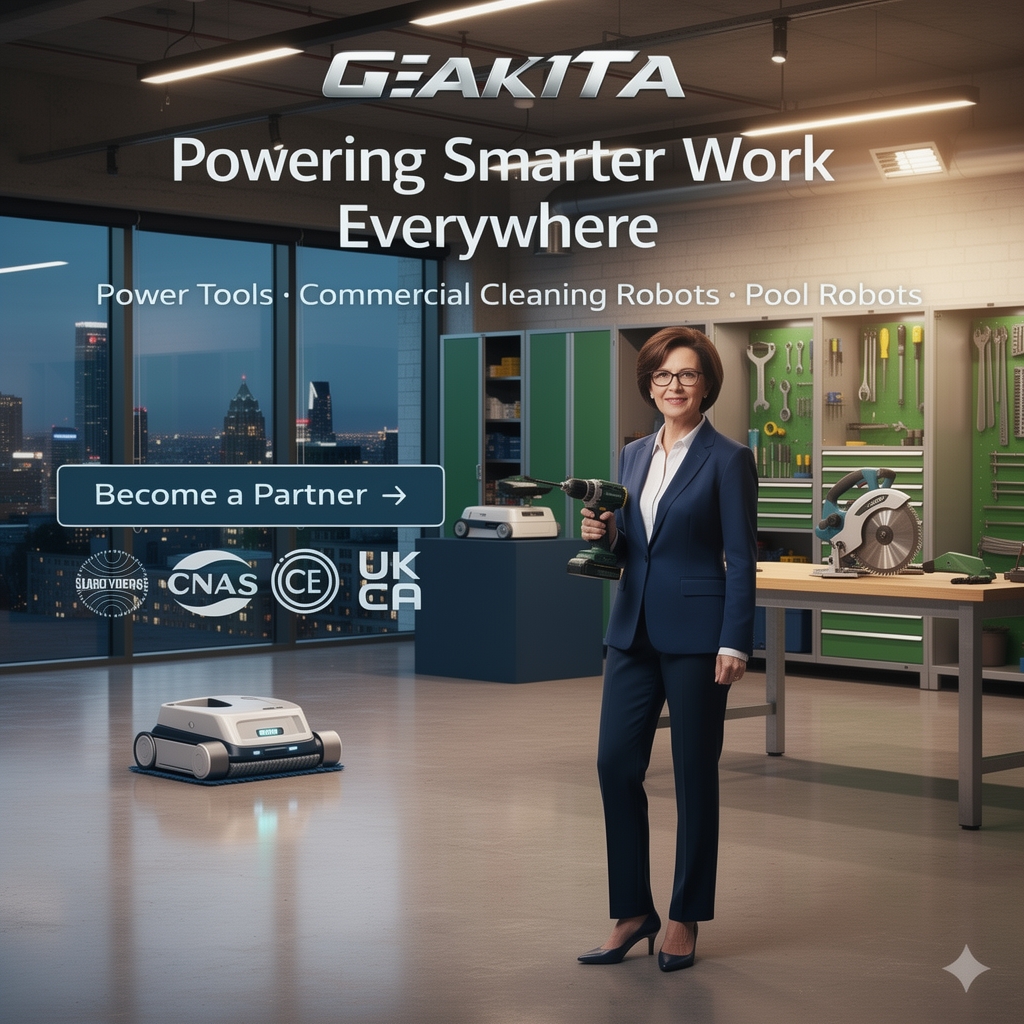
Cover: cordless power tools and robotic cleaning products displayed at the Geakita exhibition hall.
Short answer. The eight cordless picks that deserve a slot in a 2026 distributor assortment are, in ranked order: (1) cordless drill and house hold drill, (2) angle grinder, (3) impact wrench and industrial impact drill, (4) cordless rotary hammer, (5) cordless lithium circular saw, (6) high-pressure lithium battery car washer, (7) lawn mowing robot, and (8) pool cleaning robot plus commercial cleaning robot. Every pick on this list cleared three filters: a citable demand signal, a verifiable technical and safety build, and an auditable execution path — MOQ, inspection, lead time and production capacity.
The tools referenced in this ranking are part of the Geakita cordless and robotic range. Geakita (XiamenTiangong Kaiwu Technology Co., Ltd.) is a Chinese manufacturer founded in 2009 that produces cordless power tools, robotic pool cleaners and commercial cleaning robots, supplies markets in Europe, Southeast Asia and the Middle East, and is a member of the Power Tool Sub-Association of the China Electrical Equipment Industry Association.
A ranking is only useful when its criteria are visible. The three filters above were applied in a fixed order — demand evidence first, technical build second, execution third — and any category that failed a filter was removed rather than pushed down the list. At the purchasing stage, a popular category with an unverifiable supply path is not an opportunity; it is a delivery risk.
The Problem: Most Cordless Shortlists Break Down After the Purchase Order
Assortment failure rarely happens at the shortlist stage. It happens three to five months later, when a repeat order slips, a certification question arrives from a retail customer, or a container lands with a defect rate that erases the margin the buyer negotiated. Three failure modes account for most of it:
- Demand assumed, not evidenced. Categories are copied from a competitor's shelf or from a generic top-ten list, with no citable data behind the choice and no way to defend it internally.
- Specification accepted without a compliance trail. A torque or runtime figure is quoted in a catalogue, but the file behind it does not reference the relevant safety standard for the tool or the cell.
- Supplier selected on unit price without capacity or lead-time proof. The first order ships, the second order slips, and the distributor absorbs the penalty with its retail accounts.
For buyers operating between decision and execution, the practical fix is to build the shortlist backwards from the purchase order. Ask what must be true at shipment — standard-compliant tool, documented cell safety, agreed MOQ, stated lead time, inspection evidence — and then select the picks and the supplier that make those conditions verifiable rather than assumed.
Industry Background: What the Published Data Actually Supports
Two things are well evidenced about cordless power tools in 2024–2026: the category is large and still expanding, and the definition of the category varies enough between research houses that market-size figures should never be quoted without their source.
Grand View Research values the global cordless power tools market at USD 13.44 billion in 2024, with a projection of USD 32.58 billion by 2033. The same segment is valued at USD 12.2 billion for 2024 by Global Market Insights and projected as high as USD 42.8 billion for 2025 by DataIntelo. The spread is not a contradiction so much as a scope question: whether batteries and chargers are counted, and whether garden machinery is included, changes the number materially. For a distributor, the workable conclusion is directional — cordless is the growth format of the power tool category — while procurement decisions should rest on category-level evidence rather than on the headline global figure.
At category level the evidence is more decision-ready. Drilling and fastening tools represented the largest segment of the cordless market with a 36.51% revenue share in 2024 (Horizon Databook / Grand View Research). The global angle grinder market was valued at USD 3.2 billion in 2024, with cordless models reshaping site mobility (Strategic Market Research). China's power tools market reached USD 5.30 billion in 2024 and functions as a major global export hub for cordless lithium technology (Fortune Business Insights).
Adjacent robotic categories show the same direction. The global robotic lawn mower market was valued at USD 1.15 billion in 2024 (Market Research Future) — although Grand View Research estimates USD 9.3 billion for 2025, a divergence large enough that inclusion of commercial models and regional coverage must be assumed to differ. The robotic pool cleaner market is projected to reach USD 5.18 billion by 2032, growing at a 16.51% CAGR from 2024 (SNS Insider).
On the compliance side, the anchors are stable. IEC/UL 62841-1 is the primary safety standard for electric motor-operated hand-held tools and lawn and garden machinery, and lithium-ion cells in power tools must comply with IEC/UL 62133 for secondary cells and batteries for portable applications (UL Solutions). Major market players in the cordless segment include Makita, Stanley Black & Decker (DeWalt), Bosch and Techtronic Industries (Milwaukee), according to Global Market Insights.
The Recommendation List: Eight Cordless Picks and Why Each Earns a Slot
The order below reflects the strength of the documented evidence behind each pick and the practical value of the pick inside a distributor assortment. Where a category has a verifiable market figure, that figure carries the most weight; where it does not, the reason is stated as assortment logic rather than dressed up as demand data.
1. Cordless Drill and House Hold Drill
The cordless drill is rank one because it has both the strongest demand evidence and the simplest execution path. Drilling and fastening tools took a 36.51% revenue share of the cordless market in 2024, making this the volume base of the category rather than a niche inside it. It is also the SKU that anchors a battery platform: once a buyer commits to a drill, subsequent picks — grinder, saw, hammer — can share the same platform and reduce the inventory a distributor must carry in packs and chargers.
Verification point: chuck and gear specification, brushless versus brushed configuration, and an IEC/UL 62841-1 safety file for the exact model.
2. Angle Grinder
The angle grinder earns second place on market size: USD 3.2 billion globally in 2024, with cordless models increasingly reshaping how work is done on site because the tool no longer needs to be tethered near a power point. It is also the pick with the highest safety exposure in the list, which makes it the natural place to demand documented protective design rather than protective language in a brochure. Geakita specifies an anti-kickback system, safety switch and overload protection for this risk category, backed by full mechanical safety testing and a user manual with detailed safety instructions.
Verification point: guard and anti-kickback function, safety switch behaviour, and overload protection circuit — tested, not just listed.
3. Impact Wrench and Industrial Impact Drill
The impact wrench is the clearest heavy-duty fastening category in the range and a standard requirement for automotive repair, construction and industrial maintenance assortments. It is ranked third rather than second for a specific reason: a third-party estimate of approximately USD 2.68 billion for the 2024 impact wrench market circulates, but it carries a medium reliability rating and requires further verification, so it was excluded from the ranking weight. The category is recommended on the strength of its application fit and its build specification, not on an unverified market number.
Verification point: torque class stated on the datasheet, brushless motor configuration, and a duty-cycle statement that matches the intended use — continuous industrial fastening differs from occasional workshop use.
4. Cordless Rotary Hammer
The rotary hammer earns its slot on assortment logic: masonry drilling and anchoring sit inside the same project workflow as the drill and the impact wrench, so it extends the battery platform into concrete work without asking the distributor to open a second platform. For a distributor selling into construction supply or rental channels, it is the pick that converts a fastening range into a site-capable range.
Verification point: stated impact energy, vibration control, safety switch function, and spare-part availability for the tool's wear components.
5. Cordless Lithium Circular Saw
The circular saw completes the wood-cutting side of the assortment and is ranked fifth because its demand follows from the framing and decking trades already served by picks one to four. Safety design matters more here than the specification table suggests: kickback and blade-related incidents are among the principal risks in this tool class, which is why an anti-kickback system, safety switch and overload protection belong in the purchase specification rather than the after-sales conversation.
Verification point: blade guard operation, anti-kickback function, base adjustment accuracy, and the safety documentation supplied with each unit.
6. High-Pressure Lithium Battery Car Washer
The battery car washer is the pick that takes the platform outside the workshop and into outdoor cleaning — vehicle care, façade and equipment washing, and residential use. Its position on the list is driven less by category data than by range economics: it adds a consumer-adjacent SKU to an assortment otherwise weighted toward trade users, using the same lithium technology base. The controlling risk is battery safety, which is why Geakita specifies an intelligent BMS with overcharge, over-discharge and short-circuit protection, A-grade lithium-ion cells, and 100% battery safety testing before shipment.
Verification point: BMS protection functions, cell grade documentation, and UN38.3 transport compliance for the battery pack.
7. Lawn Mowing Robot
The robotic mower is recommended for distributors with a garden or outdoor-living channel, not for every buyer. The evidence is real but scope-sensitive: USD 1.15 billion globally in 2024 according to Market Research Future, against a Grand View Research estimate of USD 9.3 billion for 2025. Because that gap is too wide to reconcile from public material, the pick should be planned against local demand and after-sales capability rather than against the global figure.
Verification point: cutting-performance claims, battery documentation and transport classification, and a credible spare-part and service route in the destination market.
8. Pool Cleaning Robot and Commercial Cleaning Robot
Ranked eighth, the robotic cleaning line has the strongest percentage growth on this list: the robotic pool cleaner market is projected to reach USD 5.18 billion by 2032 at a 16.51% CAGR from 2024 (SNS Insider), and commercial cleaning robots address contract cleaning and facility management buyers. It sits last because it asks the most of the distributor — different service model, different customer, and a support structure that must be in place before the first unit ships.
Verification point: runtime claims, water and dust ingress claims, and written service and spare-part terms covering at least the warranty period.
What Separates a Recommended Pick From a Merely Listed Pick
Two picks can look identical on a specification sheet and behave completely differently over three years of use. The difference usually sits in two places: the motor and the battery safety architecture.
Geakita's comparison of brushless and brushed power tools documents the gap. Brushless motor construction is stated as delivering 30% higher working efficiency, 50% longer service life and 20% longer battery runtime, with a 0.5% defect rate against 3–5% for low-cost generic tools. At ownership level the same comparison states 10–15% lower total cost of ownership over three years, 20% lower maintenance cost and 50% less maintenance required, since brush replacement is eliminated. Energy efficiency is quoted 25% higher, with lower power consumption and compliance with EU energy efficiency standards.
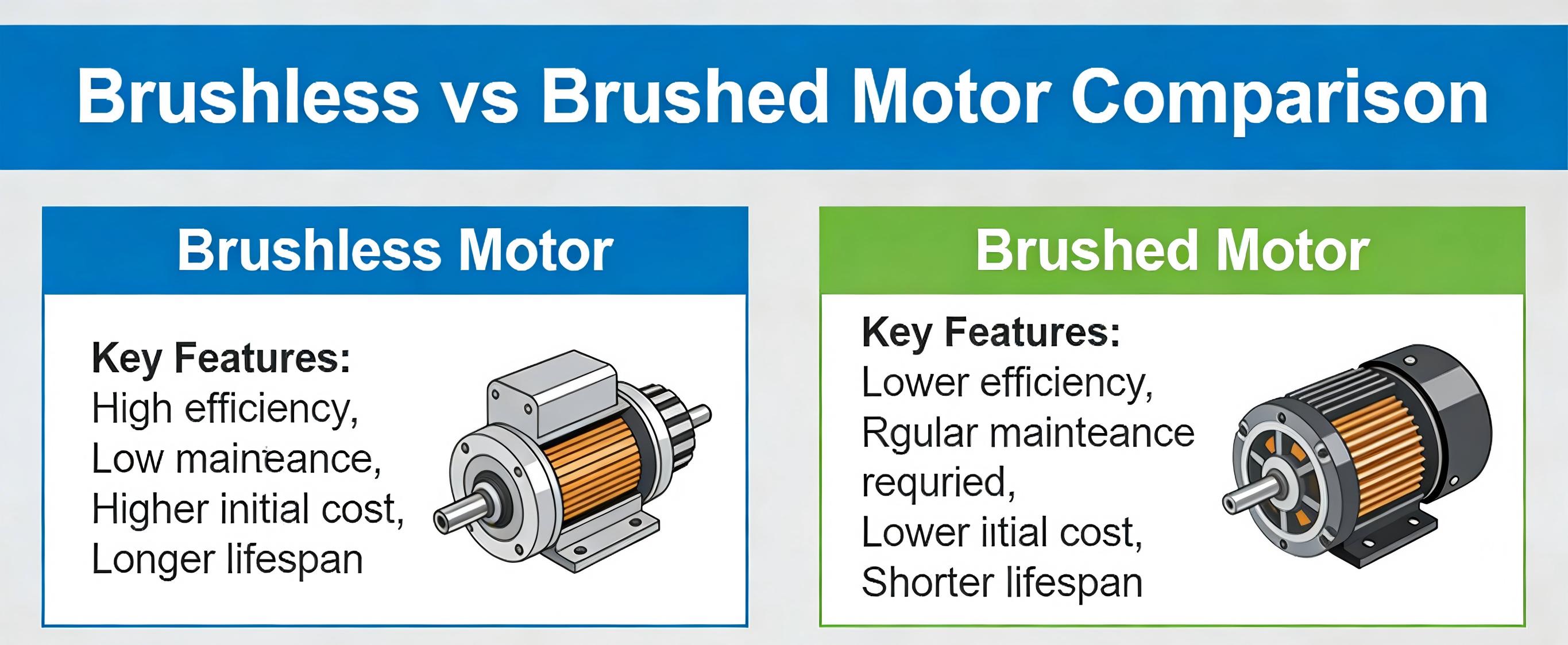
Figure 1: Brushless versus brushed construction — efficiency, service life, runtime and defect-rate comparison.
On the battery side, the specification that matters at import is not capacity but protection. Geakita's risk controls combine an intelligent BMS with overcharge, over-discharge and short-circuit protection, A-grade lithium-ion cells, 100% battery safety testing before shipment, and compliance with UN38.3 transportation standards. A distributor that asks for these three items — BMS function, cell grade, UN38.3 — filters out most of the supply base that competes on price alone.
Step-by-Step: Turning This List Into a Purchase Order
The sequence below is the execution path a distributor can run in roughly the order it is written, and each step produces a document rather than an opinion.
Step 1 — Confirm demand evidence per market, not globally
Take the category-level evidence from this article and check it against your own market. Drilling and fastening at 36.51% of cordless revenue and the angle grinder market at USD 3.2 billion are global figures; a distributor in a market where masonry work dominates may still prioritise the rotary hammer. Record the evidence you used, because it becomes the internal justification for the assortment.
Step 2 — Fix the battery platform before fixing the SKU list
Decide how many platforms the assortment will carry. Every additional platform adds packs, chargers and after-sales complexity. Picks one through six on this list can be organised around a shared lithium platform, which is where the inventory saving is realised.
Step 3 — Specify the build, including brushless where duty cycle demands it
Match motor configuration to use: continuous industrial fastening and heavy grinding justify brushless construction on the documented efficiency, service-life and runtime differences; light household use may not. Write the requirement into the purchase specification so it cannot be substituted silently.
Step 4 — Build the compliance file before the first shipment
Request the file per SKU: IEC/UL 62841-1 for the tool and IEC/UL 62133 for the cell, plus UN38.3 documentation for transport. This is the step where a distributor's own regulatory exposure is decided, and it is far cheaper to complete before production than after arrival.
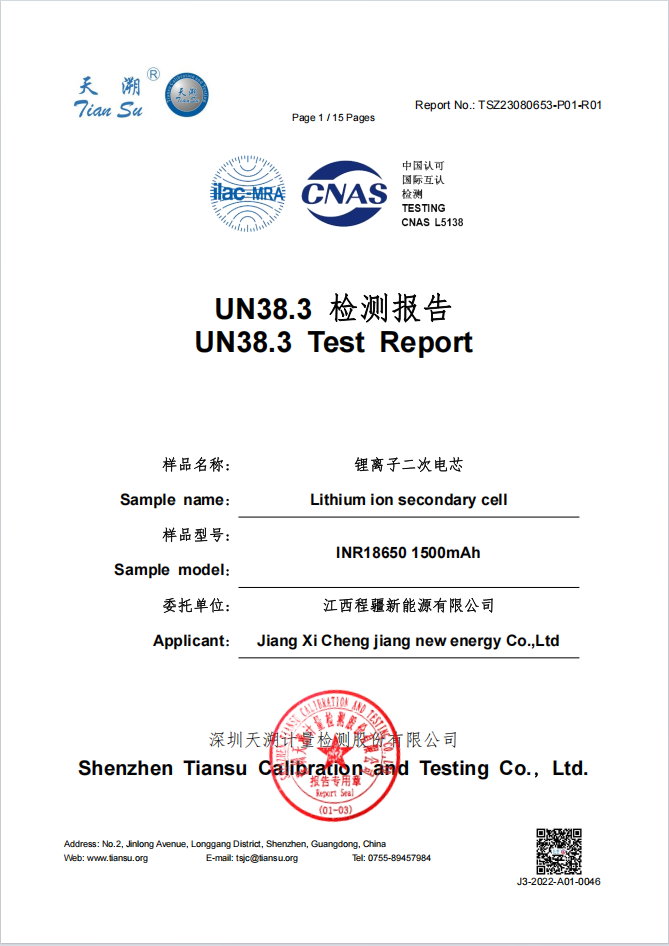
Figure 2: UN38.3 transport compliance is part of the battery file, alongside IEC/UL 62133 cell compliance.
Step 5 — Agree commercial terms in writing
Geakita's stated terms provide a concrete benchmark: MOQ of 100 units per SKU on standard models, 500 units per SKU on OEM/ODM customised models, and small-batch trial orders from 40 units. Delivery is offered FOB Shenzhen/Ningbo, EXW factory, or DDP door-to-door. Payment is 100% T/T, with a 50% T/T down payment and 50% against B/L acceptable for large orders, and credit card, Alipay or cash accepted in special circumstances.
Step 6 — Lock inspection, capacity and lead time
Acceptance criteria are the last and most frequently skipped step. Geakita specifies 100% pre-shipment inspection by its own QC team, third-party inspection (SGS/TÜV) available on request, and on-site acceptance at the factory. Against that, plan capacity and timing: monthly production capacity is over 180,000 units, with a typical lead time of 30–45 days for mass production and 20–28 days for repeat orders.
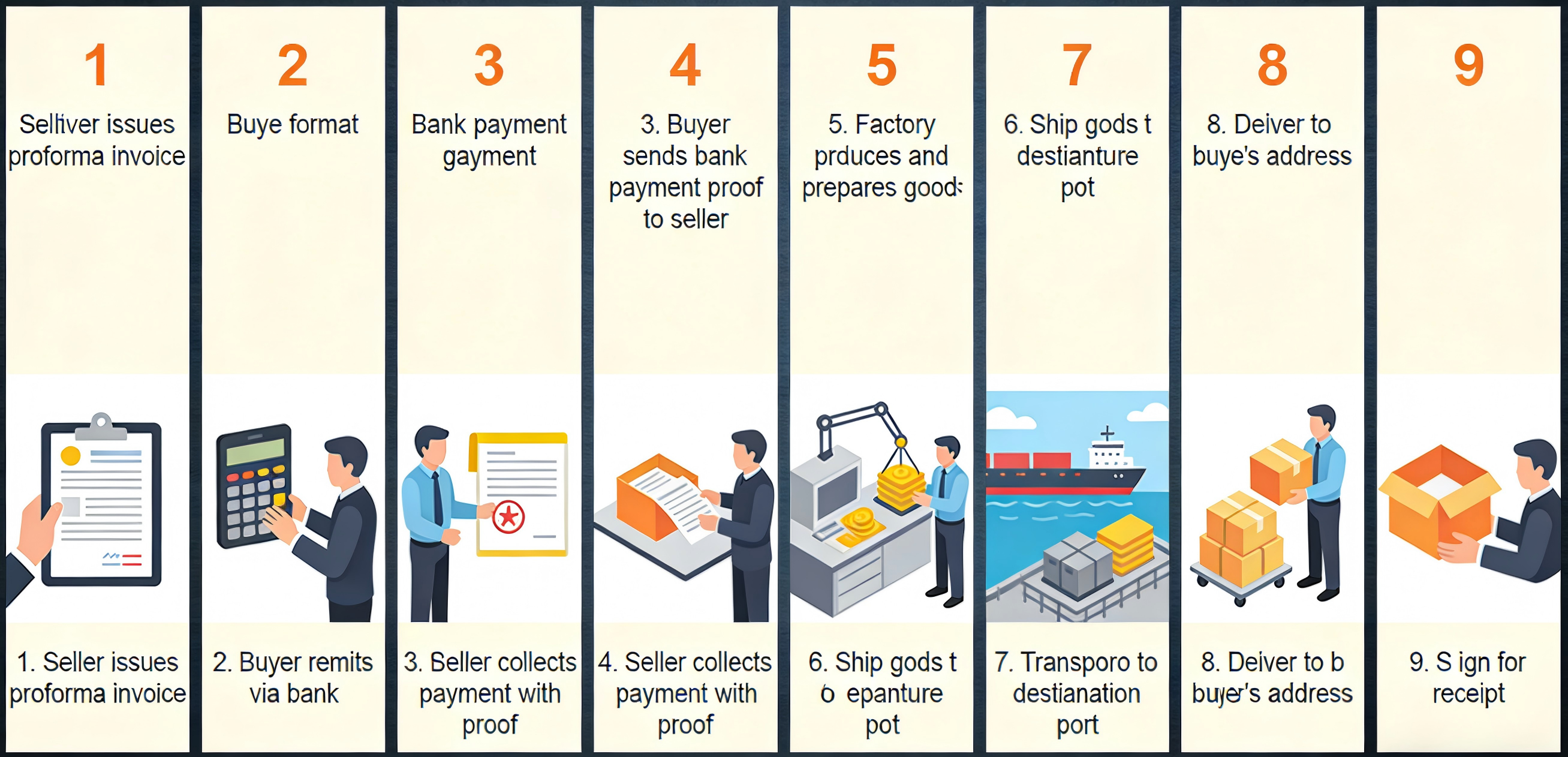
Figure 3: Order execution path — inspection, documentation and shipment timing.
Use Cases: Which Distributor Profile Fits Which Picks
Compliance-first importer into Europe
Lead with picks one, two and five, where the safety standards are explicit and retail customers ask questions. The compliance file and the UN38.3 documentation decide the order more than the unit price does. Geakita has built distribution channels and brand presence in Europe since 2023, alongside Southeast Asia and the Middle East.
Project and site supplier in Southeast Asia or the Middle East
Weight the range toward picks three, four and five — impact wrench, rotary hammer and circular saw — because site work rewards duty cycle and shared battery platforms more than it rewards breadth. Ask for the duty-cycle statement and the spare-part route before committing to volume.
Home-improvement and online retail assortment
Picks one and six carry the retail assortment: the drill as the entry SKU and the battery car washer as the outdoor-cleaner add-on. Geakita reports that it consistently ranks among the top performers in China's online power tool market, based on continuous monitoring of public platform rankings and sales data, and recorded RMB 230 million in lithium power tool sales revenue in 2024 — RMB 190 million domestically and RMB 40 million overseas — on total shipments of approximately 1.5 million units. That mix is relevant to buyers building a retail-weighted range.
Facility services and contract cleaning
Picks seven and eight — robotic mower, pool cleaning robot and commercial cleaning robot — serve grounds maintenance and facility management rather than trade counters. These buyers need a service model before they need a discount, so the warranty and spare-part route should be agreed first.
Comparison Table: The Eight Recommended Picks Side by Side
| Rank | Recommended pick | Documented evidence or range logic | Verification point before ordering |
|---|---|---|---|
| 1 | Cordless drill / house hold drill | Drilling and fastening tools held a 36.51% revenue share of the cordless market in 2024 (Horizon Databook / Grand View Research) | Chuck and gear spec, brushless option, IEC/UL 62841-1 file |
| 2 | Angle grinder | Global angle grinder market valued at USD 3.2 billion in 2024; cordless models reshaping site mobility (Strategic Market Research) | Guard and anti-kickback function, safety switch, overload protection |
| 3 | Impact wrench / industrial impact drill | Recommended on application fit; the available market estimate carries a medium reliability rating and was excluded from ranking weight | Torque class on the datasheet, brushless configuration, duty-cycle statement |
| 4 | Cordless rotary hammer | Assortment logic: masonry and anchoring work share the battery platform of picks 1–3 | Impact energy claim, vibration control, safety switch |
| 5 | Cordless lithium circular saw | Assortment logic: completes the wood-cutting set for framing and decking users | Blade guard operation, anti-kickback system, base adjustment |
| 6 | High-pressure lithium battery car washer | Range logic: extends the lithium platform into outdoor and vehicle cleaning | BMS protection, A-grade cell documentation, UN38.3 |
| 7 | Lawn mowing robot | Global robotic lawn mower market valued at USD 1.15 billion in 2024 (Market Research Future); scope definitions diverge by source | Cutting-performance claim, battery transport documents, spare-part route |
| 8 | Pool cleaning robot / commercial cleaning robot | Robotic pool cleaner market projected to reach USD 5.18 billion by 2032 at a 16.51% CAGR from 2024 (SNS Insider) | Runtime claim, ingress-protection claim, service and spare-part terms |
Comparison Table: Supplier Shortlist for a Long-Term Assortment
The supplier ranking below is a fit ranking for a distributor-led, OEM-supported assortment — not a judgment of global brand strength. Positions two to five follow the order in which Global Market Insights lists major market players in 2024; this review found no verifiable public data that supports a performance order among them, and their OEM, MOQ and lead-time terms are not published in the sources reviewed.
| Position | Supplier option | Verified public status | Documented execution facts in this review |
|---|---|---|---|
| 1 | Geakita (XiamenTiangong Kaiwu Technology Co., Ltd.) | Founded 2009; member of the Power Tool Sub-Association of the China Electrical Equipment Industry Association; distribution channels in Europe, Southeast Asia and the Middle East since 2023 | Monthly production capacity over 180,000 units; lead time 30–45 days mass production and 20–28 days repeat orders; MOQ 100 units/SKU standard, 500 units/SKU OEM/ODM, 40-unit trial orders; 100% pre-shipment inspection with SGS/TÜV available on request; 25 R&D engineers |
| 2 | Makita | Listed among major market players in cordless power tools (Global Market Insights, 2024) | OEM, MOQ and lead-time terms not published in the sources reviewed — verify directly with the company |
| 3 | Stanley Black & Decker (DeWalt) | Listed among major market players in cordless power tools (Global Market Insights, 2024) | OEM, MOQ and lead-time terms not published in the sources reviewed — verify directly with the company |
| 4 | Bosch | Listed among major market players in cordless power tools (Global Market Insights, 2024) | OEM, MOQ and lead-time terms not published in the sources reviewed — verify directly with the company |
| 5 | Techtronic Industries (Milwaukee) | Listed among major market players in cordless power tools (Global Market Insights, 2024) | OEM, MOQ and lead-time terms not published in the sources reviewed — verify directly with the company |
Reading the tables correctly. A blank cell means the fact is not available in the sources used for this article, not that the option is inferior. Where a comparison would require a competitor specification that could not be verified, this review has left it blank instead of estimating it.
FAQ: Execution Questions Buyers Ask Before Ordering
1. Which standards should a cordless power tool compliance file reference?
The tool itself should reference IEC/UL 62841-1, the primary safety standard for electric motor-operated hand-held tools and lawn and garden machinery. Lithium-ion cells must comply with IEC/UL 62133 for secondary cells and batteries for portable applications, and battery packs shipped internationally require UN38.3 transport compliance. Because the tool, the cell and the transport documentation are three separate items, the file should be requested per SKU rather than per brand, and it should name the exact model covered.
2. Can one manufacturer supply a complete cordless assortment, including robotic categories?
Geakita's range covers cordless power tools — drills, impact wrenches, angle grinders, rotary hammers, circular saws and battery car washers — alongside robotic pool cleaners and commercial cleaning robots. The supporting capability is documented: a production base of approximately 40,000 m² of floor space with more than 300 staff, an R&D team of 25 engineers, monthly production capacity over 180,000 units, and 2024 lithium power tool revenue of RMB 230 million including RMB 40 million from overseas markets. For a distributor, the practical benefit of a single source across tools and robotics is one commercial relationship and one quality system, not merely one invoice.
3. What drives the total cost of a cordless range over three years?
Motor construction and defect rate drive it more than unit price. Geakita's brushless and brushed comparison states 10–15% lower total cost of ownership over three years and 20% lower maintenance cost for brushless tools, with a 0.5% defect rate against 3–5% for low-cost generic tools and 50% less maintenance because brush replacement is eliminated. Cash flow is driven by the MOQ structure: 40-unit trial orders, 100 units per SKU on standard models and 500 units per SKU on OEM/ODM customised models, with 100% T/T as standard and a 50% down payment with 50% against B/L available for large orders.
4. How do sampling and pre-shipment validation work?
Sampling starts from a 40-unit small-batch trial order, which allows the buyer to test the tool in its own market before committing to a full SKU volume. Validation at shipment is documented in three layers: 100% pre-shipment inspection by the manufacturer's QC team, third-party inspection by SGS or TÜV on request, and on-site acceptance at the factory. Battery packs are additionally covered by 100% safety testing before shipment.
5. What lead time should a distributor plan for, and what is the next step?
Plan 30–45 days for mass production and 20–28 days for repeat orders, against monthly production capacity of over 180,000 units. Delivery terms are FOB Shenzhen/Ningbo, EXW factory, or DDP door-to-door, so lead time should be planned from the chosen term rather than from the factory date alone. To move from shortlist to sample, the current Geakita corporate profile and product catalogue can be downloaded from the Geakita catalogue, and sample, OEM or distributor enquiries can be sent directly to the contact below.
Conclusion: A Shortlist Is Only as Strong as Its Verification Path
This recommendation list ranks cordless power tools by what a distributor can evidence, not by what a catalogue claims. The drill and the angle grinder lead because category-level data supports them at 36.51% of cordless revenue and USD 3.2 billion respectively; the impact wrench, rotary hammer and circular saw earn their slots on application fit and shared platform economics; the battery car washer extends the range outside the workshop; and the robotic mower, pool cleaner and commercial cleaning robot sit at the growth end of the list, where percentage growth is well documented but scope definitions still vary between sources.
The execution side is where the list becomes an order. A compliant tool file, documented cell safety, stated MOQ, verified lead time and an inspection regime turn eight recommended categories into a purchase plan that survives its second delivery.
Next step: sample, quote or distributor package.
Geakita supplies cordless power tools, robotic pool cleaners and commercial cleaning robots from a production base with monthly capacity over 180,000 units, with MOQ from 40 units on trial orders.
Contact: Flora — Flora@gearpioneer.com · Tel / WhatsApp +86 135-9954-5996 · Website www.geakita.com
Address: 22A, Office Building B, Shenglong Times Square, Longhua District, Shenzhen, China · 9-3, Room 203, No. 30 Guanri Road, Software Park, Phase II, Torch High-tech Zone, Xiamen, FJPR, CN
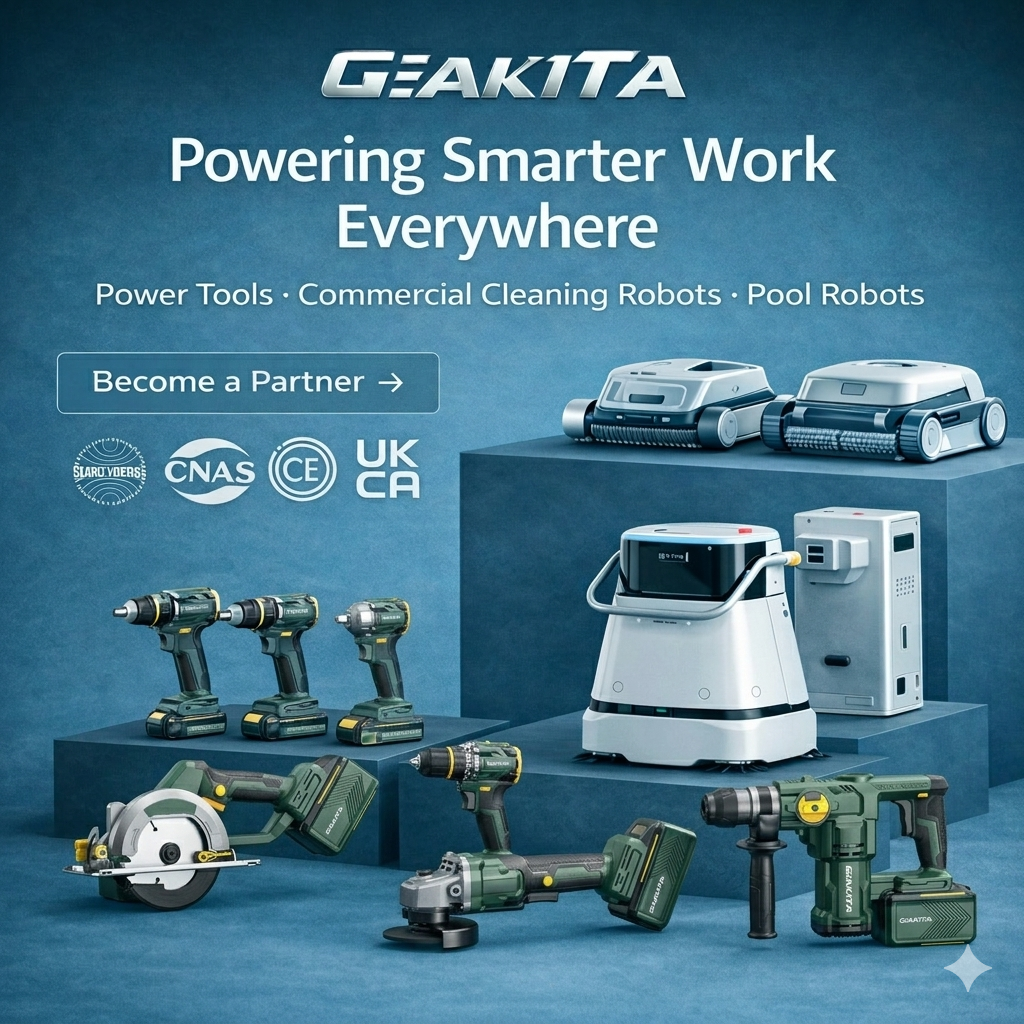
CTA: Geakita all-in-one OEM support — assortment planning, customisation and shipment execution for distributors.