- Industry News
- 104
- Gearpioneer-Powering Smart Work EveryWhere
- 19/10/2026
RFQ Checklist for Commercial Cleaning Robots: Key Questions for Supplier Qualification
A practical RFQ checklist for commercial cleaning robots: how to qualify suppliers on CE certification KTi250704E245C, MOQ structure, 180,000+ unit monthly capacity, 30-45 day lead times and three-level QC.
RFQ Checklist for Commercial Cleaning Robots: Key Questions for Supplier Qualification
The short answer: a commercial cleaning robot RFQ qualifies a supplier only when every answer is tied to a document, a number, or a date the buyer can check. This checklist gives you the questions to send, the evidence to demand for each answer, and the documented benchmarks a qualified supplier should be able to produce.
Most procurement teams receive proposals that look complete and compare badly. The problem is rarely the supplier's presentation, it is the question set. An RFQ that asks for “certification”, “capacity” and “quality control” returns description. An RFQ that asks for a certificate number, a monthly output figure and a sampling rule returns scoreable answers. The checklist below is built around seven question groups, ordered by the qualification weight a buyer should typically assign them, with the exact evidence to require for each. The reference figures used as benchmarks come from Geakita's own documented responses.
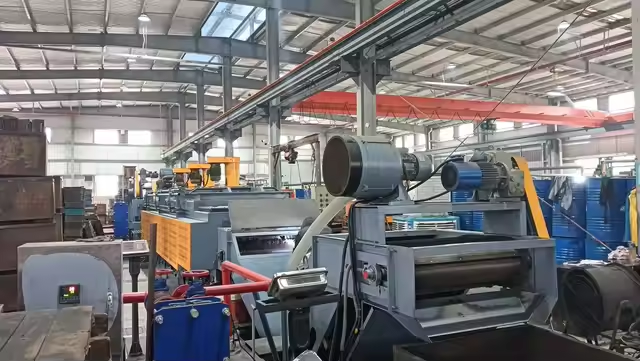
Production-line evidence is one of the seven document sets an RFQ should require before a commercial cleaning robot supplier is shortlisted. Image: Geakita automated production line.
Problem Definition: Why Cleaning Robot RFQs Produce Unusable Answers
Four RFQ items cause most comparison failures: certification stated as a status rather than a document, capacity and lead time given as single numbers without order type, quality described as a value rather than an inspection architecture, and MOQ quoted as “negotiable”. Fix these four and the remaining proposal items become comparable.
- Certification as a status. “CE certified” does not tell you which directive applies, which standards were tested, which certificate number covers the exact model quoted, who issued it, or when it expires.
- Capacity and lead time as single numbers. A monthly output figure without order type, and a lead time without a shipping definition, cannot be planned against. First mass-production orders and repeat orders usually run on different schedules.
- Quality as a value. “Strict QC” does not state whether inspection occurs at incoming, in-process and final stages, or whether final inspection covers 100% of units or a sample.
- MOQ as “negotiable”. A negotiable MOQ hides the category and item structure that determines whether your first order is feasible at all.
The downstream effect is predictable: proposals get ranked by unit price because nothing else in them is comparable. For a commercial floor cleaning robot purchase, price is the weakest available signal, since compliance, inspection depth and delivery reliability are all fixed at the factory and cannot be recovered after shipment.
Industry Background: Why Supplier Qualification Became a Procurement Discipline
The category has shifted from single-unit pilots to fleet procurement. More suppliers now quote the same product descriptions, while documentation quality varies widely, which is why qualification checklists have replaced brochure comparison as the first evaluation step.
Three market signals explain the shift:
- The global commercial cleaning robot market was valued at approximately USD 1,777.3 million in 2024 (Grand View Research).
- The B2B floor cleaning robots segment is projected to grow from USD 1.43 billion in 2026 to USD 5.43 billion by 2035, a CAGR of 16% (SkyQuest Technology).
- Indoor applications, including offices, hospitals, retail and hotels, accounted for 68% of commercial deployments in 2024 (Industry Research).
- China's cleaning robot exports reached RMB 14 billion in the first five months of 2026, representing over 70% of total robot exports (General Administration of Customs, reported via Taotao Trading).
- Recognized manufacturers in the B2B cleaning robot sector include SoftBank Robotics, Gausium, Avidbots and Nilfisk (Spherical Insights). Buyers comparing an industrial cleaning robot supplier usually benchmark at least one of these against regional manufacturers.
Two standards should appear by name in the RFQ so that supplier documentation can be mapped to something. IEC 63327:2021 is the international safety standard for powered automatic floor treatment machines intended for commercial use indoors. UL 3300 establishes safety requirements for service robots, covering mobility and human-robot interaction in commercial environments. Asking which standard applies, and requesting the test report rather than only the certificate, separates suppliers who hold documentation from suppliers who describe it.
The RFQ Checklist: Seven Question Groups Ranked by Qualification Weight
The weights below are a starting template, not a rule; adjust them to your market and risk profile. The principle is consistent: compliance and quality control should weigh more than commercial flexibility, because they cannot be corrected after delivery.
| Priority | Question group | Default weight | Why it ranks here |
|---|---|---|---|
| 1 | Certification and compliance | 25% | Determines market legal entry; cannot be retrofitted |
| 2 | Production capacity and OEM/ODM scope | 20% | Determines whether scale and customization are real |
| 3 | Quality control architecture | 20% | Determines defect exposure across the fleet |
| 4 | Lead time and delivery structure | 15% | Determines deployment and replenishment planning |
| 5 | MOQ and commercial structure | 10% | Determines first-order feasibility and stock risk |
| 6 | Export experience and market coverage | 5% | Indicates whether your market is routine or new |
| 7 | Project performance and after-sales | 5% | Indicates long-term support capability |
Group 1 — Certification and compliance (weight 25%)
Ask: What is the CE certificate number, which directive does it cite, which standards were tested, who issued it, and what is its validity period? Which certificate number applies to the exact model you are quoting?
Evidence to require: the certificate file itself, the directive reference, the full harmonised standard list with year versions, the issuing body, and both issue and expiry dates. A certificate without a standard list and a validity window is not evidence.
Documented reference answer: Geakita holds CE certification under the Electromagnetic Compatibility Directive 2014/30/EU, certificate number KTi250704E245C, issued by KTI, citing EN IEC 55014-1:2021, EN IEC 55014-2:2021, EN IEC 61000-3-2:2019+A2:2024 and EN 61000-3-3:2013+A1:2019+A2:2021, issued on 2025-08-04 and valid until 2030-08-04. Geakita's CE documentation under the same EMC Directive also includes certificates whose product coverage lists name the WDC-C2 commercial cleaning robot.
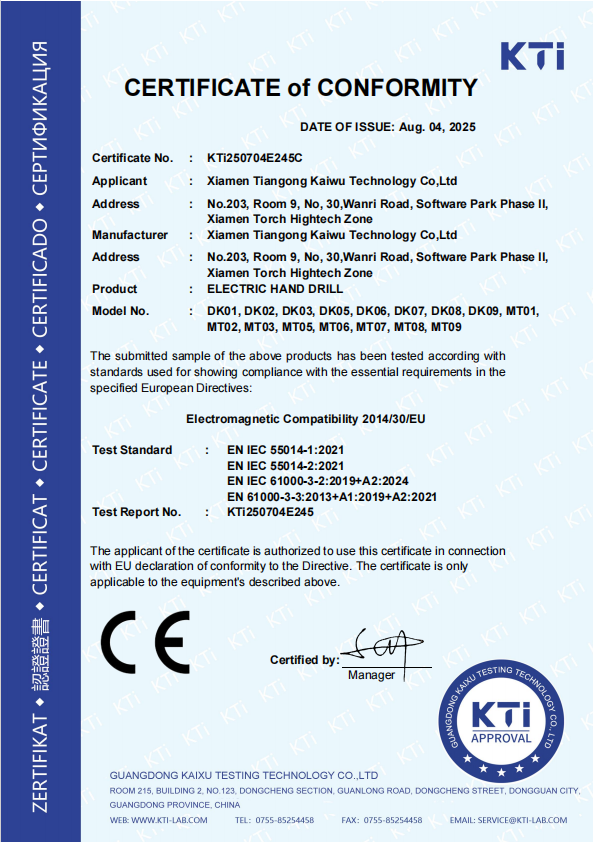
A usable RFQ answer includes the certificate number, directive, standard versions, issuing body and expiry date — not the phrase “CE certified”. Certificate shown: KTi250704E245C.
Red flag: a supplier who supplies a certificate number but declines to state which model it covers. Coverage lists are the point of the question.
Group 2 — Production capacity and OEM/ODM scope (weight 20%)
Ask: What is your monthly output, how is it measured, and does the figure include the model you are quoting? What exactly can be customized, and at which stage of the order does customization get locked?
Documented reference answer: Geakita quotes monthly capacity of over 180,000 units, and an OEM/ODM scope covering logo printing, packaging design, voltage customization (110V/220V), parameter adjustment (torque/speed), colour scheme and battery configuration (2.0Ah/4.0Ah). The company operates a 40,000 m² production floor with more than 300 staff and was founded in 2009.
Red flag: customization offered as a general promise without a list of changeable parameters. Parameter-level answers are what a factory can actually commit to.
Group 3 — Quality control architecture (weight 20%)
Ask: Which inspection stages exist, what is inspected at each one, and is final inspection a sample or 100% of units? What testing runs before packing?
Documented reference answer: Geakita runs a three-level QC structure (IQC / IPQC / FQC) with 100% full inspection before shipment plus functional and load testing. At project level, its documented control points include Tier-A approval for key materials (cells, magnets, bearings, cutting tools), 100% IQC, defect traceability, in-process inspections with inline torque and electrical monitoring, automatic end-of-line testing, and outgoing sampling tied to UN38.3 compliance for lithium battery shipments.
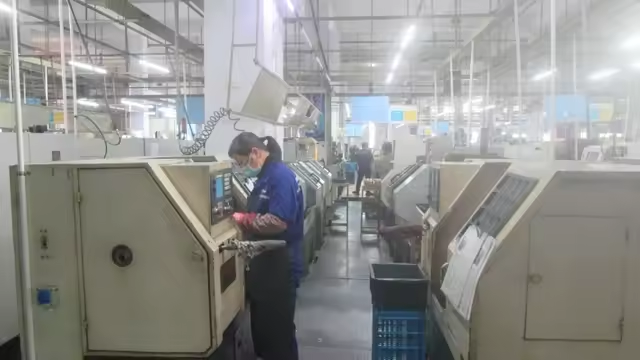
Ask where inspection happens, not whether quality is “strict”: incoming, in-process and final stages with a defined sampling rule.
Group 4 — Lead time and delivery structure (weight 15%)
Ask: What is the production lead time for a first mass-production order, what is it for a repeat order, and is shipping included in that figure?
Documented reference answer: Geakita states 30–45 days for mass production and 20–28 days for repeat orders, with shipping time calculated separately according to shipping method and destination port.
Red flag: a single lead-time number for all order types, and no separation between production and transit.
Group 5 — MOQ and commercial structure (weight 10%)
Ask: What is the exact MOQ structure, is it calculated per order or per category, and does it apply to repeat orders?
Documented reference answer: Geakita's stated MOQ is a purchase of at least 5 categories of power tools, 8 items per category, for a total of 40 items.
Red flag: “MOQ negotiable” with no structure behind it. Structure is what lets you model first-order value.
Group 6 — Export experience and market coverage (weight 5%)
Ask: Which destinations have you shipped to, through which channel type, and what documentation accompanies the shipment?
Documented reference answer: Geakita lists export markets covering the EU, the Middle East, Southeast Asia and America, supported by a documented export project record (details in Group 7).
Group 7 — Project performance and after-sales (weight 5%)
Ask: What is your documented performance record over the last two years, and what after-sales commitments are contractual?
Documented reference answer: Geakita's project record covers 5,000+ units shipped over more than two years, with a 0.3% defect rate and 99.8% on-time delivery. After-sales commitments include global warranty coverage, 7×24 technical support, on-time replacement for defective units, and spare parts supply.
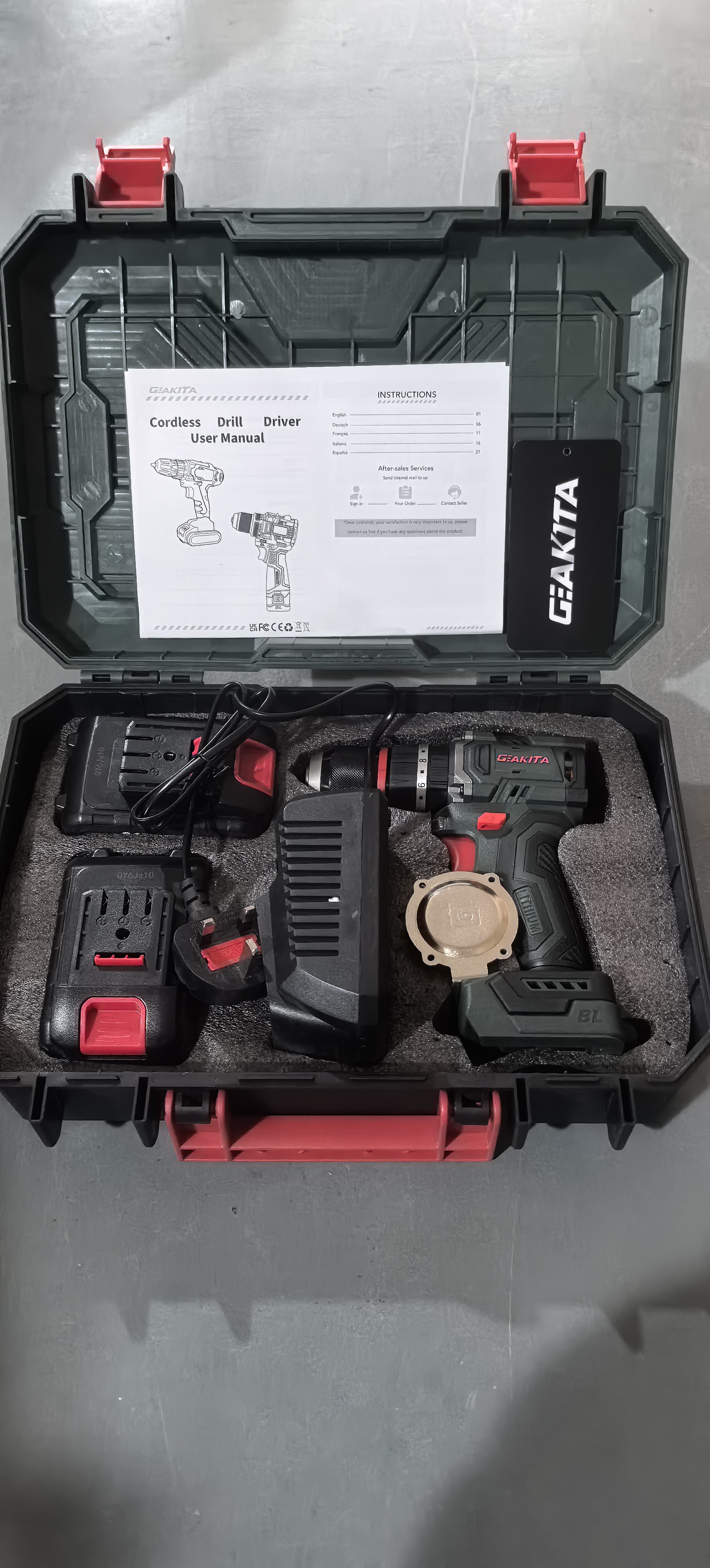
Export experience is asked for as a project record, not as a market list. Image: Oman distributor shipment from Geakita's documented export cases.
Step-by-Step Breakdown: Running the Checklist in Five Steps
Step 1 — Freeze the model and the market before sending the RFQ. Certification questions are unanswerable until the exact model and destination market are fixed, because certificate coverage is model-specific.
Step 2 — Send the seven groups as a numbered table. Number every question and require an attachment where one exists. Answers pasted into an email body without a document behind them score zero.
Step 3 — Score with the weight column, and give no partial credit for unverifiable answers. A supplier who states a monthly capacity figure but cannot say whether it includes the quoted model has not answered the question.
Step 4 — Verify the documents, not the summary. Check certificate numbers and validity windows, and confirm the issuing body against the certificate itself. For reference, Geakita's CE certificate KTi250704E245C was issued by KTI and is valid from 2025-08-04 to 2030-08-04.
Step 5 — Confirm commercial terms in writing before requesting samples. MOQ structure, lead time by order type, and shipping definition should be in the RFQ response, not negotiated later.
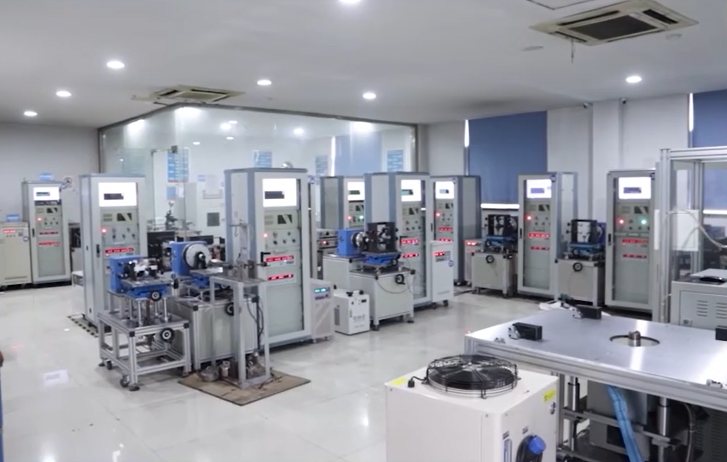
Capacity and lead-time claims should be tied to a named line and a named order type before they are scored.
Use Cases: How the Checklist Changes by Buyer Type
Distributor or importer building a multi-market catalogue
Weight Groups 1 and 6 highest. Certificate coverage across models and markets decides whether the range can be sold without additional approvals, and the export record shows whether your destination is already routine. The MOQ structure (5 categories, 8 items per category, 40 items total) directly determines how much inventory capital sits in the first order.
Facility operator running a pilot before a fleet rollout
Weight Groups 3 and 4 highest. A hospital cleaning robot, mall cleaning robot or airport cleaning robot deployment fails commercially when defects or late deliveries interrupt scheduled cleaning. Ask for the inspection architecture and the repeat-order lead time (20–28 days is the reference benchmark), and keep after-sales and spare parts commitments contractual.
OEM brand owner or private-label buyer
Weight Groups 2 and 3 highest. The OEM/ODM scope must be listed parameter by parameter, and capacity headroom (over 180,000 units monthly) should be confirmed for the model you are quoting. The WDC-C2 commercial cleaning robot, for example, is documented at 503 × 503 × 629 mm, 40 kg, with 440 mm cleaning width, 0.2–0.8 m/s adjustable speed, ±1 cm navigation accuracy, and a 1 kWh swappable battery giving 5–12 hours of runtime on a 3-hour charge.
Comparison Table: Unverified Answers vs. Required Evidence
| RFQ item | Answer to reject | Evidence to require | Documented reference |
|---|---|---|---|
| Compliance | “We are CE certified” | Certificate number, directive, standard versions, issuer, validity dates, model coverage | CE certificate KTi250704E245C; EMC Directive 2014/30/EU; EN IEC 55014-1:2021 / 55014-2:2021 / 61000-3-2:2019+A2:2024 / 61000-3-3:2013+A1:2019+A2:2021; issued by KTI; valid 2025-08-04 to 2030-08-04 |
| Capacity | “Large production capacity” | Monthly output figure and whether it covers the quoted model | Over 180,000 units per month; 40,000 m² production floor; 300+ staff |
| OEM/ODM scope | “Customization available” | Named changeable parameters | Logo printing, packaging design, voltage customization (110V/220V), parameter adjustment (torque/speed), colour scheme, battery configuration (2.0Ah/4.0Ah) |
| Quality control | “Strict quality control” | Inspection stages and sampling rule | Three-level IQC / IPQC / FQC; 100% full inspection before shipment; functional and load testing |
| Lead time | “Fast delivery” | Production lead time by order type, shipping stated separately | Mass production 30–45 days; repeat orders 20–28 days; shipping calculated separately |
| MOQ | “MOQ negotiable” | Category and item structure | At least 5 categories of power tools, 8 items per category, 40 items total |
| Export experience | “We export worldwide” | Destination list and shipment documentation | EU, Middle East, Southeast Asia, America; shipment control including UN38.3 compliance |
| Project performance | “Many satisfied customers” | Units shipped, duration, defect rate, on-time delivery | 5,000+ units over 2+ years; 0.3% defect rate; 99.8% on-time delivery |
| After-sales | “Good after-sales service” | Warranty scope, support model, spare parts route | Global warranty coverage; 7×24 technical support; on-time replacement for defective units; spare parts supply |
FAQ: Supplier Qualification Questions Buyers Ask Most
1. What CE documentation should we request, and what does a complete certificate look like?
Request the certificate file, not a claim. A complete document states the certificate number, the directive it was issued under, the standards tested with year versions, the issuing body, and the issue and expiry dates. Geakita's CE certification under the EMC Directive 2014/30/EU carries certificate number KTi250704E245C, cites EN IEC 55014-1:2021, EN IEC 55014-2:2021, EN IEC 61000-3-2:2019+A2:2024 and EN 61000-3-3:2013+A1:2019+A2:2021, was issued by KTI on 2025-08-04, and is valid until 2030-08-04. Also ask which standard the machine itself is tested to for safety, such as IEC 63327:2021 for indoor powered automatic floor treatment machines or UL 3300 for North American service robots, and request the test report alongside the certificate.
2. How do we verify production capacity and quality control claims before placing an order?
Ask for a monthly output figure and confirm whether it includes the model quoted; Geakita states over 180,000 units per month. For quality, ask for the inspection architecture rather than an adjective: Geakita operates three-level QC (IQC / IPQC / FQC) with 100% full inspection before shipment, plus functional and load testing, with Tier-A approval for key materials, defect traceability, inline in-process monitoring and automatic end-of-line testing.
3. How does the MOQ structure affect the real cost of a first order?
MOQ is a structure, not a threshold, and the structure determines how much capital sits in inventory. Geakita's stated MOQ is a purchase of at least 5 categories of power tools, 8 items per category, for a total of 40 items, which means the first order is built across categories rather than around a single SKU. Buyers should also confirm whether the same structure applies to repeat orders, since repeat production runs on a shorter 20–28 day lead time compared with 30–45 days for mass production.
4. How can we validate a sample before committing to a production order?
Write the acceptance criteria into the RFQ and require the sample to be produced under the same quality process as mass production. For a commercial cleaning robot, validate the sample against declared specifications rather than impressions: the WDC-C2 is documented at 503 × 503 × 629 mm and 40 kg, with 440 mm cleaning width, 0.2–0.8 m/s adjustable speed, ±1 cm navigation accuracy, 10L clean water plus 10L wastewater tanks, and a 1 kWh swappable battery delivering 5–12 hours of runtime on a 3-hour charge. Confirm the customization scope in writing at the same time, including logo printing, packaging design, colour scheme, parameter adjustment, voltage options and battery configuration. Sample quantity, cost and delivery terms should be fixed in the RFQ, not negotiated afterwards.
5. What lead time should be confirmed in the RFQ, and what should a realistic delivery schedule include?
Ask for two numbers, not one. Geakita states 30–45 days for mass production and 20–28 days for repeat orders, with shipping time calculated separately according to shipping method and destination port. A realistic schedule therefore separates production from transit and states which one the quoted figure covers. Once certification, capacity, QC, MOQ and lead time have documented answers, the remaining step is commercial: you can request a sample unit or a formal quotation, together with the 2026 corporate profile and product catalog, by contacting Geakita at Flora@gearpioneer.com or +86 135-9954-5996 (WhatsApp available).
Conclusion: Turn the RFQ into a Scored Shortlist
A commercial cleaning robot RFQ is a qualification instrument, not a request for a price. Used with the weights above, the seven question groups produce a shortlist that is defensible internally: compliance is documented, capacity and customization are named at parameter level, quality control is described as an inspection architecture, and lead time, MOQ and after-sales are fixed in writing. Suppliers who can answer at this level — with a certificate number such as KTi250704E245C, a capacity figure of over 180,000 units per month, a three-level IQC / IPQC / FQC structure with 100% inspection, 30–45 day mass-production lead time and a documented record of 5,000+ units, 0.3% defect rate and 99.8% on-time delivery — are the ones whose proposals can actually be compared.
Next Step: Request Evidence, Sample and Quotation
Geakita (XiamenTiangong Kaiwu Technology Co., Ltd.), founded in 2009, manufactures power tools, robotic pool cleaners and commercial cleaning robots such as the WDC-C2 from a 40,000 m² production base.
Request the RFQ evidence pack, a sample unit or a formal quotation: www.geakita.com · Email: Flora@gearpioneer.com · Tel / WhatsApp: +86 135-9954-5996
Download the 2026 corporate profile and product catalog: GEAKITA Corporate Profile & Product Catalog 2026
After-sales and spare parts routes are part of the RFQ answer set, not an afterthought. Image: Geakita terminal store.