- Industry News
- 472
- Gearpioneer-Powering Smart Work EveryWhere
- 17/10/2026
How to Audit a Commercial Cleaning Robot Factory: QC, Capacity, and CE Certification Checks
A factory audit checklist for buyers sourcing commercial cleaning robots: verify the 3-level IQC/IPQC/FQC system, 100% pre-shipment inspection, 180,000+ units/month capacity, and CE certificate KTi250704E249C for the EU market.
How to Audit a Commercial Cleaning Robot Factory: QC, Capacity, and CE Certification Checks
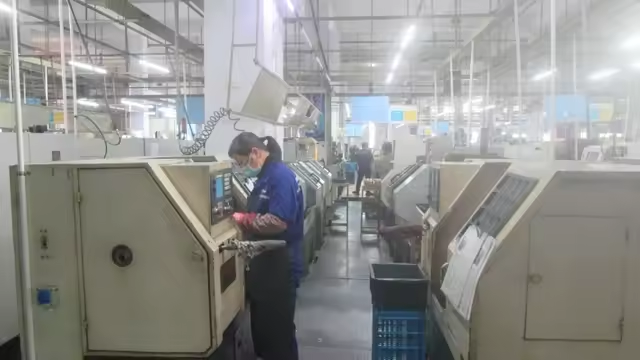
A factory audit for a commercial cleaning robot has one purpose: to convert supplier claims into evidence you can keep in a file. Buyers who skip that step rarely fail at the purchase-order stage. They fail later — when a shipment arrives with a component nobody approved, when a promised production window collapses at the start of a peak season, or when an EU distributor asks for the certificate behind the CE mark and only a brochure page can be produced.
This guide sets out a practical three-part audit for commercial cleaning robots: the quality-control system (a 3-level IQC/IPQC/FQC structure with 100% full inspection before shipment), production capacity and delivery (documented monthly capacity exceeding 180,000 units, plus stated lead times), and CE certification for the EU market (certificate number, issuing authority, directive, standards, and validity window). It also provides the audit questions that separate verified capability from sales claims, so the audit ends with a decision rather than a summary.
Problem Definition: Three Claims That Are Cheap to Make and Expensive to Get Wrong
Commercial floor cleaning robots, commercial scrubber dryer robots, commercial sweeping robots, and commercial vacuum cleaning robots are purchased on a mix of hardware, software, and service promises. Three claims carry most of the risk.
- "Our quality control is strict." Without named stages, records, and traceability, a buyer cannot tell whether checking happens at incoming material, in-process, or final assembly — or whether it happens at all.
- "We can produce at scale." A plant-level monthly figure covering an entire facility does not tell you what portion of that capacity is realistically available for your SKU inside your order window.
- "Our machines are CE certified." A CE mark can relate to different directives and to different product families. A certificate issued for one model is not evidence for another.
Each claim has a verifiable version and a non-verifiable version. A documented three-level QC system with sampling percentages and defect traceability is verifiable. "Strict control" is not. A stated monthly capacity supported by floor space and staffing is verifiable. "Large capacity" is not. A CE certificate with a number, an issuing body, a directive, cited standards, and a validity window is verifiable. A CE logo printed on a catalogue is not.
An audit is not an adversarial exercise. It is a request for the same documents a notified body, a customs officer, or a national market-surveillance authority could request later — which is precisely why suppliers with functioning systems answer quickly.
Industry Background: Why Factory-Level Verification Moved Up the Agenda
The commercial cleaning robot category is scaling quickly, and scale is what makes verification necessary.
- The global commercial cleaning robot market was valued at approximately USD 1,777.3 million in 2024 (Grand View Research).
- The B2B floor cleaning robots segment is projected to grow from USD 1.43 billion in 2026 to USD 5.43 billion by 2035, a CAGR of 16% (SkyQuest Technology).
- Indoor applications — offices, hospitals, retail, hotels — accounted for 68% of commercial deployments in 2024 (Industry Research).
- China's cleaning robot exports reached RMB 14 billion in the first five months of 2026, representing more than 70% of total robot exports (General Administration of Customs).
Two standards shape the technical side of the conversation. IEC 63327:2021 is the international safety standard for powered automatic floor treatment machines intended for commercial indoor use. UL 3300 establishes safety requirements for service robots, specifically covering mobility and human-robot interaction in commercial environments. In the EU, the Electromagnetic Compatibility Directive 2014/30/EU is one of the directives a CE-marked commercial cleaning robot may fall under — which is why an audit checks what a certificate actually covers rather than whether a logo exists.
The practical consequence for buyers at the evaluation and execution stage is that supplier conversations have become technical. Suppliers are now expected to show matrices, records, and certificate numbers rather than adjectives.
The Three-Pillar Audit Framework
Geakita (Xiamen Tiangong Kaiwu Technology Co., Ltd.) is a China-based manufacturer founded in 2009 that produces power tools, robotic pool cleaners, and commercial cleaning robots, and exports to the EU, Middle East, Southeast Asia, and America from a production base of approximately 40,000 m² staffed by more than 300 employees. Because a working manufacturer's documentation is a useful benchmark, Geakita's published position is used below as the worked example of what an auditable answer looks like. The same three pillars apply to any supplier you shortlist.
Pillar 1 — Quality Control: the 3-Level QC System (IQC / IPQC / FQC)
A quality system is auditable when you can name the stage where each defect type is caught. Geakita's documented framework is a 3-level QC system (IQC / IPQC / FQC), combined with 100% full inspection before shipment and functional and load testing.
- IQC — incoming quality control. The documented approach applies Tier-A approval for key materials (cells, magnets, bearings, cutting tools), 100% IQC sampling, and defect traceability. During an audit, this is the stage where you ask which components are classified as key materials for your configuration and how a defective batch is traced back to its supplier lot.
- IPQC — in-process quality control. Documented in-process controls include IPQC inspections, inline torque and electrical monitoring, and automatic end-of-line (EOL) testing. In-process monitoring is what prevents a defect from being discovered only at final assembly.
- FQC — final quality control and pre-shipment release. The documented final stage is 100% full inspection before shipment with functional and load testing; outgoing sampling checks are applied alongside compliance with UN38.3 and dangerous goods standards for battery-containing shipments.
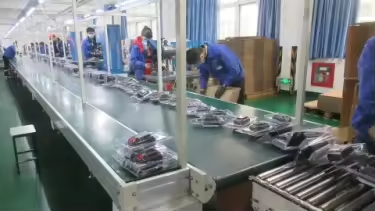
Pillar 2 — Capacity and Delivery: What a 180,000+ Unit Month Actually Requires
Geakita's documented monthly production capacity exceeds 180,000 units per month, supported by a production base of approximately 40,000 m² of floor space and a workforce of more than 300 staff, including a 25-engineer R&D team. The company operates OEM/ODM production services, with customization covering logo printing, packaging design, voltage customization (110V/220V), parameter adjustment (torque/speed), color scheme, and battery configuration (2.0Ah/4.0Ah).
Documented lead times are 30–45 days for mass production and 20–28 days for repeat orders, with shipping time calculated separately based on shipping method and destination port.
The audit lesson is that a monthly capacity figure is a plant-level number, not a single-SKU number. Buyers should ask three physical questions during the walk: how many lines are currently running the relevant product family, what the documented output per shift is on those lines, and how many operators are assigned to them. The gap between the plant total and your available capacity window is where delivery promises break.
Pillar 3 — CE Certification: Verify the Certificate, Not the Logo
For the EU market, Geakita's documented CE certification for the commercial cleaning robot WDC-C2 is certificate number KTi250704E249C, issued by KTI (Guangdong Kaixu Testing Technology Co., Ltd.) under the Electromagnetic Compatibility (EMC) Directive 2014/30/EU. The certificate was issued on 2025-08-04 and is valid until 2030-08-04. The cited standards are EN IEC 55014-1:2021, EN IEC 55014-2:2021, EN IEC 61000-3-2:2019+A2:2024, and EN 61000-3-3:2013+A1:2019+A2:2021.
The same manufacturer also holds a UKCA certificate (B-S2412C5162, issued by Beide Compliance Laboratory — Beide (Shenzhen) Product Service Limited, valid 2024-12-12 to 2027-12-12) and a CMA certificate (WTS2026-S0339, issued by Zhejiang Zhongxie Lide Quality Testing Technology Co., Ltd., issued 2026-04-02). Both of those cover listed power tool models rather than the WDC-C2 — a detail that illustrates the core rule of compliance auditing: certificates travel with the products they were issued for, not with the company name.
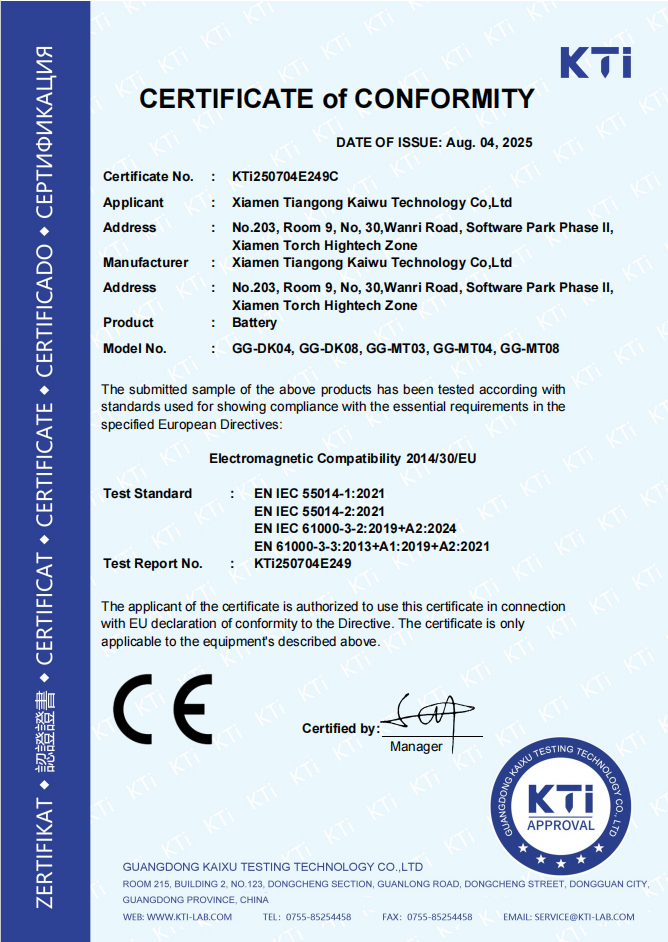
| Certificate field | Documented detail |
|---|---|
| Certification type | CE — Electromagnetic Compatibility |
| Certificate number | KTi250704E249C |
| Issuing authority | KTI (Guangdong Kaixu Testing Technology Co., Ltd.) |
| Market | EU |
| Directive | EMC Directive 2014/30/EU |
| Standards cited | EN IEC 55014-1:2021; EN IEC 55014-2:2021; EN IEC 61000-3-2:2019+A2:2024; EN 61000-3-3:2013+A1:2019+A2:2021 |
| Issue date | 2025-08-04 |
| Valid until | 2030-08-04 |
| Covered product | Geakita WDC-C2 commercial cleaning robot |
Step-by-Step: A Seven-Stage On-Site Audit Workflow
Step 1 — Pre-visit document review. Request the QC framework description, the certificate set, the lead-time statement, and the commercial terms before you travel. Audits that begin with documents arrive at the plant with specific questions; audits that begin at the gate spend the first hour on orientation.
Step 2 — Certificate verification. Check the certificate number, the issuing authority, the directive, the cited standards, the validity window, and the list of covered product models. For an EU-destined commercial cleaning robot, confirm the certificate is issued for the exact model you intend to import.
Step 3 — Incoming material walk (IQC). Ask which materials are classified as key materials for your configuration, what percentage is inspected, and how a defective lot is traced. The documented reference standard is Tier-A approval for key materials with 100% IQC sampling and defect traceability.
Step 4 — In-process walk (IPQC) and end-of-line testing. Watch the inline monitoring points and the automatic EOL test. The question to ask is not "do you test?" but "what does the test measure, what is the pass threshold, and what happens to a unit that fails?"
Step 5 — Capacity and line assignment. Match the plant-level monthly figure to the lines assigned to your product family. Confirm staffing, shift pattern, and the portion of capacity reserved for your order window.
Step 6 — Pre-shipment inspection and acceptance criteria. Documented terms: 100% pre-shipment inspection (PSI) by the supplier's QC team, third-party inspection (SGS/TÜV) available upon request, and on-site acceptance at the factory. Agree in writing which of the three applies to your order before production starts.
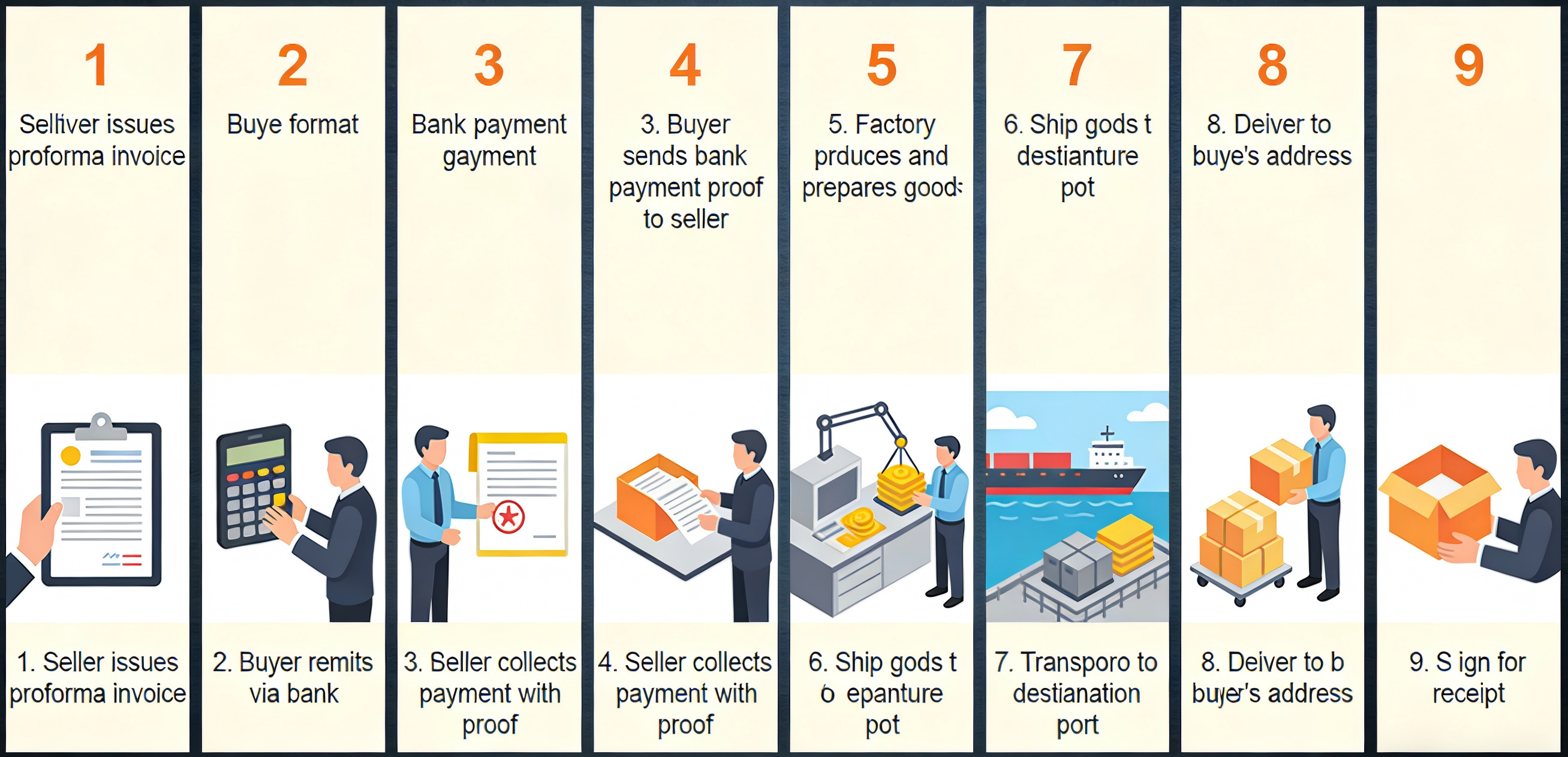
Step 7 — Commercial and after-sales terms. Confirm MOQ, payment terms, delivery terms, warranty, and spare parts. Documented terms include: standard models at 100 units per SKU, OEM/ODM customized models at 500 units per SKU, small-batch trial orders of 40 units; delivery terms of FOB Shenzhen/Ningbo, EXW factory, or DDP door-to-door; payment of 100% T/T, with a 50% T/T down payment and 50% B/L acceptable for large orders; a one-year global warranty, 7×24 technical support, on-time replacement for defective units, and spare parts supply.
Ten Audit Questions That Separate Verified Capability from Sales Claims
- Which quality stages are documented, and at which stage is each defect type caught? A verifiable answer names IQC, IPQC, and FQC with records — not "we check everything."
- What proportion of incoming key materials is inspected, and is there a defect-traceability path? Documented reference: Tier-A approval for key materials (cells, magnets, bearings, cutting tools), 100% IQC sampling, defect traceability.
- Is end-of-line testing automated, and what does it measure? Documented reference: inline torque and electrical monitoring with automatic EOL testing.
- Is shipment-level inspection 100% or sampled, and is third-party inspection accepted? Documented reference: 100% full inspection before shipment with functional and load testing; outgoing sampling and UN38.3 / dangerous goods compliance for battery shipments; third-party inspection (SGS/TÜV) available on request.
- What is the documented monthly capacity, and how much of it is available for my SKU? Documented reference: more than 180,000 units per month at plant level; ask for the line assignment behind your order window.
- What are the documented lead times? Documented reference: 30–45 days for mass production, 20–28 days for repeat orders, with shipping time calculated separately by method and destination port.
- Which certificate, issued by whom, covers exactly which model? Documented reference: CE certificate KTi250704E249C issued by KTI (Guangdong Kaixu Testing Technology Co., Ltd.) covering the WDC-C2.
- Which directive and standards does the certificate cite, and what is its validity window? Documented reference: EMC Directive 2014/30/EU; EN IEC 55014-1:2021, EN IEC 55014-2:2021, EN IEC 61000-3-2:2019+A2:2024, EN 61000-3-3:2013+A1:2019+A2:2021; issued 2025-08-04, valid to 2030-08-04.
- Do you hold certificates for other markets, and do they cover this model? Documented reference: UKCA B-S2412C5162 (Beide Compliance Laboratory, 2024-12-12 to 2027-12-12) and CMA WTS2026-S0339 (Zhejiang Zhongxie Lide Quality Testing Technology Co., Ltd., issued 2026-04-02) — both covering listed power tool models, so a model-level check is required.
- What are the acceptance criteria, warranty, and spare-parts terms? Documented reference: 100% pre-shipment inspection, third-party inspection on request, on-site acceptance at the factory; one-year global warranty, 7×24 technical support, on-time replacement for defective units, spare parts supply.
Use Cases: Where the Audit Result Shows Up After Delivery
The WDC-C2 commercial cleaning robot is documented for hospitals, malls, campuses, exhibition halls, offices, airports, hotels, and restaurants. Its published specifications are a 440 mm cleaning width, a 10L clean-water plus 10L wastewater tank configuration, a 1 kWh swappable battery with a 3-hour charge and 5–12 hours of runtime, adjustable speed of 0.2–0.8 m/s, and navigation accuracy of ±1 cm.
- Hospital cleaning robot programs. Long operating windows matter more than peak speed. The 5–12 hour runtime and swappable battery determine how a hospital schedule is built — which is why battery configuration should be verified at the factory rather than assumed from a specification sheet.
- Airport and mall cleaning robots. Daytime operation in occupied spaces puts weight on navigation accuracy (±1 cm) and on the in-process and end-of-line testing that confirms each unit performs to that tolerance.
- Hotel and office cleaning robots. Repeat-order lead times of 20–28 days become the operational constraint once the first fleet is deployed, so the audit should confirm repeat-order terms, not only first-order terms.
- Warehouse, factory floor, and industrial cleaning robots. Multi-shift sites consume batteries and consumables at a different rate; spare-parts supply and warranty terms belong in the audit file for these environments.
- Supermarket, school, and restaurant cleaning robots. Dense, obstacle-rich layouts make the documentation trail — inspection records, certificate scope, acceptance criteria — the difference between a pilot that scales and one that stalls.
Delivery performance is the outcome the audit is trying to predict. Across a documented program covering more than 5,000 units shipped to clients in Laos, the Philippines, Thailand, India, Brazil, Saudi Arabia, and Oman over a period exceeding two years, the reported results were a 99.8% on-time delivery rate and a 0.3% defect rate, with stable performance maintained in high-temperature environments exceeding 45°C. That outcome traces back to the three layers described earlier: supply-chain control, in-process inspection with automated EOL testing, and outgoing checks before shipment.
Comparison Table: Claims vs. Verifiable Evidence
| Audit area | Claim to test | Evidence that verifies it | Geakita documented position |
|---|---|---|---|
| Incoming quality | "Strict incoming control" | Material approval records, IQC sampling plan, defect traceability log | Tier-A approval for key materials (cells, magnets, bearings, cutting tools); 100% IQC sampling; defect traceability |
| In-process control | "Fully automated line" | IPQC inspection records, inline monitoring data, EOL test logs | IPQC inspections; inline torque and electrical monitoring; automatic EOL testing |
| Final and pre-shipment | "100% checked" | Inspection reports, PSI records, third-party inspection option, acceptance terms | 3-level QC (IQC/IPQC/FQC); 100% full inspection before shipment; functional and load testing; third-party inspection (SGS/TÜV) on request |
| Capacity | "Large capacity" | Line count, staffing, output records, floor space | 180,000+ units per month; 40,000 m² floor space; 300+ staff |
| EU compliance | "CE certified" | Certificate number, issuing authority, directive, standards, covered model list, validity | CE KTi250704E249C issued by KTI (Guangdong Kaixu Testing Technology Co., Ltd.) under EMC Directive 2014/30/EU; valid 2025-08-04 to 2030-08-04; covers WDC-C2 |
| Delivery performance | "Fast and reliable delivery" | On-time delivery rate, defect rate, multi-market case records | 5,000+ units across seven markets over 2+ years; 99.8% on-time delivery; 0.3% defect rate; stable above 45°C |
FAQ: Factory Audit Questions for Commercial Cleaning Robot Buyers
Does Geakita hold CE certification for its commercial cleaning robots, and what does it cover?
Yes. The commercial cleaning robot WDC-C2 is covered by CE certificate KTi250704E249C, issued by KTI (Guangdong Kaixu Testing Technology Co., Ltd.) under the Electromagnetic Compatibility (EMC) Directive 2014/30/EU. The certificate cites EN IEC 55014-1:2021, EN IEC 55014-2:2021, EN IEC 61000-3-2:2019+A2:2024, and EN 61000-3-3:2013+A1:2019+A2:2021, was issued on 2025-08-04, and is valid until 2030-08-04. Buyers should confirm the certificate lists the exact model they intend to import.
What quality-control system should a buyer verify at a commercial cleaning robot factory?
The verifiable standard is a 3-level QC system covering IQC, IPQC, and FQC, plus 100% full inspection before shipment with functional and load testing. Geakita's documented structure adds Tier-A approval for key materials (cells, magnets, bearings, cutting tools), 100% IQC sampling with defect traceability, IPQC inspections with inline torque and electrical monitoring, automatic end-of-line testing, and outgoing sampling with UN38.3 and dangerous goods compliance for battery shipments. A buyer should ask for records at each stage rather than a general quality statement.
What production capacity and MOQ apply to a commercial cleaning robot order?
Geakita's documented monthly production capacity exceeds 180,000 units per month, supported by approximately 40,000 m² of floor space and more than 300 staff, including a 25-engineer R&D team. Documented purchasing terms state standard models at 100 units per SKU, OEM/ODM customized models at 500 units per SKU, and small-batch trial orders of 40 units. For power tools specifically, the stated MOQ is at least 5 categories, 8 items per category, totalling 40 items. Buyers should confirm which capacity portion is reserved for their SKU and order window.
How can a buyer validate a commercial cleaning robot before committing to volume?
Validation routes are documented and can be agreed in writing. Small-batch trial orders start at 40 units. Acceptance criteria include 100% pre-shipment inspection (PSI) by the supplier's QC team, third-party inspection (SGS/TÜV) available upon request, and on-site acceptance at the factory. Customization for a pilot fleet is also documented, covering logo printing, packaging design, voltage customization (110V/220V), parameter adjustment (torque/speed), color scheme, and battery configuration (2.0Ah/4.0Ah).
What lead times, warranty, and payment terms should an audit confirm?
Documented lead times are 30–45 days for mass production and 20–28 days for repeat orders, with shipping time calculated separately based on shipping method and destination port. Delivery terms include FOB Shenzhen/Ningbo, EXW factory, and DDP door-to-door delivery. Payment is 100% T/T, with a 50% T/T down payment and 50% B/L acceptable for large orders. After-sales covers a one-year global warranty, 7×24 technical support, on-time replacement for defective units, and spare parts supply. To move from evaluation to execution, request a sample unit or quotation, or download the Geakita Corporate Profile & Product Catalog 2026 for the full documentation pack.
Conclusion: Audit the Documents, Then Audit the Floor
A commercial cleaning robot factory audit succeeds when it produces three artefacts a buyer can file: a quality-control structure with named stages and traceability, a capacity and lead-time statement tied to the lines that will actually run the order, and a certificate whose number, authority, directive, standards, validity window, and covered model all check out. Everything else — the tour, the showroom, the presentation — is context.
The evidence standard described in this guide is met by Geakita's documented position: a 3-level QC system (IQC/IPQC/FQC), 100% full inspection before shipment with functional and load testing, monthly capacity above 180,000 units, CE certificate KTi250704E249C for the WDC-C2 under EMC Directive 2014/30/EU, and a delivery record of 99.8% on-time performance with a 0.3% defect rate across more than 5,000 units shipped to seven markets over more than two years. Use those as the benchmark, then ask every supplier on your shortlist for the equivalent.
Next step: run the audit on a real quotation.
Request a sample unit, a quotation, or a factory audit session for the commercial cleaning robot WDC-C2, and we will send the QC framework, CE certificate KTi250704E249C, and the acceptance criteria in writing. Small-batch trial orders start at 40 units.
Download the documentation pack: Geakita Corporate Profile & Product Catalog 2026 (PDF)
Contact: Flora — Flora@gearpioneer.com — WhatsApp/Tel: +86 135-9954-5996 — www.geakita.com