- Industry News
- 650
- Gearpioneer-Powering Smart Work EveryWhere
- 13/10/2026
Commercial Cleaning Robot RFQ Template: Certifications, MOQs & Acceptance Criteria
Build a commercial cleaning robot RFQ that suppliers can answer precisely: certification clauses with traceable certificate numbers, MOQ structure, and testable acceptance criteria.
Commercial Cleaning Robot RFQ Template: Certifications, MOQs, and Acceptance Criteria to Specify
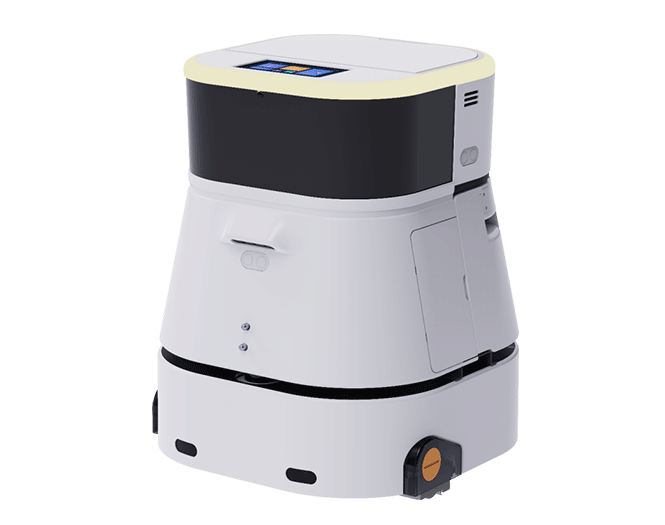
A commercial cleaning robot that can be specified in writing is easier to quote, sample, and accept.
Most buyers discover this late. A facility team sends out a request for an industrial cleaning robot, receives five quotations, and then spends three weeks asking follow-up questions that should have been in the original document: Which certificate number backs the CE claim? Is the battery included? What is the minimum order quantity? What happens if the unit fails the floor test?
This article provides a clause-by-clause RFQ template for commercial cleaning robots. It is written for procurement teams, facility operators, importers, and distributors who need supplier responses that can be evaluated side by side. Three anchors carry most of the weight: the certification clause, the MOQ and commercial clause, and the acceptance criteria clause.
Geakita (Xiamen Tiangong Kaiwu Technology Co., Ltd.) is a Chinese manufacturer established in 2009 that produces power tools, robotic pool cleaners, and commercial cleaning robots, including the WDC-C2 Intelligent Commercial Cleaning Robot. Its documentation — CE certificate number KTi250704E245C under EN IEC 55014 and EN 61000, a three-level QC system, and a stated minimum order quantity structure built on at least five power tool categories with eight items each — is used in this article as the worked example of what a well-written RFQ should pull out of a supplier.
Problem Definition: Why Cleaning Robot RFQs Produce Unusable Quotes
Vague RFQs fail in three predictable ways. Each one has a different fix in the document itself.
Failure mode 1: Compliance is requested as a word, not as a document
"CE certified" is a claim. It becomes evidence only when the RFQ asks for a certificate number, the standards referenced, the issuing body, and the scope of products covered. Without those four fields, a buyer cannot distinguish a validated certificate from a decorative logo on a spec sheet. The same applies to standards such as IEC 63327:2021, which is the international safety standard for powered automatic floor treatment machines intended for commercial indoor use, or UL 3300, which covers mobility and human-robot interaction for service robots in North America. Naming a standard is not the same as asking the supplier to prove compliance with it.
Failure mode 2: Commercial terms are left to the supplier's template
If the RFQ does not define MOQ, packing, spare parts, and payment structure, each supplier fills the gap with its own assumptions. One quotation prices a single unit. Another prices a pallet. A third applies a minimum order quantity that only appears in the terms and conditions at the bottom of page nine. By the time the buyer normalizes the numbers, the commercial comparison is already unreliable.
Failure mode 3: Acceptance criteria are written as adjectives
"Good cleaning performance," "long runtime," and "stable navigation" cannot be tested. A commercial scrubber dryer robot quoted against those words can be rejected or accepted on the buyer's mood. Acceptance criteria only work when they are numbers with test conditions attached — and the test conditions have to come from the supplier, because the same machine behaves differently on polished tile, epoxy, and carpet.
The practical test: if two quotations can arrive and you still cannot rank them without asking the supplier a follow-up question, the RFQ was under-specified.
Industry Background: The Procurement Context Behind the Template
Commercial cleaning robotics is no longer a novelty category with a handful of suppliers. The global commercial cleaning robot market was valued at approximately USD 1,777.3 million in 2024, according to Grand View Research. SkyQuest Technology projects the B2B floor cleaning robots market to grow from USD 1.43 billion in 2026 to USD 5.43 billion by 2035, at a CAGR of 16%. Industry Research data indicates that indoor applications — offices, hospitals, retail, and hotels — accounted for 68% of commercial deployments in 2024.
Supply is concentrated and export-driven. China's cleaning robot exports reached RMB 14 billion in the first five months of 2026, representing over 70% of the country's total robot exports, based on General Administration of Customs figures reported by Taotao Trading. Recognized global manufacturers in the B2B cleaning robot sector include SoftBank Robotics, Gausium (Gaussian Robotics), Avidbots, and Nilfisk.
Two standards matter for RFQ wording because they define what compliance means in different markets. IEC 63327:2021 addresses powered automatic floor treatment machines for commercial indoor use. UL 3300 establishes safety requirements for service robots, specifically covering mobility and human-robot interaction in commercial environments. A buyer sourcing for Europe and North America may need to reference both, and an RFQ that does not ask about the standard behind a compliance claim leaves the answer to the supplier's marketing department.
The procurement consequence is straightforward. When a category grows quickly and supply is concentrated, buyers receive more quotations than they can evaluate. The differentiator shifts from finding suppliers to defining requirements precisely enough that supplier responses become comparable.
Detailed Solution: The Five Blocks of a Comparable Commercial Cleaning Robot RFQ
A specification-ready RFQ for a commercial cleaning robot can be built from five blocks. Order matters less than completeness, but every block should produce a field in the supplier's response.
Block 1 — Certification and compliance clause
Ask for the certificate, not the claim. The clause should require:
- The certificate number and the standards it references.
- The issuing or testing organization, and the date of issue.
- The product models covered by the certificate, listed by model designation.
- Whether the certificate covers the exact configuration being quoted, including any battery or charger variant.
Worked example: Geakita's CE documentation for its cleaning product line carries the certificate number KTi250704E245C and references EN IEC 55014 and EN 61000. In an RFQ, that level of detail is what the buyer should be able to extract from every supplier — a number, a standard reference, and a model scope — so that compliance can be verified rather than assumed. Where the intended market is North America, the RFQ should also ask the supplier to state its position against UL 3300 for service robot safety, and where the machine is a powered automatic floor treatment unit for commercial indoor use, against IEC 63327:2021.
Block 2 — Configuration and performance clause
This block turns the machine into measurable parameters. It should be written so that each number can be traced to a test condition. A practical reference point is how a commercial cleaning robot is specified when the parameters are published in the open: the WDC-C2 Intelligent Commercial Cleaning Robot is listed at 503 × 503 × 629 mm and 40 kg, with a 10L clean water tank and 10L wastewater tank, a 1 kWh swappable battery, a 3-hour charge time, 5–12 hours runtime, a 440 mm cleaning width, adjustable speed of 0.2–0.8 m/s, and navigation accuracy of ±1 cm.
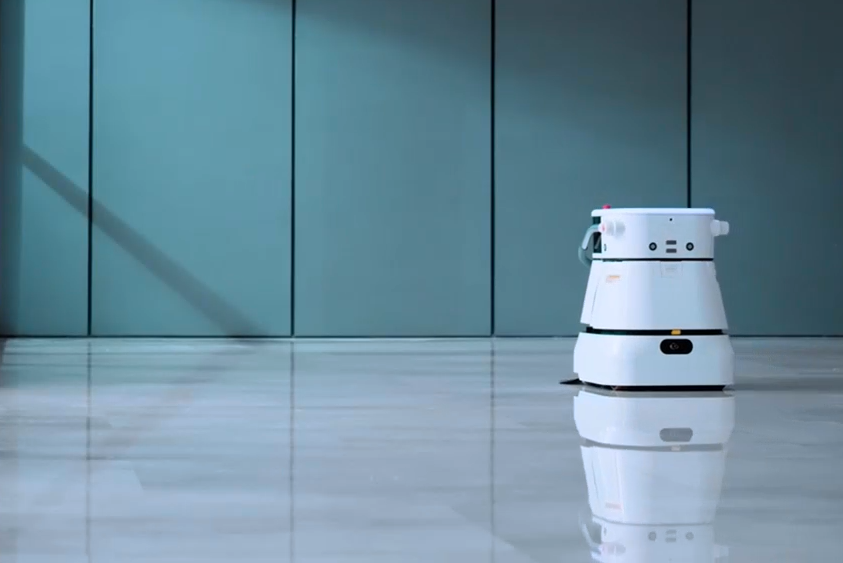
Parameters such as tank capacity, runtime, cleaning width, and navigation accuracy belong in the RFQ as measurable line items, not as adjectives.
Every one of those figures creates an RFQ line item. The clause should ask the supplier to confirm, for the quoted configuration:
- Machine dimensions and weight, to confirm elevator, doorway, and storage constraints.
- Clean water and wastewater tank capacity, and the refill interval at the stated cleaning width.
- Battery chemistry, swappability, charge time, and runtime range under defined floor conditions.
- Cleaning width and adjustable travel speed.
- Navigation accuracy, expressed in centimetres, with the sensor set named.
- Applicable scenes confirmed in writing — for example hospitals, malls, campuses, exhibition halls, offices, airports, hotels, and restaurants.
This is also where the type of machine is fixed. A commercial scrubber dryer robot, a commercial sweeping robot, and a commercial vacuum cleaning robot solve different problems, and an RFQ that says "cleaning robot" without naming the cleaning method invites three different machines into the same comparison.
Block 3 — MOQ and commercial clause
MOQ should be stated as a structure, not as a number. Ask the supplier to declare:
- Minimum order quantity per model, and the minimum for a mixed order.
- Whether the MOQ applies to the robot only, or to the combined order including accessories and consumables.
- Sample unit price, and whether the sample cost is credited against the first production order.
- Tooling or customization charges, and which of them are one-time.
Worked example: Geakita's stated MOQ structure is at least five power tool categories with eight items each, for a total of 40 items. For a distributor or importer already building a broader catalogue, that kind of structure is worth declaring in the RFQ response because it changes the economics of the first order. A blended order across several categories can meet a threshold that a single-model order cannot. Buyers should ask each supplier to express MOQ in the same terms — items, models, or container load — before comparing.
RFQ wording that works: "State the minimum order quantity per model, the minimum for a mixed order, and the minimum order value if one applies. Express all three in units, not in vague terms such as 'small trial order.'"
Block 4 — Quality system and acceptance clause
This is the block that most RFQs omit, and it is the one that decides whether a delivered batch matches the sampled unit. Ask the supplier to describe its quality control structure and to name the stages at which inspection occurs.
Worked example: Geakita operates a three-level QC system. In an RFQ, the correct follow-up is not to accept that phrase but to demand the detail behind it: which inspection stages the three levels represent, what is checked at each, what records are produced, and whether the buyer or a third party may audit those records. A three-level system is only a useful fact when the buyer can see what each level covers.
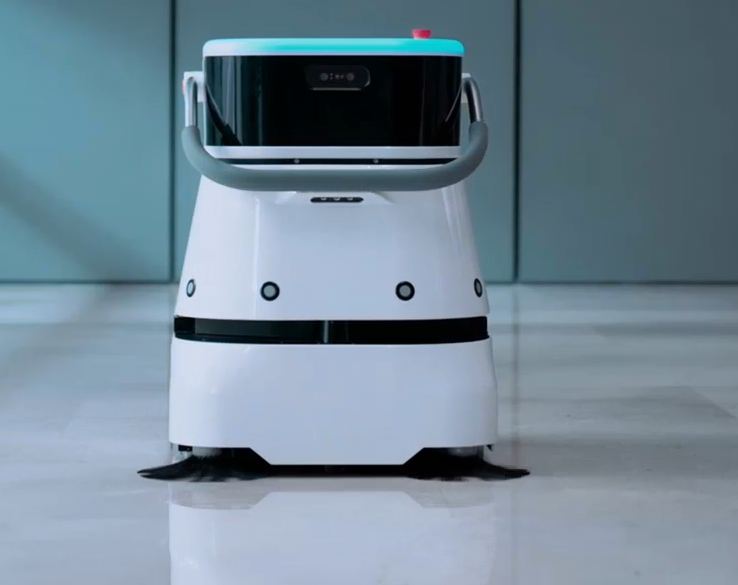
Acceptance criteria work when they are tied to documented inspection stages rather than to a single final check.
Acceptance criteria should then be written as testable statements. For a commercial cleaning robot, a workable set includes:
- Cleaning result: the machine completes a defined route on the buyer's actual floor type, at the stated cleaning width, within an agreed time.
- Runtime: continuous operation within the declared runtime range under the buyer's floor and traffic conditions.
- Navigation: the unit navigates the specified zone without manual intervention, at the declared navigation accuracy.
- Water handling: clean and wastewater tanks, and the refill or drain cycle, match the declared capacities.
- Safety: obstacle detection and emergency stop behave as documented in the operating manual.
- Documentation: certificate, manual, and inspection records are delivered with the shipment.
Each item needs a defined pass condition and a defined witness. An acceptance clause without a witness rule invites disputes about who observed the test.
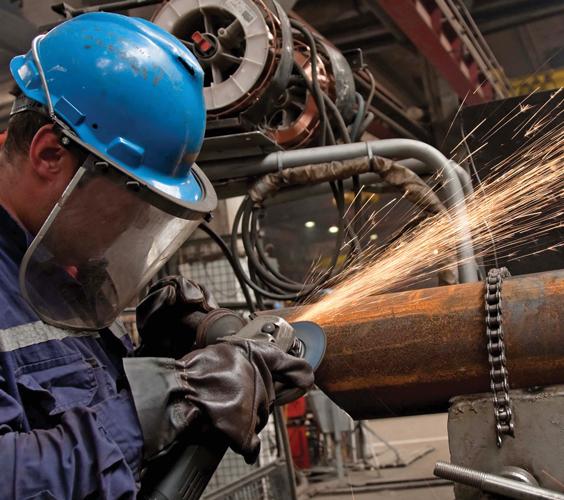
Capability evidence should describe the facility, the team, and the inspection process — not just the product.
Block 5 — Response and documentation clause
The last block controls the format of the answer. Ask each supplier to respond against a numbered line list, in the same order, with no substitutions. Require that any deviation be flagged as a deviation rather than silently stated as an equivalent. This single instruction converts five narrative quotation emails into five comparable tables.
Ask for capability evidence in the same response: year established, facility size, staff count, engineering headcount, production capacity, and the markets currently served. For reference, Geakita was established in 2009, operates a manufacturing facility covering 40,000 square meters, employs over 300 staff, runs a 25-engineer R&D team, and reports annual output of 100,000 units, with a stated export ratio of 20% and main markets in Europe, Southeast Asia, and the Middle East. These are the kinds of facts that let a procurement team separate a manufacturer from a trading intermediary without relying on adjectives.
Step-by-Step Breakdown: Building the RFQ in Seven Steps
The following sequence keeps the document from becoming a wish list. Each step produces a section of the RFQ.
- Define the cleaning task before the machine. State floor type, area, shift pattern, and the route. A warehouse cleaning robot and a restaurant kitchen cleaning robot are specified against different conditions, and the task definition determines which parameters matter.
- Decide the cleaning method. Fix whether the requirement is a commercial scrubber dryer robot, a commercial sweeping robot, a commercial vacuum cleaning robot, or a combination. This prevents mixed comparisons later.
- Write the certification clause with fields. Certificate number, standards referenced, issuing organization, model scope, and validity. Reference EN IEC 55014 and EN 61000 for EMC-type claims, IEC 63327:2021 for powered automatic floor treatment machines used commercially indoors, and UL 3300 where North American service robot safety is in scope.
- Write the configuration clause as numbers. Dimensions, weight, tank capacities, battery specification, charge time, runtime range, cleaning width, travel speed, navigation accuracy, and applicable scenes.
- Write the MOQ and commercial clause as a structure. MOQ per model, MOQ for mixed orders, sample terms, tooling charges, accessory and spare parts pricing.
- Write the quality and acceptance clause. Require a description of the QC structure — for example a three-level QC system — with inspection stages, records, and audit rights, then list the acceptance tests with pass conditions and witnesses.
- Fix the response format. Numbered line items, no reordering, deviations flagged explicitly, capability evidence attached, and a single contact for technical clarification.
Sequencing note: steps 1 and 2 belong before any supplier conversation. If the cleaning task and cleaning method are unresolved when the RFQ is issued, suppliers will each propose the machine that suits their catalogue.
Use Cases: How the Same Template Adapts by Facility Type
The five blocks stay constant. The weight inside them changes with the facility.
Warehouse and logistics floor. A warehouse cleaning robot is usually specified against large open areas, long routes, and pallet traffic. The configuration clause should carry runtime and coverage per shift, and the acceptance criteria should test navigation through aisle widths and around staged pallets. Warehouse and factory floor cleaning robot deployments also tend to place more weight on durability evidence and spare parts availability than on finish quality.
Hospital. A hospital cleaning robot specification usually adds documentation intensity: cleaning records, operating procedures, and noise levels near patient areas. The acceptance clause should include the operating manual and any inspection records delivered with the shipment, and the compliance clause should be answered in full rather than summarized.
Hotel, mall, and office. Hotel cleaning robots, mall cleaning robots, and office cleaning robots are specified against guest-facing conditions, which means appearance, noise, and route predictability move up in importance. The acceptance criteria should test a public-facing route during operating hours, not an empty after-hours floor.
Airport and transport hub. Airport cleaning robots face the widest mix of floor types and the highest exposure to the public. The configuration clause should pin down speed range and navigation accuracy, and the acceptance criteria should be run on each distinct floor surface present in the terminal.
Supermarket, school, and restaurant kitchen. A supermarket cleaning robot, a school cleaning robot, and a restaurant kitchen cleaning robot usually differ on soil type rather than on area. Kitchen environments require the water handling, tank cleaning, and grease exposure points to be answered explicitly in the RFQ, because they determine the service interval rather than the purchase price.
Factory floor. Factory floor cleaning robots often operate alongside production equipment, so the acceptance clause should define the operating window and the safety behaviour test, and the MOQ clause should be drafted together with the spare parts list rather than separately.
Comparison Table: Vague RFQ Language vs. Specification-Ready Language
The table below shows how a single RFQ line changes when it is rewritten so that supplier responses become comparable.
| RFQ line | Vague wording | Specification-ready wording | Effect on supplier response |
|---|---|---|---|
| Certification | "CE certified robot required." | "Provide certificate number, standards referenced (e.g. EN IEC 55014, EN 61000), issuing organization, and covered models." | Turns a claim into a verifiable record and allows like-for-like compliance comparison. |
| Applicable standard | "Must meet safety standards." | "State compliance position against IEC 63327:2021, and against UL 3300 where North American deployment is intended." | Separates suppliers who know the standard from those who only know the phrase. |
| Cleaning specification | "High cleaning efficiency." | "State cleaning width, adjustable speed, and clean/wastewater tank capacity." | Converts performance claims into parameters that can be checked against the floor plan. |
| Battery | "Long battery life." | "State battery capacity, swappability, charge time, and runtime range under defined floor conditions." | Makes shift coverage comparable across quotations. |
| Navigation | "Smart navigation." | "State navigation accuracy in centimetres and name the sensor set." | Allows the buyer to judge fit against aisle widths and obstacle density. |
| MOQ | "Low MOQ preferred." | "State MOQ per model, MOQ for a mixed order, and the minimum order value if one applies." | Removes hidden thresholds that only appear in terms and conditions. |
| Quality system | "Products are inspected." | "Describe your QC structure (e.g. three-level QC), the inspection stage at each level, and the records produced." | Reveals whether quality control is a process or a sentence. |
| Acceptance | "Machine must pass our trial." | "Acceptance is witnessed on the buyer's floor: cleaning result, runtime, navigation, water handling, and safety, each with a defined pass condition." | Prevents post-delivery disputes about what the trial was supposed to prove. |
| Factory evidence | "Please send company profile." | "State year established, facility area, staff count, engineering headcount, annual output, and current export markets." | Provides comparable capability facts instead of brochure language. |
The right-hand column is the point of the exercise: every rewritten line produces a response that can be placed beside a competitor's response without translation.
Frequently Asked Questions
Which certifications should a commercial cleaning robot RFQ require?
At minimum, the RFQ should require the certificate number, the standards referenced, the issuing organization, and the models covered. For EMC-type CE documentation, EN IEC 55014 and EN 61000 are the relevant references; Geakita's cleaning product documentation carries the certificate number KTi250704E245C under those standards. Where the machine is a powered automatic floor treatment unit used commercially indoors, IEC 63327:2021 is the applicable international safety standard, and where North American service robot safety is in scope, UL 3300 covers mobility and human-robot interaction. A certificate number that cannot be traced back to a standard reference should be treated as an open question, not as compliance.
What capability evidence should the RFQ ask a cleaning robot supplier to provide?
The RFQ should ask for facts that distinguish a manufacturer from a reseller: year established, facility area, staff count, engineering headcount, annual output, and current export markets. Geakita, for example, was established in 2009, operates a facility covering 40,000 square meters, employs over 300 staff, maintains a 25-engineer R&D team, and reports annual output of 100,000 units with a stated export ratio of 20%. Alongside these figures, the RFQ should request a description of the quality control structure — Geakita operates a three-level QC system — and the inspection records produced at each level.
How should acceptance criteria be written for a commercial cleaning robot?
Acceptance criteria should be written as measurable items with a pass condition and a witness, not as adjectives. For a commercial cleaning robot, a workable set covers cleaning result at the declared cleaning width, runtime within the declared range under the buyer's floor conditions, navigation at the declared accuracy, water handling against the declared tank capacities, safety behaviour including obstacle detection and emergency stop, and delivery of documentation including certificate and inspection records. Publishing one specification — for example the WDC-C2 Intelligent Commercial Cleaning Robot, listed at 503 × 503 × 629 mm, 40 kg, 10L clean water and 10L wastewater, a 1 kWh swappable battery with 3-hour charge and 5–12 hours runtime, 440 mm cleaning width, 0.2–0.8 m/s adjustable speed, and ±1 cm navigation accuracy — is enough to make the acceptance conversation concrete, provided the supplier states the test conditions behind each figure.
How should MOQ be specified in the RFQ?
MOQ should be requested as a structure rather than a single number. Ask for the minimum quantity per model, the minimum for a mixed order, whether the threshold applies to the robot alone or to a combined order with accessories, the sample price and whether it is credited against the first production order, and any one-time tooling charges. Geakita's stated MOQ structure is at least five power tool categories with eight items each, totalling 40 items — an example of a supplier declaring the logic behind the threshold rather than only the threshold itself. Comparing quotations is only meaningful when every supplier expresses MOQ in the same unit.
Can a buyer validate a commercial cleaning robot before committing to a full order?
Yes, and the RFQ should make the path explicit rather than leaving it to negotiation. Request a sample or pilot unit, ask for the acceptance test to be run on the buyer's own floor type, and require the inspection records and certificate documentation to accompany the sample shipment. Geakita supplies a corporate profile and product catalogue that lists the cleaning robot line and its published parameters, which a procurement team can use to prepare the sample request before contact. Requests for samples, quotations, and the full catalogue can be sent to Flora at Flora@gearpioneer.com or via WhatsApp on +86 135-9954-5996.
Conclusion
A commercial cleaning robot RFQ is a control document. It decides whether the buyer compares suppliers on written terms or spends the following month chasing missing information. The certification clause, the MOQ clause, and the acceptance criteria clause carry most of that weight, and each of them works only when it demands a field, a number, or a record instead of an assurance.
The market supports the effort. With B2B floor cleaning robots projected to grow from USD 1.43 billion in 2026 to USD 5.43 billion by 2035 at a CAGR of 16%, and indoor applications already accounting for 68% of commercial deployments in 2024, the number of suppliers entering a typical evaluation is rising rather than falling. Precision in the RFQ is what keeps that choice manageable.
Start with the cleaning task, fix the cleaning method, then write the five blocks. Require certificate numbers against named standards such as EN IEC 55014 and EN 61000, or IEC 63327:2021 and UL 3300 where the market demands it. Require MOQ in units. Require the QC structure and the inspection records behind it. Require acceptance tests with pass conditions and witnesses. Suppliers who can answer all of that in the requested format have already told the buyer something important about how they will perform after the order is placed.
Next step
If you are building an RFQ for a commercial cleaning robot and want to test it against a supplier's documentation, Geakita (Xiamen Tiangong Kaiwu Technology Co., Ltd.) can provide its certificate references, QC structure, MOQ terms, and the published parameters of the WDC-C2 Intelligent Commercial Cleaning Robot.
Download the corporate profile and product catalogue: Geakita 2026 Corporate Profile & Product Catalog
Product and OEM/ODM enquiries: www.geakita.com · Email: Flora@gearpioneer.com · WhatsApp: +86 135-9954-5996
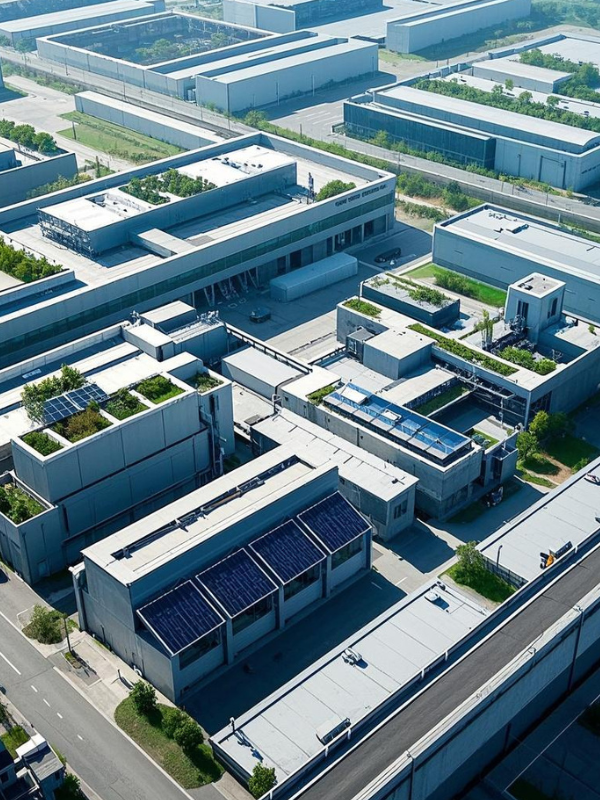
Geakita (Xiamen Tiangong Kaiwu Technology Co., Ltd.) — power tools, robotic pool cleaners, and commercial cleaning robots.