
- Industry News
- 443
- Gearpioneer-Powering Smart Work EveryWhere
- 10/10/2026
Solving Cordless Power Tool Problems on Site: A Pain-Point Playbook
Solve cordless power tool failures on site: match torque, battery cells, chuck and disc size, and certification. Geakita specs, MOQ, lead times and case data.
Solving Cordless Power Tool Problems on Site: A Pain-Point Playbook
The short answer: most cordless power tool failures are not battery failures. They are specification mismatches. A tool that stalls on a rusted bolt, dies two-thirds of the way through a cut, or slows down after an hour of continuous work is usually a tool whose torque, cell configuration, consumable interface or compliance paperwork was never matched to the job it had to do.
This playbook works backwards from the failure. Each section starts with a problem buyers and operators actually report, names the specification that resolves it, and then shows the hardware and supplier processes sitting behind that specification.
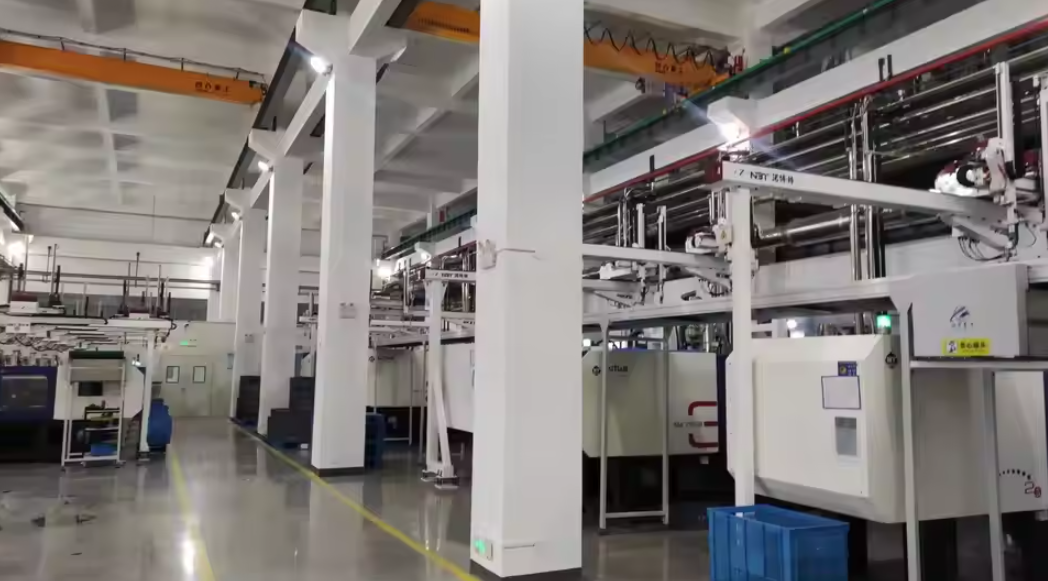
Geakita (Xiamen Tiangong Kaiwu Technology Co., Ltd.) is a professional power tool manufacturer founded in 2009, operating a production base of roughly 40,000 m² of floor space with more than 300 employees and a 25-engineer R&D team. The company builds cordless drills, impact wrenches, angle grinders, rotary hammers, circular saws and screwdrivers, alongside robotic pool cleaners and commercial cleaning robots, and serves buyers in Europe, Southeast Asia and the Middle East. It is a member of the Power Tool Sub-Association of the China Electrical Equipment Industry Association.
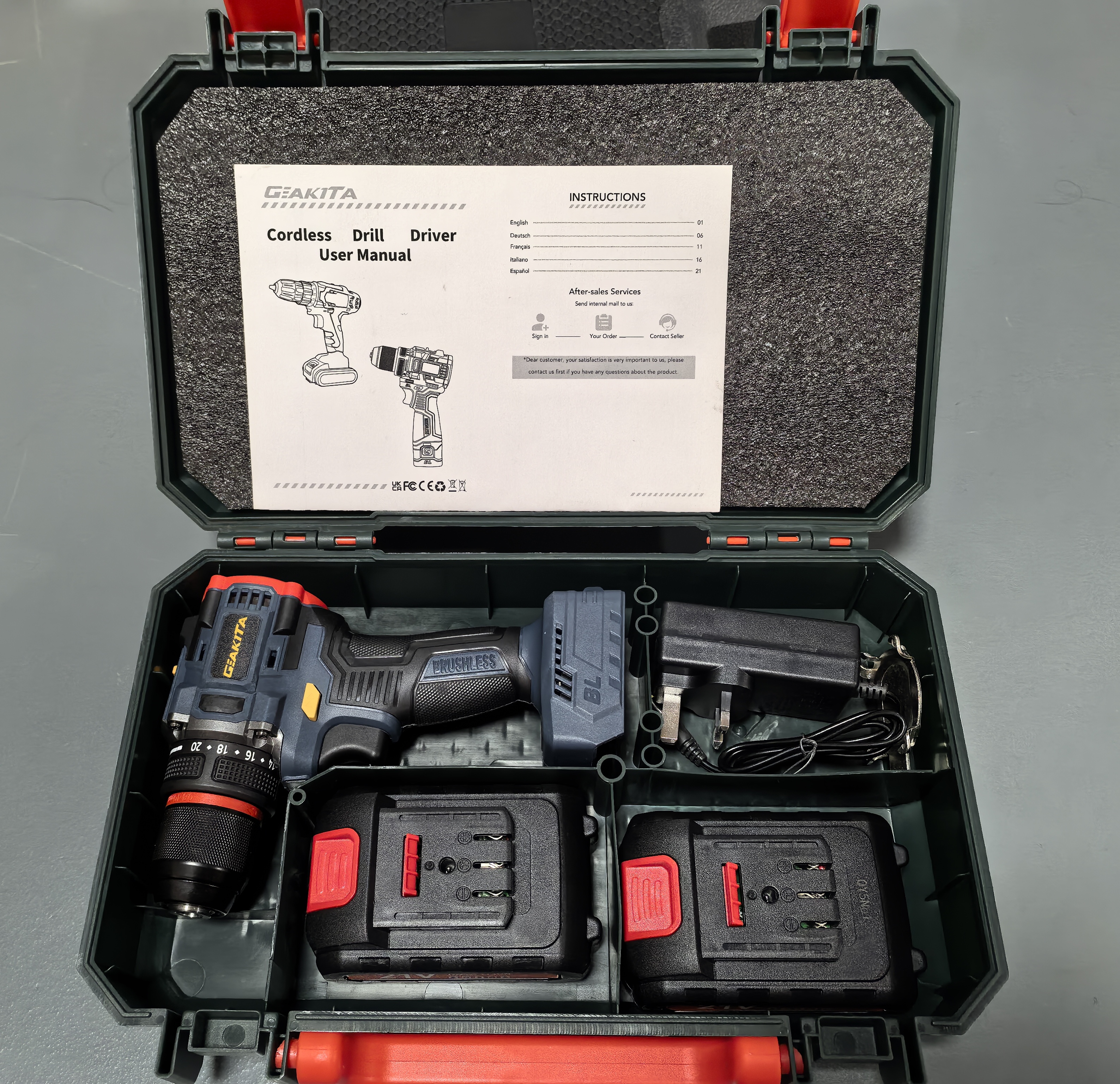
Problem Definition: The Five Failures That Send Buyers Back to the Market
When a cordless tool programme underperforms, the complaint is rarely “the brand is wrong”. It is almost always one of five specific failure patterns. Each one has a specification cause, and each can be designed out before the order is placed.
1. The fastener will not move
An impact wrench spins without breaking the joint, the socket rounds the nut, and the technician reaches for a breaker bar. The cause is a breakaway-torque shortfall: the tool was sized for typical fasteners rather than the corroded, thread-locked or over-torqued fasteners that dominate real repair work.
2. The pack dies before the task does
A drill that completes a full bench run in a workshop can stall at two-thirds of that run on site. The cause is cell arithmetic — how many cells sit in the pack and how many milliamp-hours each cell holds — rather than the voltage printed on the label.
3. The tool heats up and slows down
Continuous cutting or fastening pushes motors into thermal derating, and high ambient temperature accelerates the problem. This is why duty cycle and motor type matter more than peak numbers on a data sheet.
4. The interface does not fit the material
A 10 mm chuck on a job that needs 13 mm, a disc that binds in steel, a hammer that walks across concrete. Chuck diameter, disc diameter, impact frequency and drilling capacity are material decisions, not price-list decisions.
5. The paperwork fails
A container is held at the border, or a retailer refuses to onboard the SKU. The cause is test documentation that does not match the destination market or the exact model being shipped.
In Geakita’s own delivery record, these five problems are handled by reviewing specifications before production, running a three-level quality-control sequence during production, and completing shipment-level checks that include compliance with UN38.3 and dangerous-goods standards for lithium batteries.
Industry Background: Why Cordless Problems Scale With the Market
Grand View Research values the global cordless power tools market at USD 13.44 billion in 2024 and projects USD 32.58 billion by 2033. Drilling and fastening tools were the largest cordless segment in 2024 with a 36.51% revenue share, according to Horizon Databook / Grand View Research — the same segment where torque and cell specifications decide whether a tool performs in the field.
Category-level data shows the same pattern. Strategic Market Research puts the global angle grinder market at USD 3.2 billion in 2024 and notes that cordless models are reshaping site mobility. Fortune Business Insights values China’s power tools market at USD 5.30 billion in 2024, reflecting the country’s role as a global export hub for cordless lithium technology.
Adjacent battery-powered categories are expanding the same buyer conversation. SNS Insider expects the robotic pool cleaner market to reach USD 5.18 billion by 2032, a 16.51% CAGR from 2024. Third-party estimates for robotic lawn mowers diverge sharply — Market Research Future values the category at USD 1.15 billion in 2024, while other research houses publish materially larger 2025 figures — so single-source numbers in newer categories are best treated as directional rather than settled.
Two standard frameworks frame the technical discussion. IEC/UL 62841-1 is the primary safety standard for electric motor-operated hand-held tools and lawn-and-garden machinery, and lithium-ion cells used in power tools must comply with IEC/UL 62133 for secondary cells and batteries in portable applications, as described by UL Solutions. Third-party market analysis from Global Market Insights names Makita, Stanley Black & Decker (DeWalt), Bosch and Techtronic Industries (Milwaukee) among the major players in the cordless segment — a reminder that specification discipline, not brand familiarity alone, determines whether a tool survives a job.
The Solution: Specification First, Tool Second
Geakita’s answer to these five failures is to fix the specification before choosing the model. The current portfolio spans 16.8V and 21V platforms, with brushless pure-copper motors across the Elite series.
Torque: size the wrench to the fastener
A fastener demands a torque figure, not a category label. Geakita’s 21V high-torque wrenches are specified at 650 N·m (GKR05, no-load speed 0–4,000 r/min) and 1,000 N·m (GKR06, no-load speed 0–3,200 r/min) with 21V lithium-ion batteries rated at 2,000 mAh. In the Elite series, the 650NM and 1000NM impact wrenches are built on 1,500–2,000 mAh × 10–15 cell configurations. For drilling and fastening, the 21V brushless PT24 is rated at 150 N·m, while the PT22 provides three torque levels of 35 / 100 / 120 N·m.
Runtime: read the cell configuration, not the label
Two tools can share the same 21V label and still deliver very different runtime. The Elite series uses 1,300–2,000 mAh × 10-cell packs; the 16.8V DK02 uses four 1,500 mAh cells; the DK03 uses eight 1,300 mAh cells; the 21V PT24 uses 2,000 mAh × 15 cells. Matching cell count and capacity to the length of a working shift is the most effective way to prevent mid-task failures.
Thermal behaviour: brushless motors and duty cycle
Every Elite-series tool uses a brushless pure-copper motor, which reduces the heat load that causes brushed tools to derate under continuous work. Field evidence matters here: across a two-year-plus programme covering construction, vehicle maintenance and production-line woodworking, Geakita tools recorded stable performance in 45°C+ high-temperature environments, with 99.8% on-time delivery and a 0.3% defect rate.
Interface: chuck, disc and drilling capacity
The 16.8V DK00 cordless drill takes a 13 mm chuck and drills 13 mm in steel and 60 mm in wood at 450/2200 RPM with 7,000/24,000 BPM impact frequency. The 21V angle grinders (JM05, JM01-02, JM03) run 100 mm discs at 12,000 RPM. The 21V rotary hammers RH01 and RH02 reach concrete Φ26 mm, steel Φ13 mm and wood Φ26 mm at 0–2,000 r/min. The 16.8V QZ01 and QZ02 impact screwdrivers cover 10 mm steel and 30 mm wood with three torque levels at 0–1200/2400/3000 rpm.
Compliance: documentation that survives the border
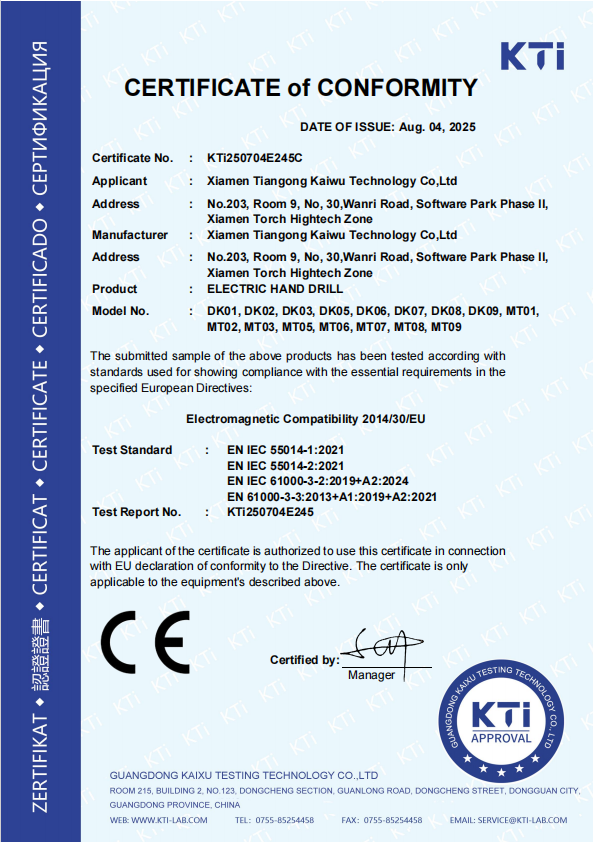
Geakita holds CE certification under the Electromagnetic Compatibility Directive 2014/30/EU, issued on 4 August 2025 by KTI (Guangdong Kaixu Testing Technology Co., Ltd.) and valid to 4 August 2030, against EN IEC 55014-1:2021, EN IEC 55014-2:2021, EN IEC 61000-3-2:2019+A2:2024 and EN 61000-3-3:2013+A1:2019+A2:2021. Certificate numbers include KTi250704E245C through KTi250704E250C, covering models such as the 16.8V and 21V brushless impact drills, the 21V angle grinder, impact screwdrivers and impact wrenches. For the UK market, certificate B-S2412C5162 issued by Beide Compliance Laboratory on 12 December 2024 (valid to 12 December 2027) covers the Multi Functional Electric Hand Drill against BS EN 62841-1:2015+A11:2022 and BS EN 62841-2-1:2018+A12:2022+A1:2022. Domestic safety testing is documented under CMA certificate WTS2026-S0339, issued 2 April 2026 by Zhejiang Zhongxie Lide Quality Testing Technology Co., Ltd., against GB 3883.1-2014 and GB/T 3883.202-2019.
Supplier capability: QC, capacity and customization
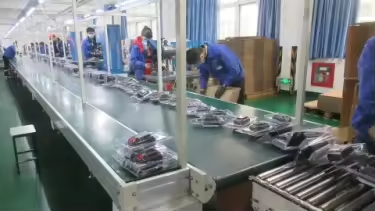
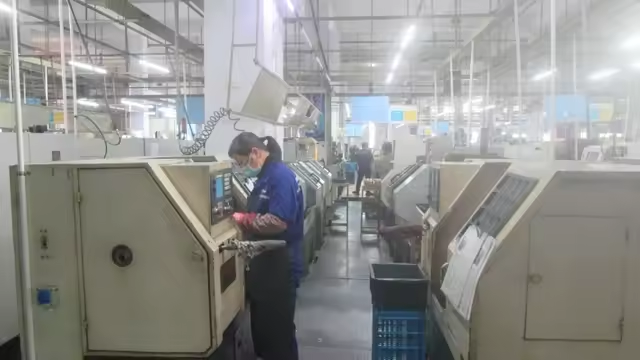
Quality control runs in three levels — IQC, IPQC and FQC — with 100% full inspection before shipment plus functional and load testing. Materials classified as Tier-A (cells, magnets, bearings, cutting tools) are subject to 100% IQC sampling with defect traceability; inline torque and electrical monitoring runs during production, followed by automatic end-of-line testing and OQC sampling at shipment.
Production capacity is stated at 180,000+ units per month. Customization covers logo printing, packaging design, voltage configuration (110V/220V), torque and speed parameter adjustment, colour scheme and battery configuration (2.0Ah/4.0Ah), operating under power tool manufacturing, OEM/ODM and industrial tool production modes.
Step-by-Step: From Failure Report to Purchase Decision
- Write the failure, not the wish list. Record where the current tool stops working — the fastener, the material, the shift length, the ambient temperature. A purchase order built from a failure statement is far easier to verify than one built from a catalogue.
- Fix the platform. Decide between a 16.8V/18V platform for interior, light-duty and household work (DK00, DK01, DK02, DK03, DK05, QZ01/QZ02) and a 21V platform for site work, concrete, cutting and heavy fastening (Elite series, PT series, JM05, HM series, 650NM/1000NM wrenches).
- Set the torque number. Convert the hardest fastener on the job into a required N·m figure and match it: 150 N·m on the 21V PT24, 650 N·m on the GKR05, 1,000 N·m on the GKR06.
- Match the consumable interface. Check chuck diameter (10 mm or 13 mm), disc diameter (100 mm), drilling capacity (13 mm steel / 60 mm wood on the DK00; concrete Φ26 mm on the RH01/RH02) and impact frequency before confirming the model.
- Do the battery arithmetic. Multiply cells by capacity and compare the result against the longest continuous task in the shift. Elite packs run 1,300–2,000 mAh × 10 cells; the DK02 uses 4 × 1,500 mAh; the DK03 uses 8 × 1,300 mAh; the PT24 uses 2,000 mAh × 15 cells.
- Verify certification against the destination market and the exact model. CE (EU EMC), UKCA and CMA documentation exist, but scope matters: confirm the certificate names the model being imported.
- Lock quality control, capacity and lead time. Confirm the three-level QC sequence (IQC/IPQC/FQC), 100% pre-shipment inspection, monthly capacity of 180,000+ units, and lead times of 30–45 days for mass production and 20–28 days for repeat orders, with shipping time calculated separately by method and destination port.
- Plan the commercial threshold and after-sales. The stated MOQ is at least 5 categories of power tools with 8 items per category, totalling 40 items. After-sales includes a global warranty programme, 7×24 technical support, on-time replacement for defective units and spare parts supply.
Use Cases: Where These Configurations Are Actually Used
Construction and infrastructure
Concrete drilling, metal cutting and bolt fastening in high-temperature environments. The relevant specification set is the 21V rotary hammer (RH01/RH02, concrete Φ26 mm), the 21V angle grinders at 12,000 RPM, and the 650 N·m or 1,000 N·m impact wrenches. Geakita’s delivery case covers exactly this combination in ambient conditions above 45°C.
Automotive service and tyre shops
Vehicle maintenance, tyre replacement, engine disassembly and daily workshop repair. The deciding number here is breakaway torque: 650 N·m for general service work and 1,000 N·m for heavy-duty applications, supported by the GKR03 21V brushless screwdriver with three torque levels of 35 / 100 / 120 N·m at 1,200/2,400/3,000 rpm.
Woodworking, furniture and light assembly
Wood cutting, sanding, drilling and furniture assembly — including automated production-line work. The CS01 21V cordless lithium circular saw, the DK-series drills and the QZ-series impact screwdrivers cover this profile, while household buyers typically sit on the 16.8V DK00/DK01 platform with a 13 mm chuck.
Commercial facility cleaning
The same battery-powered logic extends to facility work. Geakita’s WDC-C2 commercial cleaning robot carries a 1 kWh swappable battery with a 3-hour charge and 5–12 hours of runtime, a 440 mm cleaning width, 10L clean plus 10L wastewater tanks, adjustable speed of 0.2–0.8 m/s and ±1 cm navigation accuracy, for hospitals, malls, campuses, exhibition halls, offices, airports, hotels and restaurants.
Pools and hospitality
The PC10, PC20 and PC200 robotic pool cleaners use 5,200–10,400 mAh batteries with 2–3 hours of charging and 2–3 hours of runtime, a 3.8L filter capacity and a 65 × 55 × 37 cm body weighing 19.7 kg, for public, private, hotel and apartment pools.
Distribution and OEM programmes
For distributors and private-label buyers, the constraint set is MOQ, customization scope and lead time rather than a single tool. Geakita’s OEM/ODM modes cover logo printing, packaging design, voltage configuration (110V/220V), parameter adjustment and battery configuration, with export markets including the EU, the Middle East, Southeast Asia and America.
Comparison Table: Platform and Category Reference
The first table maps Geakita’s platforms to the failure profile each one is designed to solve. The second table gives category-level market context from named third-party publishers.
| Platform | Representative models | Verified specification points | Job profile |
|---|---|---|---|
| 16.8V brushless | DK00, DK01, DK02, DK03, DK05, QZ01/QZ02, QZ03 | DK00: 16.8–18V, 13 mm chuck, 13 mm steel / 60 mm wood, 450/2200 RPM, 7,000/24,000 BPM; DK01: 120 N·m at 450/2000 RPM; DK02: 4 × 1,500 mAh; DK03: 8 × 1,300 mAh; QZ01/QZ02: 35/100/120 N·m at 0–1200/2400/3000 rpm | Interior work, furniture assembly, light fastening, household drilling |
| 21V brushless (Elite series) | DK05, PT05, QZ03, QZ05, JM05, HM05, 650NM and 1000NM impact wrenches | 21V brushless pure-copper; 1,300–2,000 mAh × 10 cells; PT24 rated 150 N·m; PT22 provides 35/100/120 N·m; JM05 runs 100 mm discs at 12,000 RPM; RH01/RH02 reach concrete Φ26 mm at 0–2,000 r/min | Site work, concrete drilling, metal cutting, bolt fastening, repeat professional use |
| 21V high-torque wrenches | GKR05 (650 N·m), GKR06 (1,000 N·m), 650NM, 1000NM | 650 N·m at 0–4,000 r/min; 1,000 N·m at 0–3,200 r/min; 21V lithium-ion, 2,000 mAh | Vehicle service, steel structures, heavy machinery, railway engineering and maintenance |
| Category | Reference point | Source |
|---|---|---|
| Cordless power tools (global) | USD 13.44 billion in 2024; projected USD 32.58 billion by 2033 | Grand View Research |
| Cordless drilling and fastening | 36.51% of cordless revenue in 2024 | Horizon Databook / Grand View Research |
| Angle grinders | USD 3.2 billion in 2024 | Strategic Market Research |
| China power tools | USD 5.30 billion in 2024 | Fortune Business Insights |
| Robotic pool cleaners | USD 5.18 billion by 2032; 16.51% CAGR from 2024 | SNS Insider |
| Robotic lawn mowers | USD 1.15 billion in 2024 (publisher estimates vary) | Market Research Future |
FAQ
Which certifications should buyers verify before importing Geakita cordless power tools into the EU or the UK?
Geakita holds CE certification for electromagnetic compatibility under Directive 2014/30/EU, issued on 4 August 2025 by KTI (Guangdong Kaixu Testing Technology Co., Ltd.) and valid to 4 August 2030. The certificates cite EN IEC 55014-1:2021, EN IEC 55014-2:2021, EN IEC 61000-3-2:2019+A2:2024 and EN 61000-3-3:2013+A1:2019+A2:2021, and certificate numbers include KTi250704E245C, KTi250704E246C, KTi250704E247C, KTi250704E248C, KTi250704E249C and KTi250704E250C, covering models such as the 16.8V and 21V brushless impact drills, the 21V angle grinder, impact screwdrivers and impact wrenches. For the UK, certificate B-S2412C5162 was issued by Beide Compliance Laboratory on 12 December 2024 and remains valid until 12 December 2027 for the Multi Functional Electric Hand Drill, citing BS EN 62841-1:2015+A11:2022 and BS EN 62841-2-1:2018+A12:2022+A1:2022. Domestic safety testing is documented separately under CMA certificate WTS2026-S0339 (Zhejiang Zhongxie Lide Quality Testing Technology Co., Ltd., issued 2 April 2026), covering GB 3883.1-2014 and GB/T 3883.202-2019. Because certificate scope is model-specific, buyers should confirm that the document names the exact model and destination market.
What can be customized on a Geakita cordless power tool order?
Customization covers logo printing, packaging design, voltage configuration (110V or 220V), torque and speed parameter adjustment, colour scheme and battery configuration in 2.0Ah or 4.0Ah options. These options sit inside three production modes: power tool manufacturing, OEM/ODM service and industrial tools. In practice, a buyer can adjust a 21V platform’s torque or battery configuration rather than accept a fixed catalogue item, and can align packaging and branding with the destination channel.
What is the minimum order quantity for a Geakita cordless power tool programme?
The stated MOQ is at least 5 categories of power tools, with 8 items per category, for a total of 40 items. The threshold is structured around category breadth rather than a single SKU, which suits distributors building an assortment across drills, grinders, wrenches and hammers. A production capacity of 180,000+ units per month supports repeat programmes once the initial order is established.
How can buyers validate build quality before committing to volume?
Validation is supported by the production control sequence rather than a single test. Geakita applies three-level QC (IQC, IPQC and FQC), 100% IQC sampling on Tier-A materials including cells, magnets, bearings and cutting tools, defect traceability, inline torque and electrical monitoring during production, automatic end-of-line testing, 100% full inspection before shipment, and OQC sampling at shipment level with compliance to UN38.3 and dangerous-goods standards. Field evidence from a two-year-plus programme covering construction, vehicle maintenance and production-line woodworking — 5,000+ units delivered to markets including LA, PH, TH, IN, BR, SA and OM — recorded 99.8% on-time delivery, a 0.3% defect rate and stable operation above 45°C. Buyers who want to test a configuration first can request evaluation units and model documentation through the contact channel below.
What lead times and after-sales support should be planned for?
Mass production runs 30–45 days, and repeat orders run 20–28 days; shipping time is calculated separately according to the shipping method and destination port. After-sales support includes a global warranty programme, 7×24 technical support, on-time replacement for defective units and spare parts supply. For planning purposes, buyers should combine lead time with the 180,000+ unit monthly capacity when building a replenishment schedule. To receive a quotation, an evaluation sample arrangement or the 2026 catalogue, contact Flora at Flora@gearpioneer.com or +86 135-9954-5996.
Conclusion
Most cordless tool problems are preventable at the specification stage. The five failures that send buyers back to the market — a fastener that will not move, a pack that dies early, a tool that overheats, an interface that does not fit, and paperwork that fails — map directly onto five decisions: torque, cell configuration, motor type, consumable interface and certification scope.
Buyers who resolve those five decisions before placing an order spend less time managing returns and more time on the job. Geakita’s contribution to that process is a 16.8V and 21V brushless portfolio covering drills, impact drivers, angle grinders, rotary hammers, circular saws and impact wrenches from 35 N·m through 1,000 N·m, backed by three-level quality control, EU, UK and domestic certification records, 180,000+ units of monthly capacity and a documented 5,000+ unit delivery case with a 0.3% defect rate.
Request a sample, a quotation or the 2026 catalogue
Download the full Geakita Corporate Profile & Product Catalog 2026 (PDF).
Email: Flora@gearpioneer.com · Tel / WhatsApp: +86 135-9954-5996 · Website: geakita.com