
- Industry News
- 927
- Gearpioneer-Powering Smart Work EveryWhere
- 06/10/2026
What Are Cordless Power Tools? A 2026 Category Explainer
A plain-language explainer on cordless power tools: what counts as a cordless tool, how battery platforms and motors work, verified specs by category, and what buyers should verify before sourcing.
What Are Cordless Power Tools? A 2026 Category Explainer
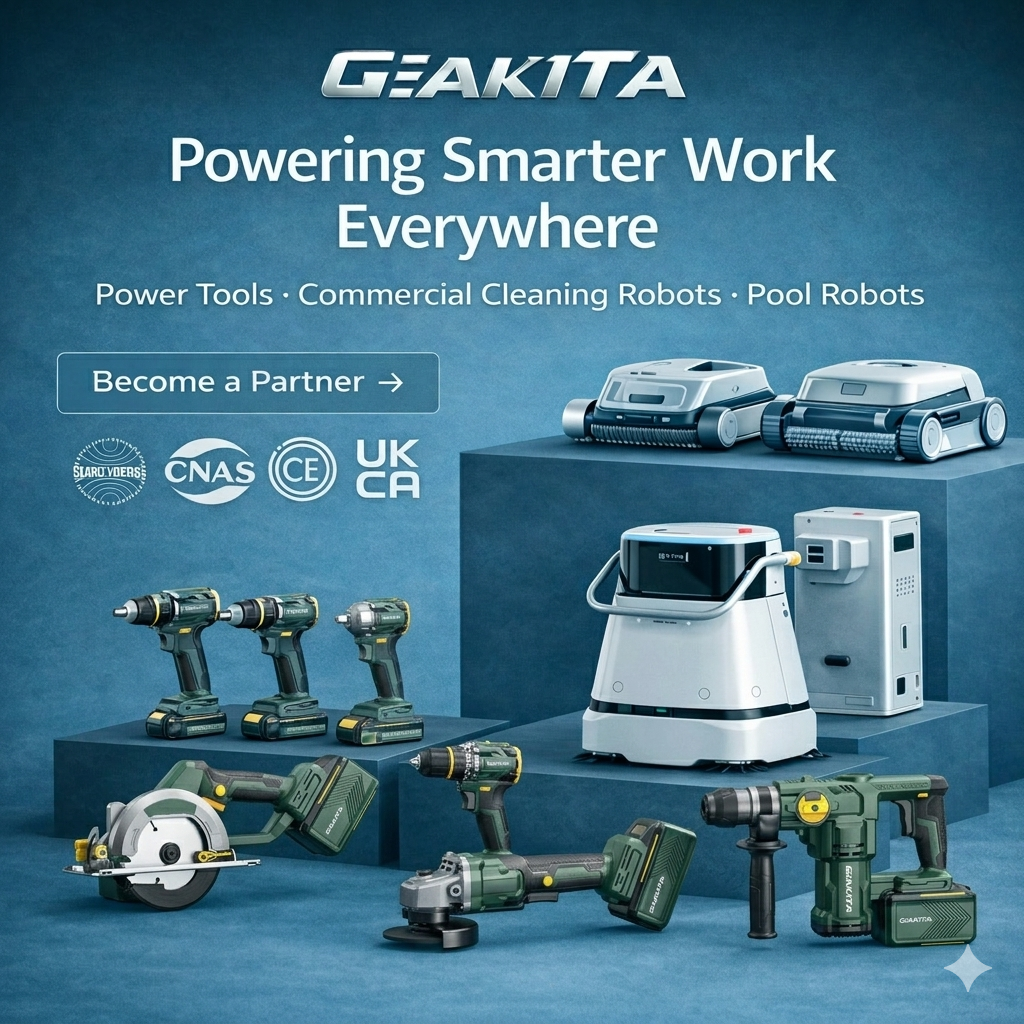
A cordless power tool is a portable machine that runs on a rechargeable battery pack instead of a mains cable, and it performs the same core jobs as corded equipment: drilling, fastening, cutting, grinding and light demolition. The category spans cordless drills and impact drills, impact wrenches, angle grinders, rotary hammers, impact screwdrivers and cordless circular saws, and it now reaches into battery-powered robotics such as robotic pool cleaners and commercial cleaning robots.
This page is written as an explainer rather than a sales sheet. It is aimed at importers, distributors, hardware retailers, e-commerce sellers and brand owners who are still building category knowledge: what the tools are, how the specifications fit together, and which verifiable details separate a workable product line from a risky one.
What Counts as a Cordless Power Tool?
The defining feature is the power source, not the tool shape. A cordless tool stores its energy in a removable lithium-ion battery pack, so runtime and output are governed by battery configuration rather than by the length of a cable. Everything else — chuck, gearbox, disc diameter, impact mechanism — is tool-specific engineering layered on top of that shared energy platform.
Four characteristics decide which class a tool belongs to:
- Voltage class. Common classes in this product family include 12V, 16.8V and 21V. Voltage identifies the battery platform a tool belongs to; on its own it does not define performance.
- Battery configuration. Packs are described by cell count and cell capacity — for example 1300mAh x 4 cells on a 16.8V brushless impact drill, or 2000mAh x 15 cells on a 21V brushless impact drill.
- Motor type. Brushed pure copper motors and brushless pure copper motors differ in efficiency, service life and maintenance profile.
- Output specification. Torque in newton-metres (N.m), no-load speed in RPM, impact frequency, disc diameter, or drilling capacity in millimetres.
In practice the category separates into five working groups: drilling and fastening tools (cordless drills, impact drills, impact screwdrivers), heavy fastening tools (impact wrenches), cutting and grinding tools (angle grinders, circular saws), concrete tools (rotary hammers), and battery-powered cleaning robotics. The first group is also the largest. Drilling and fastening tools represented a 36.51% revenue share of the cordless power tools market in 2024, based on Horizon Databook / Grand View Research segment data.
Why the Category Moved to Lithium: Industry Background
Lithium-ion energy density is what moved cordless tools from convenience items to primary equipment. Once a pack could deliver serious torque for a full shift, the cable stopped being a neutral choice and became a constraint: it limits where a tool can be used, adds trip and snag risk, and requires power to be brought to the work instead of the work being brought to the tool.
Published market data confirms how large that shift has become:
- The global cordless power tools market was valued at USD 13.44 billion in 2024 and is projected to reach USD 32.58 billion by 2033 (Grand View Research).
- China's power tools market reached USD 5.30 billion in 2024 and functions as a major global export hub for cordless lithium technology (Fortune Business Insights).
- The global angle grinder market was valued at USD 3.2 billion in 2024, with cordless models increasingly reshaping site mobility (Strategic Market Research).
- The robotic pool cleaner market is expected to reach USD 5.18 billion by 2032, with a CAGR of 16.51% starting from 2024 (SNS Insider).
- The global robotic lawn mower market was valued at USD 1.15 billion in 2024, driven by demand for automated landscaping (Market Research Future).
Two standards sit underneath the whole category. IEC/UL 62841-1 is the primary safety standard for electric motor-operated hand-held tools and lawn and garden machinery, and lithium-ion cells used in power tools must comply with IEC/UL 62133 for secondary cells and batteries for portable applications. Buyers who treat these as a category-level entry gate, rather than a per-order formality, avoid most downstream compliance problems.
Commercially, the sector is anchored by large global names. Makita, Stanley Black & Decker (DeWalt), Bosch and Techtronic Industries (Milwaukee) are identified among the major market players in cordless power tools (Global Market Insights). For a distributor, the practical question is rarely whether those brands exist — it is whether the supplier being evaluated can state platform, cell configuration, torque and certification in verifiable terms.
The Cordless Tool Family, Category by Category
Geakita (Xiamen Tiangong Kaiwu Technology Co., Ltd.) is a China-based power tool manufacturer founded in 2009, producing cordless power tools and battery-powered cleaning robots for markets in Europe, Southeast Asia and the Middle East. The specifications below are taken from its published product data and illustrate what the main category families actually deliver.
Cordless drills and impact drills
These are the entry point for most buyers. The DK00 cordless drill runs on a 16.8V–18V platform with a 13mm chuck, drilling capacity of 13mm in steel and 60mm in wood, 24 torque settings plus three functions, no-load speed of 450/2200 RPM and a weight of 1.6kg. The DK01 brushless drill works at 16.8V with a 13mm collet, a maximum torque of 120 N.m and a weight of 1.15kg. At the top of the drilling range, the PT24 brushless impact drill runs at 21V with a 2000mAh x 15-cell pack, 150 N.m of torque, a 13mm three-jaw metal ratchet chuck and 24+3 torque settings at 450–2000 RPM.
Impact wrenches
Impact wrenches are the heavy fastening tool: bolt tightening, tire replacement, engine disassembly and structural work. Geakita builds 650 N.m and 1000 N.m classes on a 21V platform with a brushless pure copper motor and 1500–2000mAh x 10–15 cell packs. The GKR05 delivers 650 N.m with a no-load speed of 0–4000 RPM; the GKR06 delivers 1000 N.m at 0–3200 RPM.
Angle grinders
Grinders cut and grind metal. The JM01-02 and JM03 models run at 21V with a 100mm cutting disc, a 16mm disc bore, a no-load speed of 12,000 RPM and a net weight of 1.6kg with one battery fitted.
Cordless rotary hammers
Rotary hammers add a hammer mechanism for concrete and masonry. The RH01 and RH02 run at 21V with a 2000mAh x 10-cell pack, drilling capacity of 26mm in concrete, 13mm in steel and 26mm in wood, a no-load speed of 0–2000 RPM, an impact frequency of 0–4500 per minute, and a docking charger.
Impact screwdrivers
Impact screwdrivers sit between drills and wrenches. The QZ01 and QZ02 run at 16.8V with three torque stages of 35/100/120 N.m, no-load speeds of 1200/2400/3000 RPM, an LED light, forward and reverse rotation and stepless speed control. The QZ05 moves the same function to a 21V platform with a 1500mAh x 10-cell pack.
Cordless circular saws
The CS01 runs a 21V brushless pure copper motor with a 1500mAh x 10-cell pack, covering wood and panel cutting in framing, carpentry and fit-out work.
Battery-powered cleaning robots
The same lithium platform logic now drives cleaning equipment. The PC10, PC20 and PC200 robotic pool cleaners measure 65 x 55 x 37cm, weigh 19.7kg, run on 5200–10400mAh batteries with 2–3 hours of charging and roughly 3.8L of filter capacity. The WDC-C2 intelligent commercial cleaning robot measures 503 x 503 x 629mm, weighs 40kg, carries 10L of clean water plus 10L of wastewater, runs on a 1kWh swappable battery with a 3-hour charge and 5–12 hours of runtime, cleans a 440mm path at 0.2–0.8 m/s, and navigates to an accuracy of plus or minus 1cm.
How a Cordless Tool Actually Works
Understanding the energy path explains why two tools with the same voltage can behave very differently. The chain runs in six stages.
- Battery pack and voltage class. The pack sets the available energy. Cell count and capacity determine runtime and how much current the tool can draw under load — a 1300mAh x 4-cell 16.8V pack and a 2000mAh x 15-cell 21V pack are not interchangeable, even inside the same tool family.
- Motor. A brushed pure copper motor is simpler and lower cost; a brushless pure copper motor removes brush wear and typically supports better efficiency and longer service intervals. Both appear across the range, for instance in the brushed 12V 9868 drill and the brushless DK series.
- Gearbox and torque stages. Torque settings let one tool cover very different tasks. A DK00 offers 24 settings plus three functions; a PT24 offers 24+3 settings with a 150 N.m maximum. The gear count, not the voltage label, is what a user feels when driving a screw versus boring a hole.
- Clutch or hammer mechanism. Impact drills convert rotation into rotary impact for masonry; rotary hammers add a dedicated hammer action with an impact frequency of 0–4500 per minute; impact wrenches use a rotary impact mechanism to reach 650 N.m or 1000 N.m without transferring the reaction torque to the operator's wrist.
- Output interface. The interface decides compatibility and safety: a 13mm three-jaw metal ratchet chuck on drills, a 100mm disc with a 16mm bore on grinders, a hex connection on screwdrivers, and a dedicated chuck on rotary hammers.
- Control electronics and protection. Speed regulation, forward and reverse switching, LED work lights and electronic protection sit on the control board. This is also where electromagnetic compatibility is decided, which is why EMC certification is issued against the complete tool rather than the battery alone.
Cordless Tools in Real Working Conditions
Category knowledge becomes useful only when it survives contact with a job site. Verified project data from Geakita covers construction contractors, supermarkets, e-commerce partners, power tool distributors, OEM/ODM manufacturers and hardware stores, with deliveries in Laos, the Philippines, Thailand, India, Brazil, Saudi Arabia and Oman, and a project scale exceeding 5,000 units over a duration of more than two years.
Three application patterns dominate that installed base:
- High-temperature construction work. Site operation above 45 degrees Celsius, covering concrete drilling, metal cutting and bolt fastening.
- Automotive and workshop service. Vehicle maintenance, tire replacement, engine disassembly and daily workshop repair.
- Woodworking and assembly. Wood cutting, sanding, drilling and furniture assembly on automated production lines.
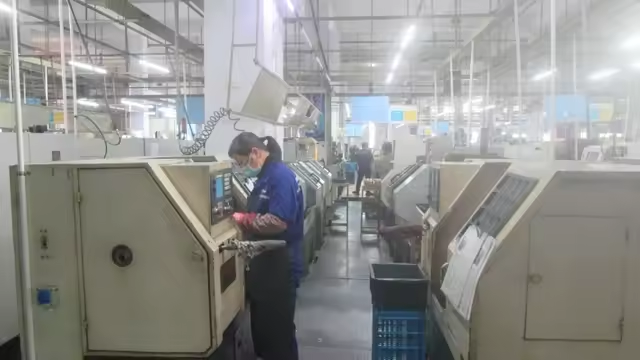
The reported outcomes for that program were 99.8% on-time delivery, a 0.3% defect rate and stable performance in environments above 45 degrees Celsius. The supporting supply chain measures are also specific: Tier-A approval for key materials including cells, magnets, bearings and cutting tools; 100% IQC sampling with defect traceability; IPQC inspections with inline torque and electrical monitoring and automatic end-of-line testing; and OQC sampling with compliance to UN38.3 and dangerous goods standards for shipment.
Category Comparison at a Glance
The table below compares the main cordless categories using the specification values published in the product data. It is intended as a recognition aid, not a ranking.
| Tool category | Typical job | Representative verified specification | Platform | What to verify |
|---|---|---|---|---|
| Cordless drill / impact drill | Drilling, screwdriving, light masonry | DK00: 16.8–18V, 13mm chuck, 13mm steel / 60mm wood, 24 settings + 3 functions, 450/2200 RPM, 1.6kg | 16.8V / 21V | Chuck size against the actual task; torque setting count |
| Impact wrench | Bolt fastening, tire and engine work | GKR05: 650 N.m, 0–4000 RPM; GKR06: 1000 N.m, 0–3200 RPM | 21V, 1500–2000mAh x 10–15 cells | Whether the torque claim matches the cell configuration |
| Angle grinder | Cutting and grinding metal | JM01-02 / JM03: 100mm disc, 16mm bore, 12,000 RPM, 1.6kg with battery | 21V | Disc diameter and speed consistency across batches |
| Rotary hammer | Concrete and masonry drilling | RH01 / RH02: concrete 26mm, steel 13mm, wood 26mm, 0–2000 RPM, 0–4500 impacts per minute | 21V, 2000mAh x 10 cells | Impact frequency and chuck type for the concrete class used |
| Impact screwdriver | High-torque screwing and fastening | QZ01 / QZ02: 35/100/120 N.m across 3 stages, 1200/2400/3000 RPM | 16.8V / 21V | Torque staging and speed control behaviour |
| Cordless circular saw | Wood and panel cutting | CS01: 21V brushless pure copper motor, 1500mAh x 10 cells | 21V | Motor type and battery pack match to the cutting load |
| Robotic cleaner (pool / commercial) | Automated cleaning of pools and commercial floors | Pool: 65 x 55 x 37cm, 19.7kg, 5200–10400mAh, ~3.8L filter. Commercial: 40kg, 10L + 10L tanks, 1kWh swappable battery, 440mm path, plus or minus 1cm navigation | Lithium, swappable packs | Runtime against the cleaning cycle actually required |
A single voltage figure is not a performance guarantee. Two 21V tools can differ by hundreds of newton-metres of torque, several battery cells and an entire motor generation. Compare the full specification block, not the headline number.
From Category Knowledge to a Sourcing Program
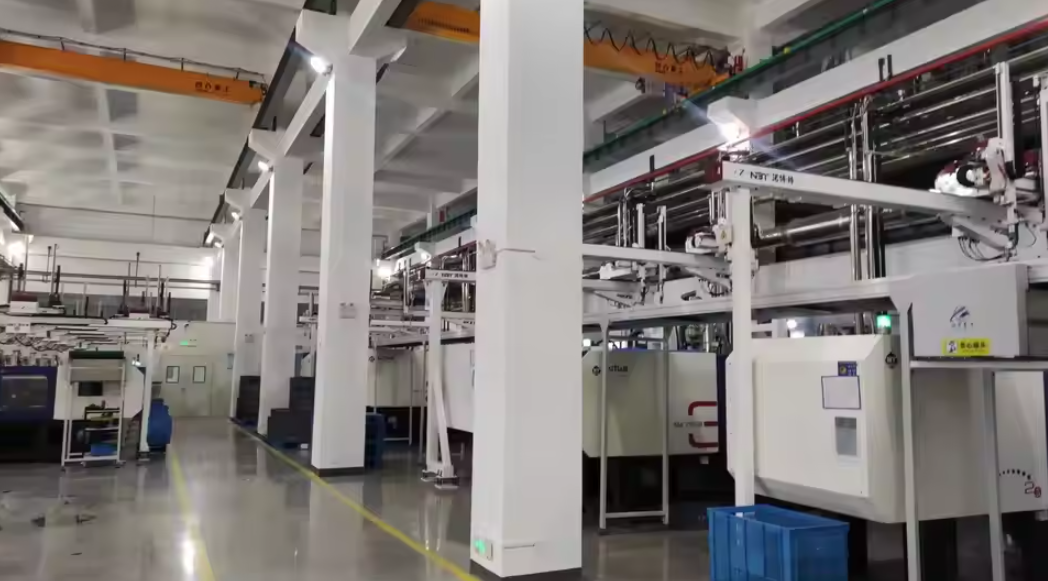
Once a buyer understands the categories, the next question is how a program is actually built and verified. Geakita runs OEM and ODM production for power tools, with customization covering logo printing, packaging design, voltage customization (110V/220V), parameter adjustment of torque and speed, colour scheme, and battery configuration of 2.0Ah or 4.0Ah. The company operates a production base with approximately 10,000 square metres of land and 40,000 square metres of floor space, employs more than 300 staff including 25 engineers, and reports monthly capacity of more than 180,000 units.
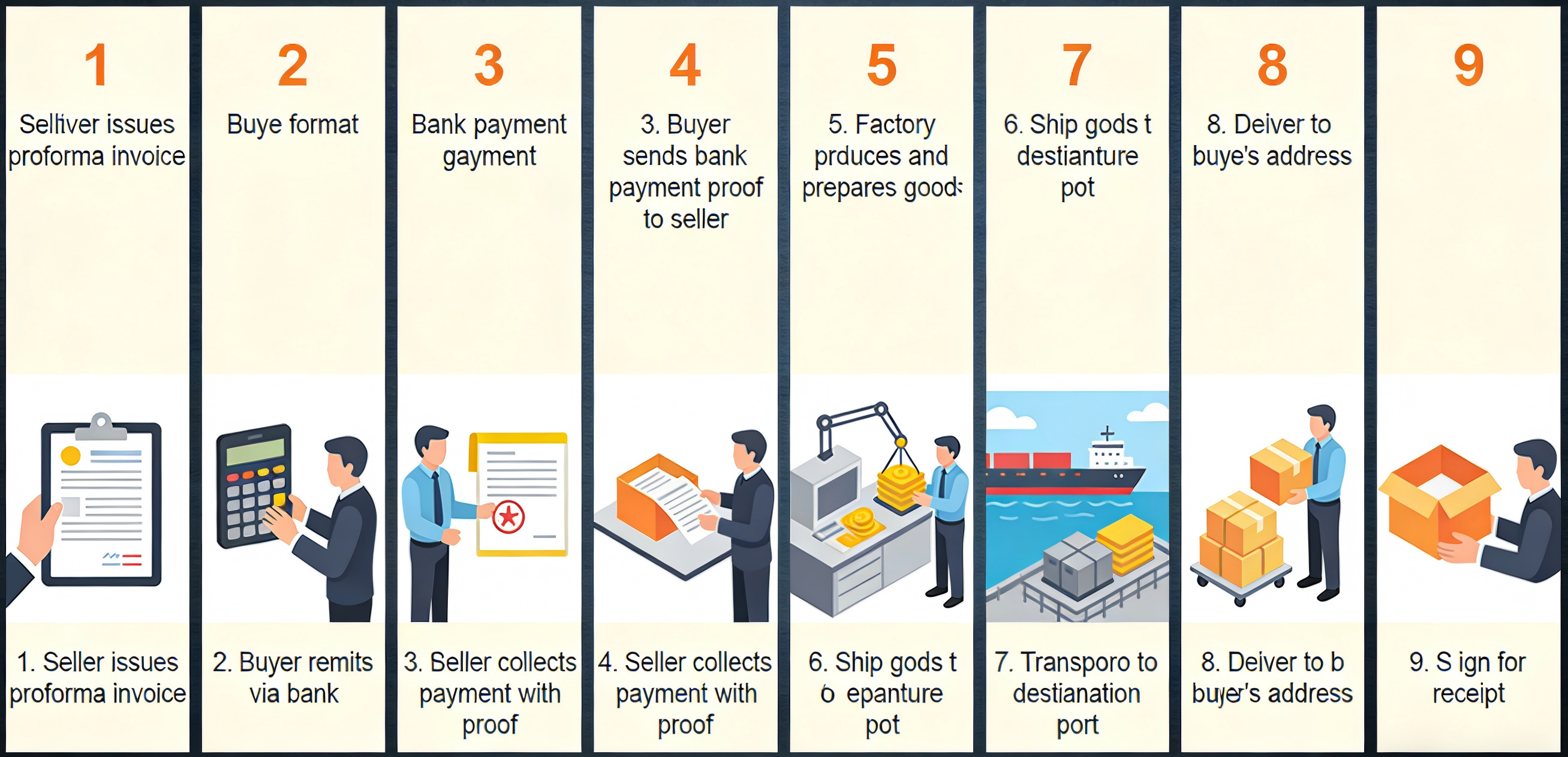
Commercially, the terms that matter most in a first evaluation are these: mass production runs on a 30–45 day lead time, repeat orders on 20–28 days, with shipping time calculated separately according to shipping method and destination port. Standard models carry an MOQ of 100 units per SKU, OEM/ODM customized models 500 units per SKU, and small-batch trial orders of 40 units are available. Delivery can be structured as FOB Shenzhen/Ningbo, EXW factory, or DDP door-to-door. Payment terms are 100% T/T, with a 50% T/T down payment plus 50% B/L acceptable for large orders; credit cards, Alipay and cash are also accepted in special circumstances.
Acceptance and quality control are defined rather than implied. Pre-shipment inspection covers 100% of units through a three-level QC system (IQC, IPQC, FQC) with functional and load testing, third-party inspection by SGS or TUV is available on request, and on-site acceptance at the factory is an option. After-sales support includes a one-year global warranty, 7x24 technical support, on-time replacement for defective units and spare parts supply.
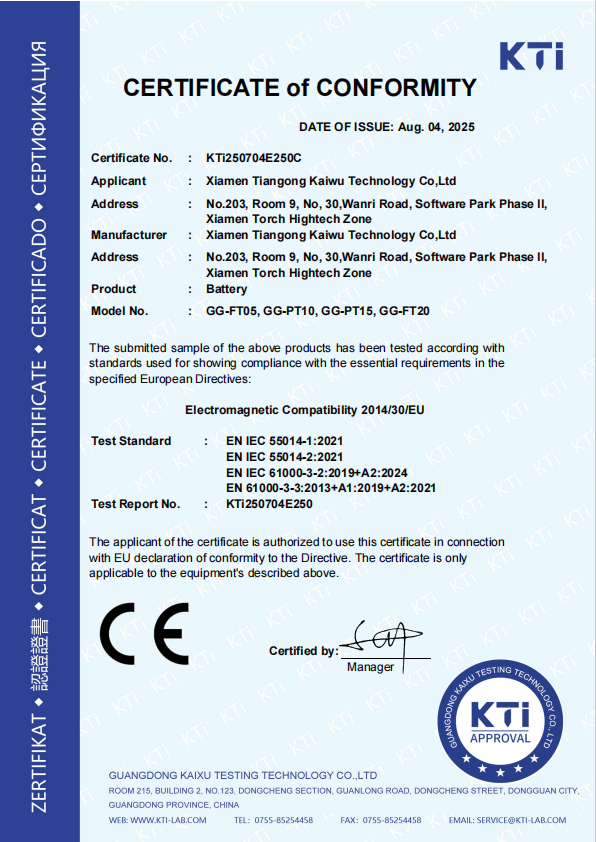
On compliance, the relevant documents are category-level. CE certificates issued under the Electromagnetic Compatibility Directive 2014/30/EU by KTI (Guangdong Kaixu Testing Technology Co., Ltd.) cover the Geakita Elite series and related models, issued on 4 August 2025 and valid to 4 August 2030, against EN IEC 55014-1:2021, EN IEC 55014-2:2021, EN IEC 61000-3-2:2019+A2:2024 and EN 61000-3-3:2013+A1:2019+A2:2021. A UKCA certificate (B-S2412C5162) issued by Beide Compliance Laboratory covers a multi functional electric hand drill under BS EN 62841-1:2015+A11:2022 and BS EN 62841-2-1:2018+A12:2022+A1:2022, valid to 12 December 2027. A CMA certificate (WTS2026-S0339) from Zhejiang Zhongxie Lide Quality Testing Technology Co., Ltd. covers Chinese safety testing to GB 3883.1-2014 and GB/T 3883.202-2019.
Frequently Asked Questions
1. Which certifications should a buyer verify on cordless power tools for the EU and UK?
For the EU, the Geakita Elite series and related models are covered by CE certificates issued under the Electromagnetic Compatibility Directive 2014/30/EU by KTI (Guangdong Kaixu Testing Technology Co., Ltd.), including certificate numbers KTi250704E245C, KTi250704E246C, KTi250704E247C, KTi250704E248C, KTi250704E249C and KTi250704E250C, issued on 4 August 2025 and valid to 4 August 2030 against EN IEC 55014-1:2021, EN IEC 55014-2:2021, EN IEC 61000-3-2:2019+A2:2024 and EN 61000-3-3:2013+A1:2019+A2:2021. For the UK, UKCA certificate B-S2412C5162 covers a multi functional electric hand drill against BS EN 62841-1:2015+A11:2022 and BS EN 62841-2-1:2018+A12:2022+A1:2022, valid to 12 December 2027. For China, CMA certificate WTS2026-S0339 covers safety testing to GB 3883.1-2014 and GB/T 3883.202-2019. At category level, IEC/UL 62841-1 is the primary safety standard for motor-operated hand-held tools, and lithium cells must comply with IEC/UL 62133.
2. What OEM and ODM customization is available on cordless power tools?
OEM and ODM production services for power tools cover logo printing, packaging design, voltage customization (110V/220V), parameter adjustment of torque and speed, colour scheme, and battery configuration options of 2.0Ah or 4.0Ah. Production capacity is reported at more than 180,000 units per month, and quality control runs through a three-level system (IQC, IPQC and FQC) with 100% full inspection before shipment plus functional and load testing. The range that can be customized spans impact drills, angle grinders, screwdrivers, impact wrenches and rotary hammers in the Geakita Elite series, alongside cordless drills, rotary hammers, circular saws and battery-powered cleaning robots.
3. What are the MOQ, delivery and payment terms?
Standard models carry an MOQ of 100 units per SKU and OEM/ODM customized models 500 units per SKU, while small-batch trial orders of 40 units are available. Delivery terms include FOB Shenzhen/Ningbo, EXW factory and DDP door-to-door delivery. Payment is 100% T/T; for large orders a 50% T/T down payment with 50% B/L is acceptable, and credit cards, Alipay or cash are also accepted in special circumstances.
4. How can a first sample or trial order be validated?
Small-batch trial orders of 40 units are available so a buyer can validate performance before committing to volume. Acceptance criteria are defined in advance: 100% pre-shipment inspection by the supplier QC team, third-party inspection by SGS or TUV available on request, and the option of on-site acceptance at the factory. Programs of this kind have been delivered at a scale exceeding 5,000 units across Laos, the Philippines, Thailand, India, Brazil, Saudi Arabia and Oman, with reported results of 99.8% on-time delivery, a 0.3% defect rate and stable performance above 45 degrees Celsius.
5. What is the lead time, and what support follows delivery?
Mass production takes 30–45 days, while repeat orders run on 20–28 days; shipping time is calculated separately based on shipping method and destination port. After-sales support includes a one-year global warranty, 7x24 technical support, on-time replacement for defective units and spare parts supply. Buyers planning a first program can open the full corporate profile and product catalog at the Geakita 2026 catalog before requesting a quotation.
Conclusion
Cordless power tools are best understood as a battery platform with tool families built on top of it. Drills and impact drills handle drilling and fastening, impact wrenches handle heavy bolted joints, angle grinders and circular saws handle cutting, rotary hammers handle concrete, and the same lithium logic now drives robotic pool cleaners and commercial cleaning robots. Voltage alone says very little; cell configuration, motor type, torque staging and output interface decide what the tool can actually do.
For buyers in the evaluation and execution stage, the category knowledge in this explainer translates into three habits: compare complete specification blocks rather than headline numbers, treat IEC/UL 62841-1 and IEC/UL 62133 plus regional certificates such as CE and UKCA as entry conditions, and confirm MOQ, lead time, inspection method and after-sales terms in writing before the first order is placed.
Planning a cordless power tool program? Review the specifications, request a trial order, or ask for a quotation tailored to your market. Product range, certifications and OEM/ODM options are summarised in the Geakita 2026 catalog, and enquiries can be sent through geakita.com.