
- Industry News
- 278
- Gearpioneer-Powering Smart Work EveryWhere
- 02/10/2026
16.8V vs 21V Cordless Power Tools: A Head-to-Head Decision
Head-to-head comparison of 16.8V and 21V cordless power tools: torque classes, chuck sizes, battery configurations, CE/UKCA coverage, MOQ and lead time.
16.8V vs 21V Cordless Power Tools: A Head-to-Head Decision
Two cordless platforms, one purchasing decision. Geakita (Xiamen Tiangong Kaiwu Technology Co., Ltd.) builds both a 16.8V brushless family and a 21V brushless family, and both are certified for the same export markets. That removes brand reputation and build quality from the argument and leaves five real decision variables: torque class, chuck and interface, battery configuration, tool ecosystem, and model-level certificate coverage.
The short answer: choose the 16.8V platform when the dominant work is drilling up to 13 mm in steel and up to 50–60 mm in wood plus general screwdriving, and when a 1.15–1.6 kg machine keeps operators productive across a full shift. Choose the 21V platform when the assortment must also cover masonry drilling, cutting, grinding and heavy fastening, where drill torque reaches 150 N.m, rotary hammers drill concrete to Φ26 mm, and impact wrenches reach 650 N.m and 1,000 N.m.
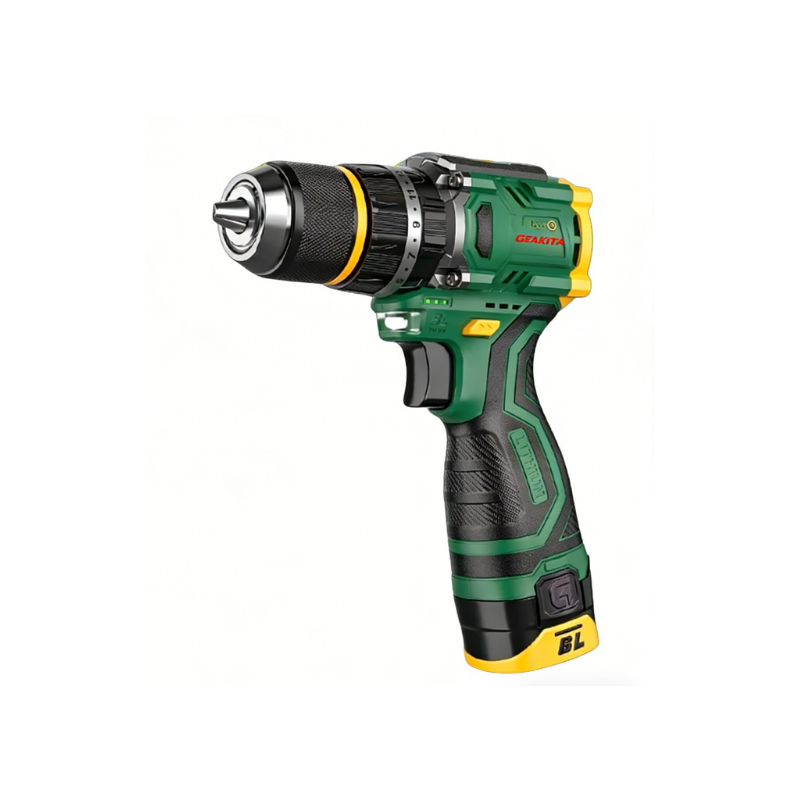
Figure 1 — The 16.8V brushless cordless drill: 13 mm chuck, drilling capacity up to 60 mm in wood, 1.6 kg. One side of the head-to-head comparison.
Problem Definition: Why This Comparison Goes Wrong So Often
A cordless platform is not one product. It is a battery format, a charger family, a packaging plan and an after-sales spare-parts commitment that a distributor keeps for years. A wrong platform choice therefore does not cost a single sale — it creates a duplicated inventory structure that is expensive to unwind.
Five failure patterns show up repeatedly when buyers compare 16.8V and 21V cordless power tools:
- Voltage is treated as a performance score. A 21V label does not state how much torque a tool produces; that number belongs to the individual model, and across the Geakita range it runs from 55 N.m to 150 N.m on drills and up to 1,000 N.m on impact wrenches.
- Torque is read once, not per model. The PT02-1 impact drill is rated 55 N.m while the PT24 is rated 150 N.m — two very different jobs inside a single voltage family.
- Battery configuration is ignored. Pack size drives runtime and pack cost, and the two platforms start at 4 cells (the 16.8V DK-05 at 1,300 mAh × 4) and scale to 15 cells (the 21V PT24 at 2,000 mAh × 15).
- Certification is assumed to be platform-wide. CE, UKCA and CMA coverage is listed per model, which changes what can be shipped to the EU, the UK or the Chinese market.
- Commercial terms are settled last. The minimum order is defined as at least 5 power tool categories with 8 items per category, for a total of 40 items — a structure that should shape the assortment rather than follow it.
Everything below compares the two platforms only on verifiable specifications, certificates and supply terms.
Industry Background: What the 2026 Cordless Market Rewards
The category is expanding, and it expands fastest where cordless replaces corded work. Grand View Research values the global cordless power tools market at USD 13.44 billion in 2024 and projects it to reach USD 32.58 billion by 2033. Within that market, drilling and fastening tools represented the largest segment with a 36.51% revenue share in 2024, according to Horizon Databook / Grand View Research — precisely the segment where the 16.8V versus 21V decision is made.
Regional and category data point the same way. China's power tools market reached USD 5.30 billion in 2024, per Fortune Business Insights, functioning as a major global export hub for cordless lithium technology. Strategic Market Research valued the global angle grinder market at USD 3.2 billion in 2024, with cordless models reshaping site mobility. The established global players identified by Global Market Insights include Makita, Stanley Black & Decker (DeWalt), Bosch and Techtronic Industries (Milwaukee) — a competitive set in which specification clarity, not brand imitation, is the practical route for newer suppliers.
Regulation shapes the comparison as much as demand does. IEC/UL 62841-1 is the primary safety standard for electric motor-operated hand-held tools, per UL Solutions, and lithium-ion cells used in power tools must comply with IEC/UL 62133 for secondary cells and batteries in portable applications. A head-to-head that ignores the certificate list is comparing products that may not be legally shippable to the destination market.
On the supply side, Geakita was founded in 2009 and operates a production base with approximately 40,000 m² of floor space, more than 300 employees and a 25-engineer R&D team. Its lithium power tool business generated RMB 230 million in 2024 sales — RMB 190 million domestically and RMB 40 million overseas — on roughly 1.5 million units shipped, with monthly power tool capacity above 180,000 units. Export channels cover Europe, Southeast Asia and the Middle East, and the company is a member of the Power Tool Sub-Association of the China Electrical Equipment Industry Association. Its portfolio also includes robotic pool cleaners (PC10, PC20, PC200) and the WDC-C2 commercial cleaning robot; those are adjacent cleaning categories and are not part of the cordless platform decision discussed here.
Detailed Solution: A Two-Option Head-to-Head Framework
Both options use brushless pure copper motors and housings built from ABS, aluminium alloy, steel and copper. The differences that decide the purchase are below.
Option A — the 16.8V brushless platform (16.8V–18V operating range)
- DK00 Cordless Drill: 16.8V–18V, 13 mm chuck, drilling capacity 13 mm in steel and 60 mm in wood, 24 torque settings plus triple functions, no-load speed 450/2,200 RPM, impact frequency 7,000/24,000 BPM, LED light, stepless speed regulation, 1.6 kg.
- DK01 Brushless Drill: 16.8V, 13 mm collet, steel 13 mm and wood 50 mm, 24 gears plus three functions, maximum torque 120 N.m, no-load speed 450/2,000 RPM, impact frequency 7,000 BPM, LED light, forward and reverse, 1.15 kg.
- DK02 and DK03 Brushless Drills: 16.8V, 13 mm chuck, 0–120 N.m, two speed ranges of 0–450 and 0–2,000 r/min, impact frequency 7,000/24,000 BPM. DK02 carries 4 × 1,500 mAh cells; DK03 carries 8 × 1,300 mAh cells.
- DK-05 Brushless Impact Drill: 16.8V with a 1,300 mAh × 4 cell pack.
- QZ01 and QZ02 Impact Screwdrivers: 16.8V, torque 35/100/120 N.m, three speed gears, 1,200/2,400/3,000 rpm, stepless speed change, LED light, forward and reverse, three-function with impact.
What this platform delivers: a compact 13 mm chuck class, torque up to 120 N.m, and machines starting at 1.15 kg that can be held through long assembly or maintenance sessions without fatigue becoming the limiting factor.
Option B — the 21V brushless platform
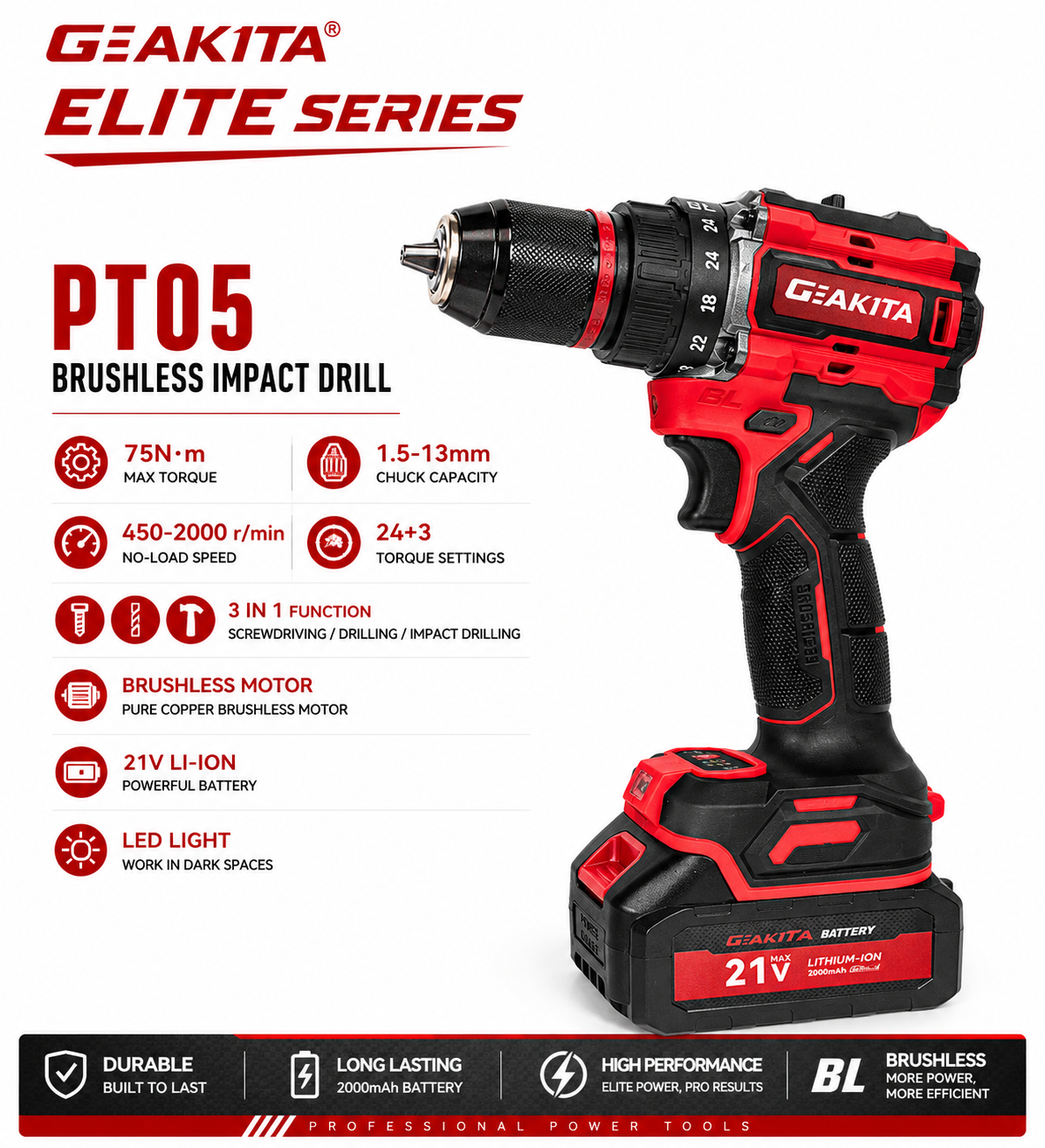
Figure 2 — The 21V brushless impact drill (PT-05): one battery platform, a much wider tool ecosystem.
- PT-series impact drills: PT01 (60 N.m, 10 mm chuck, 20+1 settings), PT02-1 (55 N.m, 10 mm chuck, 23+1), PT12 (60 N.m, 13 mm chuck, 24+3), PT20 (80 N.m, 13 mm chuck, 1,300 mAh × 10), PT-21 (80 N.m, 13 mm chuck, 1,500 mAh × 10), PT22 (35/100/120 N.m, 13 mm chuck, 1,500 mAh × 10), PT24 (150 N.m, 13 mm chuck, 2,000 mAh × 15).
- Angle grinders JM01-02 and JM03: 21V, 100 mm cutting disc, 16 mm inner diameter, 12,000 RPM, 1.6 kg including one battery.
- Rotary hammers RH01 and RH02: 21V, 2,000 mAh × 10, impact frequency 0–4,500/min, no-load speed 0–2,000 r/min, drilling capacity Φ26 mm in concrete, Φ13 mm in steel and Φ26 mm in wood.
- Cordless lithium circular saw CS01: 21V with a brushless pure copper motor and a 1,500 mAh × 10 battery configuration.
- Impact screwdrivers QZ03 (1,300 mAh × 10) and QZ05 (1,500 mAh × 10); rotary hammer HM05 (1,500–2,000 mAh × 10).
- Impact wrenches: the 650 NM and 1,000 NM models run on 1,500–2,000 mAh × 10–15 cell packs; GKR05 is rated 650 N.m at 0–4,000 r/min, GKR06 is rated 1,000 N.m at 0–3,200 r/min, and GKR03 is a screwdriver with three torque levels of 35/100/120 N.m at 1,200/2,400/3,000 rpm.
- Geakita Elite series: DK05, PT05, QZ03, QZ05, JM05, HM05 and the 650 NM and 1,000 NM impact wrenches, all 21V brushless pure copper with 1,300–2,000 mAh × 10 cell packs.
The decision rule
- If the dominant jobs are drilling under 13 mm in steel, up to 60 mm in wood and screwdriving at hand height, the 16.8V platform is the lower-friction choice.
- If the assortment must include masonry drilling, cutting or grinding, only the 21V platform covers those tool classes.
- If tire service, structural bolting or machinery repair is in scope, the torque conversation moves to the 21V impact wrenches at 650 N.m and 1,000 N.m.
- If operator fatigue is a recurring complaint from end users, compare 1.15 kg (DK01) against the heavier 21V machines before comparing torque.
- If one charger platform has to serve one retail shelf, compare cell configurations — 4, 5, 8, 10 and 15 cell packs exist across the two families.
- If the destination is the EU or the UK, confirm the certificate list for the exact model numbers, not for the platform.
Comparison Table: 16.8V vs 21V Head-to-Head
| Decision factor | 16.8V platform (DK00–DK03, DK-05, QZ01/QZ02) | 21V platform (PT series, JM, RH, CS01, QZ03/QZ05, wrenches) |
|---|---|---|
| Rated voltage | 16.8V; the DK00 operates across 16.8V–18V | 21V across the whole family |
| Motor | Brushless pure copper (DK01, DK02, DK03, DK-05) | Brushless pure copper (PT series, QZ03/QZ05, JM, RH, CS01, HM05, wrenches) |
| Chuck diameter | 13 mm three-jaw metal ratchet chuck (DK00–DK03) | 10 mm (PT01, PT02-1) or 13 mm (PT12, PT20, PT-21, PT22, PT24) |
| Torque | Up to 120 N.m (DK01–DK03); QZ01/QZ02 screwdrivers at 35/100/120 N.m | 55 N.m (PT02-1), 60 N.m (PT01, PT12), 80 N.m (PT20, PT-21), 35/100/120 N.m (PT22), 150 N.m (PT24); wrenches to 650 N.m and 1,000 N.m |
| Battery configuration | 4 × 1,300 mAh (DK-05), 4 × 1,500 mAh (DK02), 8 × 1,300 mAh (DK03) | 5 × 1,300 mAh (PT01/PT02-1/PT12), 10 × 1,300 mAh (PT20), 10 × 1,500 mAh (PT-21/PT22), 15 × 2,000 mAh (PT24), 10–15 × 1,500–2,000 mAh (wrenches) |
| No-load speed | 450/2,200 RPM (DK00); 450–2,000 RPM (DK01–DK03) | 450–2,000 r/min (PT-series drills); 0–4,000 r/min (GKR05); 0–3,200 r/min (GKR06) |
| Impact frequency | 7,000/24,000 BPM (DK00, DK02, DK03); 7,000 BPM (DK01) | 0–4,500/min (RH01, RH02 rotary hammers) |
| Drilling capacity | Steel 13 mm, wood 60 mm (DK00); steel 13 mm, wood 50 mm (DK01–DK03) | Concrete Φ26 mm, steel Φ13 mm, wood Φ26 mm (RH01/RH02); not listed for PT-series drills in the source specification |
| Machine weight | 1.6 kg (DK00); 1.15 kg (DK01) | 1.6 kg including one battery (JM01-02, JM03); not listed for PT-series drills in the source specification |
| Tool ecosystem | Drills and impact screwdrivers | Drills, impact screwdrivers, angle grinders, rotary hammers, circular saw, impact wrenches |
| Certification coverage | CE (EMC 2014/30/EU) covers DK-05 and DK00–DK03; UKCA covers DK00–DK03 and QZ01/QZ02 | CE covers PT-05, QZ03/QZ05, JM05, HM05 and the 650 NM/1,000 NM wrenches; UKCA covers PT01–PT24, JM01-02/JM03, RH02, CS01, GKR03/GKR05/GKR06; CMA WTS2026-S0339 applies to GKR05 |
| Best-fit buying pattern | Light assembly, maintenance, DIY and retail entry SKUs | Construction, auto repair, railway and heavy machinery maintenance, masonry, cutting and grinding |
Table compiled from Geakita product specification data. Where the source does not list a value, the table says so rather than estimating.
Step-by-Step Breakdown: From Job Requirement to Signed Order
- Step 1 — Fix the dominant job. Write down what the majority of end users actually do: structural fastening, masonry drilling, metal cutting, or light assembly and screwdriving. This single sentence eliminates one platform in most cases.
- Step 2 — Convert the job into a torque and chuck requirement. Fastening wheels and machinery bolts means 650 N.m to 1,000 N.m impact wrenches; anchor and masonry work means Φ26 mm concrete capacity from a rotary hammer; general drilling and driving sits between 55 N.m and 150 N.m on 10 mm or 13 mm chucks.
- Step 3 — Size the battery pack to the duty cycle. Match the pack to hours in use: 4 cell (DK-05, 1,300 mAh × 4) and 8 cell (DK03, 1,300 mAh × 8) packs for intermittent tasks, 10 cell packs (PT20, PT-21, PT22) for site days, and 15 cell packs (PT24, 2,000 mAh × 15) for continuous heavy fastening. Cell count also sets pack cost, so this step protects margin.
- Step 4 — Check the destination market certificate list against the exact model numbers. CE under EMC Directive 2014/30/EU, UKCA under the UK Supply of Machinery (Safety) Regulations 2008, and CMA under GB 3883.1-2014 do not automatically cover every SKU, and a certificate that misses the model you import stops the shipment.
- Step 5 — Score the ecosystem against your shelf. A 21V shelf can carry drills, screwdrivers, angle grinders, rotary hammers, a circular saw and impact wrenches on one battery family — the Elite series packages DK05, PT05, QZ03, QZ05, JM05, HM05 and the 650 NM and 1,000 NM wrenches together. A 16.8V shelf stays focused on drills and screwdrivers, which is simpler but narrower.
- Step 6 — Validate with inspection evidence, not with claims. Ask for the quality route: 100% full inspection before shipment, three-level QC (IQC / IPQC / FQC), functional and load testing. In a programme covering more than 5,000 units over more than two years, this route produced 99.8% on-time delivery and a 0.3% defect rate, with stable performance in 45 °C+ high-temperature environments.
- Step 7 — Lock commercial terms. Confirm the minimum order structure (at least 5 categories, 8 items per category, 40 items total), the lead time (30–45 days for mass production, 20–28 days for repeat orders, shipping time calculated separately), the customization scope (logo printing, packaging design, voltage customization at 110V/220V, torque and speed adjustment, colour scheme, battery configuration at 2.0Ah/4.0Ah), and the after-sales terms (global warranty, 7×24 technical support, on-time replacement for defective units, spare parts supply).
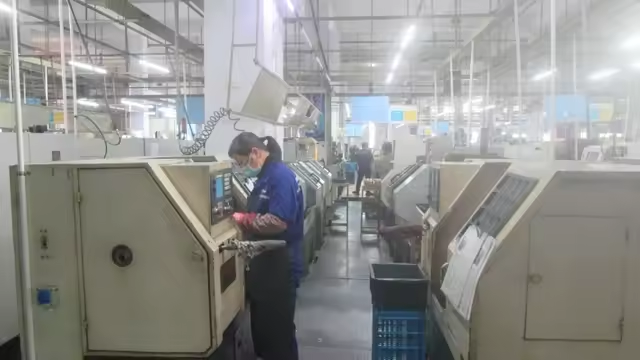
Figure 3 — Quality control testing laboratory: functional and load testing support the 100% pre-shipment inspection route.
Use Cases: Where Each Platform Wins
Auto repair and tire service
Wheel nuts, suspension bolts and engine work sit outside the drill class entirely, so this segment resolves to the 21V impact wrenches — the 650 NM and 1,000 NM models on 1,500–2,000 mAh × 10–15 cell packs, with GKR05 rated 650 N.m and GKR06 rated 1,000 N.m. Geakita's applicable-industry data for these wrench and screwdriver models lists vehicle maintenance, tire replacement, engine disassembly and daily workshop repair as core applications.
Railway engineering and heavy machinery maintenance
The GKR03, GKR05 and GKR06 cordless models are specified for railway engineering and maintenance, automotive and transportation, construction and steel structures, heavy machinery and equipment manufacturing, energy and petrochemicals, shipbuilding and marine engineering, mining and metallurgy, and light industry and DIY. These are environments where 21V torque and a swappable lithium pack outperform any corded alternative on access.
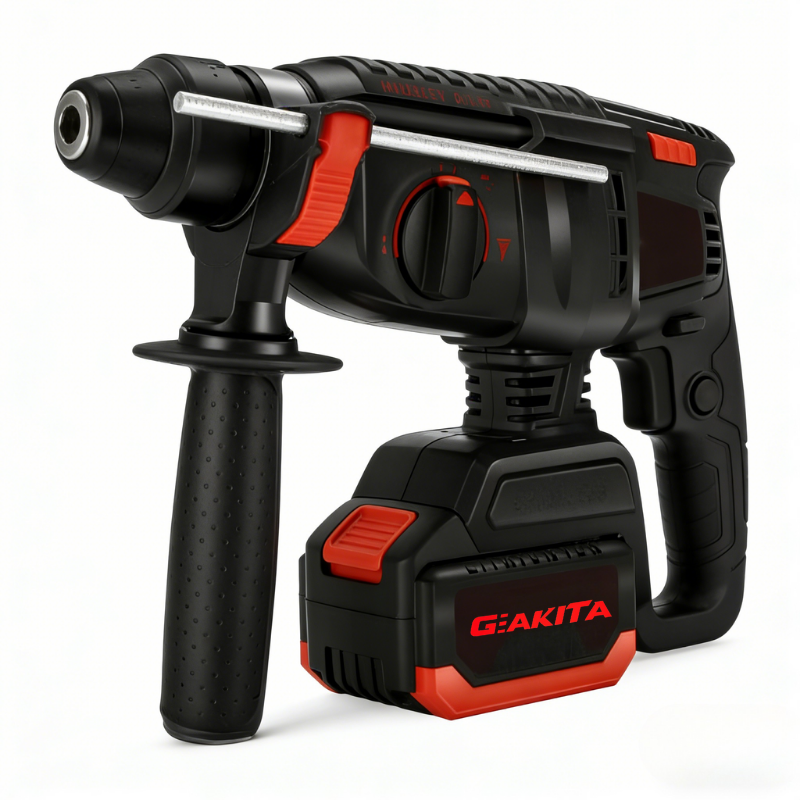
Figure 4 — The 21V cordless rotary hammer (RH01): concrete Φ26 mm, steel Φ13 mm, wood Φ26 mm — a tool class the 16.8V platform does not cover.
Construction and infrastructure
Masonry anchors, core holes and formwork fixing need the rotary hammers: RH01 and RH02 deliver 0–4,500/min impact frequency and 0–2,000 r/min no-load speed with Φ26 mm concrete capacity, while JM01-02 and JM03 handle 100 mm cutting discs at 12,000 RPM. Field programmes using this class of tooling have run in 45 °C+ conditions with stable performance.
Retail, e-commerce and hardware distribution
For a distributor building a sellable shelf, the 40-item minimum order structure — 5 categories, 8 items per category — is best filled by mixing platform tiers: a 16.8V entry layer at 1.15–1.6 kg for DIY and household buyers, and a 21V layer for professional and semi-professional demand. Geakita's distribution experience covers supermarkets, e-commerce partners, power tool distributors, hardware stores and OEM/ODM manufacturers.
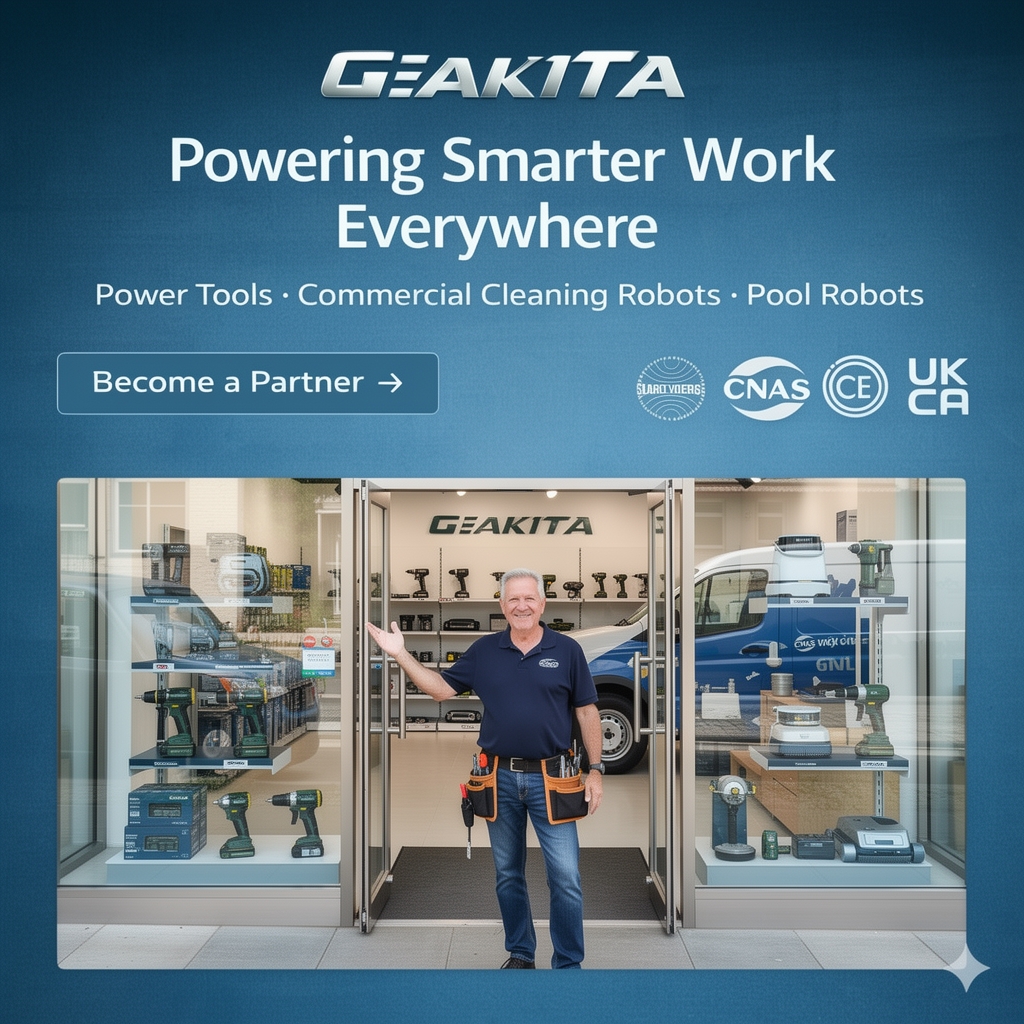
Figure 5 — Terminal retail presence: the platform decision also shapes shelf layout, packaging and after-sales spare-part stock.
Light assembly, maintenance and DIY
Cabinet assembly, fixture maintenance and household repair are better served by the lighter end of the 16.8V range. The DK01 at 1.15 kg with 120 N.m maximum torque and 24 gears plus three functions covers most of this work without the weight penalty of a heavier platform.
Compliance Check Before You Compare Specs
Certificates are model-specific, so this section is best treated as a precondition rather than a checklist item. Geakita holds CE certificates under the Electromagnetic Compatibility Directive 2014/30/EU — numbers KTi250704E245C through KTi250704E250C — issued on 4 August 2025 by KTI (Guangdong Kaixu Testing Technology Co., Ltd.) and valid until 4 August 2030, tested against EN IEC 55014-1:2021, EN IEC 55014-2:2021, EN IEC 61000-3-2:2019+A2:2024 and EN 61000-3-3:2013+A1:2019+A2:2021. The CE scope lists the Geakita Elite series together with the DK, PT, QZ, JM, RH, CS and GKR model ranges.
For the United Kingdom, certificate B-S2412C5162 was issued on 12 December 2024 by Beide Compliance Laboratory and runs to 12 December 2027 under the UK Supply of Machinery (Safety) Regulations 2008, tested to BS EN 62841-1:2015+A11:2022 and BS EN 62841-2-1:2018+A12:2022+A1:2022, covering cordless drills, screwdrivers, angle grinders, a rotary hammer, a circular saw and wrench models. A CMA certificate numbered WTS2026-S0339, issued on 2 April 2026 by Zhejiang Zhongxie Lide Quality Testing Technology Co., Ltd. under GB 3883.1-2014, applies to the GKR05 impact wrench for the Chinese market.
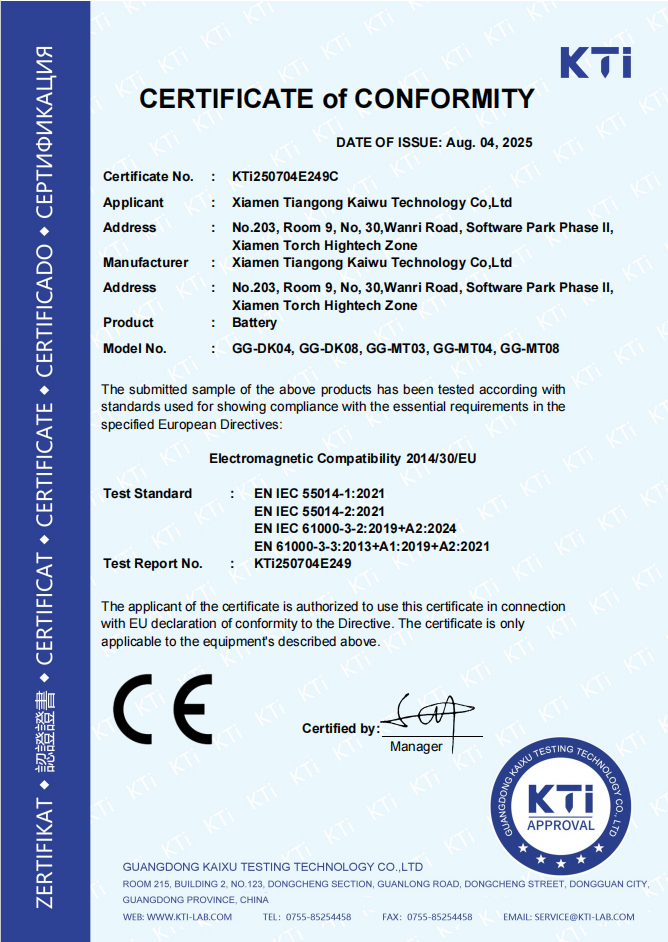
Figure 6 — CE certificate KTi250704E249C (EMC Directive 2014/30/EU), valid 4 August 2025 to 4 August 2030, listing the covered cordless models.
At the international level, IEC/UL 62841-1 frames the safety requirements for motor-operated hand-held tools, and IEC/UL 62133 frames lithium-ion cell and battery requirements for portable applications. Buyers comparing platforms should ask for the certificate list mapped to the exact model numbers on the purchase order.
FAQ: Cordless Power Tool Platform Decisions
Does Geakita's cordless power tool range carry the certificates required for the EU and UK?
Yes, at model level rather than platform level. Geakita holds CE certificates under the Electromagnetic Compatibility Directive 2014/30/EU — numbers KTi250704E245C through KTi250704E250C — issued on 4 August 2025 by KTI (Guangdong Kaixu Testing Technology Co., Ltd.) and valid until 4 August 2030, tested against EN IEC 55014-1:2021, EN IEC 55014-2:2021, EN IEC 61000-3-2:2019+A2:2024 and EN 61000-3-3:2013+A1:2019+A2:2021. For the UK, certificate B-S2412C5162 issued on 12 December 2024 by Beide Compliance Laboratory under the UK Supply of Machinery (Safety) Regulations 2008 and valid to 12 December 2027 covers cordless drill, screwdriver, angle grinder, rotary hammer, circular saw and wrench models, tested to BS EN 62841-1:2015+A11:2022 and BS EN 62841-2-1:2018+A12:2022+A1:2022. A CMA certificate, WTS2026-S0339 issued on 2 April 2026 by Zhejiang Zhongxie Lide Quality Testing Technology Co., Ltd. under GB 3883.1-2014, applies to the GKR05 impact wrench. Match the certificate list to the exact model numbers you intend to import.
Which platform delivers more torque, the 16.8V or the 21V?
The 21V platform covers the higher torque classes. Within the 21V brushless drills, the PT24 is rated 150 N.m, the PT20 and PT-21 are rated 80 N.m, the PT12 and PT01 are rated 60 N.m, the PT02-1 is rated 55 N.m, and the PT22 is rated 35/100/120 N.m. The 16.8V drills reach 120 N.m (DK01, DK02, DK03), and the 16.8V QZ01/QZ02 impact screwdrivers are rated 35/100/120 N.m. The 21V advantage becomes decisive in neighbouring tool classes: the RH01/RH02 rotary hammers drill concrete to Φ26 mm, steel to Φ13 mm and wood to Φ26 mm; the JM01-02/JM03 angle grinders run a 100 mm disc at 12,000 RPM; and the 21V impact wrenches reach 650 N.m (GKR05) and 1,000 N.m (GKR06).
What drives the cost difference between the two platforms?
Cost follows the bill of materials, and the visible variables are cell count, cell capacity, torque class, motor type and certification scope. On the 16.8V side, DK-05 uses a 1,300 mAh × 4 cell pack, DK02 uses 4 × 1,500 mAh and DK03 uses 8 × 1,300 mAh. On the 21V side, packs run from 5 × 1,300 mAh (PT01, PT02-1, PT12) to 10 × 1,300 mAh (PT20), 10 × 1,500 mAh (PT-21, PT22) and 15 × 2,000 mAh (PT24), with the 650 NM and 1,000 NM impact wrenches on 1,500–2,000 mAh × 10–15 cell configurations. Higher torque classes and brushless pure copper motors add cost on top of that. Commercial structure shapes the landed number too: the minimum order is at least 5 power tool categories with 8 items per category, 40 items in total, with a mass production lead time of 30–45 days and repeat orders at 20–28 days, shipping time calculated separately.
Can a distributor validate both platforms before committing to volume?
Validation is a commercial step rather than a sample-only step, and the structure supports it in a defined way. The minimum order is 40 items — at least 5 categories with 8 items each — which allows a first shipment to be built as a mixed assortment spanning both the 16.8V and 21V platforms instead of a single-SKU bet. Before shipment, every unit passes 100% full inspection supported by three-level QC (IQC / IPQC / FQC) plus functional and load testing, so the data a distributor receives is inspection-based rather than marketing-based. To scope a first assortment, the Geakita corporate profile and product catalog can be downloaded from the Geakita catalog PDF, and sample, quotation or OEM/ODM requirements can be raised directly with the export team at Flora@gearpioneer.com or +86 135-9954-5996, with WhatsApp available on the same number.
What lead time should be planned for both platforms?
Mass production lead time is 30–45 days, and repeat orders run 20–28 days; shipping time is calculated separately according to the shipping method and destination port. Delivery reliability evidence comes from a programme covering more than 5,000 units over more than two years, with 99.8% on-time delivery and a 0.3% defect rate, including stable performance in 45 °C+ high-temperature environments. Key materials — cells, magnets, bearings and cutting tools — are held to Tier-A approval status with 100% IQC sampling and defect traceability, alongside IPQC inspections, automatic end-of-line testing, and OQC sampling with UN38.3 compliance.
Conclusion: The Head-to-Head Result
There is no abstract winner, because the two platforms solve different problems. The 16.8V family wins on handling and everyday work: 16.8V–18V operation, 13 mm chucks, up to 120 N.m, and machines of 1.15 kg to 1.6 kg that keep operators productive across a full shift. The 21V family wins on reach and load: 55 N.m to 150 N.m on drills, Φ26 mm concrete capacity from the RH01/RH02 rotary hammers, 100 mm cutting discs at 12,000 RPM from the JM grinders, and 650 N.m to 1,000 N.m from the impact wrenches.
The practical decision is therefore an assortment decision, not a product decision. Distributors serving DIY, household and light maintenance demand should anchor on 16.8V and add 21V selectively. Distributors serving construction, auto repair, railway, heavy machinery or hardware professionals should anchor on 21V and use one or two 16.8V SKUs for entry price points. Whichever route is taken, the certificate list, battery configuration and lead time should be confirmed before the purchase order, not after.
Next Step
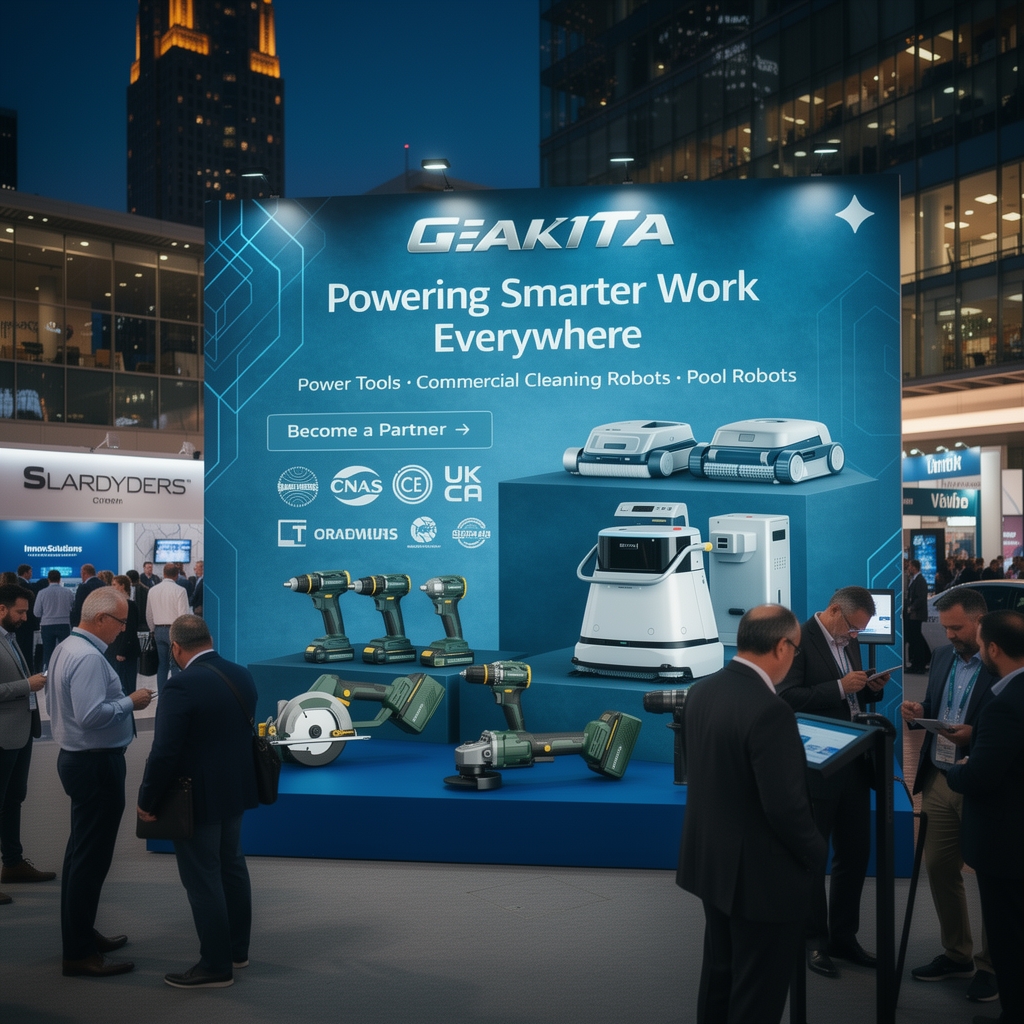
Figure 7 — Review both platforms, request samples and confirm an assortment with the Geakita export team.
To compare the two platforms against your own assortment plan, request the current specification sheets, certificate list and sample arrangement. Geakita supplies cordless power tools on OEM/ODM terms with logo printing, packaging design, voltage customization at 110V/220V, torque and speed adjustment, colour schemes and battery configuration options of 2.0Ah or 4.0Ah.
Download the corporate profile and product catalog: GEAKITA Corporate Profile & Product Catalog 2026
Contact: Flora | Email: Flora@gearpioneer.com | Tel / WhatsApp: +86 135-9954-5996 | Start a WhatsApp conversation | Website: www.geakita.com
Address 1: 22A, Office Building B, Shenglong Times Square, Longhua District, Shenzhen, China. Address 2: 9-3, Room 203, No. 30 Guanri Road, Software Park, Phase II, Torch High-tech Zone, Xiamen, FJPR, CN.