
- Industry News
- 536
- Gearpioneer-Powering Smart Work EveryWhere
- 17/09/2026
How to Assess a Cordless Impact Wrench for Heavy-Duty Industrial Use
A decision guide for procurement teams assessing cordless impact wrenches for production lines, construction sites, and automotive repair. Covers brushless motor data, 3-year TCO, battery safety evidence, and compliance checks.
How to Assess a Cordless Impact Wrench for Heavy-Duty Industrial Use
Assessing a cordless impact wrench for heavy-duty industrial use comes down to evidence, not impressions. Three questions decide most purchases in this category: which motor architecture is actually inside the tool, what the battery pack can prove about cell grade and safety testing, and what the tool costs across three years of continuous duty rather than on the day it is ordered.
This guide is written for procurement managers, plant engineers, and tooling buyers evaluating cordless impact wrenches for industrial production lines, construction sites, and automotive repair operations. It sets out the decision factors that separate a professional-grade brushless impact wrench from traditional brushed tools and low-cost generic alternatives, and it lists the documentation and test evidence that should exist before a purchase order is signed.
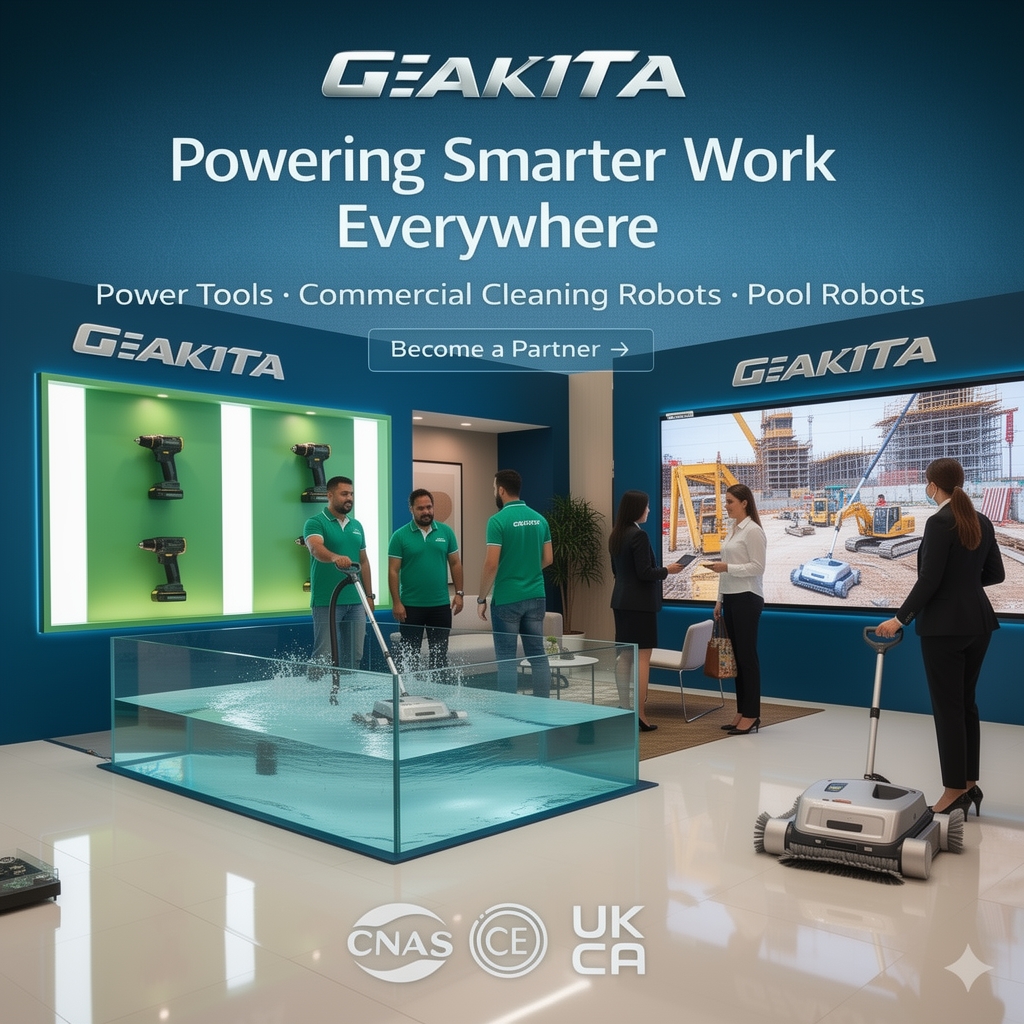
Assessment starts with the tool platform and its documented evidence, not with the largest number on a specification sheet.
Problem Definition: Why Industrial Impact Wrench Assessments Go Wrong
A cordless impact wrench deployed on a production line is judged on different criteria than one used for occasional workshop jobs. It has to survive continuous duty cycles, dust, and vibration, hold consistent fastening performance across a shift, and keep its battery pack inside safe operating limits. When procurement teams apply consumer-grade evaluation logic, three specific failure patterns appear.
- Shortlisting on peak torque instead of duty capability. Peak fastening torque describes a single event, not what the tool delivers across a working shift. Buyers who rank tools by the largest number on the box frequently end up with units that slow down or overheat under continuous load.
- Treating purchase price as cost. The quoted price covers the tool at delivery. It does not cover brush replacement, battery degradation, maintenance labor, or unplanned downtime.
- Treating the battery as an accessory. In industrial use, the battery pack is both a safety component and a regulated transport item. Cell grade, protection electronics, and test documentation belong in the evaluation, not in a footnote.
Each of these failures is avoidable, but only if the assessment is structured around verifiable facts rather than brand impressions. That structure is what the rest of this guide provides.
Industry Background: Where Impact Wrenches Sit in the Cordless Market
Cordless power tools are a mature but still expanding category, and fastening tools sit at its center. The global cordless power tools market was valued at USD 13.44 billion in 2024 and is projected to reach USD 32.58 billion by 2033, according to Grand View Research. Drilling and fastening tools accounted for the largest segment of that market in 2024 with a 36.51% revenue share, based on Horizon Databook / Grand View Research data. Cordless impact wrenches sit inside that fastening segment, which is one reason buyers treat motor architecture as a category-level decision rather than a product-level one.
Published market size figures vary by methodology. Some estimates include batteries, chargers, and garden machinery while others exclude them, so any single number should be read as directional rather than exact. What does not vary is the direction: cordless lithium platforms continue to displace corded and pneumatic alternatives in maintenance, assembly, and field service work.
The competitive field is dominated by established global brands, including Makita, Stanley Black & Decker (DeWalt), Bosch, and Techtronic Industries (Milwaukee), as identified by Global Market Insights. Alongside them, Chinese manufacturers supply a substantial share of worldwide cordless tool production. China's power tools market reached USD 5.30 billion in 2024 and functions as a major global export hub for cordless lithium technology, according to Fortune Business Insights.
Geakita (XiamenTiangong Kaiwu Technology Co., Ltd.) is one of those manufacturers. Founded in 2009, the company builds power tools alongside robotic pool cleaners and commercial cleaning robots, operates a 40,000 m² production base with more than 300 employees and a 25-engineer R&D team, and reports export activity across Europe, Southeast Asia, and the Middle East. Its 2024 lithium power tool sales reached RMB 230 million, with approximately 1.5 million units shipped, and the company has accelerated international expansion since 2023. For a buyer, the relevant point is not the size figure itself but what it implies: a supplier with enough volume to fund engineering depth and certification support.
Detailed Solution: The Five Dimensions That Decide a Heavy-Duty Assessment
1. Motor architecture: brushless versus brushed
The first filter in any industrial assessment is the motor. Brushless motors remove the carbon brushes that wear down in brushed tools, and that single design change drives most of the downstream differences buyers care about. Compared with traditional brushed motor power tools and low-cost generic power tools, brushless models deliver roughly 30% higher working efficiency, about 50% longer service life, and approximately 20% longer battery runtime per charge. Field defect rates differ as well: brushless units in this comparison show a 0.5% defect rate against 3-5% for the brushed and generic alternatives.
The practical translation for a procurement team is straightforward. A brushless impact wrench holds its fastening performance across a shift, needs fewer interventions between shifts, and draws fewer battery cycles to complete the same volume of work. On a line running multiple shifts, that difference compounds weekly.
2. Total cost of ownership over three years
Purchase price is the smallest part of the cost picture on a heavy-duty tool, and it is the part buyers most often over-weight. Over a three-year horizon, brushless impact wrenches carry 10-15% lower total cost of ownership than brushed and low-cost generic equivalents, with maintenance cost running about 20% lower and roughly 50% less maintenance required overall. Because there are no carbon brushes to replace, the maintenance events that do occur are fewer and shorter.
Energy efficiency is also higher, by around 25%, which lowers power consumption per fastening cycle and supports compliance with EU energy efficiency standards. In procurement terms, the purchase-price gap is normally absorbed within weeks of service, while the remainder of the three-year window carries the savings.
3. Battery system and safety evidence
In industrial settings, the battery pack is where risk concentrates. Battery overcharging, short circuit, or fire hazard in extreme environments is a recognized failure mode, and the control set that addresses it includes an intelligent BMS (Battery Management System) with overcharge, over-discharge, and short-circuit protection. Cell grade matters just as much: A-grade lithium-ion cells behave differently from lower-tolerance alternatives under repeated fast-charge cycling.
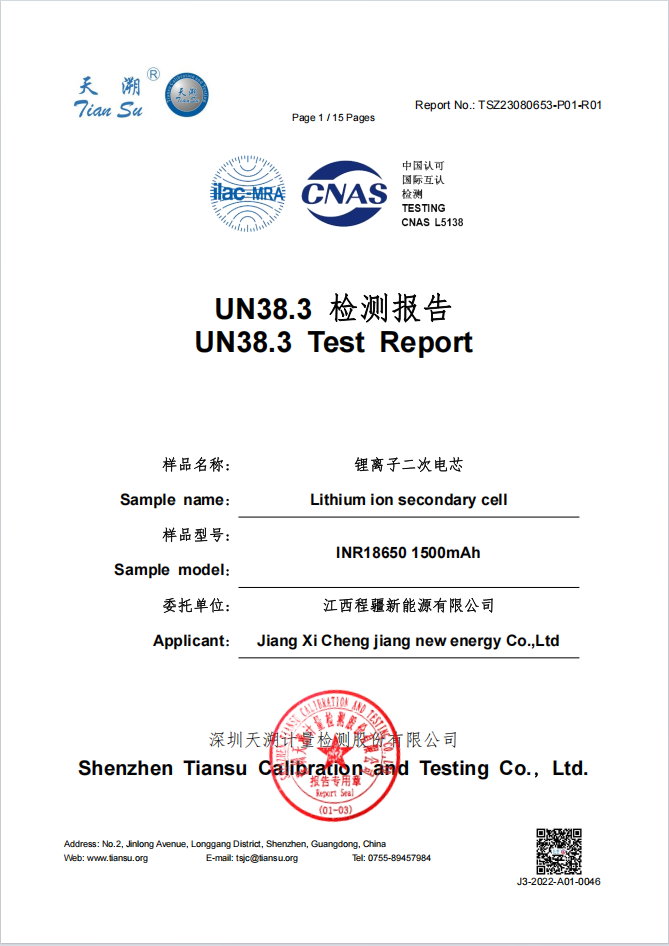
Battery documentation is both a safety requirement and a shipping prerequisite for industrial buyers.
Two supplier-side practices should be treated as pass-or-fail conditions: 100% battery safety testing before shipment, and compliance with UN38.3 transportation standards. The second point is a procurement constraint as much as a safety one, because a battery that does not meet UN38.3 cannot move across borders as a standalone shipment into the buyer's market.
4. Mechanical safety and reaction control
Impact wrenches are high-torque tools, and reaction forces are part of normal operation. The primary risk during use is accidental injury caused by tool kickback or blade breakage, and the control set against it includes an anti-kickback system, a safety switch, and overload protection.
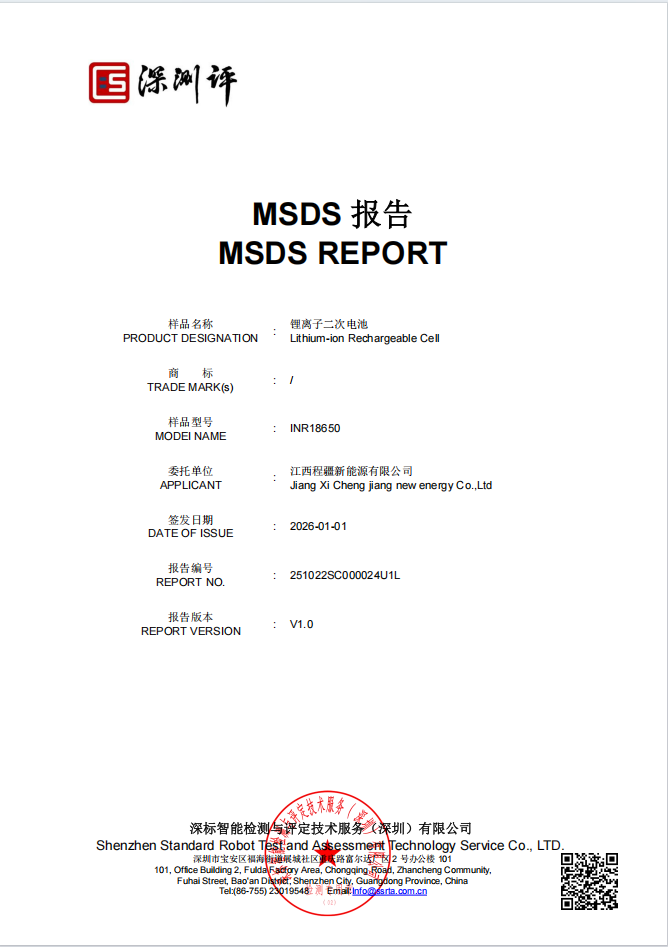
Mechanical safety controls and their documentation are part of the tool specification, not an add-on.
Supplier-side evidence should extend beyond the tool itself. Full mechanical safety testing, a user manual containing detailed safety instructions, and regular safety training for the production teams building the tools are all verifiable items a buyer can request. For an industrial purchaser, that turns a marketing claim into a checklist.
5. Compliance and certification support
Two standards govern most of what an industrial buyer needs to see. IEC/UL 62841-1 is the primary safety standard for electric motor-operated hand-held tools and lawn and garden machinery, per UL Solutions. Lithium-ion cells used in power tools must comply with IEC/UL 62133, the standard for secondary cells and batteries for portable applications.
Beyond the two core standards, an industrial buyer should confirm that the supplier can support full global certification requirements for the destination market. Certification support is one of the practical differences between a professional brushless supply relationship and a low-cost generic one, particularly when the tool is destined for Europe or other regulated markets.
Step-by-Step Breakdown: A Six-Step Assessment Workflow
- Define the load by duty cycle, not by specification. Write down the number of fastening cycles per shift, the bolt size range, and whether the tool runs continuously or intermittently. This number drives every other decision in the assessment.
- Confirm motor architecture before comparing torque. Two tools can list the same maximum torque value while using different motors. Get the motor type in writing, because under continuous load the difference shows up in efficiency, service life, and battery runtime rather than in a peak figure.
- Treat battery evidence as a gate, not a preference. Cell grade, protection electronics, 100% pre-shipment safety testing, and UN38.3 compliance should be satisfied before an order is placed, not verified after delivery.
- Build a three-year total cost of ownership model. Layer maintenance events, maintenance labor, energy consumption, and battery replacement on top of the tool purchase price. The reference point for brushless units is a 10-15% lower three-year TCO.
- Audit the mechanical safety controls. Confirm the anti-kickback system, safety switch, and overload protection, and request mechanical safety testing evidence together with a manual containing detailed safety instructions.
- Verify compliance and customization support before committing to volume. Cross-check IEC/UL 62841-1 and IEC/UL 62133 documentation, and confirm whether the supplier offers OEM/ODM customization capability and the certification support required by the destination market.
Use Cases: How the Assessment Shifts by Work Environment
Automotive repair
In automotive repair, the same impact wrench may run hundreds of fastening cycles in a day across wheel, suspension, and chassis work. Repeatable fastening performance, battery runtime per charge, and swap speed between packs matter most. A 20% longer battery runtime and a 0.5% defect rate are materially different from a 3-5% failure rate when service bays are booked by the hour and a stalled tool delays the next job.
Construction sites
On construction sites, exposure to dust, vibration, and reactive torque is continuous rather than occasional. Anti-kickback protection, a safety switch, and overload protection are not optional features in this environment; they are the controls that address the injury risk that defines the category. Cordless operation also removes the setup time and cable management that corded tools impose on dispersed work areas.
Industrial production lines
On a production line, every minute of unplanned downtime carries a cost, so tool selection should minimize maintenance interventions. This is where the roughly 50% reduction in required maintenance and the removal of carbon brush replacement matter most. Continuous duty also places steady demand on battery packs, which is why cell grade, BMS protection, and UN38.3 compliance belong in the line-specification document rather than in a supplier brochure.
Comparison Table: Brushless Professional Versus Brushed and Generic Tools
| Assessment dimension | Brushless professional-grade power tools | Traditional brushed / low-cost generic tools |
|---|---|---|
| Working efficiency | 30% higher | Baseline |
| Service life | 50% longer | Baseline |
| Battery runtime per charge | 20% longer | Baseline |
| Defect rate | 0.5% | 3-5% |
| 3-year total cost of ownership | 10-15% lower | Baseline |
| Maintenance cost | 20% lower | Baseline |
| Maintenance required | 50% less; no brush replacement needed | Carbon brushes require periodic replacement |
| Energy efficiency | 25% higher; supports EU energy efficiency standards | Baseline |
The comparison above covers brushless motor technology, durability, battery life, certification support, and OEM/ODM customization capability against traditional brushed motor power tools and low-cost generic power tools. It is intended for heavy-duty industrial production, construction site operation, automotive repair, long-term continuous use, and global export projects.
FAQ: Assessing a Cordless Impact Wrench for Industrial Use
What battery safety evidence should be requested before approving a cordless impact wrench?
Request four items: cell grade, protection electronics, test evidence, and transport documentation. An industrial battery pack should use A-grade lithium-ion cells with an intelligent BMS providing overcharge, over-discharge, and short-circuit protection; every pack should pass 100% battery safety testing before shipment; and the pack should comply with UN38.3 transportation standards. Separately, lithium-ion cells used in power tools must comply with IEC/UL 62133. Buyers can treat these as pass-or-fail conditions rather than follow-up questions.
How much difference does a brushless motor actually make in continuous industrial use?
The difference shows up in efficiency, service life, and uptime rather than in a peak torque number. Compared with brushed and low-cost generic tools, brushless models deliver approximately 30% higher working efficiency, around 50% longer service life, and roughly 20% longer battery runtime per charge. On quality data, brushless units show a 0.5% defect rate against 3-5% for brushed and generic alternatives. For continuous duty, that means more fastening cycles per shift and fewer maintenance interventions between shifts.
What actually drives the cost difference over three years?
Maintenance and energy, not purchase price. Over a three-year period, brushless impact wrenches carry 10-15% lower total cost of ownership than brushed and low-cost generic equivalents, with maintenance cost about 20% lower and roughly 50% less maintenance required overall, including the elimination of carbon brush replacement. Energy efficiency is around 25% higher, which reduces power consumption per fastening cycle and supports compliance with EU energy efficiency standards.
Which safety features should be verified before a tool enters a production floor?
Start with the mechanical controls. The primary operational risk is accidental injury caused by tool kickback, and the control set addressing it includes an anti-kickback system, a safety switch, and overload protection. On the supplier side, request evidence of full mechanical safety testing, a user manual containing detailed safety instructions, and confirmation that regular safety training is provided for production teams. That combination converts a safety claim into something a buyer can document.
What should an industrial buyer look for in a long-term cordless power tool partner?
Look for capability that matches execution rather than presentation. A 25-engineer R&D team supports genuine OEM/ODM customization; full global certification support is what keeps tools compliant in export markets such as Europe, Southeast Asia, and the Middle East; and a 40,000 m² production base with more than 300 employees underpins continuity of supply. Geakita, founded in 2009, recorded RMB 230 million in lithium power tool sales in 2024 with approximately 1.5 million units shipped, and works with buyers moving from evaluation into execution. You can download the corporate profile and product catalogue or discuss a specific assessment directly with the team.
Conclusion: Assessment Ends With Evidence, Not Impressions
Evaluating a cordless impact wrench for heavy-duty industrial use ends with documents, not opinions. Four evidence sets carry most of the decision: the motor architecture and its measured effect on efficiency, service life, and battery runtime; a three-year total cost of ownership model instead of a purchase price; battery cell grade, BMS protection, 100% pre-shipment safety testing, and UN38.3 compliance; and the mechanical safety controls that address kickback and overload.
Confirm those four and the shortlist narrows quickly. Ignore any one of them and the evaluation usually returns within a year in the form of unplanned maintenance, battery replacement, or a non-compliant shipment. The same logic applies across a wider cordless range — impact wrenches, drills, rotary hammers, angle grinders, and cutting tools — which is why the assessment framework is worth standardizing rather than rebuilding for each purchase.
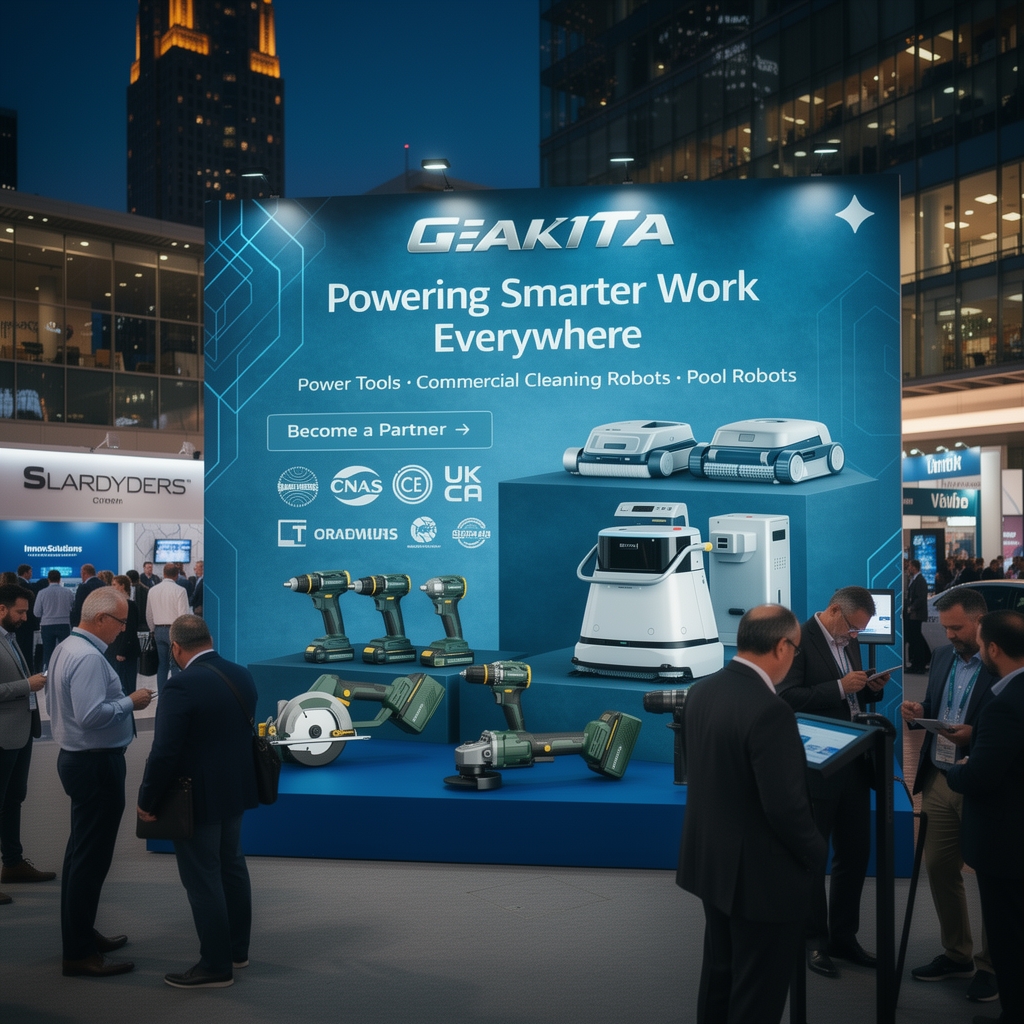
Next step: review the certified cordless range and confirm the battery documentation for your destination market.
Download the Geakita corporate profile and product catalogue: GEAKITA Corporate Profile & Product Catalog 2026
For technical questions, sample discussion, or volume quotation, contact Geakita directly. Website: www.geakita.com | Contact: Flora | Email: Flora@gearpioneer.com | Tel / WhatsApp: +86 135-9954-5996