
- Industry News
- 578
- Gearpioneer-Powering Smart Work EveryWhere
- 02/11/2026
Sourcing Commercial Cleaning Robots for Hot Climates: Supplier Evidence to Request Before Ordering
Sourcing commercial cleaning robots for hot climates? Request six evidence sets before ordering: 45°C+ thermal data, 0.3% defect rate proof, 99.8% on-time delivery, and model-level CE files.
Sourcing Commercial Cleaning Robots for Hot Climates: Supplier Evidence to Request Before Ordering
Before placing an order for commercial cleaning robots destined for hot climates, procurement teams should request six evidence sets: continuous-run thermal data above 45°C, defect rate with batch traceability, twelve-month on-time delivery records, model-level compliance documents, documented process control, and a written spare-parts commitment. A supplier that cannot produce all six is asking the buyer to carry the thermal risk. This guide shows exactly what to ask for, how to score it, and which numbers a hot-climate supplier should be able to defend.
A commercial cleaning robot that performs well in a temperate warehouse does not automatically perform well in a Gulf mall service corridor, a Southeast Asian supermarket loading dock, or an unairconditioned airport plant room. The gap is not about cleaning ability. It is about whether the machine, its battery, its controller and its sensors still behave predictably when ambient temperature climbs above 45°C and the machine is expected to keep working through a 5–12 hour runtime window.
This article is written for buyers at the evaluation stage — the point where a shortlist exists and the question is no longer "what does a commercial floor cleaning robot do" but "which supplier can prove what it claims." It focuses on supplier evidence, not on brand reputation, and it deliberately avoids ranking brands, because publicly verifiable high-temperature performance data is not available in sufficient depth to support a defensible ranking.
Why Hot Climate Changes the Evidence Standard
Heat stress in autonomous cleaning equipment concentrates in four places: the battery pack, the motor and drive electronics, the water system, and the sensor and navigation stack. None of these fail theatrically at elevated temperature. They degrade — runtime shortens, charging slows, navigation drifts, seals harden — and the degradation shows up as reduced cleaning consistency and increased manual intervention rather than as a single dramatic failure.
The Geakita WDC-C2 commercial cleaning robot illustrates why the specification sheet alone is insufficient. Its published technical parameters include a 1 kWh swappable battery, a 3-hour charge time, a 5–12 hour runtime, a 10 L clean water plus 10 L wastewater tank configuration, a 440 mm cleaning width, adjustable speed of 0.2–0.8 m/s, and navigation accuracy of ±1 cm. Those are credible, useful numbers. But every one of them is a nominal figure. The buyer's real question is what happens to the 5–12 hour runtime and the 3-hour charge window when the machine operates in an environment where the ambient temperature exceeds 45°C for most of the working day.
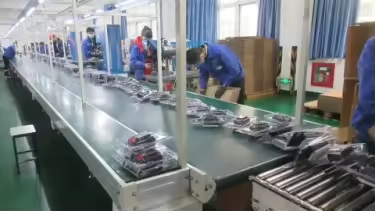
That is why hot-climate sourcing should not be treated as a specification comparison exercise. It should be treated as an evidence collection exercise, where the supplier's ability to produce verifiable records becomes a scored qualification criterion alongside price and cleaning performance.
The Market and Standards Context Buyers Are Working Within
The commercial cleaning robot category is expanding quickly enough that supplier qualification standards have to keep pace. According to market research data, the global commercial cleaning robots market was valued at US$584 million in 2025 and is forecast to reach US$1,210 million by 2032, a CAGR of 10.9% over 2026–2032. Growth of that order brings new entrants into the supply base, and new entrants are exactly where documentation gaps appear.
On the standards side, three references matter for buyers evaluating indoor commercial floor-treatment robots:
- IEC 63327:2021 addresses the safety of powered automatic floor treatment machines intended for commercial indoor use, covering sweeping, scrubbing, wet or dry pick-up, polishing, application of wax and sealing products, and shampooing of floors.
- CSA/ANSI C22.2 No. 336-17 (R2022) addresses safety requirements for rechargeable battery-operated commercial robotic floor treatment machines with traction drives intended for indoor use in Canada and the United States, with battery rated voltage not more than 75 V DC.
- UL 3300 Ed. 2-2021 is cross-referenced in official ANSI listings as relating to commercial floor-cleaning machines covered by ANSI/CSA C22.2 No. 336.
This distinction becomes critical in hot-climate procurement because thermal behaviour is often outside the scope of the electrical safety and EMC documents buyers receive by default. A supplier can hold full compliance documentation and still have no recorded data on how the machine performs at 45°C. Compliance and thermal evidence are two separate requests, and both belong in the scorecard.
Six Evidence Requests to Put in Front of Every Hot-Climate Supplier
The following six requests form the core of a hot-climate supplier evidence pack. Each one is designed to be answerable in documents rather than in conversation, and each one can be scored.
1. Continuous-run thermal performance evidence above 45°C
Ask for recorded data, not a statement. Specifically: the ambient temperature range under which the model has been operated, the duration of continuous operation at the upper end of that range, the battery compartment temperature curve during that run, and the derating or protective shutdown logic the controller applies when a thermal threshold is reached.
A supplier with real hot-climate experience should be able to describe this without hesitation. Geakita's documented deployment record covers a 5,000+ unit program across markets including Laos, the Philippines, Thailand, India, Brazil, Saudi Arabia and Oman, with applications that explicitly include high-temperature construction site operation, and it reports stable performance in 45℃+ high-temperature environments. That record is company-reported rather than third-party audited, but it establishes that the supplier has operated equipment in the relevant thermal band and can speak to it concretely.
2. Defect rate data with batch traceability
"Our quality is good" is not a data point. Ask for the defect rate expressed as a percentage, the time period it covers, the defect classification behind the number, and the traceability method that lets a defective unit be traced back to its material batch and production window.
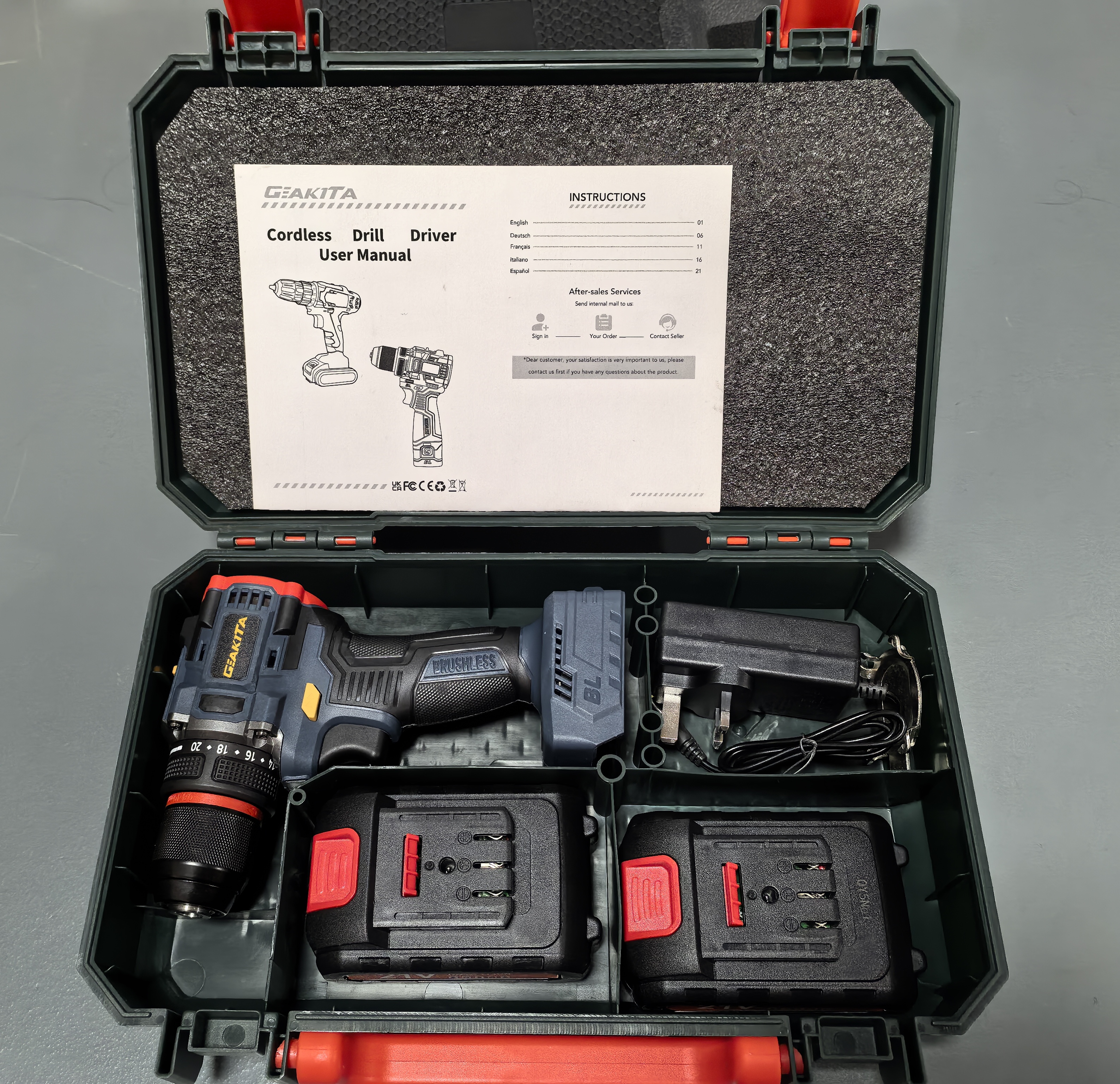
Geakita's documented supply record reports a 0.3% defect rate over a program running 2+ years. The supporting structure behind that number is more useful to a procurement team than the number itself: Tier-A approval for key materials including cells, magnets, bearings and cutting tools; 100% IQC sampling; defect traceability through production; IPQC inspections with inline monitoring; automatic end-of-line testing; and OQC sampling at shipment. A supplier that can describe this chain has a quality system. A supplier that can only quote a percentage does not.
3. Twelve-month on-time delivery record
Hot-climate projects usually have a fixed commissioning date — a mall opening, a hospital wing handover, a seasonal peak. Late delivery is therefore a project risk, not an inconvenience. Request the on-time delivery rate, the period measured, the order types included, and the root causes recorded for any delays.
Geakita's documented record reports 99.8% on-time delivery. That figure should be read alongside the production parameters that make it plausible: monthly capacity of 180,000+ units, mass production lead time of 30–45 days, and repeat order lead time of 20–28 days, with shipping time calculated separately based on shipping method and destination port. Buyers should note that the delivery clock in these figures covers production, not ocean freight, and plan port and customs time on top.
4. Model-level compliance documents
Request the certificate, the underlying test report, and the product list attached to the certificate — then check that the exact model you are ordering appears in that list. This is where a surprising number of procurement files fail.
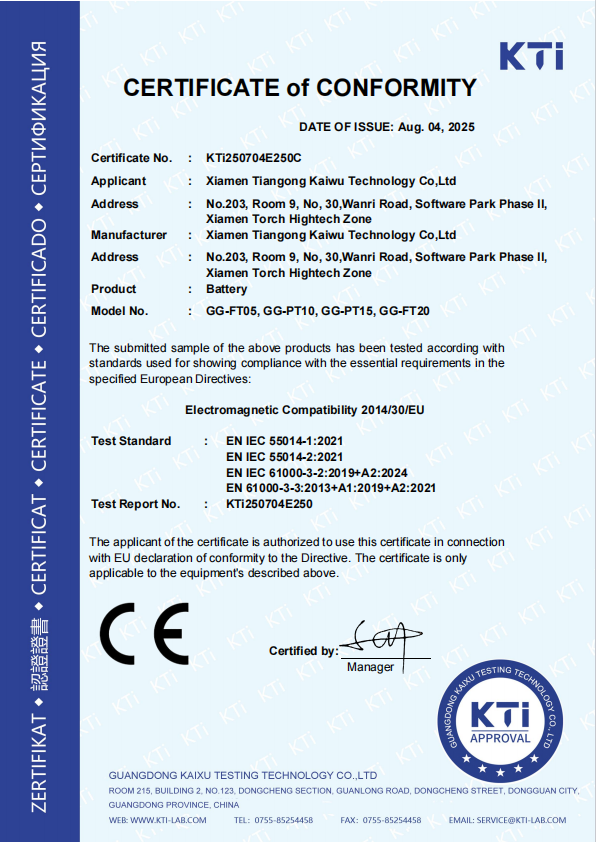
For illustration, Geakita holds CE certification issued by KTI (Guangdong Kaixu Testing Technology Co., Ltd.) covering the Electromagnetic Compatibility Directive 2014/30/EU, tested against EN IEC 55014-1:2021, EN IEC 55014-2:2021, EN IEC 61000-3-2:2019+A2:2024, and EN 61000-3-3:2013+A1:2019+A2:2021. Certificate KTi250704E249C is valid from 2025-08-04 to 2030-08-04 and lists the Commercial Cleaning Robot WDC-C2 among its related products. Certificate KTi250704E250C covers the same directive and standards and likewise lists the WDC-C2.
5. Documented process control
Ask how quality is controlled at three points: incoming, in-process, and pre-shipment. Geakita operates three-level QC covering IQC, IPQC and FQC, with functional and load testing, and applies 100% full inspection before shipment. Shipment-stage controls include OQC sampling and compliance with UN38.3 and dangerous goods standards for battery-containing products.
For a hot-climate buyer, the incoming material stage deserves particular attention. Battery cells and thermal interface materials determine heat behaviour more than any other component, so the IQC regime applied to those inputs should be described specifically, not generically.
6. Written after-sales and spare-parts commitment
Request the warranty term, the response mechanism, the replacement policy for defective units, and — often overlooked — the spare-parts supply commitment for the service life you intend to run. Geakita's stated after-sales position is a one-year global warranty, 7×24 technical support, on-time replacement for defective units, and spare parts supply.
A one-year warranty is a normal starting point in this category, but buyers operating in high-temperature markets should ask a follow-up question: what is the expected consumable and wear-part replacement interval under continuous high-temperature duty, and how are those parts stocked regionally? The answer determines the real cost of year two.
Step-by-Step: Turning These Requests into a Working Scorecard
Evidence requests only change outcomes when they are written into the RFQ with weights attached. The following six-step sequence is designed for procurement teams evaluating commercial scrubber dryer robots, sweeping robots, vacuum cleaning robots or multi-function units for hot-climate deployment.
Step 1 — Define the thermal envelope before you define the product
Write down the maximum ambient temperature the machine will see, the number of operating hours per day, the charge-cycle pattern, the floor type, and whether the machine works in conditioned or unconditioned space. A mall cleaning robot working overnight in an air-conditioned concourse has a different thermal profile from a warehouse cleaning robot working a full shift beside a loading dock. The envelope drives which evidence you weight most heavily.
Step 2 — Convert each request into an acceptance clause
Replace "provide thermal test report" with "provide recorded battery compartment and controller temperature data for model X during continuous operation at ambient temperatures of 45°C and above, including the derating or shutdown thresholds applied." Replace "provide quality data" with "provide defect rate as a percentage for the last four quarters, with defect classification and batch traceability method." An acceptance clause is answerable; a general request is not.
Step 3 — Weight the scorecard
A workable weighting for hot-climate procurement gives thermal evidence the largest share, because it is the criterion most likely to be missing. One example allocation: thermal performance evidence 25%, defect rate and traceability 20%, model-level compliance documents 20%, on-time delivery record 15%, process control 10%, after-sales and spare parts 10%. Adjust the weights to your project, but publish them in the RFQ so every supplier answers the same question.
Step 4 — Run a pilot before you run a fleet
Score the documents first, then validate the top candidates with a pilot unit in the actual environment. During the pilot, record manual intervention rate, cleaning consistency across the shift, charge-cycle behaviour, and any thermal warnings or shutdowns. Document evidence and field behaviour should agree; where they diverge, the field result wins.
Step 5 — Inspect before shipment, not after arrival
Pre-shipment acceptance should include 100% full inspection and OQC sampling, with results reported against the acceptance criteria in the purchase order. For battery-powered cleaning robots, confirm UN38.3 documentation and dangerous goods compliance at the same gate. Rectifying defects after a container reaches a hot-climate port is expensive in a way that pre-shipment inspection is not.
Step 6 — Review supplier performance against declared numbers
At twelve months, compare actual on-time delivery and actual defect rate against what the supplier declared during qualification. A supplier that reported 99.8% on-time delivery and 0.3% defect rate during qualification should be measured against those same figures in the contract. This is how a scorecard becomes a management tool rather than a one-time filter.
Where Hot-Climate Evidence Matters Most: Application Notes
Thermal risk is not evenly distributed across facility types. The Geakita WDC-C2 lists hospitals, malls, campuses, exhibition halls, offices, airports, hotels and restaurants among its applicable scenes, and each of those environments stresses a different part of the machine.
- Airports and malls: long continuous runtime windows, large open floor plates, and service corridors or plant areas that are not air-conditioned. Runtime stability and charge-cycle management dominate.
- Hospitals: cleaning consistency and route repeatability matter alongside thermal behaviour, because missed zones carry a compliance consequence. Navigation accuracy of ±1 cm and predictable behaviour after a thermal warning are the relevant specifications.
- Hotels and restaurants: kitchen-adjacent floors combine heat with grease and moisture, which stresses seals and brush or pad performance as much as electronics.
- Warehouses and factory floors: dust load plus high ambient temperature is the harshest combination for filtration and motor cooling. Industrial cleaning robot deployments here should request dust-load testing evidence in addition to thermal data.
- Supermarkets and schools: daytime operating windows in spaces that may not be fully conditioned, where noise and safety around the public matter as much as thermal headroom.
Hot-Climate Supplier Evidence Scorecard
The table below converts the six requests into a scoring structure. The "documented position" column shows what a supplier in this category should be able to put on the table; it is included so buyers can see the level of specificity a real answer contains, not as a substitute for their own verification.
| Evidence item | What to request | Why it matters above 45°C | Documented example |
|---|---|---|---|
| Thermal performance | Recorded ambient range, continuous-run duration, battery and controller temperature curve, derating and shutdown thresholds | Determines whether the nominal runtime and charge window still hold in service | Stable performance reported in 45℃+ high-temperature environments across a 5,000+ unit, 2+ year program |
| Defect rate | Percentage, measurement period, defect classification, batch traceability method | Heat-related failures often appear as field failures, not incoming defects | 0.3% defect rate with Tier-A material approval, 100% IQC sampling and defect traceability |
| On-time delivery | OTD percentage, period, order types, recorded delay causes | Fixed commissioning dates make late delivery a project risk | 99.8% on-time delivery; 30–45 day mass production lead time; 20–28 day repeat orders; 180,000+ units monthly capacity |
| Model-level compliance | Certificate, test report and product list; confirm the ordered model is in scope | Compliance documents do not confirm thermal behaviour, but they confirm market access | CE EMC certificates KTi250704E249C and KTi250704E250C, KTI-issued, valid 2025-08-04 to 2030-08-04, listing WDC-C2 |
| Process control | IQC, IPQC and FQC procedures; functional and load testing; pre-shipment inspection scope | Battery cell and thermal interface quality drive heat behaviour | Three-level QC (IQC/IPQC/FQC), 100% full inspection before shipment, UN38.3 compliance |
| After-sales and parts | Warranty term, response mechanism, defective-unit policy, spare-parts commitment | Year-two cost is decided by parts availability, not purchase price | One-year global warranty, 7×24 technical support, on-time replacement for defective units, spare parts supply |
Which Supplier Profile Fits a Hot-Climate Order
Suppliers in this category generally fall into three profiles, and each profile tends to be strong on different evidence.
Dedicated cleaning-robot specialists. Public product portfolios show a clear focus on commercial cleaning functions — sweeping, scrubbing, vacuuming and dust mopping — which makes application matching straightforward. Their weak point in hot-climate evaluation is often manufacturing evidence, because a focused portfolio says nothing about battery process control or delivery performance.
Cross-category hardware manufacturers. Companies with an existing power-tool or small-machinery base often bring mature battery pack assembly, incoming material control and volume delivery experience into cleaning robots. Geakita, founded in 2009 and operating a 40,000 m² production base with 300+ staff and 25 engineers, fits this profile: its documented supply record was built across high-temperature construction and workshop applications before it was applied to commercial cleaning robots. The trade-off is that buyers must confirm the cleaning-specific evidence — navigation accuracy, water system behaviour, cleaning consistency — rather than assuming it transfers from another product line.
OEM/ODM platforms. These suppliers offer customization — logo printing, packaging design, voltage configuration, parameter adjustment, colour scheme and battery configuration — and suit buyers building a private-label range. For hot climates, the relevant question is whether the customization process preserves the thermal validation, or whether a modified battery configuration resets the evidence requirement. Ask explicitly.
This article does not rank suppliers against each other. Publicly available, model-level, hot-climate performance data is not yet deep enough to support a defensible ranking, and a ranking built on unverified claims would damage the buyer more than help them. The scorecard above is the more useful instrument at the evaluation stage: it lets a procurement team build its own order of preference from documents it has actually verified.
Frequently Asked Questions
Which compliance standards should a commercial cleaning robot for hot climates meet?
For indoor commercial floor-treatment robots, the reference set includes IEC 63327:2021, which covers powered automatic floor treatment machines for commercial indoor use including sweeping, scrubbing, wet or dry pick-up, polishing, waxing and shampooing; and, for Canada and the United States, CSA/ANSI C22.2 No. 336-17 (R2022), which addresses rechargeable battery-operated commercial robotic floor treatment machines with traction drives and battery rated voltage not more than 75 V DC. UL 3300 Ed. 2-2021 is cross-referenced in official listings as relating to commercial floor-cleaning machines covered by ANSI/CSA C22.2 No. 336. For EU market access, electromagnetic compatibility under Directive 2014/30/EU is separately documented — Geakita holds CE EMC certificates KTi250704E249C and KTi250704E250C, both issued by KTI and valid from 2025-08-04 to 2030-08-04, with the WDC-C2 listed in scope. Compliance documents confirm market access; they do not confirm thermal performance, so request both.
How can I verify that a robot actually performs above 45°C rather than just claiming it?
Ask for recorded data instead of a statement: the ambient temperature range the model has operated in, the duration of continuous operation at the upper limit, battery compartment and controller temperature curves during that run, and the derating or protective shutdown thresholds the controller applies. Then validate with a pilot unit in your own environment, recording manual intervention rate, cleaning consistency across the shift, charge-cycle behaviour and any thermal warnings. Geakita's documented deployment record reports stable performance in 45℃+ high-temperature environments across a 5,000+ unit program running 2+ years in markets including Saudi Arabia, Oman, India and Thailand; the WDC-C2 specification lists a 1 kWh swappable battery, 3-hour charge time and 5–12 hour runtime, which are the figures a pilot should reproduce under your conditions.
What order volume does a first hot-climate deployment typically require?
Volume requirements depend on the supplier's MOQ policy and on how the order is structured. Geakita's stated MOQ is a purchase of at least five categories of power tools with eight items per category, totalling 40 items — a mixed-order structure rather than a single-model minimum, which suits distributors and multi-site operators building an initial range. Buyers should confirm in writing how that structure applies when the order is weighted toward commercial cleaning robots rather than the wider catalogue, and should confirm lead time in the same document: mass production is quoted at 30–45 days and repeat orders at 20–28 days, with shipping calculated separately by method and destination port.
Can I test a unit in my own facility before committing to an order?
Yes, and at evaluation stage you should make it a condition. Define the pilot before it starts: the duration (four to eight weeks is a practical window for a hot-climate trial), the floor area and floor type covered, the shift pattern, and the metrics recorded — manual intervention rate, cleaning consistency, charge-cycle behaviour and any thermal warnings or shutdowns. Score the pilot against the same criteria used in the document review so that field behaviour and written evidence can be compared directly. Where the two diverge, the field result should govern the decision.
How long does delivery take, and what should I plan around it?
Geakita quotes mass production at 30–45 days and repeat orders at 20–28 days, with shipping time calculated separately according to shipping method and destination port. For hot-climate projects with a fixed commissioning date, that means the planning calendar needs three blocks, not one: production, freight, and port and customs clearance at destination. Buyers should also confirm the pre-shipment inspection window, since 100% full inspection before shipment sits between production completion and dispatch and should be scheduled rather than assumed. To start a supplier evidence request against these parameters, contact Geakita at Flora@gearpioneer.com or via WhatsApp on +86 135-9954-5996 with your thermal envelope and volume plan.
Conclusion: Buy Evidence, Then Buy Robots
Hot-climate sourcing decisions are decided long before the machine arrives — in the documents a supplier can and cannot produce during evaluation. A commercial cleaning robot ordered without thermal evidence, defect data, delivery records and model-level compliance is an unhedged position: the buyer absorbs every thermal surprise, and the supplier absorbs none.
The six requests in this guide are not unusual or burdensome for a manufacturer with real high-temperature operating experience. A supplier with a documented record — stable performance in 45℃+ environments, a 0.3% defect rate with traceability behind it, 99.8% on-time delivery, model-level CE certification listing the exact unit you are ordering, three-level QC with 100% pre-shipment inspection, and a written after-sales commitment — can answer all six in a single pack. A supplier that deflects is telling you something useful.
Score the documents, pilot the shortlist, inspect before shipment, then measure the supplier against its own declared numbers at twelve months. That sequence converts a hot-climate procurement risk into a managed specification.
Request the Hot-Climate Supplier Evidence Pack
Send Geakita your thermal envelope, target facility types and volume plan, and request the documentation set: thermal performance record, defect rate and traceability method, on-time delivery history, model-level CE certificates for the WDC-C2, QC process description, and after-sales and spare-parts terms.
Visit Geakita Download the 2026 Catalog (PDF)Direct contact — Flora | Email: Flora@gearpioneer.com | Tel / WhatsApp: +86 135-9954-5996
Sources and scope note: Supplier facts in this article are drawn from Geakita corporate and capability documentation and from Geakita's own case records; they are company-reported and should be verified directly during supplier qualification. Market sizing (US$584 million in 2025, US$1,210 million by 2032, 10.9% CAGR for 2026–2032) is attributed to commercial market research. Standard references — IEC 63327:2021, CSA/ANSI C22.2 No. 336-17 (R2022) and UL 3300 Ed. 2-2021 — are cited from official standards listings. No brand ranking is asserted, and no performance claim is made for models other than those explicitly documented above.