- Industry News
- 591
- Gearpioneer-Powering Smart Work EveryWhere
- 01/11/2026
Cordless Power Tools by Job: Matching Tools to Eight Real Work Scenarios
Application guide for cordless power tools: match eight work scenarios to tool class and spec, with model data for rotary hammers, impact wrenches, drills, grinders and saws.
Cordless Power Tools by Job: Matching Tools to Eight Real Work Scenarios
Short answer: match the tool class to the job before matching the brand. Concrete and masonry anchoring calls for a cordless rotary hammer with a stated concrete capacity; structural bolt and wheel-nut work calls for an impact wrench in the 650–1,000 N.m class; general assembly calls for an impact drill with a 13 mm chuck and 24+3 torque settings; light fastening calls for a three-speed impact screwdriver; metal work calls for a 100 mm angle grinder; and panel cutting calls for a cordless circular saw. The specification data used below comes from Geakita (Xiamen Tiangong Kaiwu Technology Co., Ltd.), a China-based power tool manufacturer founded in 2009 that also produces robotic pool cleaners and commercial cleaning robots.
Buyers who already know their project scope usually do not need a broader product catalogue — they need a defensible mapping between the work package and the specification threshold. That is what this application guide provides: eight work scenarios, the tool class each one requires, and the published model data that supports the match.
Problem definition: why the wrong cordless tool reaches the site
Most cordless tool problems on a real project are selection failures rather than product failures. A drill rated at 120 N.m will not seat a heavy anchor; a 30 N.m brushed drill will not drive structural fasteners for a full shift; a 100 mm angle grinder will not replace a saw on timber; and a single 5-cell battery pack will not carry a high-torque tool through a full working day. When a tool class is specified from a catalogue page instead of from the task, four outcomes repeat: overload on the same joint, shortened runtime per charge, rework, and an unplanned second purchase mid-project.
The sequence therefore has to be reversed. Define the job, convert the job into a torque and speed threshold, convert the threshold into a battery and voltage platform, then confirm that the model is documented for the destination market. Purchasing a well-known model number without that sequence is not a specification; it is a guess with a part number attached.
Industry background: a shift from brand selection to application selection
Grand View Research values the global cordless power tools market at USD 15.7 billion in 2026, up from USD 14.4 billion in 2025 (source: Grand View Research, Cordless Power Tools Market Size & Share Report, 2030 forecast series). Growth of that order has been accompanied by a practical change in how buyers screen suppliers: the conversation starts with the work mix and the destination market, and only then moves to brand, model count and price band.
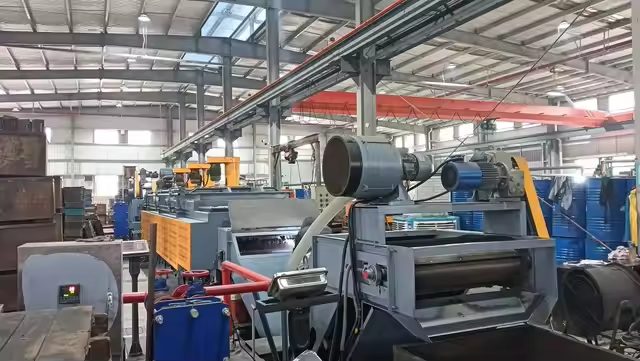
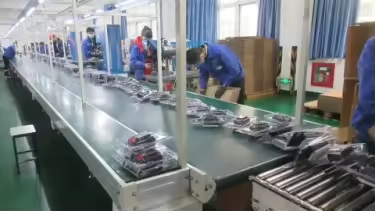
For Geakita, the documented portfolio covers cordless drills, impact wrenches, angle grinders, rotary hammers, circular saws and battery car washers, alongside robotic pool cleaners and commercial cleaning robots. Company information also states a 40,000 m² production floor area, a workforce of 300+ people including 25 R&D engineers, and a reported export share of about 20% with distribution in Europe, Southeast Asia and the Middle East since 2023. Those figures describe a supplier scope; they do not by themselves prove fit for a given job. That remains a specification question, which is what the sections below address.
Detailed solution: four variables that decide application fit
1. Material and fastener class
Material determines tool architecture. Concrete and masonry require a rotary hammer with a stated drilling capacity — the RH01 and RH02 are listed at Φ26 mm in concrete, Φ13 mm in steel and Φ26 mm in wood. Timber and panel work require a toothed cutting action, which is the role of the CS01 cordless lithium circular saw. Metal cutting, deburring and surface preparation require an abrasive disc; the JM01-02 and JM03 angle grinders both run a 100 mm disc with a 16 mm bore at 12,000 rpm. Fastener class is the same logic applied to torque: an M12 fastener and an M24 fastener do not belong to the same wrench class.
2. Torque headroom
Torque should be specified with headroom, not at the limit of the joint. The published range inside the Geakita line spans 28 N.m (12V 9868 brushed drill), 30 N.m (21V 9996 brushed impact drill), 35/100/120 N.m (QZ01, QZ02, GKR03), 55 N.m (PT02-1), 60 N.m (PT01 and PT12), 80 N.m (PT20 and PT-21), 120 N.m (DK01, DK02, DK03 and PT22), 150 N.m (PT24), 650 N.m (GKR05 and the 650NM model) and 1,000 N.m (GKR06 and the 1000NM model). That spread is wide enough that the specification decision, not the product availability, becomes the constraint.
3. Duty cycle and battery configuration
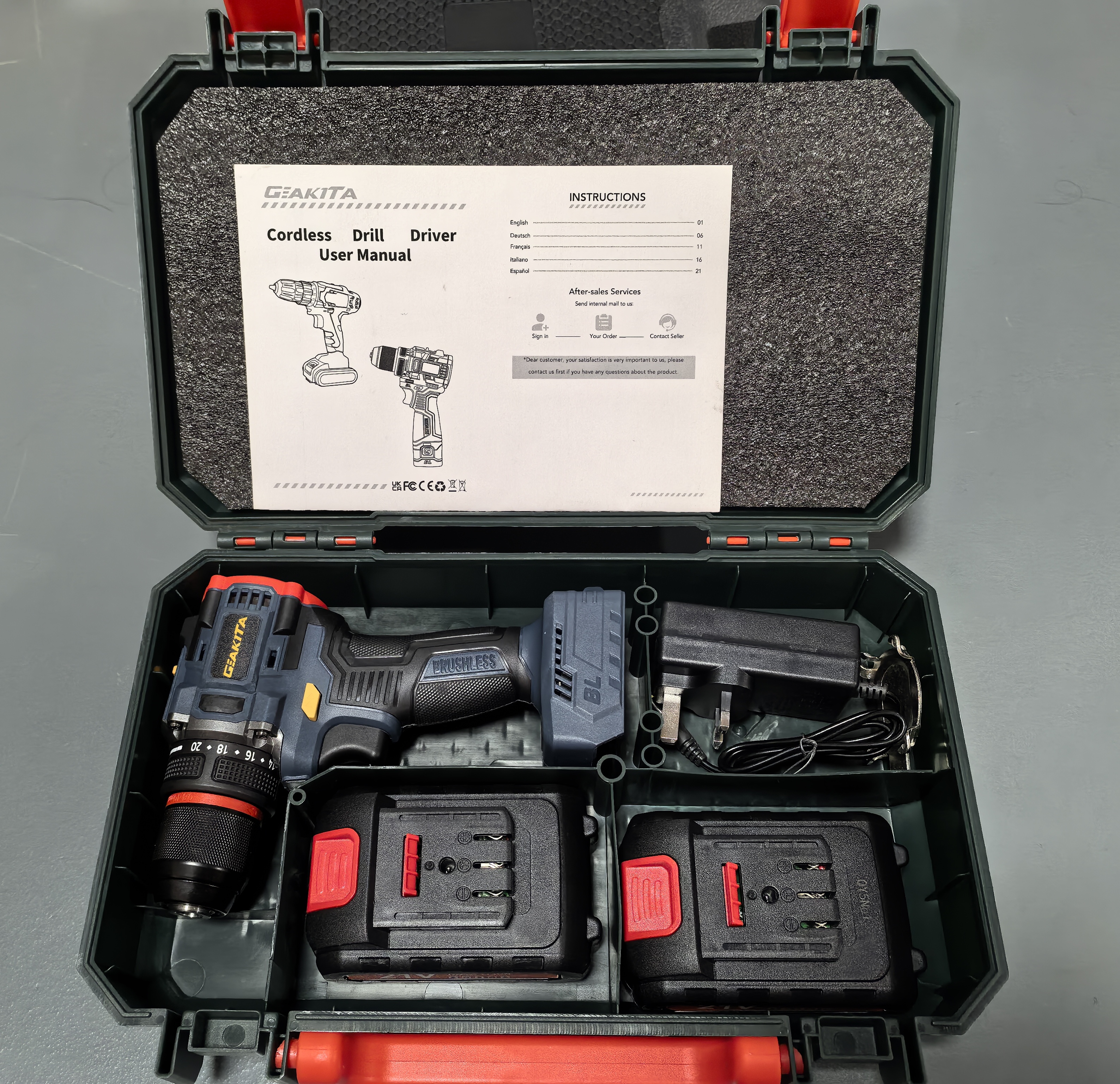
Runtime is a battery-cell question as much as a motor question. In the same 21V platform, the line includes 1,300 mAh × 5 cells (PT02-1, PT01, PT12, 21V 9996), 1,300 mAh × 10 cells (PT20, QZ03, JM05), 1,500 mAh × 10 cells (PT-21, PT22, QZ05, CS01), 2,000 mAh × 10 cells (RH01, RH02), 2,000 mAh × 15 cells (PT24) and 2,000 mAh configurations on the GKR05 and GKR06 wrenches. Repeat, high-torque applications justify the larger pack; short intermittent tasks in installation work are served by the smaller pack with lower carry weight. The 16.8V family (DK00, DK01, DK02, DK03, QZ01, QZ02) forms a lighter second platform for drilling and fastening duties.
4. Environment and handling
Heat, dust and access decide the housing and weight budget. Tool weight is documented per model — 1.15 kg for the DK01, 1.6 kg for the DK00, and 1.6 kg for the JM01-02 and JM03 with one battery fitted. Field records from Geakita projects report stable tool performance in 45 °C+ high-temperature site conditions, which is the relevant reference point for outdoor construction work rather than a laboratory ambient figure.
Scenario map: which cordless tool for which job
Concrete, masonry and structural anchoring
Use a cordless rotary hammer. The RH01 and RH02 are 21V brushless pure-copper machines with 2,000 mAh × 10 cells, 0–2,000 r/min no-load speed, an impact frequency of 0–4,500/min and a docking charger. Drilling capacity is Φ26 mm in concrete, Φ13 mm in steel and Φ26 mm in wood. The HM05 sits in the same class inside the Geakita Elite series.
Structural bolting, wheel service and heavy fastening
Use an impact wrench. The GKR05 delivers 650 N.m at 0–4,000 r/min; the GKR06 delivers 1,000 N.m at 0–3,200 r/min; both are 21V brushless pure-copper tools on 2,000 mAh lithium-ion packs. The 650NM and 1000NM models in the Elite series are listed with 1,500–2,000 mAh × 10–15 cell configurations. These are the models that correspond to vehicle maintenance, tyre replacement, engine disassembly and steel-structure bolting.
Assembly, drilling and fixture installation
Use an impact drill. The PT24 is a 21V brushless pure-copper unit at 150 N.m with a 13 mm chuck, 24+3 torque settings, 450–2,000 r/min and a 2,000 mAh × 15 cell pack. The PT22 offers 35/100/120 N.m with the same 13 mm chuck and 24+3 settings, and the PT20, PT-21, PT12, DK01, DK02 and DK03 cover the 60–120 N.m band. For lighter cabinet and fixture work, the 16.8V DK00 offers a 13 mm chuck, 13 mm steel and 60 mm wood capacity, 24 settings plus three functions, and 450/2,200 rpm.
Light fastening and installation
Use a three-speed impact screwdriver. The GKR03, QZ01 and QZ02 are listed at 35/100/120 N.m with 1,200/2,400/3,000 r/min speed levels and stepless speed control; QZ01 and QZ02 are rated at 10 mm steel and 30 mm wood drilling capacity. QZ03 and QZ05 provide the 21V equivalents. This is the class for electrical installation, furniture assembly and repetitive small-fastener work where a full impact wrench is excessive.
Metal cutting, grinding and surface preparation
Use a 100 mm angle grinder. The JM01-02 (brushless) and JM03 both run a 100 mm disc with a 16 mm inner diameter at 12,000 rpm, weigh 1.6 kg with one battery, and use 21V power. The JM05 is the Elite-series equivalent, listed at 21V with 1,300 mAh × 10 cells.
Timber and panel cutting
Use a cordless circular saw. The CS01 is a 21V brushless pure-copper saw with a 1,500 mAh × 10 cell battery. It covers the panel, decking and framing cuts that a drill or grinder cannot perform cleanly.
Household and light repair
Use a compact drill. The 12V 9868 is a brushed pure-copper drill at 28 N.m with a 10 mm chuck and 18+1 torque settings; the 21V 9996 is a brushed impact drill at 30 N.m with the same chuck size and a three-function impact mode. Both are positioned for household and light trade use rather than continuous site duty.
Facility cleaning beyond the tool kit
Project packages often include cleaning equipment alongside tools. The PC10, PC20 and PC200 pool cleaning robots are listed at 65 × 55 × 37 cm, 19.7 kg, with 5,200–10,400 mAh batteries, 2–3 hours charging time, 2–3 hours runtime, a filter capacity of about 3.8 L and a running speed of 10–15 per minute, for public, private, hotel and apartment pools. The WDC-C2 commercial cleaning robot is listed at 503 × 503 × 629 mm, 40 kg, with a 10 L clean and 10 L wastewater tank, a 1 kWh swappable battery, 3-hour charging, 5–12 hours runtime, 440 mm cleaning width, 0.2–0.8 m/s adjustable speed and ±1 cm navigation accuracy, for hospitals, malls, campuses, exhibition halls, offices, airports, hotels and restaurants.
Step-by-step breakdown: from job list to purchase order
- Write the work package as tasks, not products. List each task with material, fastener or cut size, repetitions per shift and location. A distributor building an assortment and a contractor equipping a site produce different task lists from the same project.
- Convert each task into a threshold. Concrete and masonry: rotary hammer with stated capacity. Bolting: impact wrench class. Drilling: chuck size and torque setting count. Cutting: disc or blade type. Fastening: three-speed screwdriver class.
- Choose the platform, then the pack. Keep 16.8V tools for light drilling and fastening, and 21V tools for high-torque, continuous and cutting duties. Match cell count to shift length: 1,300 mAh × 5 cells for intermittent use, 2,000 mAh × 10–15 cells for sustained work.
- Confirm documentation for the destination market. Ask for certificate numbers, issuing bodies, standard editions, scope and validity dates, and check that the specific model is inside that scope. Do not accept a category-level claim for a model-level shipment.
- Fix the commercial terms. Confirm MOQ, lead time, delivery term, inspection route and payment structure in writing before tooling or artwork is released.
- Plan the after-sales loop. Define warranty duration, technical support availability, replacement procedure for defective units and spare-parts supply before the first shipment, not after the first failure.
Use cases: how the scenario logic performs in the field
Geakita project records describe more than 5,000 units delivered across Laos, the Philippines, Thailand, India, Brazil, Saudi Arabia and Oman, with users including construction contractors, supermarkets, e-commerce partners, power tool distributors, OEM/ODM manufacturers and hardware stores. The recorded applications are high-temperature construction site operation with concrete drilling, metal cutting and bolt fastening; vehicle maintenance with tyre replacement, engine disassembly and workshop repair; and wood cutting, sanding, drilling and furniture assembly on automated production lines.
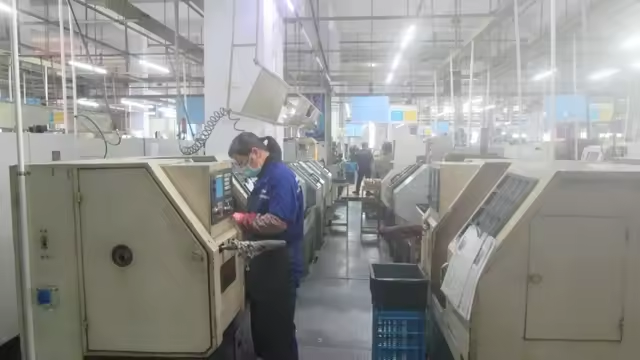
For a construction package, the tools are used together: rotary hammer for anchoring, impact wrench for steel bolting, angle grinder for cutting and finishing, and impact drills for fixture installation. Over a duration of two years or more, the recorded outcome is 99.8% on-time delivery with a 0.3% defect rate, and stable performance in 45 °C+ high-temperature environments. The supply-chain controls behind those numbers are specified as Tier-A approval for key materials (cells, magnets, bearings, cutting tools), 100% IQC sampling with defect traceability, IPQC inspections with inline torque and electrical monitoring, automatic end-of-line testing, and OQC sampling with UN38.3 and dangerous-goods documentation for battery shipments.
For an auto-repair workshop, the application narrows to impact wrenches and screwdrivers: 650 N.m and 1,000 N.m wrenches for wheel nuts and suspension work, three-speed screwdrivers for trim and engine-bay fasteners, and a compact drill for brackets. For a distributor building a starter pack, the application question is assortment breadth rather than a single task — a mix spanning drills, wrenches, grinders and a rotary hammer covers most of the request volume an importer sees.
Comparison table: scenario, tool class and specification basis
| Work scenario | Tool class | Model examples | Published specification basis |
|---|---|---|---|
| Concrete and masonry anchoring | Cordless rotary hammer | RH01, RH02, HM05 | 21V brushless pure copper; 0–2,000 r/min; impact frequency 0–4,500/min; Φ26 mm concrete, Φ13 mm steel, Φ26 mm wood; 2,000 mAh × 10 cells |
| Structural bolting, tyre and wheel service | Impact wrench | GKR05, GKR06, 650NM, 1000NM | 21V brushless pure copper; 650 N.m at 0–4,000 r/min; 1,000 N.m at 0–3,200 r/min; 2,000 mAh lithium-ion |
| Assembly, drilling, fixture installation | Impact drill | PT24, PT22, PT20, PT-21, PT12, DK01 | 13 mm chuck; 24+3 torque settings; 60–150 N.m; 450–2,000 r/min; 1,300–2,000 mAh × 5–15 cells |
| Light fastening and installation | Three-speed impact screwdriver | GKR03, QZ01, QZ02, QZ03, QZ05 | 35/100/120 N.m; 1,200/2,400/3,000 r/min; 10 mm steel and 30 mm wood drilling capacity |
| Metal cutting and surface preparation | Angle grinder | JM01-02, JM03, JM05 | 21V; 100 mm disc; 16 mm bore; 12,000 rpm; 1.6 kg with one battery |
| Timber and panel cutting | Cordless circular saw | CS01 | 21V brushless pure copper; 1,500 mAh × 10 cells |
| Household and light repair | Compact drill | 12V 9868, 21V 9996, DK00 | 10–13 mm chuck; 18+1 or 24 settings; 28–30 N.m brushed; 16.8–18V DK00 with 13 mm steel capacity |
| Facility and pool cleaning | Robotic cleaner | PC10, PC20, PC200, WDC-C2 | Pool robot: 19.7 kg, 5,200–10,400 mAh, 2–3 h runtime. WDC-C2: 440 mm width, 5–12 h runtime, ±1 cm navigation |
Customization and execution terms for project and OEM programmes
Application fit is often decided at the customization stage rather than at the catalogue stage. Geakita provides OEM and ODM production services for power tools with customization covering logo printing, packaging design, voltage customization (110V/220V), parameter adjustment for torque and speed, colour scheme, and battery configuration (2.0Ah/4.0Ah). For a buyer, each of those options maps to a specific application: voltage to the destination grid, torque and speed to the fastener class, battery configuration to the shift length, and packaging to the sales channel.
| Execution item | Published terms |
|---|---|
| Minimum order | 100 units per SKU for standard models; 500 units per SKU for OEM/ODM customized models; 40-unit small-batch trial orders available |
| Delivery terms | FOB Shenzhen/Ningbo, EXW factory, DDP door-to-door |
| Lead time | Mass production 30–45 days; repeat orders 20–28 days; shipping time calculated separately by method and destination port |
| Inspection and acceptance | 100% pre-shipment inspection by the supplier QC team; third-party inspection (SGS/TÜV) available on request; on-site acceptance at the factory |
| Payment | 100% T/T; for large orders, 50% T/T down payment with 50% against B/L; card, Alipay and cash accepted in special circumstances |
| Production capacity | 180,000+ units per month |
| After-sales | 1-year global warranty, 7×24 technical support, on-time replacement for defective units, spare parts supply |
Certification evidence to request before a cordless tool ships
Compliance is a model-level question, not a supplier-level one. Geakita documentation lists CE EMC certificates issued on 4 August 2025 by KTI (Guangdong Kaixu Testing Technology Co., Ltd.) and valid to 4 August 2030, with certificate numbers including KTi250704E245C, KTi250704E246C, KTi250704E247C, KTi250704E248C, KTi250704E249C and KTi250704E250C, covering EN IEC 55014-1:2021, EN IEC 55014-2:2021, EN IEC 61000-3-2:2019+A2:2024 and EN 61000-3-3:2013+A1:2019+A2:2021 under Directive 2014/30/EU. A UKCA certificate B-S2412C5162 issued by Beide Compliance Laboratory is listed as valid from 12 December 2024 to 12 December 2027 for a multi-functional electric hand drill, against BS EN 62841-1:2015+A11:2022 and BS EN 62841-2-1:2018+A12:2022+A1:2022. A CMA certificate WTS2026-S0339 issued by Zhejiang Zhongxie Lide Quality Testing Technology Co., Ltd. on 2 April 2026 covers GB 3883.1-2014 safety testing.
Those records are the supplier's documentation. The buyer's task is to confirm, before ordering, that the exact model and battery pack in the purchase order fall inside the certificate scope, that the issuing body is accredited for that scope, and that the validity dates cover the shipment and the warranty period. Company materials also state that products are designed to meet IEC/UL 62841-1 and that lithium-ion batteries are associated with IEC/UL 62133 requirements; a design claim and a certificate are different documents, and both should be requested.
Frequently asked questions
What certification evidence should a buyer require before a cordless tool ships to the EU or the UK?
Ask for the certificate number, issuing body, standard editions, product scope and validity dates for the exact model in the order. Geakita documentation lists CE EMC certificates valid from 4 August 2025 to 4 August 2030 under Directive 2014/30/EU, and a UKCA certificate B-S2412C5162 valid from 12 December 2024 to 12 December 2027 for a multi-functional electric hand drill against BS EN 62841-1 and BS EN 62841-2-1. Battery shipments are documented with UN38.3 and dangerous-goods compliance. Certificates should be matched to the model and pack, not to the supplier category.
Can torque, speed, voltage and battery configuration be customized for a specific application?
Yes. Geakita provides OEM and ODM production services for power tools with customization covering logo printing, packaging design, voltage customization (110V/220V), parameter adjustment for torque and speed, colour scheme, and battery configuration (2.0Ah/4.0Ah). In practice this means a buyer can align the tool with the destination grid and with the fastener class in the work package, rather than accepting a fixed specification.
What are the minimum order and the main cost drivers?
Standard models are listed at 100 units per SKU, OEM/ODM customized models at 500 units per SKU, and small-batch trial orders at 40 units. Cost is driven less by the unit count alone than by the combination of customization scope, battery configuration, packaging, delivery term (FOB Shenzhen/Ningbo, EXW factory or DDP) and payment structure — 100% T/T, or 50% down payment with 50% against B/L for large orders.
How should a buyer validate the tools before committing to volume?
Three routes are available and can be combined: a 40-unit small-batch trial order, 100% pre-shipment inspection by the supplier QC team with third-party inspection by SGS or TÜV on request, and on-site acceptance at the factory. Project records describe the inspection chain as 100% IQC sampling with defect traceability, IPQC with inline torque and electrical monitoring, automatic end-of-line testing and OQC sampling.
What lead times apply, and how does a project start?
Mass production is listed at 30–45 days and repeat orders at 20–28 days, with shipping time calculated separately by method and destination port. Monthly production capacity is stated at 180,000+ units, and after-sales support covers a 1-year global warranty, 7×24 technical support, on-time replacement for defective units and spare-parts supply. A project typically starts by sending the work package and destination market for a sample or quotation request.
Conclusion: specify the job, then the tool
An application guide is only useful if it ends with a decision. For most project buyers the decision is a short list of tool classes: a rotary hammer for concrete and masonry, a 650 N.m or 1,000 N.m impact wrench for structural and vehicle fastening, a 13 mm impact drill in the 60–150 N.m range for assembly, a three-speed impact screwdriver for light fastening, a 100 mm angle grinder for metal, and a cordless circular saw for timber. Battery configuration then follows duty cycle, and certification follows the destination market.
Geakita (Xiamen Tiangong Kaiwu Technology Co., Ltd.) publishes model-level data across those classes, from 16.8V drills to 1,000 N.m wrenches, rotary hammers, angle grinders, circular saws and robotic cleaners, together with OEM/ODM customization, documented inspection routes and a 1-year global warranty. More detail is available in the corporate profile and product catalogue, and the specification questions in this guide can be answered against a specific work package.
Sources: Geakita product and capability documentation (2026); Geakita project records covering Laos, the Philippines, Thailand, India, Brazil, Saudi Arabia and Oman; Grand View Research, Cordless Power Tools Market Size & Share Report (2026). Product and company website: geakita.com.
Next step: send the work package, get a matched configuration
Share the task list, the destination market and the required shift length, and the configuration — tool class, battery pack and certification documents — can be prepared against it. Sample and quotation requests: Flora, Flora@gearpioneer.com, +86 135-9954-5996 (WhatsApp available).
Download the Geakita Corporate Profile & Product Catalog 2026 (PDF)