- Industry News
- 305
- Gearpioneer-Powering Smart Work EveryWhere
- 28/10/2026
Why Choose 16.8V Brushless Drills for High-Temperature Construction and Assembly Tasks
Why 16.8V brushless drills suit hot construction and assembly work: DK00 specs, 1.6 kg weight, 24+3 torque, maintenance and sourcing checks.
Why Choose 16.8V Brushless Drills for High-Temperature Construction and Assembly Tasks
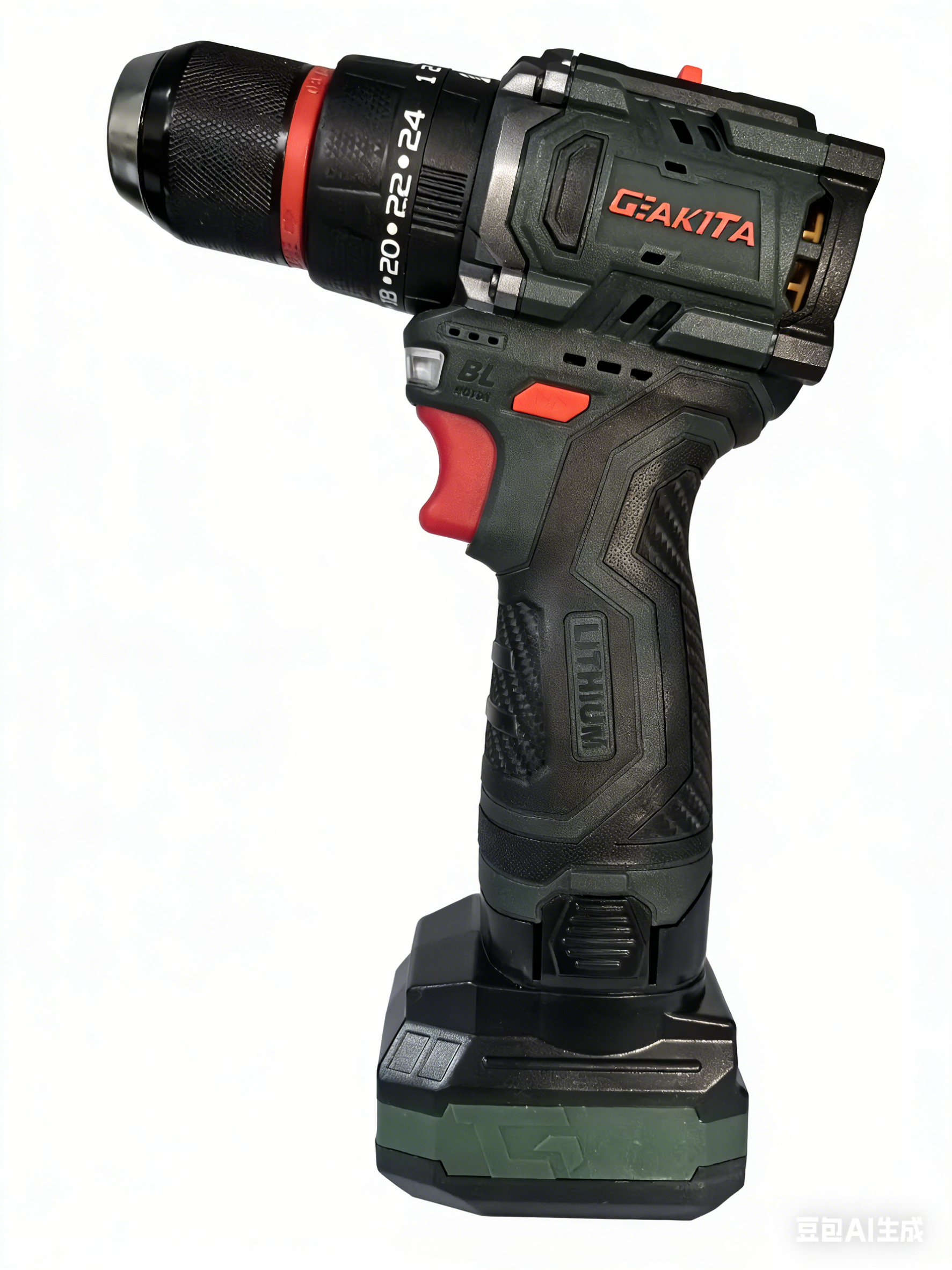
A 16.8V brushless drill is the compact end of the cordless power tools platform. For high-temperature construction and assembly tasks, the practical case rests on a specific combination: 16.8V to 18V operation, a brushless motor that removes carbon-brush replacement from the maintenance schedule, 450 to 2200 RPM, 7000 to 24000 BPM, 24+3 torque settings, an LED light, and a 1.6 kg net weight. These are the verified facts that matter when heat, repetition and operator fatigue make tool control more important than raw size.
The tool does not remove heat risk. It reduces one maintenance variable, supports controlled fastening and drilling, and keeps the operator working with a lighter tool. That distinction is important for contractors and industrial operators evaluating a 16.8V brushless drill for hot construction sites or assembly lines.
The Heat Problem: Why Standard Drill Choices Break Down
High ambient temperature changes the procurement question. A drill that performs acceptably in a climate-controlled workshop may become a source of downtime on a hot site or a production line with limited cooling. The issue is rarely one single failure mode. It is the combination of motor heat, battery heat, operator fatigue and maintenance frequency.
Three constraints appear repeatedly:
- Maintenance interruption. Brushed motors use carbon brushes that wear over time. A brushless motor removes that wear item. The verified product specification identifies the 16.8V drill as brushless, which supports the no-brush-replacement claim.
- Control under repetition. Assembly work and overhead site work reward lower weight and predictable torque delivery. The 1.6 kg net weight and 24+3 torque settings are directly relevant to operator control.
- Heat management at the battery and tool level. No maximum ambient operating temperature is stated in the available product data. Buyers therefore need to validate duty cycle, battery cooling and charging practice against the actual site or line conditions rather than assume a temperature rating.
Industry Background: Cordless Power Tools Are Shifting Toward Controlled, Maintainable Platforms
The cordless power tools market is large and still expanding. Grand View Research estimates the global cordless power tools market at USD 15.7 billion in 2026, up from USD 14.4 billion in 2025. That scale matters because it supports a broad supplier base, but it also makes specification discipline more important. Buyers are not short of options; they are short of verifiable differences.
Within that market, lithium-ion battery platforms and brushless motors have become central to professional tool selection. Brushless designs are associated with lower maintenance because they eliminate carbon brushes. Lithium-ion packs support cordless operation and pack swapping. For hot construction and assembly work, the useful question is not whether a tool is cordless, but whether its voltage, speed, torque control and weight match the task.
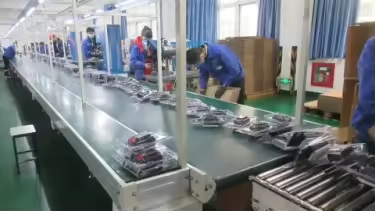
Geakita (XiamenTiangong Kaiwu Technology Co., Ltd.) is a China-based manufacturer of cordless power tools, robotic pool cleaners and commercial cleaning robots. The company was founded in 2009 and operates a production base of approximately 40,000 m² with more than 300 staff and 25 engineers. Geakita reports 2024 lithium power tool sales revenue of RMB 230 million, including RMB 190 million domestically and RMB 40 million overseas, with total shipments of approximately 1.5 million units. Its reported markets include Europe, Southeast Asia and the Middle East.
Those company facts are context, not proof of high-temperature performance. The product-level case has to come from the drill specification and the documented use conditions.
Detailed Solution: What the 16.8V Brushless Drill Actually Provides
The Geakita DK00 is specified as a 16.8V to 18V brushless cordless drill. Its relevant published parameters are:
- Voltage: 16.8V to 18V
- Chuck diameter: 13 mm
- Maximum drilling capacity: 13 mm in steel and 60 mm in wood
- Torque settings: 24 settings plus triple functions
- No-load speed: 450/2200 RPM
- Impact frequency: 7000/24000 BPM
- LED light: yes
- Speed control: stepless speed regulation
- Weight: 1.6 kg
Each parameter has a practical meaning in heat-exposed work.
16.8V to 18V: a compact platform, not a heavy-duty substitute
The 16.8V to 18V range places the tool in a compact cordless class. That is useful when the operator is working overhead, moving between positions, or fastening repeatedly on an assembly line. It is not the same class as a 21V rotary hammer or a high-torque impact wrench. Buyers should use the 16.8V drill where its weight and control are an advantage, and move to a different tool class when the task demands higher torque or concrete anchor capacity.
Brushless motor: no carbon-brush replacement
A brushless motor does not use carbon brushes, so brush replacement is removed from the maintenance schedule. That is the factual basis for the maintenance-cost reduction argument. The exact saving depends on duty cycle, battery care, spare-parts pricing and how the tool is used. The verified benefit is the elimination of a wear item, not a guaranteed percentage reduction in total cost.
450 to 2200 RPM and 7000 to 24000 BPM: speed range for drilling and impact driving
The speed range allows low-speed control and higher-speed drilling or driving. The impact frequency range supports impact-assisted fastening and drilling tasks within the tool's stated capacity. In hot conditions, the operator can use the lower range for controlled starts and the higher range where the material and accessory allow it. The tool still needs appropriate duty cycles and cooling breaks.
24+3 torque settings: repeatable fastening on assembly tasks
Assembly work depends on repeatability. A clutch with 24+3 settings gives the operator a way to set fastening torque close to the joint requirement and reduce the risk of over-driving. This is especially relevant where the same screw or fastener is repeated across a line. The setting must still be validated on the actual joint and material.
LED light and stepless speed control: visibility and control
The LED light supports work in low-light areas of a site, cabinet, fixture or assembly station. Stepless speed regulation lets the operator start slowly and build speed. In high-temperature work, controlled starts can reduce unnecessary tool loading and improve fastener placement.
1.6 kg net weight: fatigue reduction in repeated work
The DK00 is listed at 1.6 kg net weight. Lower weight matters when the tool is held overhead, used in horizontal positions, or cycled repeatedly. Weight alone does not solve heat stress, but it reduces operator fatigue, which is part of safe and consistent work in demanding conditions.
Step-by-Step Breakdown: Selecting and Using a 16.8V Brushless Drill in Hot Conditions
Step 1: Define the duty cycle before comparing models
Start with the real work pattern: continuous fastening, intermittent drilling, overhead work, or mixed tasks. A drill selected for short assembly cycles has different requirements from one used for long drilling passes. Because no maximum ambient temperature is stated in the product data, the buyer should describe the expected heat exposure and confirm a trial under those conditions.
Step 2: Choose the right model within the 16.8V family
The 16.8V family is not one uniform specification. The DK00 uses a 450/2200 RPM range and 1.6 kg weight. The DK01 is listed at 1.15 kg with 120 N.m maximum torque and a 7000 BPM impact frequency. The DK02 and DK03 use a 0-450/0-2000 RPM range, 7000/24000 BPM impact frequency and 0-120 N.m torque. Buyers should select by task, not by voltage label alone.
Step 3: Set torque and speed to the joint or material
Use the 24+3 torque settings to establish a repeatable fastening setting. Use the lower speed range for controlled starts and the higher range where the material and accessory permit. Validate the setting on a sample joint before full production or site use.
Step 4: Match the accessory and tool class to the material
For steel drilling, the DK00 is specified up to 13 mm. For wood, it is specified up to 60 mm. For concrete anchor holes, move to the rotary hammer class. For metal cutting and grinding, use an angle grinder or circular saw rather than a drill. This tool-class discipline is more important in hot conditions because forcing a compact drill beyond its stated capacity increases heat and downtime risk.
Step 5: Manage batteries and charging as part of the heat plan
Lithium-ion packs are affected by heat. The available product data does not state a maximum operating temperature, so the safe procurement approach is to require a battery-management procedure: avoid leaving packs in direct sun, allow packs to cool before charging where conditions are hot, and rotate packs where continuous work is required. The drill's brushless motor removes brush maintenance, but it does not remove battery heat.
Step 6: Validate with a sample or trial order
Test the drill on the actual joint, material and duty cycle. Check fastener consistency, operator fatigue, LED visibility, battery swap time and heat buildup. A trial should include the accessory intended for production, not a general-purpose bit.
Step 7: Lock inspection, spare parts and after-sales terms
Geakita states 100% full inspection before shipment, three-level QC covering IQC, IPQC and FQC, and functional and load testing. The company also states a one-year global warranty, 7*24 technical support, on-time replacement for defective units and spare-parts supply. These terms should be written into the purchase agreement and checked against the selected model.
Use Cases: Where the 16.8V Brushless Drill Fits
High-temperature construction sites
On a hot construction site, the 16.8V brushless drill is best used for drilling and fastening tasks within its stated capacity: steel up to 13 mm, wood up to 60 mm, and repetitive screwdriving with the 24+3 torque settings. It is useful for formwork, metal framing, fixture installation, cabinet work and maintenance tasks where a lighter tool reduces fatigue.
Concrete drilling is a separate decision. The RH01 and RH02 rotary hammers are specified for concrete up to Φ26 mm, steel up to Φ13 mm and wood up to Φ26 mm. That makes them the correct class for anchor holes and masonry drilling. A 16.8V drill can support the site, but it should not be asked to replace the rotary hammer.
Geakita's case record for high-temperature construction site operation reports stable performance in 45°C+ environments, with 99.8% on-time delivery and a 0.3% defect rate over a 2-year+ duration. That is a company-reported case result. It is useful as a reference point, not as a universal guarantee for every site.
Assembly lines and production stations
Assembly work rewards repeatability. The 24+3 torque settings, stepless speed control and LED light support consistent fastening in fixtures, cabinets, electrical assemblies and light mechanical products. The 1.6 kg weight is relevant where operators cycle the tool many times per shift. For higher-torque assembly, a different model or a dedicated impact driver may be more appropriate.
Maintenance and repair workshops
In repair workshops, the 16.8V brushless drill can handle drilling in steel and wood within the stated capacities and general fastening tasks. The brushless motor removes brush replacement from the service schedule, which matters where tools are shared and maintenance time is limited. Metal cutting and grinding should still be assigned to an angle grinder or circular saw.
Distributor assortments
For distributors, the 16.8V drill is an entry point into a broader cordless power tools range. A practical assortment may also include impact wrenches, angle grinders, a circular saw, an industrial impact drill, a cordless rotary hammer and a cordless lithium circular saw. Geakita's wider portfolio also includes robotic pool cleaners and commercial cleaning robots. Lawn mowing robots and high-pressure lithium battery car washers belong to adjacent outdoor and cleaning categories; they should be evaluated on their own specifications, not folded into a drill claim.
Comparison Table: 16.8V Brushless Drill Models at a Glance
The table below uses only published product specifications. Where a value is not stated in the available data, it is marked as not stated.
| Model | Voltage | No-load speed | Impact frequency | Torque settings | Max torque where stated | Weight | Drilling capacity |
|---|---|---|---|---|---|---|---|
| DK00 | 16.8V to 18V | 450/2200 RPM | 7000/24000 BPM | 24+3 | Not stated | 1.6 kg | Steel 13 mm; wood 60 mm |
| DK01 | 16.8V | 450/2000 RPM | 7000 BPM | 24+3 | 120 N.m | 1.15 kg | Steel 13 mm; wood 50 mm |
| DK02 | 16.8V | 0-450/0-2000 RPM | 7000/24000 BPM | 24+3 | 0-120 N.m | Not stated | Steel 13 mm; wood 50 mm |
| DK03 | 16.8V | 0-450/0-2000 RPM | 7000/24000 BPM | 24+3 | 0-120 N.m | Not stated | Steel 13 mm; wood 50 mm |
The comparison shows why model selection matters. The DK00 has the highest stated no-load speed and the highest stated wood capacity in this group. The DK01 is the lightest listed model and states 120 N.m maximum torque. The DK02 and DK03 provide the same 24+3 control layout with a 0-450/0-2000 RPM range. Buyers should match the model to the dominant task rather than assume that all 16.8V brushless drills are interchangeable.
FAQ: Compliance, Capability, Budget, Sample and Lead Time
What compliance documents should buyers verify for 16.8V brushless drills used in hot climates?
Ask for the certificate and test report for the exact model, not only the product family. Geakita reports CE certificate KTi250704E245C for electromagnetic compatibility under Directive 2014/30/EU, UKCA certificate B-S2412C5162, and CMA certificate WTS2026-S0339. The CE and UKCA documents shown in the available data cover EMC standards and UK safety standards respectively; buyers should confirm that the certificate scope includes the specific 16.8V model and the destination market. For battery shipments, Geakita reports that UN38.3 and dangerous-goods documentation form part of the shipment process. These are company-reported documents and should be verified against the certificate registry and the actual order.
Can a 16.8V brushless drill handle concrete drilling and metal cutting?
Use the drill within its stated capacity. The DK00 is specified for steel drilling up to 13 mm and wood drilling up to 60 mm. It is not specified for concrete drilling. For concrete anchor holes, use the Geakita RH01 or RH02 rotary hammer, which are specified for concrete up to Φ26 mm, steel up to Φ13 mm and wood up to Φ26 mm. For metal cutting, use an angle grinder or circular saw. A drill is the wrong tool class for cutting metal, even when it can drill a hole in steel within its stated limit.
Does a brushless 16.8V drill reduce maintenance cost?
The maintenance argument is based on the absence of carbon brushes. A brushless motor removes brush replacement from the service schedule, so the tool has one less wear item. The exact cost reduction depends on duty cycle, battery care, spare-parts prices and downtime costs. Buyers should compare total cost of ownership across the drill, batteries, charger, accessories, spare parts and after-sales support, not only the unit price.
Can buyers test a sample before committing to mass production?
A trial is the right way to validate heat exposure, fastener consistency and operator fit. Geakita's stated MOQ structure is to purchase at least five categories of power tools, eight items per category, for a total of 40 items. That structure is suitable for a mixed-category trial but should be confirmed for a single-model sample request. The trial should use the production accessory and the actual joint or material.
What lead time should buyers plan for?
Geakita states a mass-production lead time of 30-45 days and a repeat-order lead time of 20-28 days. Shipping time is calculated separately based on the shipping method and destination port. Buyers should add inspection, battery documentation and freight time to the plan. For a first order, request the sample or trial, confirm the certificate scope, and reserve time for a pre-shipment inspection. To discuss a sample, quote or the 2026 catalog, contact Flora at Flora@gearpioneer.com or +86 135-9954-5996; the catalog is available at GEAKITA Corporate Profile and Product Catalog 2026.
Conclusion: The Case for 16.8V Brushless Drills Is About Control and Maintenance
For high-temperature construction and assembly tasks, the 16.8V brushless drill is not the largest or most powerful cordless tool. Its case is more specific: it combines a compact 16.8V to 18V platform, a brushless motor with no carbon-brush replacement, 450 to 2200 RPM, 7000 to 24000 BPM, 24+3 torque settings, an LED light and a 1.6 kg net weight. Those facts support controlled drilling and fastening, lower operator fatigue and a simpler maintenance schedule.
The buyer still has to do the discipline work: confirm the certificate scope, match the tool to steel, wood or concrete correctly, manage battery heat, trial the actual duty cycle, and lock lead time and after-sales terms. Used within those limits, the 16.8V brushless drill is a practical part of a cordless power tools program for hot sites and repetitive assembly work.
Next step: request a sample, a model-specific quote or the current catalog from Geakita. Include the target material, duty cycle, battery configuration and destination market so the specification and compliance documents can be checked against the order.
Contact: Flora | Email: Flora@gearpioneer.com | Tel and WhatsApp: +86 135-9954-5996 | Website: www.geakita.com
Download the GEAKITA Corporate Profile and Product Catalog 2026