
- Industry News
- 379
- Gearpioneer-Powering Smart Work EveryWhere
- 25/09/2026
Cordless Power Tool Compliance by Region: A 2026 Supply Guide
A practical compliance guide to cordless power tools: tool safety standards, lithium battery rules, transport documentation and sourcing terms buyers must verify.
Cordless Power Tool Compliance by Region: A 2026 Supply Guide
Cordless power tool compliance is not a certificate you file once. It is a document set that has to stay valid for as long as a supply relationship runs: tool-level safety testing, lithium battery cell and pack testing, and transport documentation for the battery packs that ship in the same carton as the tool.
This guide explains the three compliance layers that apply to cordless power tools, which internationally recognised standards sit behind each layer, and how importers, distributors and private-label owners can verify that a supplier's documentation actually matches the models and battery packs being shipped. It is written for buyers who have already selected a category and now need to secure the paperwork that keeps a channel open.
Geakita (XiamenTiangong Kaiwu Technology Co., Ltd.) is a professional power tool manufacturer founded in 2009 in China and a member of the Power Tool Sub-Association of the China Electrical Equipment Industry Association. The company operates a production base covering approximately 40,000 m² of floor space with more than 300 employees and a 25-engineer R&D team, and supplies cordless power tools, robotic pool cleaners and commercial cleaning robots to Europe, Southeast Asia and the Middle East.
Why Compliance Failures Appear in Year Two, Not at the First Order
Most cordless power tool compliance failures are documentation failures, not product failures. The first order is usually well documented, because both sides are paying attention. The gap opens later: when a battery cell is re-sourced, when a motor is upgraded from brushed to brushless, when a new SKU is added under the same brand, or when a model is refreshed, and nobody re-issues the documents that the destination market requires.
In regulatory terms a cordless power tool is two products sold as one: the tool, and the lithium-ion battery pack that powers it. Both are tested. Both can change independently. That is why compliance has to be treated as a repeating process inside a supply agreement rather than as a one-time procurement step.
The commercial scale behind this is significant. The global cordless power tools market was valued at USD 13.44 billion in 2024 and is projected to reach USD 32.58 billion by 2033, according to Grand View Research. Within that market, drilling and fastening tools represented the largest segment with a 36.51% revenue share in 2024.
Two risk categories drive most of the compliance work in this category:
- Battery risk — overcharging, short circuit, or fire hazard in extreme environments.
- Mechanical risk — accidental injury caused by tool kickback or blade breakage during operation.
Neither risk is neutralised by a certificate on its own. Both are controlled by design features that generate testable evidence, and that evidence is what a buyer should be auditing.
Why Cordless Growth Pushes Compliance to the Centre of Sourcing
Compliance intensity in this category is rising because the energy source moved. When tools were corded, the regulatory conversation largely ended at the tool. Once tools went cordless, the lithium-ion pack became a regulated object with its own cell standards, its own protection electronics and its own transport rules. A supplier that can only evidence tool-level testing is only half-documented.
Category scale, as reported by third-party research houses, shows why the documentation burden now sits across a wide product range:
- Angle grinders: a USD 3.2 billion market in 2024, with cordless models increasingly reshaping site mobility (Strategic Market Research).
- Impact wrenches: estimated at approximately USD 2.68 billion in 2024 (Verified Market Research; medium-reliability estimate).
- Robotic pool cleaners: expected to reach USD 5.18 billion by 2032, at a 16.51% CAGR from 2024 (SNS Insider).
- Robotic lawn mowers: USD 1.15 billion in 2024, driven by demand for automated landscaping (Market Research Future).
- China power tools: USD 5.30 billion in 2024, functioning as a major global export hub for cordless lithium technology (Fortune Business Insights).
Global market players in the cordless sector include Makita, Stanley Black & Decker (DeWalt), Bosch and Techtronic Industries (Milwaukee), according to Global Market Insights. Their presence matters to distributors for a practical reason: retail and channel listing requirements in most markets are calibrated to the documentation depth those brands provide. A smaller manufacturer is rarely rejected on product quality at that stage — it is rejected on documentation depth.
The Three Compliance Layers for Cordless Power Tools
Cordless power tool compliance rests on three layers: tool safety, battery safety, and the transport of lithium batteries. Each layer has its own standard, its own test evidence and its own failure mode. A complete supplier file covers all three, per model and per battery pack configuration.
Layer 1 — Tool safety: IEC/UL 62841-1
IEC/UL 62841-1 is the primary safety standard for electric motor-operated hand-held tools and lawn and garden machinery, according to UL Solutions. It governs the tool itself: drills, impact wrenches, angle grinders, circular saws, rotary hammers, motor-driven cleaning equipment and comparable hand-held machines, together with garden machinery.
For buyers, the practical issue is scope, not existence. A certificate covers a defined product family and configuration. When a distributor adds a variant — a different voltage, chuck, switchgear or housing — the first question should be whether the existing file covers the new configuration or whether it requires re-testing. Certificate scope is where most listing problems begin.
Layer 2 — Battery safety: IEC/UL 62133 and protection electronics
Lithium-ion cells in power tools must comply with IEC/UL 62133, the standard for secondary cells and batteries for portable applications, as stated by UL Solutions. This layer covers both the cell and the assembled pack, and it is the layer most likely to change during a supply relationship, because cell sourcing can change without the tool model changing at all.
Production-side controls are what make battery compliance repeatable rather than occasional. Geakita's approach combines three elements: A-grade lithium-ion cells, an intelligent BMS (Battery Management System) with overcharge, over-discharge and short-circuit protection, and 100% battery safety testing before shipment. The third element is the one worth writing into a supply agreement, because it applies to every unit rather than to a sample.
Layer 3 — Transport compliance: UN38.3
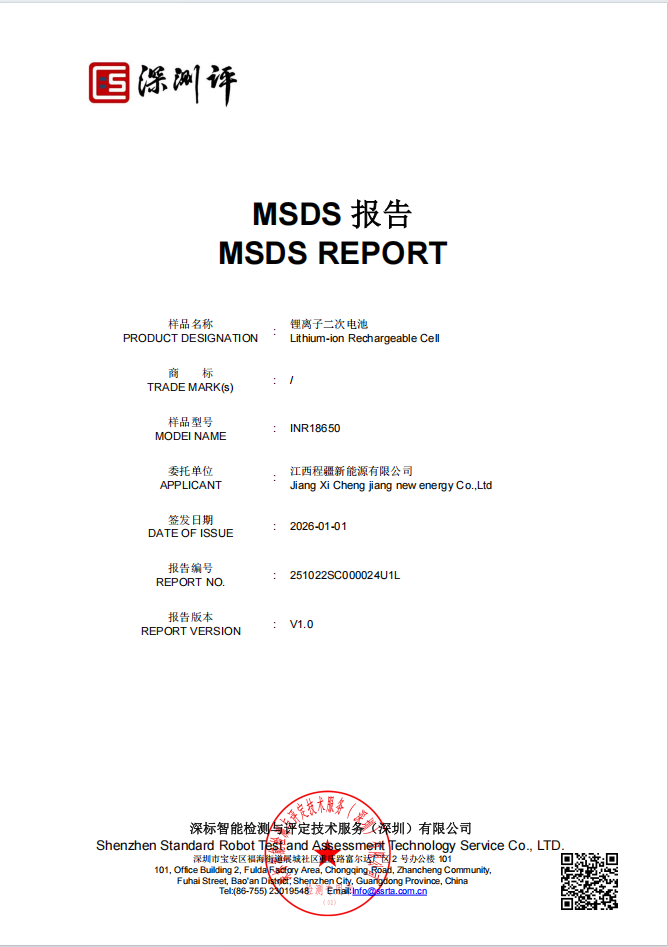
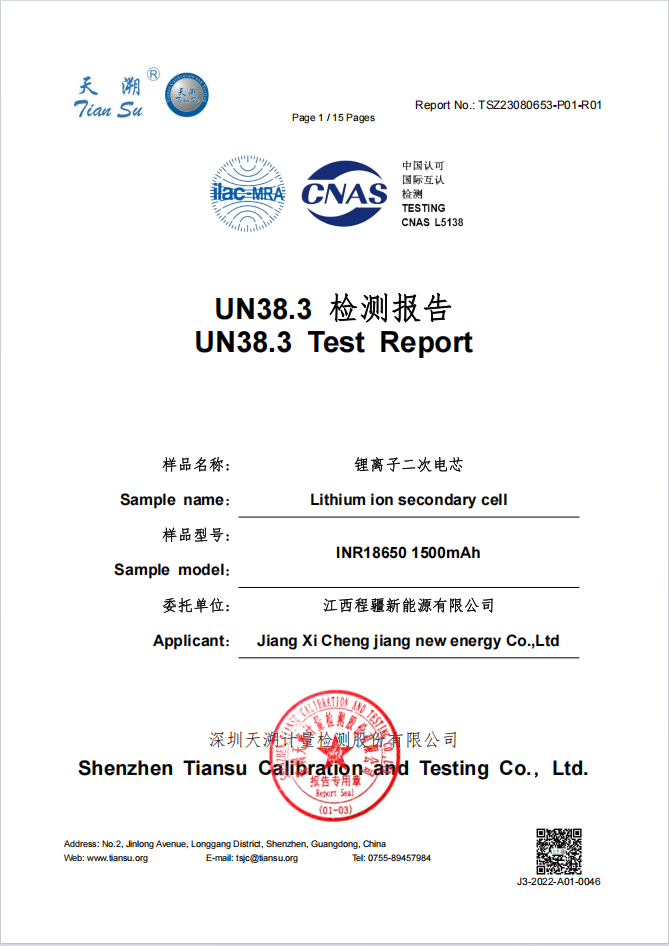
Lithium batteries are classified as dangerous goods for transport, which places UN38.3 documentation on the critical path of any export order. Geakita reports compliance with UN38.3 transportation standards for its lithium battery products.
Transport documentation is pack-specific. Capacity, cell chemistry and configuration all influence what is declared. A distributor that adds a higher-capacity pack to its range should expect to request transport documentation for that pack rather than assume coverage under a previous file.
Mechanical risk controls and the documentation that proves them
For the mechanical risk of kickback or blade breakage, the recognised control methods are anti-kickback systems, safety switches and overload protection. Geakita applies these controls together with full mechanical safety testing, a user manual containing detailed safety instructions, and regular safety training for production teams.
The end-user manual is often omitted from sourcing discussions, yet in several markets it forms part of what a retailer or inspector will ask to see. Treat documentation and user instructions as a deliverable with a defined language set and revision control, not as a printing afterthought.
Durability and efficiency factors that carry compliance side effects
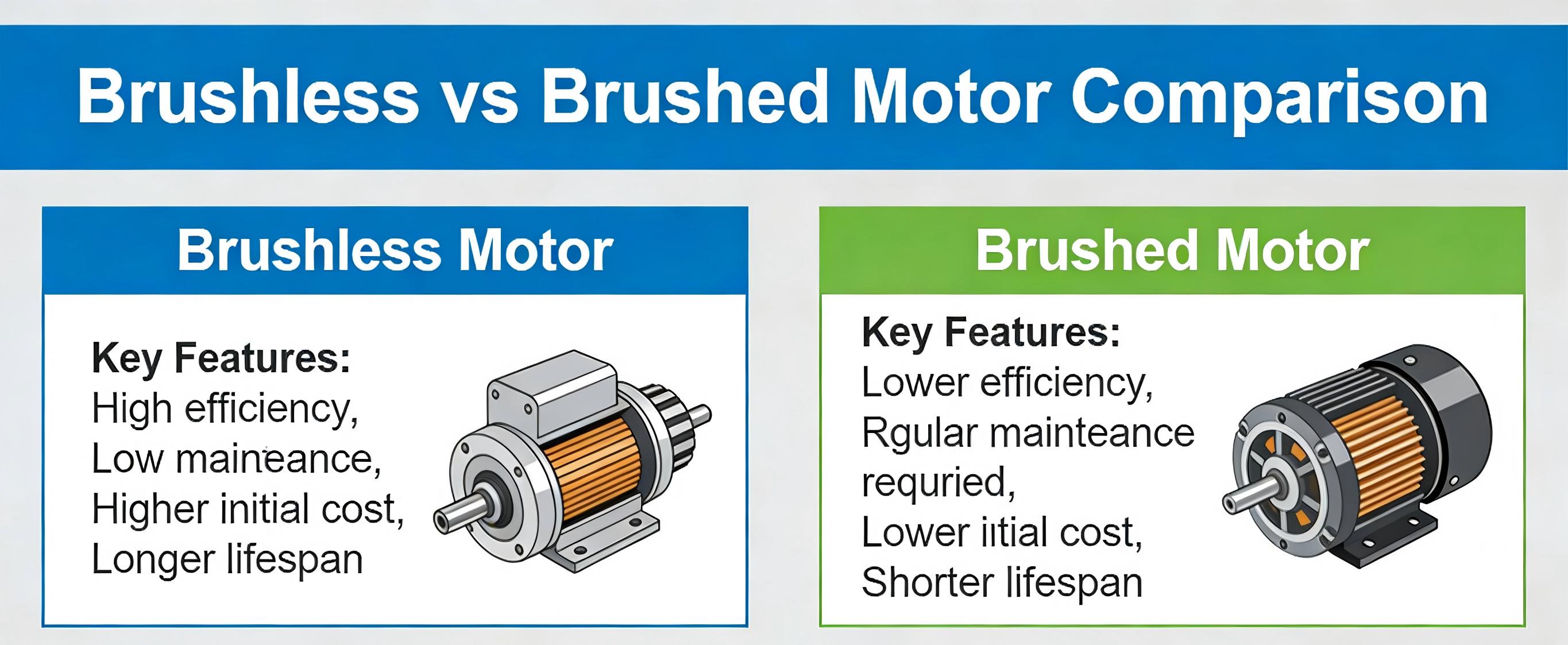
A brushless drive is not only a performance choice. Compared with brushed-motor power tools, brushless tools deliver 30% higher working efficiency, 50% longer service life and 20% longer battery runtime, with a defect rate of 0.5% against 3–5% for low-cost generic tools. They also operate at 25% higher energy efficiency, which is where the compliance connection appears: energy efficiency is a stated consideration under EU energy efficiency standards.
The maintenance side matters just as much for long-term supply planning. Brushless tools require roughly 50% less maintenance, need no brush replacement, and deliver a 10–15% lower total cost of ownership over three years, with 20% lower maintenance cost. For a distributor running a multi-year channel, those figures convert into fewer warranty claims and a more predictable service load.
Manufacturing evidence behind the documents
Documentation is only as reliable as the production system that produces it. Geakita's production base covers approximately 40,000 m² of floor space and employs more than 300 staff, supported by a 25-engineer R&D team. Monthly production capacity is over 180,000 units.
Acceptance criteria are defined rather than implied: 100% pre-shipment inspection (PSI) by the in-house QC team, third-party inspection by SGS or TÜV available on request, and on-site acceptance at the factory.
A Seven-Step Compliance Verification Workflow
The following workflow is built for buyers at the execution stage — companies that have selected a supplier and now need a repeatable process for keeping documentation valid across multiple orders and multiple markets.
- Map the destination market to a standard set. For each market, list the locally adopted version of the tool safety standard, the battery standard and the transport regime. International standards are implemented differently in different jurisdictions, so confirm the local adoption rather than assuming the international text applies unchanged.
- Request the certificate file and check scope, not existence. Ask for certificate number, issuing body, product family, covered model list and validity date, then match that model list line by line against the SKUs on the purchase order.
- Verify the battery layer separately. Request cell-level and pack-level documentation against IEC/UL 62133, evidence of BMS protection functions (overcharge, over-discharge, short circuit), and written confirmation that 100% battery safety testing is performed before shipment.
- Confirm transport documentation for each pack configuration. UN38.3 documentation should be issued against the pack actually being shipped, including higher-capacity variants.
- Validate production-side controls. Treat 100% PSI as the baseline, and use third-party inspection by SGS or TÜV on request where order value or market risk justifies it. On-site acceptance at the factory remains an option for first orders.
- Decide who owns documentation over time. This is the step buyers skip and later regret. Fix in the agreement who holds certificates, how model or cell changes are notified, what the renewal window is, and which party is responsible for re-testing when a configuration changes.
- Lock the commercial terms that make documentation repeatable. Agree MOQ thresholds, delivery terms and payment terms up front so that repeat orders move without reopening the compliance discussion each time.
| Compliance layer | Standard or control mechanism | What it governs | Evidence a buyer should request |
|---|---|---|---|
| Tool safety | IEC/UL 62841-1 (UL Solutions) | Electric motor-operated hand-held tools and lawn and garden machinery | Certificate and test report with the exact model and type scope |
| Battery safety | IEC/UL 62133 (UL Solutions) | Secondary cells and batteries for portable applications | Cell and pack test documentation; BMS protection functions (overcharge, over-discharge, short circuit); 100% battery safety testing before shipment |
| Transport | UN38.3 transportation standards | Transport of lithium batteries | Transport test documentation issued per pack configuration |
| Mechanical risk | Anti-kickback system, safety switch, overload protection | Kickback, blade breakage and overload injury | Mechanical safety testing records; user manual with safety instructions; safety training for production teams |
Compliance Scenarios by Channel Model
The same standard set produces different documentation tasks depending on how a buyer enters the market. Four common patterns:
1. EU importer adding a cordless angle grinder SKU
The importer must confirm the locally adopted version of the tool safety standard and the associated market-entry obligations for the exact tool type, then check that the certificate scope covers the specific grinder configuration. Because angle grinders are a high-energy category, the mechanical risk file (anti-kickback, guard, switch and overload protection) and the user manual matter as much as the electrical file.
2. Middle East distributor building a mixed range
A distributor assembling drills, impact wrenches and rotary hammers across several SKUs should request family-level documentation rather than one file per model, and should verify the battery layer once per pack type. The objective is a single documentation map that can be reused as the range grows, instead of a re-testing cycle every time a new SKU is listed.
3. Private-label brand owner running an OEM/ODM programme
For OEM/ODM customized models, the minimum order quantity is 500 units per SKU, while standard models start at 100 units per SKU. Certification scope must be issued against the private-label configuration, and the buyer should confirm before tooling begins that the intended model name, housing and battery pack match what will appear on the certificate.
4. Existing channel partner renewing a multi-year agreement
At renewal, the compliance conversation shifts from scope to continuity: which documents expire during the new term, how model changes are notified, and how repeat orders are scheduled. Repeat-order lead time is typically 20–28 days, against 30–45 days for mass production, which is why documentation delays are usually more disruptive than production delays in a mature channel.
| Sourcing item | Terms to verify before committing |
|---|---|
| MOQ | Standard models: 100 units per SKU. OEM/ODM customized models: 500 units per SKU. Small-batch trial orders: from 40 units |
| Delivery terms | FOB Shenzhen / Ningbo; EXW factory; DDP door-to-door delivery |
| Inspection and acceptance | 100% pre-shipment inspection (PSI) by in-house QC; third-party inspection (SGS / TÜV) available on request; on-site acceptance at the factory |
| Payment terms | 100% T/T. For large orders, a 50% T/T down payment with 50% against B/L. Credit cards, Alipay and cash are accepted in special circumstances |
| Lead time | Typically 30–45 days for mass production; 20–28 days for repeat orders |
| Monthly production capacity | Over 180,000 units |
Frequently Asked Questions
Which standards apply to cordless power tools and to the battery packs inside them?
Two standards apply to the product itself. IEC/UL 62841-1 is the primary safety standard for electric motor-operated hand-held tools and lawn and garden machinery, and it governs the tool. IEC/UL 62133 covers the secondary cells and batteries used in portable applications, which is the layer that applies to the lithium-ion pack. A third requirement applies to shipping: lithium batteries are dangerous goods, and Geakita reports compliance with UN38.3 transportation standards for its lithium battery products. A complete supplier file addresses all three, per model and per pack configuration.
How can a buyer confirm that a manufacturer's compliance documentation matches the units actually being shipped?
Match the covered model list on each certificate against the SKUs on the purchase order, then verify the production-side controls that keep compliance repeatable. At Geakita these include A-grade lithium-ion cells with an intelligent BMS providing overcharge, over-discharge and short-circuit protection; 100% battery safety testing before shipment; full mechanical safety testing with anti-kickback, safety switch and overload protection; and 100% pre-shipment inspection by the in-house QC team, with third-party inspection by SGS or TÜV available on request. Monthly production capacity of over 180,000 units is what allows those controls to be applied consistently across a growing SKU range.
What commercial terms should a compliance-ready sourcing plan account for?
Standard models carry a minimum order quantity of 100 units per SKU and OEM/ODM customized models 500 units per SKU, with small-batch trial orders available from 40 units. Delivery can be arranged FOB Shenzhen / Ningbo, EXW factory or DDP door-to-door. Payment terms are 100% T/T, with a 50% T/T down payment and 50% against B/L acceptable for large orders. Buyers should treat certificate renewal and third-party inspection as recurring budget lines rather than one-off costs, because both return with every model change and every new SKU.
Can a buyer validate compliance before committing to a full production order?
Yes. Small-batch trial orders are available from 40 units, which allows a buyer to inspect finish, packaging, the user manual and the battery pack as a system before scaling. Where the market risk justifies it, third-party inspection by SGS or TÜV can be requested, and on-site acceptance at the factory is an option for first orders. For OEM/ODM programmes, the trial stage is also the point at which the certificate scope should be confirmed against the final private-label configuration, before the 500-unit-per-SKU threshold is committed.
How long does production take once the order and documentation are settled?
Typical lead time is 30–45 days for mass production and 20–28 days for repeat orders, supported by a monthly production capacity of over 180,000 units. In practice, most schedule slippage in this category comes from documentation rather than from the line, so the handover of certificates, transport documents and approved artwork should be closed before production slots are booked. To review the full range and compliance-relevant specifications, download the Geakita Corporate Profile & Product Catalog (2026) or send your market and SKU list to Flora@gearpioneer.com.
Compliance Is a Supply-Relationship Asset
Cordless power tool compliance holds only when it is designed into the relationship rather than attached to a single shipment. The tool standard, the battery standard and the transport regime each have to be evidenced per model and per pack, and each has to be re-evidenced when a configuration changes. Buyers who fix documentation ownership, change-notification and renewal windows inside the supply agreement spend less time resolving listings and more time building the channel.
For distributors and private-label owners moving into execution, the practical sequence is straightforward: confirm the destination market's adopted standards, audit certificate scope against the actual SKUs, verify battery and transport documentation for every pack, and settle the commercial terms — MOQ, delivery, inspection and payment — so that repeat orders run on a documented baseline rather than on memory.
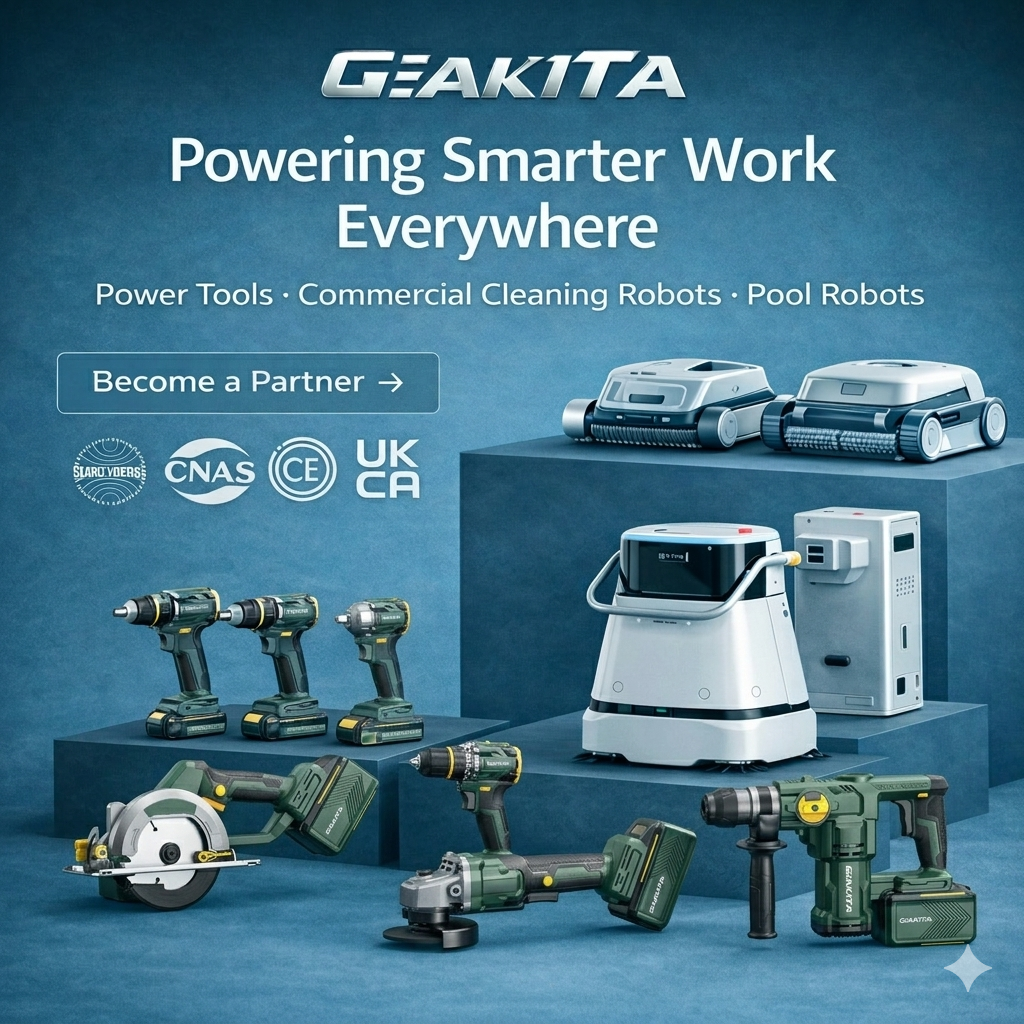
Next step: verify the file against your SKU list
Send your destination markets and target SKUs to the Geakita team to receive the relevant compliance documentation set, MOQ guidance and lead-time planning for your range. Sample and trial orders start from 40 units.
Email: Flora@gearpioneer.com · Tel / WhatsApp: +86 135-9954-5996 · Website: www.geakita.com
Catalog download: GEAKITA Corporate Profile & Product Catalog 2026