- Industry News
- 870
- Gearpioneer-Powering Smart Work EveryWhere
- 10/09/2026
Impact Wrench vs Impact Screwdriver: When to Choose Each for Heavy-Duty Jobs
Compare impact wrenches and impact screwdrivers for automotive, construction, and industrial jobs. Verified 21V brushless Geakita model facts are included.
Impact Wrench vs Impact Screwdriver: When to Choose Each for Heavy-Duty Jobs
If you are comparing impact wrenches and impact screwdrivers for a cordless power tools purchase, start with the fastener type. For socket-driven nuts and bolts that need high torque, the impact wrench is the appropriate tool. For screwdriving work using screwdriver bits, including repeated fastening and lower-torque assembly, the impact screwdriver is the appropriate tool. This guide explains the difference for heavy-duty industrial production, construction sites, automotive repair, workshop maintenance, and assembly work, and it uses verified Geakita 21V brushless models to make the decision concrete.
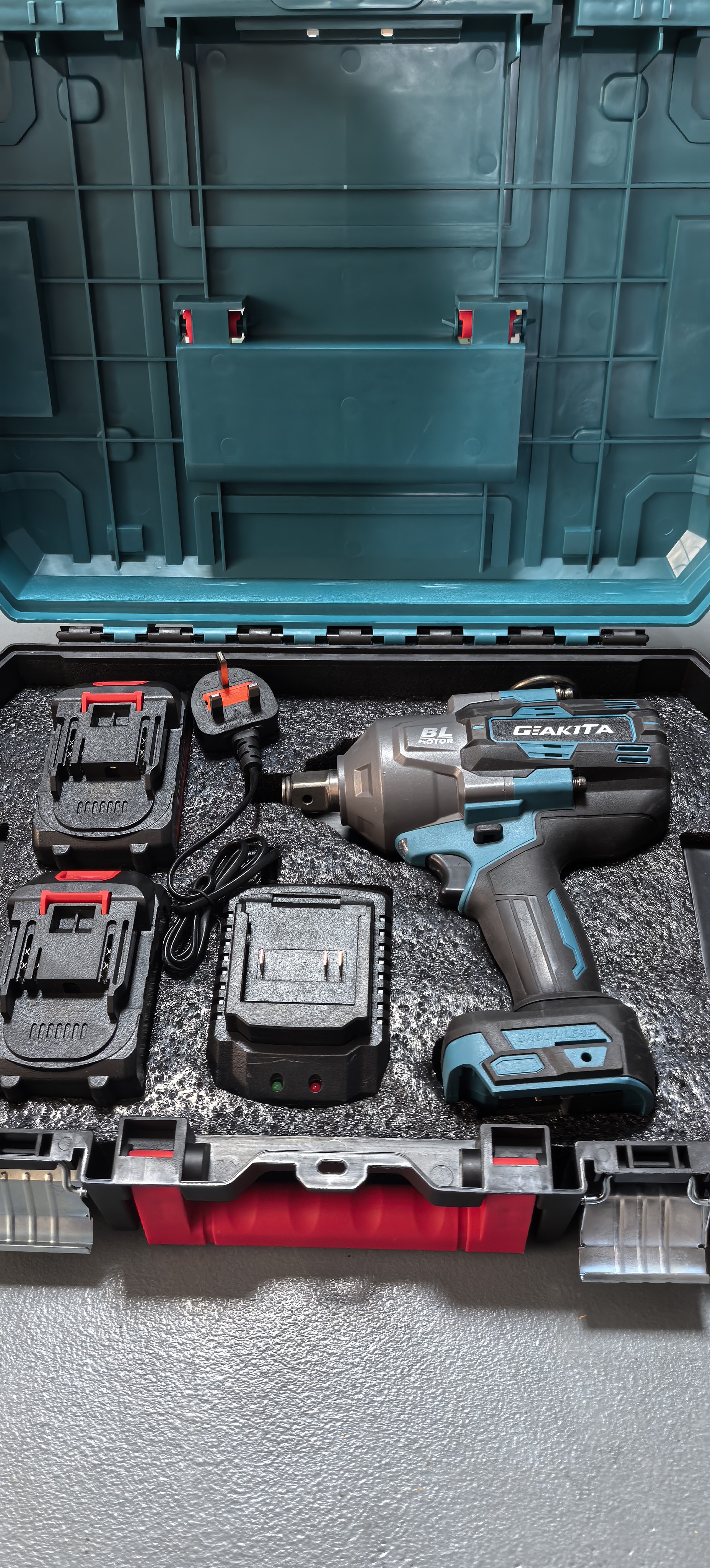
Geakita impact wrench in an automotive repair context from its field case library.
What this comparison covers
This article is written for procurement teams, distributors, contractors, and OEM/ODM buyers moving from evaluation to execution. It focuses on two cordless fastening formats: the impact wrench and the impact screwdriver. Both live under the same broad category of cordless power tools, but they answer different job requirements. If you are selecting SKUs for stock or planning a private-label order, the difference changes your list of models, safety documentation, and application support.
For the purpose of this guide, Geakita is used as a concrete product reference. Geakita is the registered brand of Xiamen Tiangong Kaiwu Technology Co., Ltd., a power tool manufacturer founded in 2009 that supplies markets including Europe, Southeast Asia, the Middle East, and America. The comparison below is based on verified Geakita product facts and does not rely on unaudited price claims.
Problem definition: both use impact, but they are not interchangeable
An impact wrench and an impact screwdriver both use a hammer-and-anvil-style impact mechanism to deliver rotational pulses. That is why they look related. The difference is not the brand or the motor type; it is the tool output and the fastener family it supports.
An impact wrench is designed around high-torque socket work. It uses a square-drive socket anvil and is best suited to nuts and bolts that need more torque than a manual wrench can provide comfortably. An impact screwdriver, sometimes called an impact driver in general tool terminology, is designed around screwdriver bits. It is used for screws, self-tapping screws, panel fasteners, and other bit-driven tasks where the screw head is the main interface.
Choosing the wrong format usually shows up in one of two ways. If you use a screwdriver-type tool for a heavy bolt that needs an impact wrench, the job can stop because the tool does not have enough torque output. If you use a wrench on screwdriving tasks, the socket drive makes bit work slower and less practical. Therefore, heavy-duty job planning should match the tool format to the fastener and the expected torque demand.
Industry background: fastening drives cordless demand
Fastening is not a niche part of the cordless power tools market. According to industry data cited by Grand View Research, drilling and fastening tools represented the largest segment in the cordless market with a 36.51% revenue share in 2024. The practical effect for a distributor or contractor is that decisions about fastening tools shape a large share of inventory and daily site efficiency.
Impact wrenches have a meaningful place in that same landscape. The impact wrenches market was estimated at roughly USD 2.68 billion in 2024 by one third-party research source. This is not about brand popularity. It is evidence that high-torque fastening tools are a buying category on their own, separate from general drilling tools.
Detailed solution: 21V brushless fastening platform from Geakita
Geakita supplies both impact wrenches and impact screwdrivers in a 21V cordless architecture with brushless pure copper motors. For a buyer evaluating a full SKU range, this structure is useful because both fastening families can be compared on the same type of motor technology and the same nominal voltage.
Impact wrench references
Geakita's 21V Brushless Impact Wrench is documented under the model names 650NM and 1000NM. Both models are listed as 21V brushless pure copper tools, with battery configurations ranging from 1500mAh to 2000mAh and from 10 cells to 15 cells depending on the model. More detailed pure copper brushless wrench references include the GKR05 impact wrench with actual torque of 650 N·m and the GKR06 heavy-duty wrench with actual torque of 1000 N·m.
Impact screwdriver references
Geakita's 21V impact screwdriver line includes the QZ03 and QZ05 models. QZ03 is listed as a 21V brushless pure copper screwdriver with a 1300mAh 10-cell configuration. QZ05 is listed as a 21V brushless pure copper screwdriver with a 1500mAh 10-cell configuration. For screwdrivers that require more documented torque detail, Geakita also offers the GKR03 pure copper brushless screwdriver with three torque levels of 35/100/120 N·m and no-load speeds of 1200/2400/3000 rpm.
Comparison table: impact wrench vs impact screwdriver
| Comparison point | Impact wrench | Impact screwdriver |
|---|---|---|
| Core task | Remove or install nuts, bolts, and socket-driven threaded fasteners | Drive or remove screws and bit-driven fasteners |
| Typical heavy-duty jobs | Vehicle lug nuts, suspension bolts, engine mounts, construction bolting, heavy-equipment maintenance | Workshop daily repair, furniture assembly, panel screws, cladding fasteners, repeated lower-torque assembly |
| Tool interface | Square-drive socket anvil commonly used with impact sockets | Bit collet commonly used with screwdriver bits |
| Geakita references | 21V Brushless Impact Wrench 650NM and 1000NM; GKR05 and GKR06 pure copper brushless wrench references | 21V Impact Screwdriver QZ03 and QZ05; GKR03 pure copper brushless screwdriver reference |
| Verified platform detail | 21V, brushless pure copper; 1500–2000mAh and 10–15 cell configurations; GKR05 actual torque 650 N·m; GKR06 actual torque 1000 N·m | QZ05: 21V, 1500mAh, 10 cells, brushless pure copper; QZ03: 21V, 1300mAh, 10 cells, brushless pure copper; GKR03: 35/100/120 N·m torque levels |
| Best suited for continuous heavy-duty use | High-torque nut and bolt work where wrench torque and socket interface are required | Bit-driven screw turnover, assembly, and workshop repair rather than high-torque nut removal |
All product and specification facts in this table are drawn from Geakita product documentation referenced in this guide. No competitor specifications or unaudited prices are included.
When to choose an impact wrench for heavy-duty jobs
Choose an impact wrench when the workload is dominated by nuts, bolts, anchors, or threaded fasteners that need socket drive. In automotive work, this includes tire replacement, suspension bolts, and engine disassembly. In construction work, it includes structural bolt fastening and equipment that must be secured quickly on site. In industrial maintenance, an impact wrench is usually the practical answer when a manually loosened bolt is too rusty or too tight for a screwdriver.
Geakita's field application notes include vehicle maintenance, tire replacement, engine disassembly, and workshop daily repair. They also include bolt fastening and high-temperature construction-site operation. These are not low-torque screw tasks. They are jobs where torque delivery through a socket, not through a screwdriver bit, is the predictable way to complete the fix.
When to choose an impact screwdriver for heavy-duty jobs
Choose an impact screwdriver when the task is bit-driven and the fastener has a screw head. Common examples include assembling panels, mounting brackets, installing self-tapping screws, and performing repetitive repair work where the same tool stays on a screwdriver bit for long periods. For workshop daily repair, an impact screwdriver helps operators move quickly between different screw sizes by changing bits instead of changing sockets.
Geakita's application documentation also lists wood cutting, sanding, drilling, and furniture assembly in automated production lines as areas of use. For screwdriver-specific SKUs such as QZ03 and QZ05, the 21V brushless pure copper motor is a shared advantage because it reduces the periodic maintenance issue created by brushed motors in daily production use.
Use cases from field projects
Field projects using Geakita tools have been implemented in Laos, the Philippines, Thailand, India, Brazil, Saudi Arabia, and Oman. The published case description covers construction contractors, supermarkets, e-commerce partners, power tool distributors, OEM/ODM manufacturers, and hardware stores. One documented project exceeded 5,000 units delivered and reported a 99.8% on-time delivery rate and a 0.3% defect rate in field operations, with stable performance in a 45°C high-temperature environment.
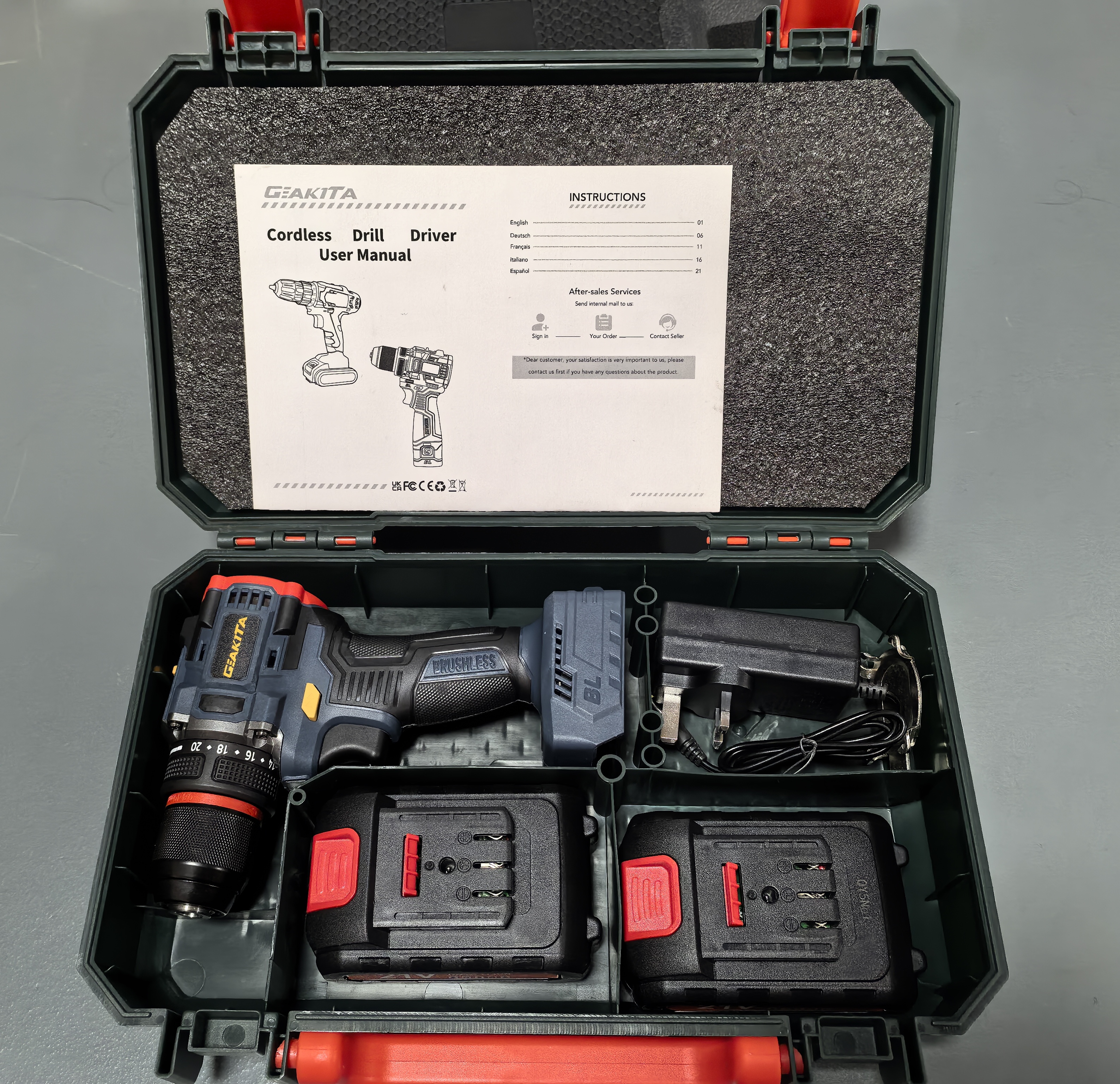
Construction-site power tool application case from Geakita's project history.
The application list behind these project references includes high-temperature construction operation, concrete drilling, metal cutting, bolt fastening, vehicle maintenance, tire replacement, engine disassembly, workshop daily repair, and furniture assembly in automated production lines. For a heavy-duty tool assortment, this means the consumption pattern is not limited to one format. Both the impact wrench and the impact screwdriver have separate demand signals.
Step-by-step selection process
Use the following process when deciding between impact wrenches and impact screwdrivers for your own inventory or project toolkit.
- List your three most frequent fastening jobs.
- Identify whether each job is a bolt/nut task or a screw/bit task.
- Match bolt and nut tasks to an impact wrench line such as the 650NM or 1000NM Geakita references.
- Match screw and bit tasks to an impact screwdriver line such as QZ03, QZ05, or the GKR03 screwdriver reference.
- Check whether your duty cycle is continuous. A brushless pure copper motor is the relevant technology to compare because it removes carbon brushes as a routine maintenance item.
- For EU-bound stock, confirm that the specific model has the required CE EMC documentation. For buyers targeting the UK, check if UKCA documentation exists for the selected SKU.
- If you need a private label, verify OEM/ODM customization options before committing to packaging or model count.
- Validate with sample units or a small-batch order before executing a full production order.
Beyond the tool comparison: OEM/ODM and quality control
For buyers selecting both tool families from one supplier, manufacturing capability matters as much as the tool comparison. Geakita provides OEM and ODM production services for power tools, including customization of logo printing, packaging design, voltage in 110V/220V formats, torque and speed parameters, color schemes, and battery configuration in 2.0Ah or 4.0Ah options.
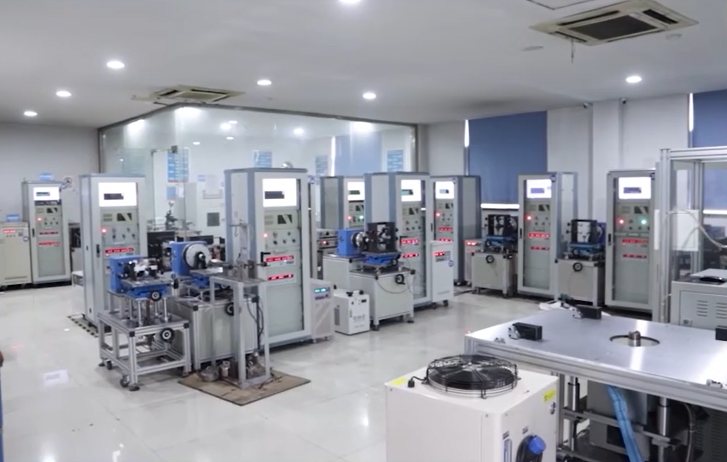
Automated power tool production line capability documented by Geakita.
Geakita also reports a monthly manufacturing capacity of more than 180,000 units. Its quality control process includes 100% full inspection before shipment, three-level QC covering IQC, IPQC, and FQC, and functional and load testing. For after-sales execution, the documented package includes a one-year global warranty, 7x24 technical support, on-time replacement for defective units, and spare parts supply.
Lead-time and sourcing details are covered more specifically in the FAQ below.
Frequently asked questions
What compliance documentation should be checked before sourcing these 21V tools?
For EU-bound buyers, request CE EMC documentation for the exact model. Geakita CE certificates reference EMC Directive 2014/30/EU and standards including EN IEC 55014-1, EN IEC 55014-2, EN IEC 61000-3-2, and EN 61000-3-3. The CE certificates for selected impact wrench and impact screwdriver models were issued in 2025 and have a valid date of 2030-08-04. For UK-bound buyers, confirm whether the selected model also has UKCA documentation. An EMC certificate alone is not proof of full product safety compliance, so always check the target market's applicable safety standard as well.
What can Geakita customize for OEM/ODM buyers who want both impact wrenches and impact screwdrivers?
Geakita provides OEM and ODM production services for power tools. Customization options include logo printing, packaging design, voltage customization in 110V or 220V formats, parameter adjustment for torque and speed, color scheme selection, and battery configuration in 2.0Ah or 4.0Ah options. This is useful when you want the same visual identity, packaging language, and battery platform across both fastening families.
How should budget be allocated between an impact wrench and an impact screwdriver?
Budget should be allocated by task type. If most of your jobs involve lug nuts, structural bolts, or industrial equipment fasteners, the impact wrench is the critical SKU. If most of your jobs involve screwdriving, panels, furniture assembly, or workshop repair, the impact screwdriver is the critical SKU. In a mixed workload, both are justifiable because they serve different interfaces. For private-label sourcing, final price is determined by model, motor type, battery cells, customization complexity, and order volume. No honest budget can be fixed before those specifications are defined.
How can a buyer validate Geakita impact tools before placing a full order?
A small-batch trial order is one available path. Geakita procurement documentation states that small-batch trial orders of 40 units can be used for validation. Standard SKU orders are set at 100 units per SKU, while OEM/ODM customized models are set at 500 units per SKU. Before committing to a customized production quantity, request the relevant specification sheet, available certification document, and sample configuration for review.
What are typical lead times and why does a single-source fastening platform matter?
Geakita lists mass production lead time at 30–45 days and repeat-order lead time at 20–28 days, with shipping time calculated separately based on shipping method and destination port. Sourcing impact wrenches and impact screwdrivers from one manufacturer reduces vendor complexity and lets you align voltage, color, packaging, quality control, and after-sales terms across both categories. For the current catalog, product brochure download, or sample quotation, contact Flora at Flora@gearpioneer.com or via WhatsApp at +86 135-9954-5996.
Conclusion
The decision between an impact wrench and an impact screwdriver for heavy-duty jobs should be made by fastener type. If the job is a nut or bolt that needs socket drive and high torque, choose an impact wrench. If the job is a screwdriving task that needs bit speed and controlled impacts, choose an impact screwdriver. They are complementary tools, not competing versions of the same tool.
For buyers evaluating cordless power tools from Geakita, both fastening families are available on a 21V brushless pure copper platform. The documented platform covers the 650NM and 1000NM impact wrench references as well as the QZ03 and QZ05 impact screwdriver references. When combined with OEM/ODM options, CE/UKCA-related documentation, 100% pre-shipment inspection, and a defined lead-time process, the comparison becomes a practical procurement decision.
For further reading, download the current Geakita Corporate Profile and Product Catalog.
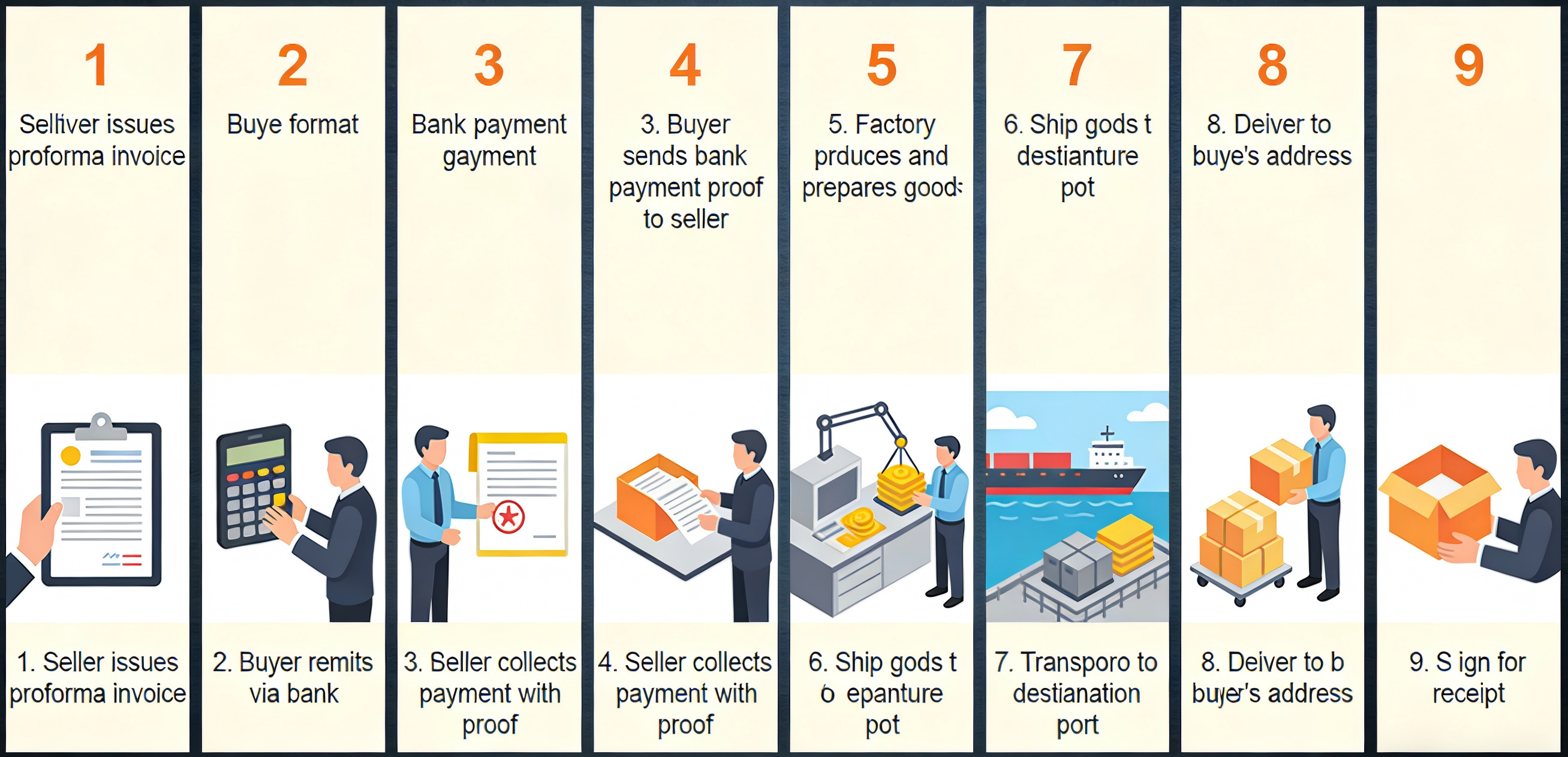
Geakita delivery process guide for procurement planning.