- Industry News
- 399
- Gearpioneer-Powering Smart Work EveryWhere
- 15/10/2026
Commercial Cleaning Robot Supplier Audit: Verifying CE, QC, Capacity, and Delivery Claims
Audit a commercial cleaning robot supplier with a document-first checklist: verify CE certificate KTi250704E245C, 3-level QC gates, 180,000+ unit monthly capacity, and 30-45 day lead times.
Commercial Cleaning Robot Supplier Audit: Verifying CE, QC, Capacity, and Delivery Claims

A commercial cleaning robot supplier audit is a document-matching exercise, not a price negotiation. Every claim a manufacturer makes about certification, quality control, production capacity, and delivery can be tested against a specific artifact — a certificate number, an inspection gate, an allocated production slot, a shipment log. This guide sets out what to request, which fields inside each document actually matter, and which answers should stop an order.
Why Generic Supplier Claims Fail to Hold Up
Commercial cleaning robot procurement sits in a category where marketing language has moved faster than documentable proof. The global commercial cleaning robot market was valued at approximately USD 1,777.3 million in 2024, according to Grand View Research. SkyQuest Technology projects the B2B floor cleaning robots segment to grow from USD 1.43 billion in 2026 to USD 5.43 billion by 2035, a CAGR of 16%. Industry Research found that indoor applications — offices, hospitals, retail, and hotels — accounted for 68% of commercial deployments in 2024. China's cleaning robot exports reached RMB 14 billion in the first five months of 2026, representing more than 70% of the country's total robot exports, based on General Administration of Customs data.
Fast growth attracts supply. Recognized manufacturers in the B2B cleaning robot sector include SoftBank Robotics, Gausium (Gaussian Robotics), Avidbots, and Nilfisk, and they are joined by a large tier of OEM and ODM manufacturers. For a buyer, the practical consequence is that two quotations with near-identical specifications can sit at very different levels of verifiable compliance — and the difference rarely appears in the specification sheet.
An audit fixes that problem by forcing each claim into a falsifiable form. "We are CE certified" becomes a certificate number that can be checked. "We have strict quality control" becomes a defect figure attached to a named inspection gate. "We can produce at scale" becomes a capacity allocation for a specific order. "We deliver on time" becomes a shipment log by destination and month.
The Four Verification Layers of a Supplier Audit
A structured audit for commercial cleaning robots covers four layers, in this order, because each one depends on the previous: certifications (can the product legally be placed on your market), quality system (can the factory hold a specification repeatedly), capacity (can the factory hold your schedule), and delivery record (has it actually done so for comparable buyers). Buyers who invert this order usually discover a compliance problem after the tooling has been paid for.
Layer 1 — Certifications: Reading a CE Certificate Properly
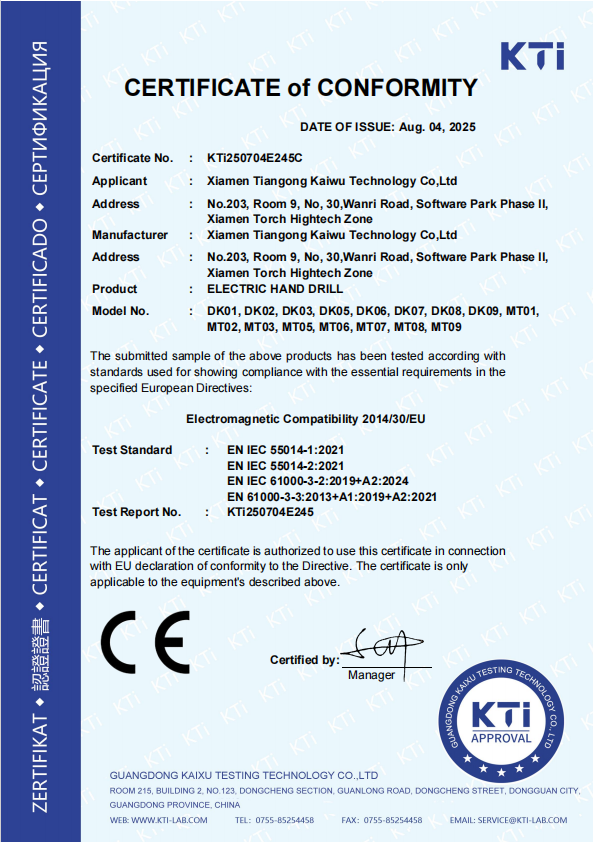
A CE certificate is useful in an audit only when five fields are read together: certificate number, issuing body, directive scope, applicable standards, and validity window. Read individually, any of them can be presented as stronger than it is.
For the commercial cleaning robot line, the referenced CE documentation states certificate number KTi250704E245C, issued by KTi, applicable to the EU market and to the standard EN IEC 55014 61000, covering the Electromagnetic Compatibility (EMC) Directive 2014/30/EU. The validity window recorded on the certificate runs from 2025-08-04 to 2030-08-04.
Two distinctions decide whether a certificate actually covers your purchase. First, an EMC certificate addresses electromagnetic compatibility; it is not a machine safety certificate. The international safety standard for powered automatic floor treatment machines intended for commercial indoor use is IEC 63327:2021, published by the International Electrotechnical Commission. In North America, UL 3300 addresses safety requirements for service robots, specifically mobility and human-robot interaction in commercial environments. A supplier that presents an EMC certificate as complete CE conformity for a mobile robot has not answered the safety question.
Second, certification is model-specific. Ask for the list of models the certificate covers, and confirm that the model you are ordering appears on it. If the certificate names a product family rather than the exact configuration you are buying, request the declaration that ties the family to your configuration.
Audit action: Request the certificate as a full document, not a thumbnail. Confirm the certificate number directly with the issuing body. Separate the EMC scope from the machine safety scope, and request the safety test report if your market requires one.
Layer 2 — Quality Control: Auditing IQC, IPQC, and FQC
A three-level QC system is a manufacturing governance structure, not a slogan. It is built from IQC (incoming quality control on materials and components), IPQC (in-process quality control during assembly), and FQC (final quality control on the completed unit). The value of the structure is that defects are attributed to a gate, which makes continuous improvement measurable.
For the referenced commercial cleaning robot program, the documented system includes 100% full inspection before shipment together with functional and load testing. Supporting controls include Tier-A approval for key materials such as cells, magnets, bearings, and cutting tools, 100% IQC sampling with defect traceability, in-process inspection with inline monitoring, automated end-of-line testing, and outgoing checks at shipment with lithium battery handling compliant with UN38.3 and dangerous goods standards.
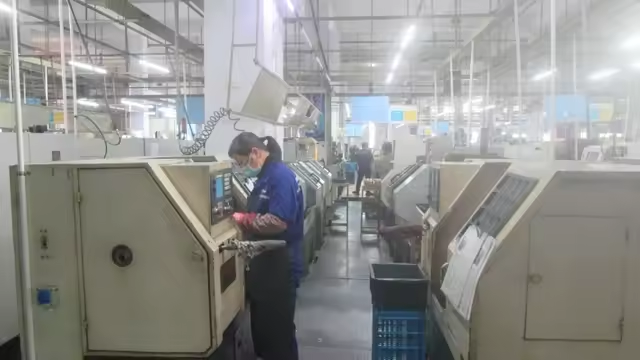
In an audit, the question is not whether a QC system exists but whether it produces data. Ask for the written QC plan with gate definitions, the defect rate recorded at each gate, and the traceability record for a serial number selected at random by you rather than by the supplier. A factory that can retrieve one unit's material batch, in-process inspection record, end-of-line test result, and shipment date is operating a real system. A factory that can produce a certificate of inspection but no underlying records is not.
The delivery record gives the audit a benchmark to measure those numbers against: a documented 0.3% defect rate and a defined after-sales process covering on-time replacement for defective units, spare parts supply, and 7×24 technical support. Confirm the warranty terms and the RMA procedure in writing — this is where most commercial cleaning robot disputes actually originate, because a mobile robot that stops mid-route affects the buyer's cleaning contract, not just the equipment ledger.
Layer 3 — Capacity: Turning a Number Into an Allocation
Stated production capacity is a facility-level figure, and facility-level figures do not automatically translate into capacity for your order. The manufacturer's published capability is a monthly capacity of more than 180,000 units, produced from a base with approximately 40,000 m² of floor space and supported by more than 300 staff, including an internal R&D team of 25 engineers.
The audit question that follows is allocation: what share of that monthly capacity is reserved for your program, during which weeks, and what happens to your schedule when a larger account increases its order. A supplier that cannot answer this has capacity, but not committed capacity.
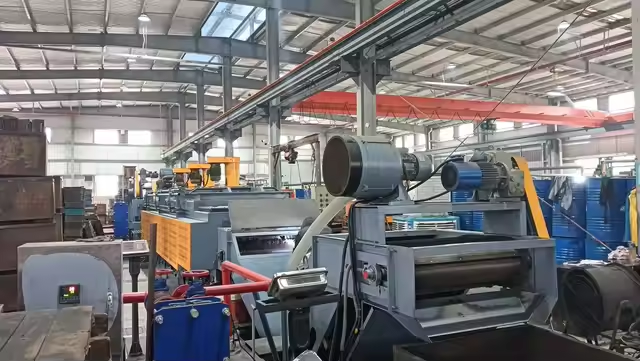
Lead time belongs in the same conversation. The stated figures are 30–45 days for mass production and 20–28 days for repeat orders, with shipping time calculated separately according to shipping method and destination port. Because the shipping element is excluded from those numbers, total receipt time can be substantially longer than 45 days for a distant destination. Convert the factory lead time and the freight lead time into two separate lines in your planning schedule so that neither is mistaken for the other.
Layer 4 — Delivery: Testing the Record, Not the Promise
Delivery claims are the easiest to state and the easiest to verify against a log. The referenced project record covers more than 5,000 units completed over more than two years for clients in Laos, the Philippines, Thailand, India, Brazil, Saudi Arabia, and Oman, with 99.8% on-time delivery, a 0.3% defect rate, and stable performance in environments above 45°C.
Three audit questions sharpen that record. First, ask for the subset relevant to your product category and destination — a strong record across one product family is not automatically a strong record across a mobile cleaning robot deployment in a hospital corridor. Second, ask what "on-time" means contractually, including the measurement point and the baseline date. Third, ask whether the environmental conditions match your site: a supplier that has documented stable operation above 45°C has evidence for hot-climate and unairconditioned facilities such as warehouse and factory floor installations, which is materially different evidence from a temperature-controlled exhibition hall deployment.
Step-by-Step: Running the Audit in Seven Moves
- Request the certificate pack first. Collect the CE certificate and the model coverage list. Confirm the certificate number with the issuing body, and establish whether a machine safety standard applies separately.
- Request the QC plan and gate-level defect data. Ask for IQC, IPQC, and FQC definitions, the recorded defect rate at each gate, and the pre-shipment inspection standard.
- Request capacity allocation, not capacity totals. Ask for the share of monthly output reserved for your order and the weeks it is reserved for.
- Request a dated lead-time schedule. Separate mass production time (30–45 days) and repeat order time (20–28 days) from shipping time, and require milestone dates rather than a single figure.
- Request delivery records for your destination. Ask for shipments by market and month, the on-time delivery definition, and the defect rate on comparable orders.
- Validate a production-configuration sample. Test in your own facility, record results against the published specification, and require the mass-production units to match the sample configuration.
- Write verification into the contract. Convert each audit finding into an acceptance criterion: certificate currency, inspection standard, delivery dates, defect remedies, and spare parts availability.
Audit Comparison Table: Evidence, Compliant Answers, and Red Flags
| Claim area | Evidence to request | What a compliant answer looks like | Red flag |
|---|---|---|---|
| CE certification | Full certificate document and model coverage list | Certificate number KTi250704E245C issued by KTi, EU market, standard EN IEC 55014 61000, valid 2025-08-04 to 2030-08-04 | Thumbnail image only; number cannot be verified with the issuing body |
| Machine safety scope | Safety test report or declaration | Safety coverage addressed separately, referencing standards such as IEC 63327:2021 for commercial indoor floor treatment machines or UL 3300 for service robot mobility and interaction | An EMC certificate presented as complete CE conformity for a mobile robot |
| Quality system | Written QC plan, gate definitions, defect data | 3-level QC (IQC/IPQC/FQC), 100% full inspection before shipment, functional and load testing, Tier-A approval for key materials, defect traceability | "We have QC" with no gate definitions and no defect figures |
| Field defect rate | Warranty and RMA records | Documented 0.3% defect rate with on-time replacement for defective units and spare parts supply | Refusal to share any defect or RMA figure |
| Production capacity | Capacity allocation statement and production schedule | Monthly capacity of 180,000+ units with the specific allocation and weeks reserved for the order | Capacity quoted as a total with no allocation or bottleneck detail |
| Lead time | Schedule with milestone dates | Mass production 30–45 days, repeat orders 20–28 days, shipping time calculated separately by method and port | A single lead-time number with no milestone breakdown |
| Delivery record | Shipment log by destination and month | 5,000+ units over more than two years for clients in Laos, the Philippines, Thailand, India, Brazil, Saudi Arabia, and Oman; 99.8% on-time delivery | "Many clients worldwide" with no markets, volumes, or dates |
| Environmental performance | Field test notes for the target condition | Documented stable performance above 45°C | No test conditions stated |
How Audit Depth Changes by Facility Type
The four layers do not carry equal weight in every project. For a hospital cleaning robot or airport cleaning robot deployment, compliance documentation and uptime guarantees dominate, because the machine operates in public circulation areas with continuous foot traffic. For a commercial scrubber dryer robot used in a mall cleaning robot or supermarket cleaning robot program, throughput and battery scheduling dominate, since cleaning windows are tied to trading hours.
For a warehouse cleaning robot or factory floor cleaning robot, the environmental evidence matters most: high-temperature stability above 45°C and dust tolerance during long operating windows. For a hotel cleaning robot, office cleaning robot, or school cleaning robot program, navigation accuracy and noise behavior during occupied hours drive the evaluation — the published ±1 cm navigation accuracy becomes the number buyers test rather than accept. For a restaurant kitchen cleaning robot or back-of-house application, water handling becomes the deciding specification, which is why the clean water and wastewater tank configuration belongs in the audit sheet rather than the appendix.
If your sourcing scope also includes a commercial sweeping robot or a commercial vacuum cleaning robot, or an industrial cleaning robot for a heavier duty cycle, the same four verification layers apply. What changes is the specification baseline used to compare the sample against mass production.
FAQ: Verifying Supplier Claims Before You Sign
How do I verify a CE certificate for a commercial cleaning robot before signing?
Request the certificate as a full document rather than an image thumbnail, then check five fields together: certificate number, issuing body, directive scope, applicable standards, and validity window. For the commercial cleaning robot line, the referenced certificate is number KTi250704E245C, issued by KTi, applicable to the EU market and the standard EN IEC 55014 61000, covering Electromagnetic Compatibility (EMC) Directive 2014/30/EU, with validity from 2025-08-04 to 2030-08-04. Two further checks matter: confirm that the certificate names the model you are ordering, and confirm whether machine safety is covered separately, because safety standards for powered automatic floor treatment machines (IEC 63327:2021) and service robot mobility (UL 3300) are distinct from EMC requirements.
What does a 3-level QC system consist of, and what evidence proves it is running?
A 3-level QC system is structured as IQC for incoming materials and components, IPQC for in-process control during assembly, and FQC for final inspection of the completed unit. In the referenced commercial cleaning robot program, the system includes 100% full inspection before shipment plus functional and load testing, Tier-A approval for key materials such as cells, magnets, bearings, and cutting tools, 100% IQC sampling with defect traceability, in-process inspection with inline monitoring, automated end-of-line testing, and outgoing checks at shipment with lithium battery handling compliant with UN38.3. Evidence to request is the written QC plan with gate definitions, the defect rate recorded at each gate, and the traceability record for a serial number you select yourself.
How do I verify pricing and MOQ claims when no public price list exists?
Verification shifts from the number to the structure of the quotation. Ask for a written quotation that separates unit price, tooling or customization charges, packaging, spare parts, warranty terms, and freight, and confirm the MOQ in writing against the exact configuration it applies to. Geakita's published MOQ structure for mixed power tool orders is 5 categories at 8 items per category, totaling 40 items, which shows a stated and checkable commercial term rather than an open-ended one. Robot-specific MOQ, sample charges, and tooling costs should be confirmed in the same written form before a purchase order is issued, and the price behavior at doubled volume should be stated rather than assumed.
What should a commercial cleaning robot sample evaluation actually test?
A sample is only useful if it is built to the production configuration and tested in the environment it will operate in. Use the published specification as the comparison baseline: model WDC-C2 measures 503 × 503 × 629 mm, weighs 40 kg, carries 10 L of clean water and 10 L of wastewater, runs a 1 kWh swappable battery with a 3-hour charge time and 5–12 hours of runtime, cleans a 440 mm path at 0.2–0.8 m/s, and navigates with ±1 cm accuracy across hospitals, malls, campuses, exhibition halls, offices, airports, hotels, and restaurants. Record cleaning results, runtime against your real shift pattern, obstacle behavior, and battery swap time in your own facility, then require the delivered mass-production units to match the same test sheet.
How can I confirm that a 30–45 day lead time is realistic?
Convert the lead time into a dated production schedule and test whether the supplier can allocate capacity to it. The stated figures are 30–45 days for mass production and 20–28 days for repeat orders, with shipping time calculated separately based on shipping method and destination port. Ask for milestone dates covering material release, assembly start, end-of-line testing, and packing; ask what share of the stated monthly capacity of 180,000+ units is reserved for your order; and ask for on-time delivery evidence from comparable destinations. The referenced program recorded 99.8% on-time delivery and a 0.3% defect rate across more than 5,000 units delivered over more than two years to clients in Laos, the Philippines, Thailand, India, Brazil, Saudi Arabia, and Oman. Buyers who prefer to begin with the documentation set can request the certificate pack, the product catalog, and a quotation through geakita.com.
Conclusion: Audit First, Order Second
Certification, quality control, capacity, and delivery are four separate claims, and each one has a document behind it. The audit is complete when the certificate number can be confirmed with the issuing body, the QC gates come with defect data, the capacity figure comes with an allocation for your order, and the delivery claim comes with a shipment log for your region. None of those checks require a purchase order to begin — which is precisely why they are worth running before one is issued.
Geakita (Xiamen Tiangong Kaiwu Technology Co., Ltd.) is a Chinese manufacturer founded in 2009 that produces power tools, robotic pool cleaners, and commercial cleaning robots, operating a production base with approximately 40,000 m² of floor space and a workforce of more than 300, with export activity concentrated in Europe, Southeast Asia, and the Middle East.
Request the Documentation and a Quotation
Start with the audit artifacts rather than a sales conversation: request the certificate pack, the QC and delivery documentation, a production-configuration sample, and a written quotation for your configuration.
Corporate profile and product catalog (PDF): Download the Geakita catalog
Website: www.geakita.com | Email: Flora@gearpioneer.com | Tel / WhatsApp: +86 135-9954-5996