
- Industry News
- 396
- Gearpioneer-Powering Smart Work EveryWhere
- 17/10/2026
Cordless Power Tools: A Comparison Guide by Duty Cycle
Compare cordless power tools by duty cycle: verified specs for drills, impact wrenches, angle grinders and rotary hammers, plus compliance, MOQ and lead time.
Cordless Power Tools: A Comparison Guide by Duty Cycle
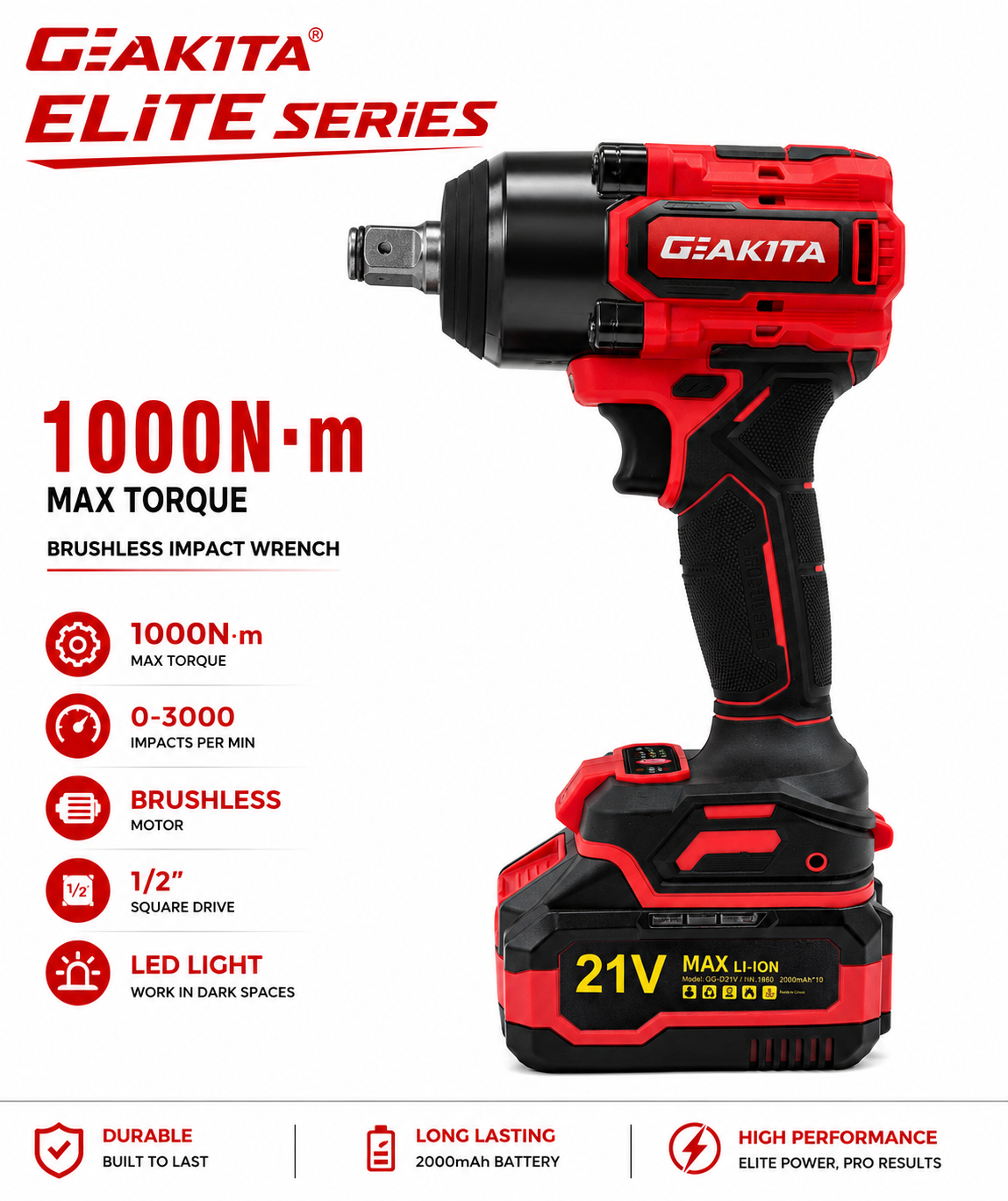
Short answer: the specification that most reliably separates one cordless power tool from another is not the brand on the housing or the peak number on the label — it is the duty cycle the tool was built to survive. Geakita documents three operating modes across its cordless range: continuous operation at 8–12 hours per day, intermittent operation for DIY and household use, and portable on-demand operation. A 21V impact wrench that has to hold torque through a full maintenance shift is a different purchase decision from a 16.8V drill used for weekend assembly work, even when both sit in the same online category.
This comparison guide works through cordless power tool classes — drills, impact drills, impact screwdrivers, impact wrenches, angle grinders, rotary hammers and circular saws — using published specifications rather than headline claims. Geakita (Xiamen Tiangong Kaiwu Technology Co., Ltd.) is a cordless power tool manufacturer founded in 2009 that operates a 40,000 m² production base with more than 300 staff and a 25-engineer R&D team; the company also produces robotic pool cleaners and commercial cleaning robots, and exports to Europe, Southeast Asia and the Middle East.
Every comparison below traces back to one of three sources: Geakita’s documented operating modes and product specifications, Geakita’s documented manufacturing and case data, or labelled third-party market research. Where a figure is a market estimate rather than a measurement, it is identified as one.
Why Most Cordless Power Tool Comparisons End in a Mismatch
Buyers normally compare three things first: voltage, peak torque and unit price. All three are real specifications, but none of them is comparable across tool classes, which is why shortlists built this way tend to collapse at the sample or pilot-order stage.
Cross-class comparison is the first failure pattern. A 16.8V brushless drill such as the Geakita DK01 is documented at 120 N·m maximum torque with a 13 mm chuck, while the 21V GKR05 impact wrench is documented at 650 N·m actual torque. Placing those two figures side by side produces a “winner” that means nothing: one tool drills and fastens, the other tightens and loosens high-torque fasteners. The classes do different work and only become comparable after the work is defined.
Peak instead of sustained is the second pattern. Sustained demand is what an operating mode describes. Continuous operation at 8–12 hours per day, intermittent DIY or household use, and portable on-demand operation are documented as three distinct modes inside the same product family, and the configurations differ accordingly — battery packs run from 1300 mAh × 3 cells on the 12V 9868 brushed drill to 2000 mAh × 15 cells on the 21V PT24 brushless impact drill.
Interface mismatch is the third. Chuck diameter, disc diameter and socket drive decide which accessories a project can actually run. A 10 mm three-jaw metal ratchet chuck (documented on the 12V 9868 and the 21V 9996) and a 13 mm three-jaw metal ratchet chuck (documented on DK01, DK02, DK03 and the PT series) accept different drill bits, and a 100 mm cutting disc with a 16 mm inner diameter is a fixed requirement for the JM-series angle grinders.
The comparison a buyer actually needs is narrower than a category page suggests: inside one tool class, between configurations, against a defined operating mode.
Industry Background: The Cordless Market Going Into 2026
Grand View Research valued the global cordless power tools market at USD 13.44 billion in 2024 and projected it to reach USD 32.58 billion by 2033. That is not the only figure in circulation: Global Market Insights published USD 12.2 billion for the same year, and DataIntelo’s 2025 projection sits at USD 42.8 billion. Published divergence notes attribute most of the spread to scope — whether batteries, chargers and garden machinery are counted inside the same boundary. For comparison purposes, the direction of travel is more useful than any single base number.
Inside the category, drilling and fastening tools were the largest segment at 36.51% revenue share in 2024, which explains why drills, impact drills and impact screwdrivers dominate most buyer shortlists. Angle grinders form a sizeable market of their own — USD 3.2 billion in 2024, according to Strategic Market Research — with cordless models reshaping how much cutting and grinding work happens away from a power outlet.
On the supply side, China’s power tools market reached USD 5.30 billion in 2024 and functions as a major export hub for cordless lithium technology. Third-party market research lists Makita, Stanley Black & Decker (DeWalt), Bosch and Techtronic Industries (Milwaukee) among the major market players. Geakita operates in the same market as a China-based manufacturer; its role in this article is as a specification and process reference, not as a ranked claim.
Standards have become a comparison dimension. IEC/UL 62841-1 is the primary safety standard for electric motor-operated hand-held tools and lawn and garden machinery, and lithium-ion cells used in power tools fall under IEC/UL 62133 for secondary cells and batteries for portable applications, as documented by UL Solutions. A specification comparison that stops at torque and voltage does not tell a buyer whether a configuration can enter a given market.
The Duty-Cycle Comparison Model
Comparing cordless power tools in a way that survives contact with a real project means fixing the operating mode first, then comparing five measurable dimensions inside a single tool class.
Dimension 1: Operating mode
Geakita documents cordless tools against three modes: continuous operation at 8–12 hours per day, intermittent operation for DIY and household use, and portable on-demand operation. The same documentation states the tools are designed for industrial production lines, construction site operation, household DIY maintenance and heavy-duty continuous operation environments. That is the frame: a configuration that is comfortable in intermittent household use and a configuration expected to hold through a full working day are answering different questions, even when they share a voltage label.
Dimension 2: Voltage and battery configuration
Voltage tells you the platform; cell count tells you how much energy sits behind it. The documented range runs from a 12V brushed drill with 1300 mAh × 3 cells and 28 N·m, through 16.8V brushless configurations with 4 cells (DK02, 1500 mAh per cell) and 8 cells (DK03, 1300 mAh per cell), to 21V brushless tools at 1300 mAh × 5 (PT01, PT02-1, PT12), 1300 mAh × 10 (PT-05, PT20, QZ03, JM05), 1500 mAh × 10 (PT-21, PT22, CS01) and 2000 mAh × 15 (PT24). The 21V impact wrench family is documented at 1500–2000 mAh across 10–15 cell configurations. Two tools with the same voltage can therefore sit a long way apart in usable runtime per charge.
Dimension 3: Motor type
The documentation separates brushed pure-copper motors — the 12V 9868 at 28 N·m and the 21V 9996 at 30 N·m — from brushless pure-copper motors used across the PT, DK, JM, RH and QZ families. Motor type is not a label in this comparison; it marks which configurations sit in the entry tier and which sit in the heavy-duty tier of the same catalogue.
Dimension 4: Performance figures that map to real work
Four published figure types carry most of the decision weight:
- Torque (N·m) — 28 N·m and 30 N·m on the brushed drills, 55–60 N·m on PT01, PT02-1 and PT12, 80 N·m on PT20 and PT-21, 35/100/120 N·m on PT22 and the QZ screwdrivers, 150 N·m on PT24, and 650 N·m actual torque on the GKR05 impact wrench.
- Speed (r/min) — 0–2000 r/min no-load on the RH rotary hammers, 450–2000 r/min across the PT and DK families, 0–4000 r/min on the GKR05, and 12,000 RPM no-load on the JM-series angle grinders.
- Impact frequency — 7000 BPM documented on DK01, and 7000 / 24,000 BPM on DK02 and DK03 across low and high gears.
- Capacity (mm) — RH01 and RH02 are documented at concrete Φ26 mm, steel Φ13 mm and wood Φ26 mm; the DK drills at steel 13 mm and wood 50 mm (DK00 up to wood 60 mm); the QZ screwdrivers at steel 10 mm and wood 30 mm.
Dimension 5: Interface, compliance and the route behind the product
Interface decisions are physical: 10 mm or 13 mm three-jaw metal ratchet chucks, and 100 mm cutting discs with a 16 mm inner diameter on the JM angle grinders. Compliance decisions are market-specific: CE, UL, INMETRO and FCC compliance and IP ratings appear among the documented project requirements for these cordless tools. Supply-route decisions sit behind the catalogue: documented manufacturing support covers 3-level QC (IQC/IPQC/FQC), 100% full inspection before shipment, functional and load testing, and shipment compliance with UN38.3.
Six Steps to Build a Defensible Cordless Tool Comparison
Step 1 — Write down the operating mode before opening a catalogue
Choose one of the three documented modes: continuous operation at 8–12 hours per day, intermittent operation for DIY/household use, or portable on-demand work. Every later filter depends on this choice, because it determines whether a 1300 mAh × 4 cell configuration is sufficient or whether the job needs a 2000 mAh × 15 cell pack.
Step 2 — Compare inside one tool class only
Build separate columns for drills, impact drills, impact screwdrivers, impact wrenches, angle grinders, rotary hammers and saws. A 30 N·m brushed impact drill and a 650 N·m impact wrench should never appear in the same weighted score, because they do not perform the same operation.
Step 3 — Read the battery configuration, not just the voltage
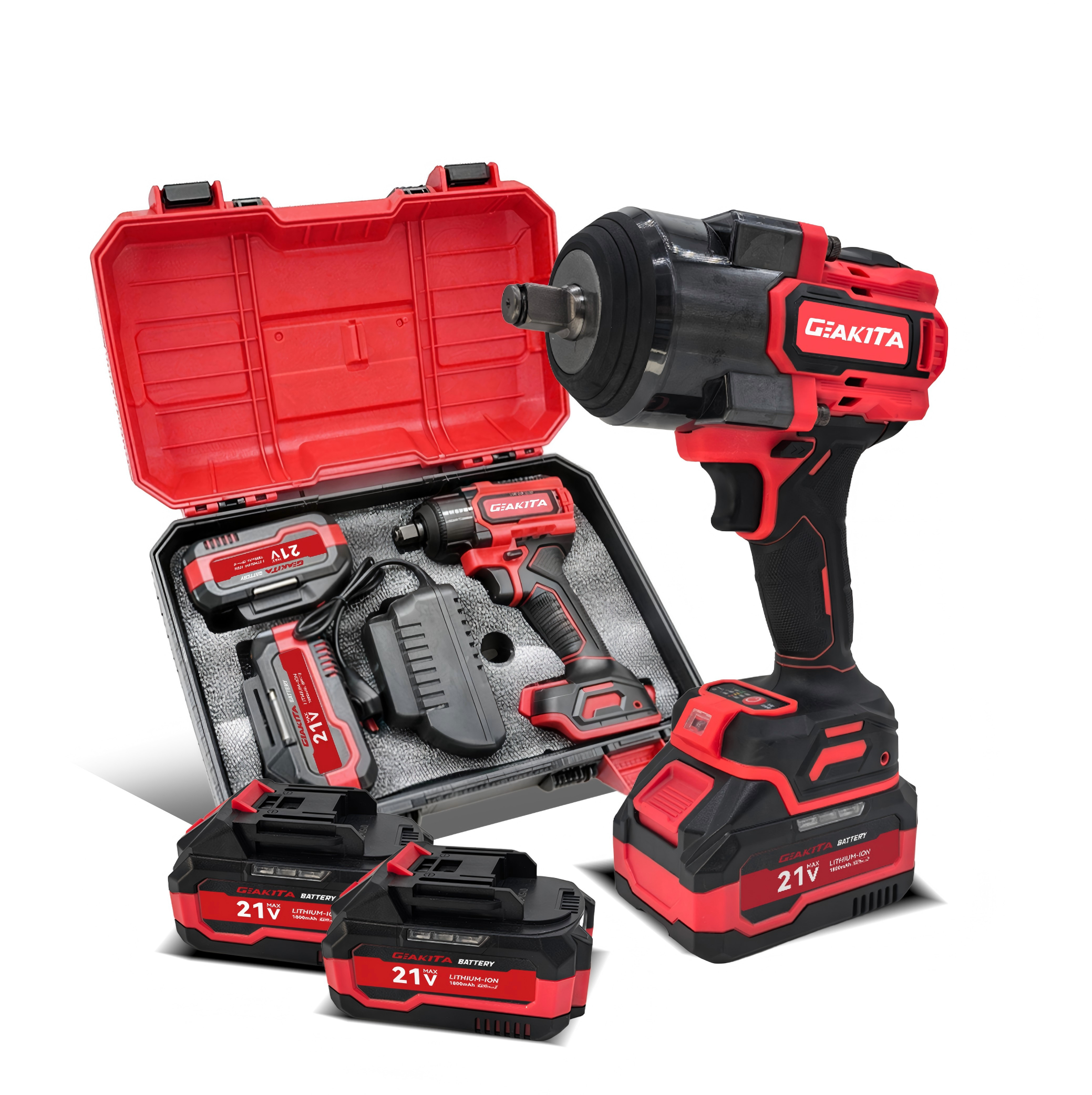
Record voltage, cell count and capacity together. Documented examples: 16.8V with 1300 mAh × 4 cells (DK-05), 16.8V with 1500 mAh × 4 cells (DK02), 16.8V with 1300 mAh × 8 cells (DK03), 21V with 1300 mAh × 10 cells (PT-05, QZ03, JM05), 21V with 1500 mAh × 10 cells (QZ05, CS01) and 21V with 2000 mAh × 15 cells (PT24). Battery configuration is also a customization lever: 2.0Ah and 4.0Ah options are documented, alongside logo printing, packaging design, 110V/220V voltage customization, torque and speed parameter adjustment and colour scheme selection.
Step 4 — Match the interface to the accessory chain
Confirm chuck diameter (10 mm or 13 mm), disc diameter (100 mm with 16 mm inner diameter), and the accessory list the supplier supports: battery packs, chargers, drill bits, screwdriver bits, grinding wheels, cutting discs, sockets, router bits and carrying cases. An interface that does not match the accessories already in the field creates hidden cost regardless of the tool’s torque rating.
Step 5 — Confirm the compliance path for the destination market
Check the safety standard (IEC/UL 62841-1 for hand-held motor-operated tools), the battery standard (IEC/UL 62133), and the market documents the supplier can support. Documented project requirements for Geakita cordless tools include CE, UL, INMETRO and FCC compliance and IP ratings, with multi-language manuals and retail-ready packaging available.
Step 6 — Verify what sits behind the specification
Ask what the numbers rest on. Documented Geakita manufacturing data includes a 40,000 m² production base, more than 300 employees, a 25-engineer R&D team, a stated monthly capacity of 180,000+ units, 3-level QC (IQC/IPQC/FQC), 100% full inspection before shipment, and functional and load testing. Case data adds Tier-A approval for key materials (cells, magnets, bearings, cutting tools), 100% IQC sampling with defect traceability, inline torque and electrical monitoring, automatic end-of-line testing and OQC sampling with UN38.3-compliant shipment.
Project Environments and the Configurations That Fit Them
Construction sites and infrastructure projects
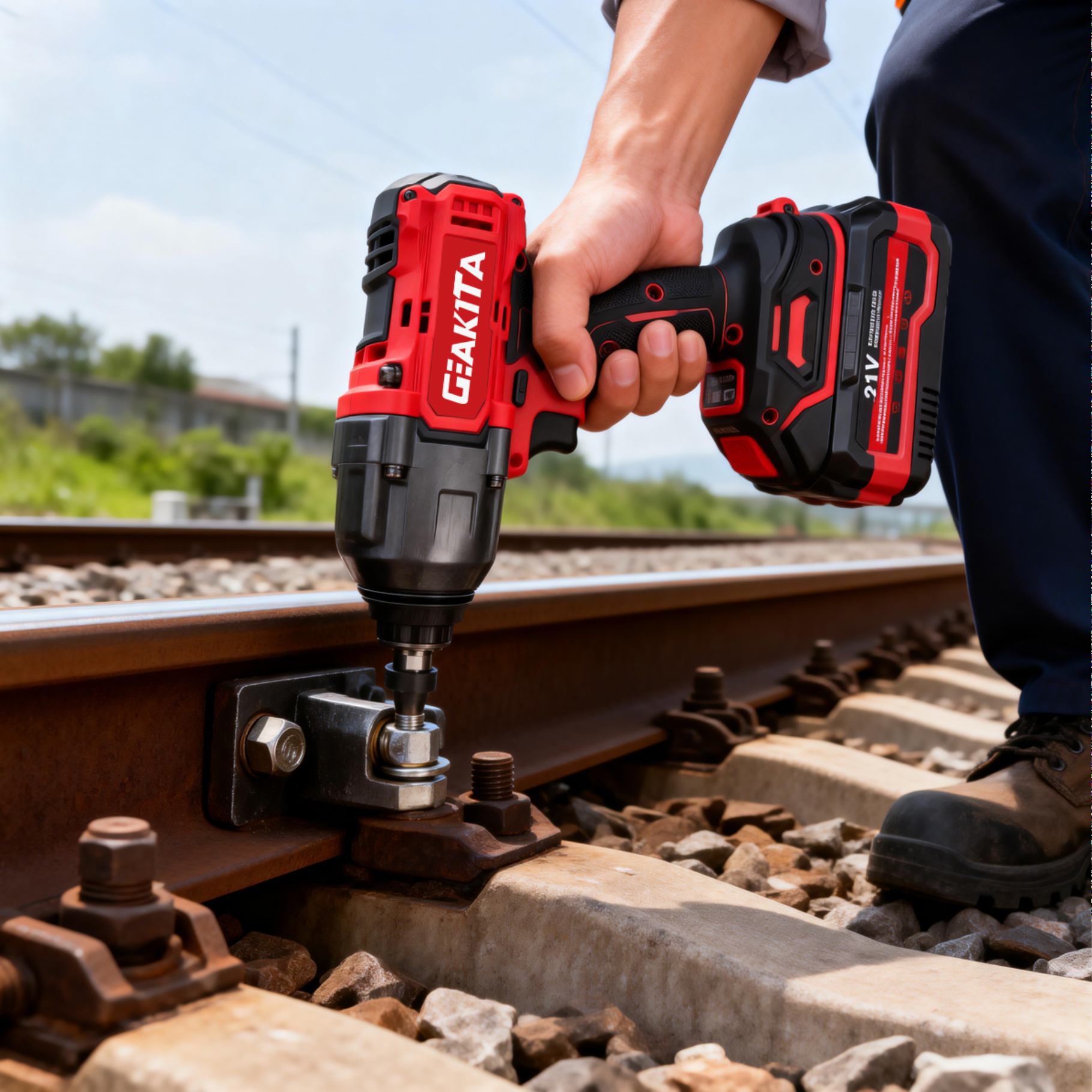
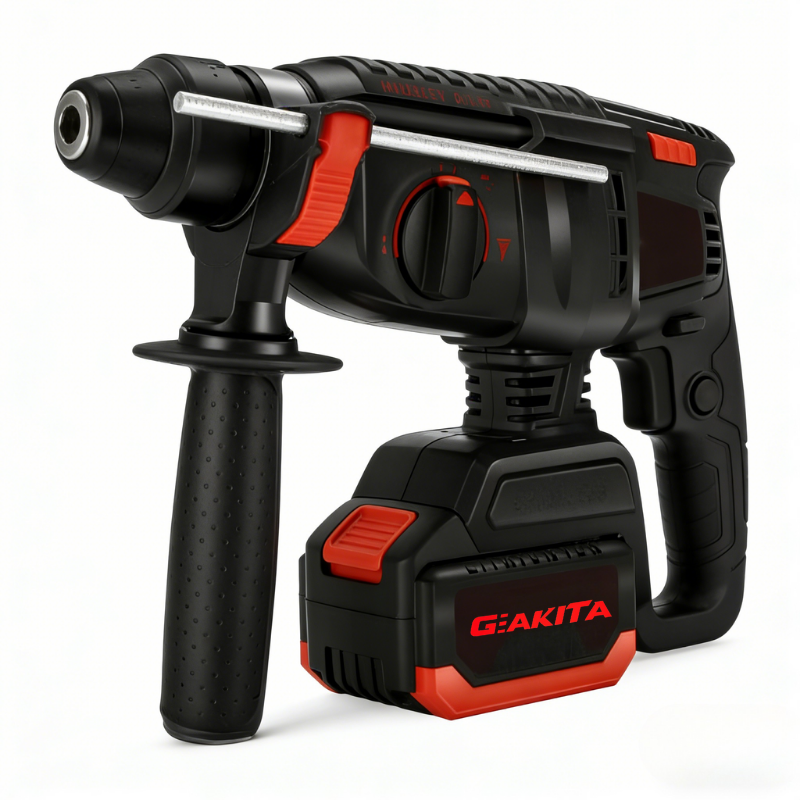
Drilling into concrete, cutting and grinding steel, and tightening structural fasteners define this environment. The RH01 and RH02 rotary hammers are documented at concrete Φ26 mm, steel Φ13 mm and wood Φ26 mm drilling capacity with brushless pure-copper motors and 2000 mAh × 10 cell packs; the JM01-02 brushless angle grinder runs a 100 mm disc at 12,000 RPM with a net weight of 1.6 kg including one battery. Documented case data for construction and infrastructure engagements across Laos, the Philippines, Thailand, India, Brazil, Saudi Arabia and Oman covers 5,000+ units over a 2-year-plus period, with 99.8% on-time delivery, a 0.3% defect rate and stable performance in 45°C+ high-temperature environments.
Automotive repair and workshop maintenance
Torque and repeatability matter more than drilling capacity. The GKR05 impact wrench is documented at 650 N·m actual torque with 0–4000 r/min no-load speed and a 2000 mAh × 10 cell pack; the 1000NM model carries a 1500–2000 mAh, 10–15 cell configuration for heavier fastener work. The QZ02 impact screwdriver covers 35/100/120 N·m with three speed ranges (0–1200 / 2400 / 3000 r/min), three torque gears, LED lighting and forward/reverse rotation — useful where a wrench is too large for the fixing being driven.
Manufacturing assembly lines and maintenance teams
This is the environment that maps most directly to continuous operation at 8–12 hours per day. Configurations documented for it include the PT-05 (21V, 1300 mAh × 10 cells), PT24 (150 N·m, 2000 mAh × 15 cells, 24+3 torque settings, 13 mm chuck) and DK-05 (16.8V, 1300 mAh × 4 cells), all with brushless pure-copper motors and 450–2000 r/min no-load speed ranges.
Retail, e-commerce and hardware distribution
For distributors and channel partners the comparison shifts from single tools to assortment logic. Geakita’s documented purchase structure requires a minimum of 5 power tool categories at 8 items per category, 40 items in total, with OEM/ODM support, retail-ready packaging and multi-language manuals available. The documented application data lists e-commerce retail sales, hardware store distribution and power tool distributors among the industries the cordless range serves.
Household DIY and intermittent use
Weight and control matter more here than maximum torque. DK01 is documented at 1.15 kg with a 13 mm chuck, 120 N·m maximum torque, 450/2000 RPM and 7000 BPM impact frequency; the 12V 9868 brushed drill offers 28 N·m from 1300 mAh × 3 cells without an impact function. Both sit in the documented intermittent operation category rather than the heavy-duty continuous one.
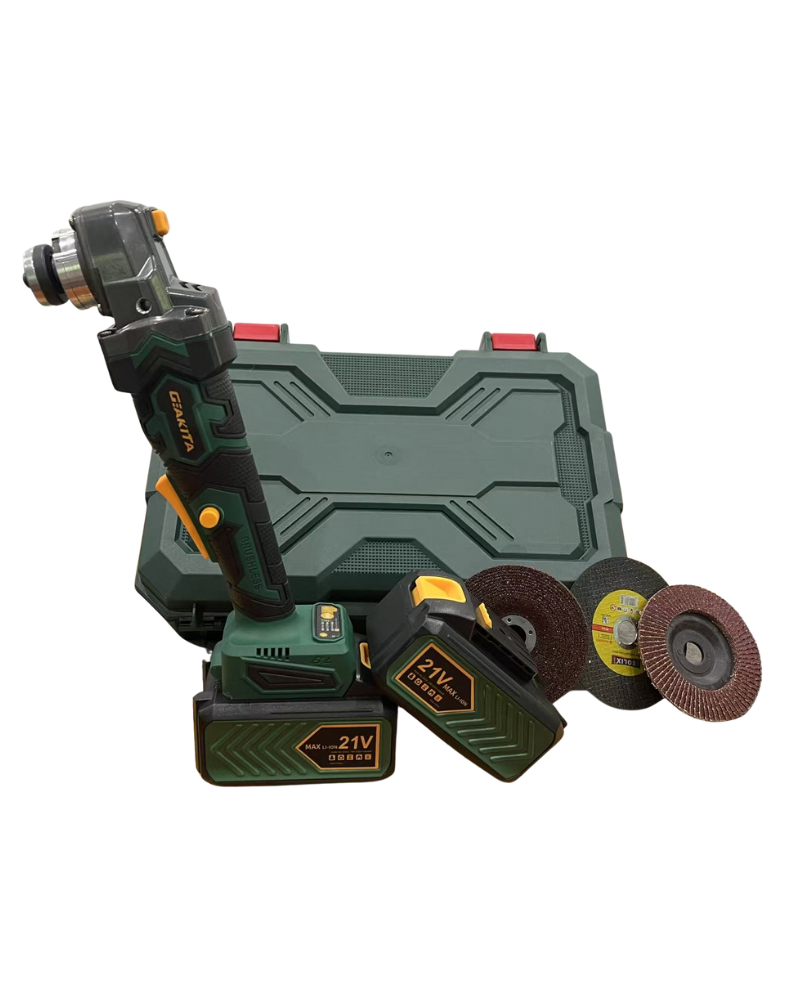
Cordless Power Tool Classes Side by Side
The table below compares documented configurations across the main cordless classes. Every figure is taken from published product specifications; empty cells indicate that the specification is not published for that configuration rather than a value of zero.
| Tool class | Representative model | Voltage | Motor | Battery configuration | Documented performance figure | Interface / capacity |
|---|---|---|---|---|---|---|
| Compact cordless drill (DIY) | DK01 | 16.8V | Brushless pure copper | — | 120 N·m max torque; 450/2000 RPM; 7000 BPM; 1.15 kg | 13 mm chuck; steel 13 mm / wood 50 mm |
| Cordless impact drill (mid) | DK02 | 16.8V | Brushless | 1500 mAh × 4 cells | 0–120 N·m; 0–450 / 0–2000 r/min; 7000 / 24,000 BPM | 13 mm chuck; steel 13 mm / wood 50 mm |
| Impact drill (light 21V) | PT12 | 21V | Brushless pure copper | 1300 mAh × 5 cells | 60 N·m; 450–2000 r/min; 24+3 settings | 13 mm chuck |
| Impact drill (heavy 21V) | PT24 | 21V | Brushless pure copper | 2000 mAh × 15 cells | 150 N·m; 450–2000 r/min; 24+3 settings | 13 mm chuck |
| Impact screwdriver | QZ02 | 16.8V | — | — | 35/100/120 N·m; 0–1200 / 2400 / 3000 r/min; 3 speeds | Steel 10 mm / wood 30 mm; LED; forward/reverse |
| Impact wrench | GKR05 | 21V | Brushless pure copper | 2000 mAh × 10 cells | 650 N·m actual torque; 0–4000 r/min | — |
| Impact wrench (heavy) | 1000NM | 21V | Brushless pure copper | 1500–2000 mAh × 10–15 cells | Model designation 1000NM | — |
| Angle grinder | JM01-02 | 21V | Brushless | — | 12,000 RPM no-load; 1.6 kg with one battery | 100 mm disc; 16 mm inner diameter |
| Rotary hammer | RH01 / RH02 | 21V | Brushless pure copper | 2000 mAh × 10 cells | 0–2000 r/min no-load | Concrete Φ26 mm; steel Φ13 mm; wood Φ26 mm |
| Circular saw | CS01 | 21V | Brushless pure copper | 1500 mAh × 10 cells | — | — |
| Entry brushed drill | 12V 9868 | 12V | Brushed pure copper | 1300 mAh × 3 cells | 28 N·m; 450–2000 r/min; 18+1 settings | 10 mm chuck; no impact function |
| Entry brushed impact drill | 21V 9996 | 21V | Brushed pure copper | 1300 mAh × 5 cells | 30 N·m; 450–2000 r/min; 18+1 settings | 10 mm chuck; three-function with impact |
The clearest reading of this table is that voltage alone does not order the range. A 16.8V PT-class brushless drill and a 21V brushed impact drill sit close together in voltage terms but apart in motor type, and the DK01 at 120 N·m sits above the 21V 9996 at 30 N·m despite the lower voltage label.
Duty cycle in practice: matching the mode to the decision
| Documented operating mode | How it is documented | Specification that carries the most weight | Question to put to the supplier |
|---|---|---|---|
| Continuous operation | 8–12 hours per day; heavy-duty continuous operation environment | Battery cell count and configuration (from 1300 mAh × 4 cells up to 2000 mAh × 15 cells) | Which cell configuration and spare-pack options are available for this model? |
| Intermittent operation | DIY and household use | Weight, chuck size and torque settings (DK01 at 1.15 kg; 13 mm chuck; 24 gears plus three functions) | Which configuration keeps weight down without falling below the torque the job needs? |
| Portable on-demand operation | Cordless battery-powered, 18V/21V lithium-ion, variable speed, rechargeable | Voltage platform, motor type and accessory interface | Which battery platform and accessory interface does this tool share with the rest of the fleet? |

Frequently Asked Questions
Which standards and certifications belong in a cordless power tool comparison?
For hand-held, motor-operated tools, IEC/UL 62841-1 is the primary safety standard, and lithium-ion cells used in power tools fall under IEC/UL 62133 for secondary cells and batteries for portable applications, as documented by UL Solutions. CE, UL, INMETRO and FCC compliance and IP ratings appear among the documented project requirements for Geakita cordless tools, and shipment data reports compliance with UN38.3 for lithium battery transport. A comparison that omits these points is incomplete, because they determine whether a configuration can legally enter and move through the destination market.
What manufacturing and customization capability should be compared behind the product?
Documented Geakita manufacturing data covers a 40,000 m² production base with more than 300 employees and a 25-engineer R&D team, and a stated monthly capacity of 180,000+ units. Customization options include logo printing, packaging design, 110V/220V voltage customization, torque and speed parameter adjustment, colour scheme selection and battery configuration in 2.0Ah or 4.0Ah. Quality control is documented as 3-level QC (IQC/IPQC/FQC) with 100% full inspection before shipment and functional and load testing; case data adds Tier-A approval for key materials such as cells, magnets, bearings and cutting tools, 100% IQC sampling with defect traceability, inline torque and electrical monitoring, automatic end-of-line testing and OQC sampling.
Which specification differences drive cost differences between cordless tool classes?
No price list is published here, but the structural variables that separate configurations are visible in the specifications: motor type (a brushed 12V 9868 with 3 cells and 28 N·m versus a brushless 21V PT24 with 15 cells and 150 N·m), battery cell count and capacity, torque class, chuck or disc interface, and whether the tool carries an impact function. Because these variables move together, budget comparisons are only meaningful inside one tool class and against one operating mode — a cheaper configuration in the wrong class is not a saving.
How can a buyer validate a configuration before committing to a volume order?
Validation rests on documented checkpoints rather than promises: Tier-A approval for key materials (cells, magnets, bearings, cutting tools), 100% IQC sampling with defect traceability, IPQC inspections with inline torque and electrical monitoring, automatic end-of-line testing, 100% full inspection before shipment and OQC sampling with UN38.3-compliant shipment. Buyers who want to check physical build, packaging and documentation first can request a sample and the 2026 catalogue before confirming an order — Geakita’s team can be reached through the contact details at the end of this article.
What are the MOQ, lead time and after-sales terms to compare?
The documented purchase structure requires at least 5 categories of power tools at 8 items per category, for a total of 40 items. Mass production is quoted at 30–45 days, with repeat orders at 20–28 days; shipping time is calculated separately based on shipping method and destination port. After-sales terms cover a one-year global warranty, 7×24 technical support, on-time replacement for defective units and spare parts supply. Buyers comparing suppliers should place these three figures — MOQ, lead time and after-sales — next to the specification table rather than treating them as commercial footnotes, and can request a sample or a quotation to confirm them for a specific configuration.
Conclusion: Compare the Cycle, Then the Tool
Cordless power tools do not fail buyers because the specifications are missing; they fail because specifications from different classes and different duty cycles are compared as if they described the same job. Fixing the operating mode first — continuous operation at 8–12 hours per day, intermittent DIY/household use, or portable on-demand operation — narrows the field before a single voltage figure is read.
From there, five documented dimensions carry the comparison: battery configuration (from 1300 mAh × 3 cells to 2000 mAh × 15 cells), motor type (brushed or brushless pure copper), the performance figure that matches the operation (28 N·m to 650 N·m in torque terms, 450–4000 r/min in speed, 7000–24,000 BPM in impact frequency, up to Φ26 mm in concrete capacity), the interface (10 mm or 13 mm chuck, 100 mm disc with 16 mm inner diameter), and the compliance and QC route behind the product (IEC/UL 62841-1, IEC/UL 62133, 3-level QC, 100% inspection before shipment).
Geakita manufactures cordless power tools across these classes from a 40,000 m² base in China, with documented OEM/ODM support, a 40-item minimum purchase structure, 30–45 day mass production lead times and a one-year global warranty. Buyers who need the full specification set can download the corporate profile and product catalogue below, or contact the team directly for a sample, a quotation or a configuration review.
Next step: request a sample or a quotation
Download the full Geakita Corporate Profile & Product Catalog 2026 for the complete cordless power tool specification set, or reach the team through the details below.
Website: geakita.com
Contact: Flora — Flora@gearpioneer.com | Tel / WhatsApp: +86 135-9954-5996
WhatsApp: Start a conversation