
- Industry News
- 274
- Gearpioneer-Powering Smart Work EveryWhere
- 07/09/2026
Long-Term Cordless Power Tools Agreements: What Distributors Should Evaluate Before Signing
A practical guide for distributors evaluating long-term cordless power tools supply agreements, covering capacity, quality, compliance, OEM flexibility, order terms, robots and Geakita capabilities.
Long-Term Cordless Power Tools Agreements: What Distributors Should Evaluate Before Signing
A cordless power tools partner is not only a source of hardware. For a distributor entering a multi-year sourcing relationship, the real question is whether the manufacturer can protect your line continuity, quality consistency, commercial flexibility and product expansion plans while both teams grow.
Published: September 2026
The Problem: Single-Order Thinking Is Not Built for Category Growth
Many distributors begin cordless power tools sourcing by collecting quotes from several suppliers at once. That approach works for emergency replenishment, but it becomes fragile when the category changes quickly, product lines multiply, marginal costs creep up and customers expect a consistent battery-powered experience across tool categories.
Market forecasts explain why sourcing strategy matters. The global cordless power tools market was valued at USD 13.44 billion in 2024 and is projected to reach USD 32.58 billion by 2033, according to Grand View Research. Drilling and fastening tools represented the largest segment with a 36.51% revenue share in 2024. At the same time, adjacent battery-powered and robotic product markets are expanding: the robotic pool cleaner market is expected to reach USD 5.18 billion by 2032 with a 16.51% CAGR from 2024, while the global angle grinder market was valued at USD 3.2 billion in 2024. These are signals that customers will keep adding tool and cleaning categories into one purchasing pattern.
For a distributor, that creates a structural decision. You can continue buying each product from whichever factory offers the lowest unit price, or you can consolidate around a manufacturer that can supply an expanding cordless ecosystem: power tools, household tools and robotic cleaning equipment, with consistent quality, certification support and predictable lead times.
Industry Background: Cordless Tools Have Become an Ecosystem, Not a Single SKU
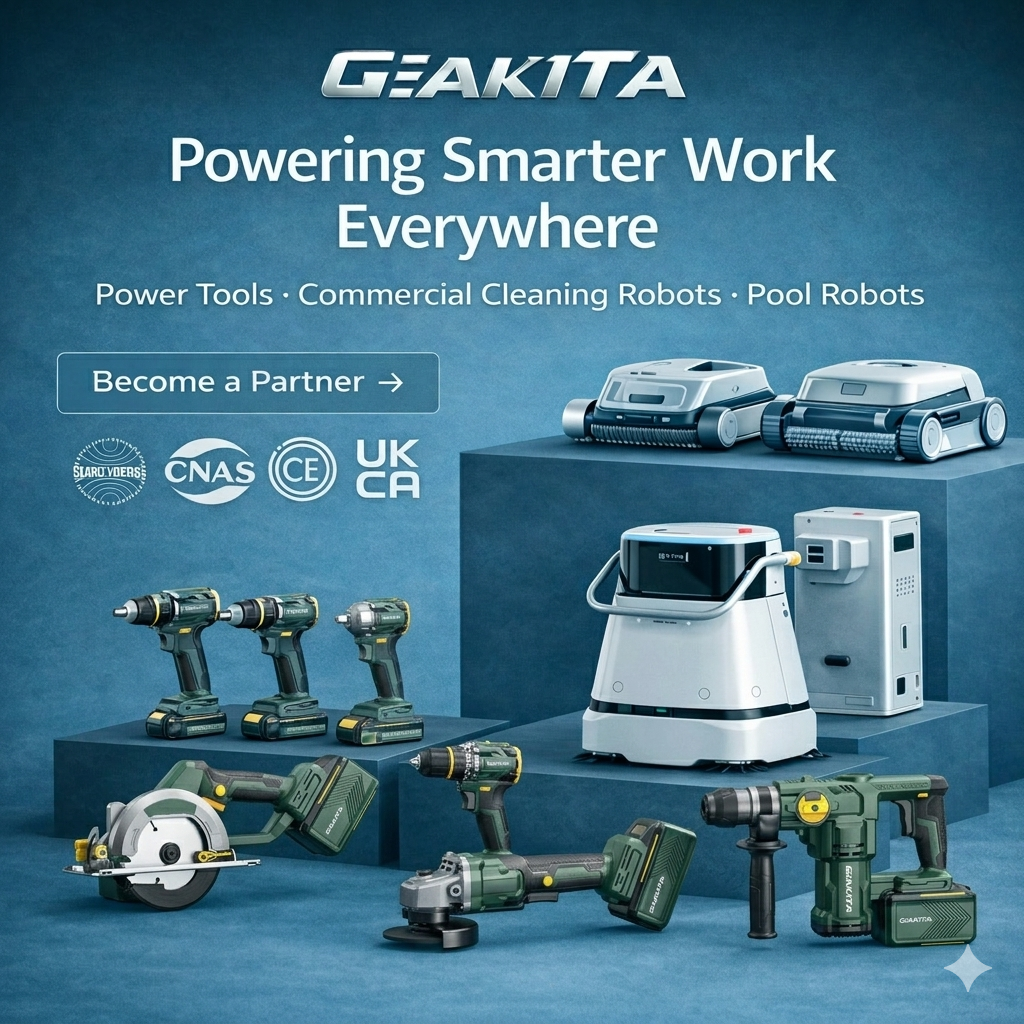
A modern cordless power tools partner needs to support more than one product line. Geakita (Xiamen Tiangong Kaiwu Technology Co., Ltd.) is one example of a manufacturer that has built its range beyond a single tool category. Founded in 2009, Geakita is engaged in the R&D and production of power tools, robotic pool cleaners and commercial cleaning robots. The company operates a modern industrial base in Xiamen, with roughly 40,000 square meters of floor space and more than 300 employees. Its engineering group includes 25 senior engineers, and export sales currently account for about 20% of revenue, with focus on Europe, Southeast Asia and the Middle East.
Long-term supply decisions in this industry are increasingly driven by platform breadth. A distributor that sells cordless drills today may need cordless circular saws, rotary hammers, angle grinders, industrial impact drills, pool cleaning robots or commercial cleaning robots within the same buying relationship. Geakita’s existing catalog includes brushed and brushless drills, impact drills, impact screwdrivers, cordless lithium circular saws, cordless rotary hammers and angle grinders across the DK, PT, QZ, RH, JM and CS model families. Complementary robotic lines include pool cleaning robot models PC10, PC20 and PC200, as well as commercial cleaning robot model WDC-C2.
The Detailed Solution: Six Foundations of a Long-Term Cordless Power Tools Partnership
A durable partnership does not begin with a purchase order. It begins with a clear evaluation of what the manufacturer can do when demand grows, when compliance demands change and when your product mix shifts. The following six foundations can be assessed using facts that a serious manufacturer should be able to verify.
1. Assortment Depth Across Cordless Categories and Related Robots
The first foundation is product breadth. A long-term distributor usually needs to build category density over time rather than import one single model forever. A useful manufacturer should provide enough depth in one relationship to let you test, rank and scale products in multiple demand groups.
For example, Geakita offers household and professional drilling products from 12V brushed drills to 21V brushless impact drills. Models such as DK00, DK01, DK02, DK03, PT01, PT02-1, PT12, PT20, PT-21, PT22 and PT24 cover common drilling and fastening work with variations in torque, battery configuration and impact capability. Around this drilling core, the catalog also includes QZ01 and QZ02 impact screwdrivers, CS01 cordless lithium circular saw, RH01 and RH02 cordless rotary hammers, JM01-02 brushless angle grinder and JM03 angle grinder.
For distributors that already serve cleaning or facility-management channels, the same supplier can support robotic pool cleaners and commercial cleaning robots. In practice, one order can cover tools for maintenance teams and robotic equipment for facility owners, which reduces the number of factories, shipping relationships, quality systems and spare-parts channels a distributor must manage.
2. Production Scale That Can Support a Multi-Year Program
Long-term sales forecasts mean little if the factory cannot absorb your peak orders. Capacity matters even more when a distributor is signing annual agreements rather than buying single containers.
Geakita’s stated monthly production capacity is over 180,000 units. That scale is supported by a production base of approximately 40,000 square meters, in-house testing facilities and a team of more than 300 staff. In 2024, the company reported approximately RMB 230 million in sales from lithium power tools alone, including about RMB 40 million from overseas markets, with approximately 1.5 million units shipped in total.
These numbers are not just marketing claims. They help a distributor calculate how many SKUs can be scheduled across a quarter, how much surge capacity is available, and whether the manufacturer can grow with your line instead of becoming a bottleneck.
3. Engineering and OEM Flexibility as a Long-Term Asset
Long-term agreement often leads to private label, local voltage adjustment, packaging modification or performance tuning. OEM and ODM capability, therefore, is not optional for many importers and brand owners.
Geakita supports OEM and ODM customization, offering a range that spans standard tools, color changes, brand marking, packaging adaptation and custom product configurations. Its engineering structure includes 25 engineers, which is a meaningful signal for buyers who want to move from catalog purchases to semi-custom or fully customized products.
For decision-to-execution buyers, one useful rule is to confirm how far the factory can customize without compromising certification or lead time. This is especially relevant for cordless products because battery voltage, charger configurations and local plug standards affect market acceptance.
4. Quality That Protects Distributor Reputation
Quality is not only a factory topic; it becomes part of the distributor’s brand. Consumers who receive a defective drill may not blame the factory by name. They blame the distributor.
Manufacturer-level comparison data from Geakita illustrates the gap that buyers should investigate: compared with traditional brushed or low-cost generic power tools, brushless motor systems can deliver around 30% higher working efficiency, 50% longer service life and 20% longer battery runtime. The same benchmark material cites a typical defect rate of about 0.5% for products built under disciplined QC, versus 3–5% for low-cost generic manufacturing. Over a three-year ownership period, the total cost of ownership difference is estimated at 10–15%, with maintenance costs roughly 20% lower and maintenance needs about 50% lower because there is no brush replacement. These internal benchmark figures should be treated as supplier-provided, not third-party validated, but they give a useful starting point for comparing warranty and return risks.
5. Risk and Compliance Management Across the Product Lifecycle
The second and more serious quality layer involves batteries and safety. Battery overcharging, short circuit, extreme-environment failure and transport issues can cause costly recalls and logistics delays. A partner should be able to show battery protection as a system, not as a single component choice.
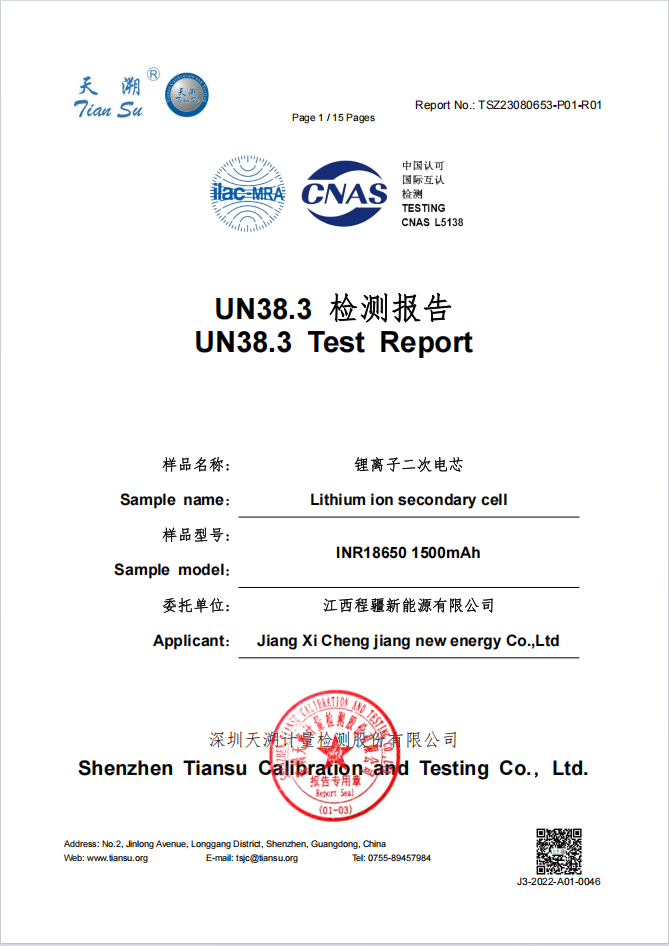
Geakita uses intelligent BMS (Battery Management System) protection, including overcharge, overdischarge and short-circuit protection. The company states that it uses A-grade lithium-ion cells, conducts 100% battery safety testing before shipment and follows UN38.3 transportation standards. This is important for air freight and export compliance.
Mechanical safety also belongs in the partnership review. Risks such as accidental injury caused by tool kickback or blade breakage are normally managed through anti-kickback design, safety switches and overload protection. Geakita’s approach includes full mechanical safety testing, detailed user manuals and regular safety training for production teams.
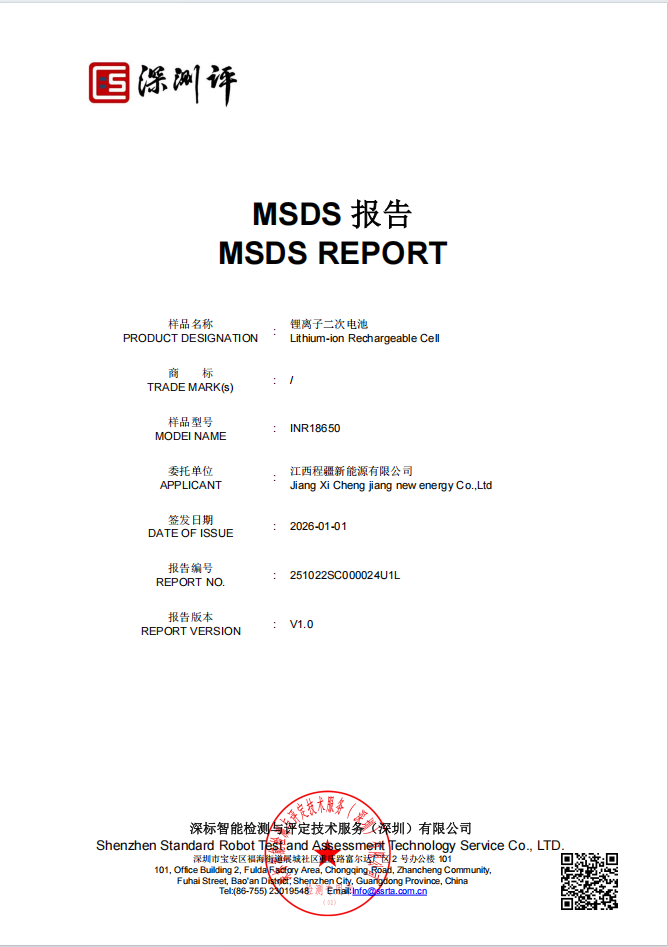
For distributors exporting into regulated markets, standards alignment is part of the evaluation. IEC/UL 62841-1 is widely recognized as the primary safety standard for electric motor-operated hand-held tools. Lithium-ion cells used in power tools also fall under IEC/UL 62133 requirements. A long-term supplier should be able to explain which standards each SKU is designed to meet, not just in the first shipment but through future production runs.
6. Commercial and Operational Terms That Scale With Your Business
Long-term agreements need commercial rules that fit both parties. Geakita offers several practical options for distributors at different stages.
Standard stock models can start at 100 units per SKU. OEM or ODM customized models require 500 units per SKU. There is also a small-batch trial option of 40 units, which is useful for distributors that need to verify quality before building a larger program. Delivery methods include FOB Shenzhen or Ningbo, EXW factory and DDP door-to-door delivery.
Payment terms are normally 100% T/T. For larger orders, a 50% T/T deposit plus 50% against the bill of lading is acceptable. Acceptance procedures include 100% pre-shipment inspection by the Geakita QC team. Third-party inspection by SGS or TÜV is available on request, and buyers can also perform on-site factory acceptance.
From a capacity and scheduling point of view, Geakita reports a typical lead time of 30–45 days for mass production and 20–28 days for repeat orders. This is commercially valuable for distributors that need to run continuous stock replenishment rather than one-time import projects.
Step-by-Step Breakdown: From Evaluation to Execution
Buyers in the decision-to-execution stage often already know which tools they want. What they need is a disciplined process for converting intention into a repeatable supply program.
Step 1: Verify Manufacturing Capacity and Quality Claims
Do not accept capacity numbers on face value. Ask about monthly production, total shipments, factory area and engineering team composition. In the case of Geakita, the manufacturer states monthly production capacity of over 180,000 units, a workforce of more than 300 people, a 40,000-square-meter production base and 25 engineers. These figures give a baseline for discussing order scheduling.
Step 2: Map the Product Mix You Want to Grow Into
Make a two-year product map. If cordless drills are your entry point, identify what comes next: impact drills, rotary hammers, angle grinders, circular saws, screwdrivers, cleaning robots or replacement batteries. A manufacturer with a wide catalog allows you to expand without re-qualifying a new supplier for every category.
Geakita’s catalog is a practical example. A distributor can source 16.8V and 21V drills from the DK and PT families, impact screwdrivers from the QZ family, circular saw CS01, rotary hammers RH01 and RH02, angle grinders JM01-02 and JM03, plus pool cleaning robots and commercial cleaning robot WDC-C2. This range creates multiple expansion paths from one approved vendor.
Step 3: Validate With a Small-Batch Trial Order
Before signing a large annual agreement, use the trial option of 40 units per SKU. This is the lowest-commitment way to check actual unit quality, packaging, documentation and battery performance in your own warehouse or with a pilot customer.
Step 4: Set Service Levels for Repeat Orders
Ask the manufacturer for realistic lead-time commitments and confirm how repeat orders are scheduled. Geakita’s typical lead time is 30–45 days for mass production and 20–28 days for repeat orders. A repeat-order window of under four weeks can be a meaningful advantage for distributors that need to manage inventory cost.
Step 5: Choose the Right Commercial Entry Point
After trial orders, you can step up to standard stock models at 100 units per SKU. If you are building a private brand, OEM and ODM customization starts at 500 units per SKU. If you need faster delivery without setting up full customs and freight operations, DDP terms can simplify the process.
Step 6: Build Quality and Compliance Review Into Every Order
Do not assume that a good first shipment predicts every future shipment. In long-term partnerships, quality review should happen regularly. Geakita performs 100% pre-shipment inspection before shipping and allows third-party inspections by SGS or TÜV. Distributors should include inspection rights in their master agreement, especially for battery-powered products that must travel across borders under UN38.3 and related standards.
Use Cases: How Distributors Apply This Approach
The strategic model described above is not limited to one type of buyer. Several common use cases explain why long-term agreements are often more attractive than one-off purchasing.
Use Case 1: Hardware, Home Improvement and Consumer E-Commerce Distributors
Distributors serving households and DIY users usually need reliable volume across basic drill and fastening SKUs. Models such as DK00, DK01, DK02 and DK03 offer a clear ladder from 16.8V brushed-style entry tools to brushless impact drilling tools. Their specification variations allow the distributor to build three or four price layers without using multiple factories.
Use Case 2: Construction, Maintenance and Industrial Supply Distributors
Industrial distributors need higher torque, vibration resistance and sustained job-site performance. Brushless 21V impact drills in the PT family, including PT22 and PT24 models, provide higher nominal torque ranges, while RH01 and RH02 rotary hammers are designed for masonry and concrete work. CS01 cordless circular saw and JM01-02 brushless angle grinder help cover cutting and surface preparation needs.
Use Case 3: Private-Label Brand Owners and OEM Buyers
Brand owners that want to put their name on cordless tools tend to start with standard models and then add customization. Geakita’s OEM and ODM threshold of 500 units per SKU makes this realistic for mid-size brands. The same production line supports quality testing, packaging and compliance documentation, which is essential for brand protection.
Use Case 4: Distributors Expanding From Tools Into Robotic Cleaning
Some distributors already serve facility management, property maintenance, hotels or pool service companies. With Geakita, the same supplier relationship can add pool cleaning robot models PC10, PC20 and PC200, plus commercial cleaning robot WDC-C2. This reduces supplier complexity while giving the distributor a broader share of the customer’s wallet.
Comparison: Long-Term Ecosystem Supplier vs. Low-Cost Generic or Traditional Brushed Sourcing
The following comparison reflects manufacturer-provided benchmark data from Geakita. It is intended to help distributors understand the dimensions they should compare before making an agreement, not as an impartial third-party laboratory result.
| Evaluation Dimension | Long-Term Ecosystem Supplier (Geakita Model) | Low-Cost Generic Tool Sourcing | Traditional Brushed Motor Sourcing |
|---|---|---|---|
| Motor Technology | Brushless pure copper motor available across core models | Often brushed or unspecified motor quality | Brushed motor requiring periodic brush replacement |
| Working Efficiency | Up to 30% higher working efficiency | Baseline | Lower energy efficiency |
| Service Life | Approximately 50% longer service life claimed | Shorter life under continuous use | Brush wear limits service interval |
| Battery Runtime | Approximately 20% longer runtime | Shorter runtime per charge | Lower energy efficiency and higher discharge loss |
| Typical Defect Rate | About 0.5% under disciplined QC | About 3–5% in low-cost generic production | Varies by factory quality control |
| TCO over 3 Years | 10–15% lower total cost of ownership | Higher replacement and failure cost | Higher maintenance cost |
| Maintenance Requirements | About 50% less maintenance | Unpredictable | Brush replacement required |
| Order Flexibility | Trial order 40 units, standard 100 units per SKU, OEM 500 units per SKU | Often wide MOQ differences | Usually limited to existing catalog |
| Lead Time | 30–45 days mass production; 20–28 days repeat orders | Highly variable | Longer maintenance windows and spare-part delays |
| Compliance Support | 100% battery safety testing, UN38.3, BMS, third-party inspection available | Documentation may be incomplete | Legacy compliance documentation may not cover new battery standards |
Frequently Asked Questions
What safety and compliance standards should a cordless power tools manufacturer support?
For export-ready cordless tools, IEC/UL 62841-1 is widely recognized as the primary safety standard for electric motor-operated hand-held tools. Lithium-ion cells should be assessed against IEC/UL 62133 requirements, and battery transport often requires UN38.3 compliance. Distributors should also check whether the supplier performs 100% battery safety testing before shipment. Geakita states that it follows these areas through intelligent BMS protection, A-grade lithium-ion cells, UN38.3 transport compliance and full pre-shipment QC inspection.
Can a distributor buy power tools and robotic cleaning products from one manufacturer?
Yes. Geakita is a manufacturer of both cordless power tools and robotic cleaning equipment. Its product range includes cordless drills, impact drills, screwdrivers, circular saws, rotary hammers, angle grinders, pool cleaning robots and commercial cleaning robots. This allows a distributor to consolidate purchasing, quality control, packaging and logistics under one relationship rather than managing separate suppliers for each category.
What is the minimum order quantity for Geakita cordless power tools?
Geakita offers tiered order requirements. Standard stock models require 100 units per SKU. OEM or ODM customized models require 500 units per SKU. For a small-batch trial order, 40 units per SKU are accepted. These thresholds make it possible to test quality before committing to a large long-term program.
How can a distributor validate product quality before building a long-term agreement?
Start with a small-batch trial order of 40 units per SKU. Geakita also performs 100% pre-shipment inspection before release. If the buyer requires additional assurance, third-party inspection by SGS or TÜV is available upon request, and on-site factory acceptance can be arranged.
What are typical production and repeat-order lead times?
Geakita reports typical lead times of 30–45 days for mass production and 20–28 days for repeat orders. This faster repeat-order window is useful for distributors that want to maintain continuous stock availability without over-committing to large single shipments.
Conclusion: A Long-Term Cordless Power Tools Agreement Is a Supply-Chain Decision
Distributors do not choose a long-term manufacturing partner only because of a product sample. They choose a partner because the manufacturer can deliver consistent cordless power tools quality, scale up volume, support certification, adapt to private-label needs, maintain repeat-order speed and open new product categories over time.
Geakita provides a useful case study of this ecosystem approach: 40,000 square meters of production floor space, more than 300 employees, monthly production capacity over 180,000 units, a multi-brand-ready tool catalog, robotic cleaning lines, OEM/ODM customization, battery safety discipline and commercial terms that allow trial, standard and custom ordering.
When you move from evaluation to execution, your agreement should specify not only price and delivery, but also capacity visibility, quality controls, inspection rights, compliance responsibilities, customization routes and a plan for adding future SKUs. A partner that can support those requirements becomes a durable part of your supply chain instead of just another factory on a list.
Ready to evaluate a long-term cordless power tools partner?
Geakita can support trial orders, standard distribution orders and OEM/ODM programs across cordless power tools and robotic cleaning products.
Download the 2026 Corporate Profile & Product Catalog
Contact Flora: Flora@gearpioneer.com | WhatsApp