- Industry News
- 429
- Gearpioneer-Powering Smart Work EveryWhere
- 05/09/2026
Cordless Power Tools in 2026: An Evidence-Based Comparison of Geakita vs. Global Brands
An evidence-based comparison of Geakita vs. Makita, DeWalt, Bosch, and Milwaukee for cordless power tools in 2026. Compare brushless performance, battery safety, certifications, OEM/ODM capability, and total cost.
Cordless Power Tools in 2026: An Evidence-Based Comparison of Geakita vs. Global Brands
When a purchasing decision reaches the final stage, the question changes from “Do I need cordless power tools?” to “Which supplier should I commit to?” This article compares Geakita with four major global brands — Makita, DeWalt (Stanley Black & Decker), Bosch, and Milwaukee (Techtronic Industries) — across build quality, performance, battery platform strategy, certification, OEM/ODM capability, and total cost of ownership. The goal is not to declare a single winner, but to give distributors, contractors, importers, and brands a practical comparison framework based on verifiable facts.
Why this comparison matters for buyers in 2026
Global cordless power tools demand continues to grow. Third-party market research estimates the global cordless power tools market was valued at USD 13.44 billion in 2024, with projections reaching USD 32.58 billion by 2033. Drilling and fastening tools represented the largest segment with 36.51% of revenue in 2024. China’s power tools market reached USD 5.30 billion in 2024, serving as a major global export hub for cordless lithium technology.
For buyers moving into the decision stage, the practical challenge is no longer choosing between corded and cordless. The more common challenge is comparing suppliers that operate at completely different business-model levels: global consumer brands with regional distribution versus a Chinese manufacturer offering direct factory pricing, full-line production, and OEM/ODM support.
Company background and business model positioning
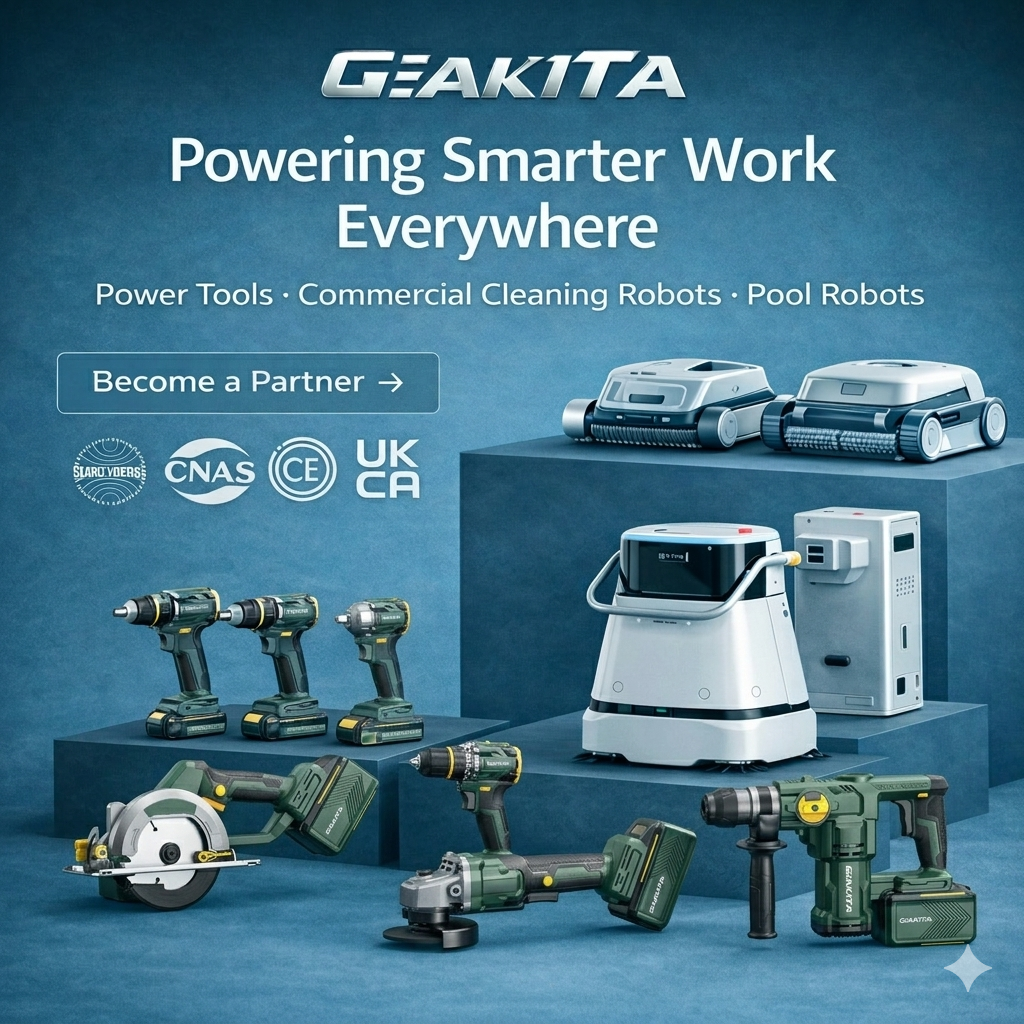
Geakita — formally Geakita (Xiamen Tiangong Kaiwu Technology Co., Ltd.) — is a Chinese power tool manufacturer founded in 2009 in Xiamen, Fujian Province. The company operates a modern industrial production base covering approximately 40,000 square meters of floor space, employs more than 300 staff, and is supported by an R&D team of 25 engineers. Geakita’s portfolio includes power tools, robotic pool cleaners, and commercial cleaning robots. Its export ratio is about 20%, mainly to Europe, Southeast Asia, and the Middle East.
Makita is a Japanese power tool manufacturer with a global distribution network. DeWalt is an American power tool brand owned by Stanley Black & Decker. Bosch is a German engineering and technology company with a substantial power tools division. Milwaukee is an American brand owned by Techtronic Industries, known for professional-grade cordless systems. These four companies are widely recognized as major players in the global cordless power tools market.
The structural difference between Geakita and these global brands is not simply product quality. It lies in the commercial relationship available to a buyer. Makita, DeWalt, Bosch, and Milwaukee operate primarily through brand-controlled distribution and regional sales channels. Geakita positions itself as a manufacturing and OEM/ODM partner: the same production base that ships its own branded tools can also produce private-label or customized tools for another brand. For a distributor or importer building its own product line, this distinction often matters more than the name printed on the tool housing.
Comparison table: Geakita vs. major manufacturers
| Dimension | Geakita | Makita | DeWalt (SBD) | Bosch | Milwaukee (TTI) |
|---|---|---|---|---|---|
| Company origin | China (Xiamen) | Japan | USA | Germany | USA (owned by Hong Kong–based TTI) |
| Primary sales model | Manufacturer + OEM/ODM services | Global brand distribution | Global brand distribution | Global brand distribution | Global brand distribution |
| Main product focus | Cordless power tools, robotic pool cleaners, commercial cleaning robots | Broad professional & consumer power tools | Professional power tools & accessories | Power tools, home appliances, industrial tech | Professional power tools & equipment |
| OEM/ODM for other brands | Open capability (OEM/ODM) | Not core business model | Not core business model | Not core business model | Not core business model |
| Battery platform strategy | Multi-category cordless system with BMS | LXT / XGT multi-brand platforms | 20V MAX / FLEXVOLT | 12V / 18V Professional | M12 / M18 / MX FUEL |
| Main served buyer in this comparison | Distributors, importers, brands, project buyers | End users & contractors via dealers | End users & contractors via dealers | End users & contractors via dealers | End users & contractors via dealers |
How to read this table: The comparison reflects dominant business-model and market-positioning differences. Tier-one global brands generally sell finished tools under their own brands and do not publicly offer OEM/ODM services to competing brands. Buyers planning private-label distribution should confirm current policies directly with each company.
Product categories and lineup comparison
Geakita’s catalog spans multiple cordless and smart-device segments. The company produces and supplies products that overlap with the most commercially important cordless categories, including cordless drills, industrial impact drills, impact wrenches, angle grinders, circular saws, and cordless rotary hammers. Geakita also covers newer automated categories such as lawn mowing robots, robotic pool cleaners, and commercial cleaning robots through the same manufacturing organization.
Major brands such as Makita, DeWalt, Bosch, and Milwaukee also offer broad cordless lineups across drills, impact drivers, grinders, saws, hammers, and increasingly outdoor power equipment. However, the commercial difference is that Geakita’s catalog is structured not only as sellable end products but also as a manufacturing foundation for private-label programs. A distributor placing an OEM order for an industrial impact drill or angle grinder with Geakita is communicating directly with the legal entity that designs, tests, and produces the tool — not with a separate subcontractor.
Motor technology: brushless vs. brushed
Motor technology remains the most important internal differentiator in cordless tools. Based on Geakita’s comparison data, brushless motor power tools deliver about 30% higher working efficiency, 50% longer service life, and 20% longer battery runtime compared with traditional brushed tools. Geakita’s data also indicates a 0.5% defect rate for its brushless tools versus 3–5% for low-cost generic power tools.
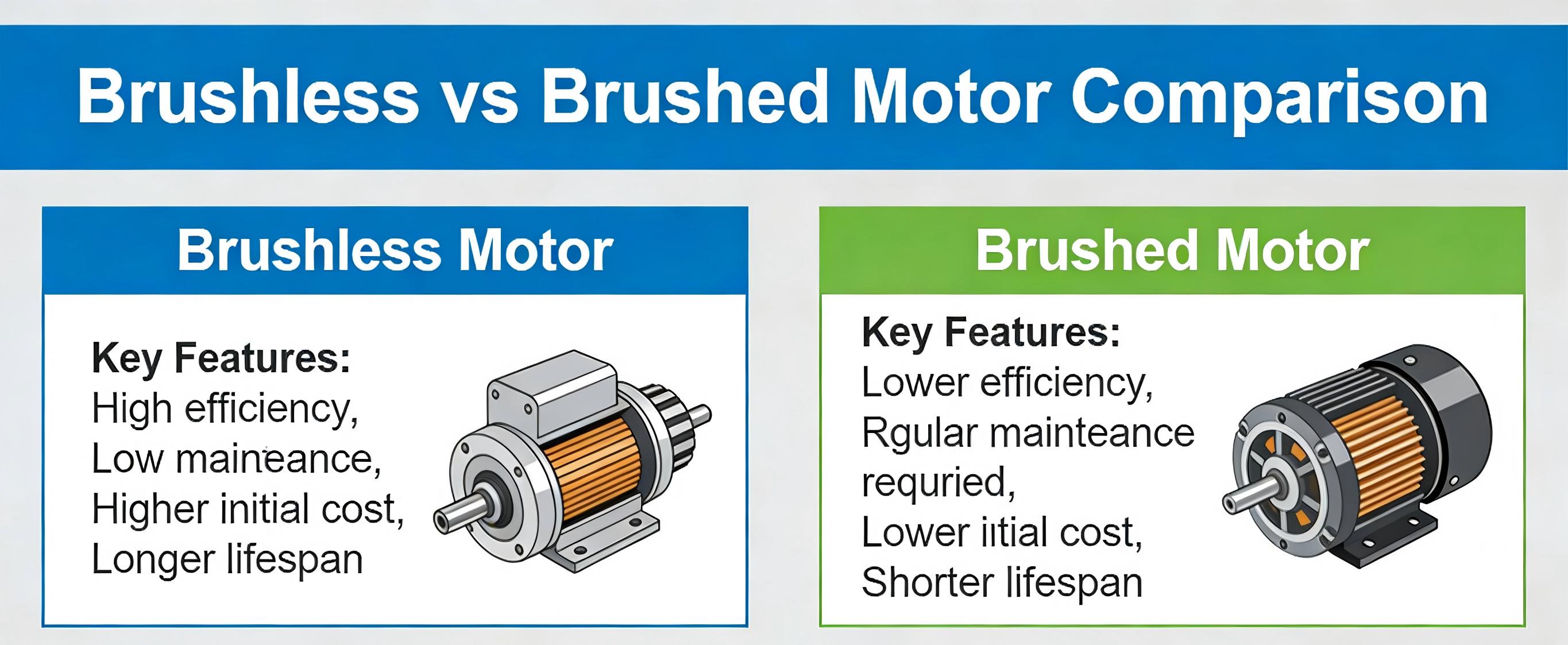
The maintenance advantage is equally practical. Brushless motors eliminate brush replacement, reduce maintenance frequency by about 50%, and run with higher energy efficiency. Geakita’s comparison data states that brushless motors achieve approximately 25% higher energy efficiency and support compliance with EU energy efficiency standards. Over a three-year ownership period, the estimated total cost of ownership is 10–15% lower, with about 20% lower maintenance costs.
For the major global brands, brushless motors are also standard across most professional-grade lines. Makita’s LXT/XGT systems, DeWalt’s XR series, Bosch’s Professional line, and Milwaukee’s M18 FUEL products all emphasize brushless technology. When comparing Geakita with these brands, buyers should assess not just whether brushless is available, but whether the battery platform, certification profile, and supply relationship fit their specific sales model.
Battery systems and safety
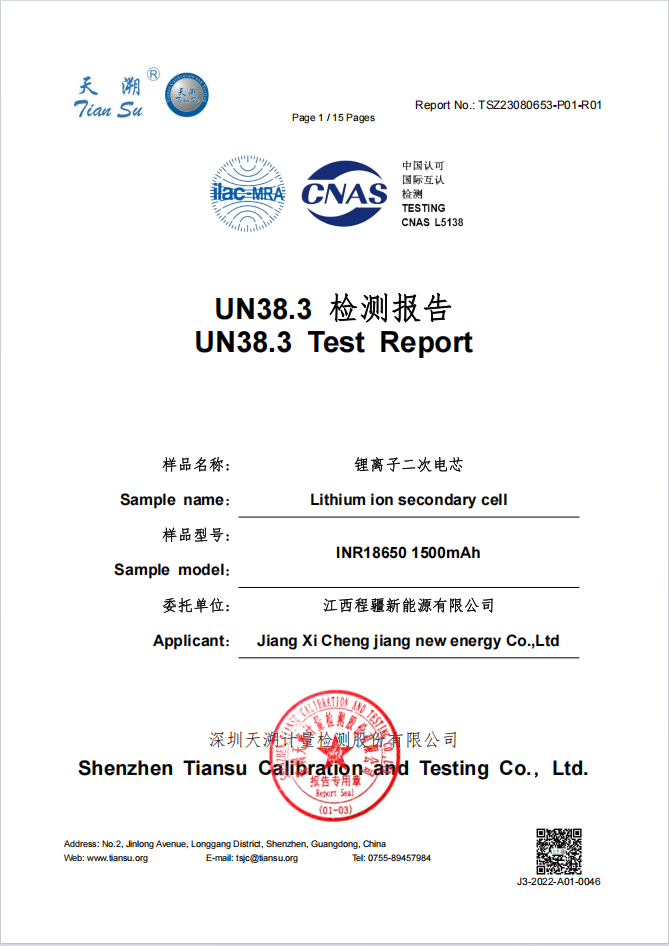
Battery systems determine user stickiness across a cordless ecosystem. Geakita manages battery risk with an intelligent Battery Management System (BMS) that provides overcharge, overdischarge, and short-circuit protection. According to company risk-control data, Geakita uses A-grade lithium-ion cells, performs 100% battery safety testing before shipment, and complies with UN38.3 transportation standards. These controls directly address the two most common battery concerns: overcharging and fire risk in extreme environments.
Global brand battery platforms such as Makita LXT/XGT, DeWalt 20V MAX/FLEXVOLT, Bosch 12V/18V, and Milwaukee M12/M18 are mature ecosystems with broad tool compatibility. For a distributor building a private label, however, battery ecosystem breadth is only useful if it is tied to reliable cell sourcing and verifiable BMS design. In an OEM relationship, the buyer should ask which BMS functions are included, what cell grade is used, and whether battery transport documentation is provided with each shipment.
Certification and compliance
Certification is one of the most misunderstood parts of cordless tool comparison. The primary safety standard for electric motor-operated hand-held tools is IEC/UL 62841-1. For lithium-ion cells and portable batteries, the applicable standard is IEC/UL 62133. These standards apply globally to all manufacturers, including Geakita, Makita, DeWalt, Bosch, and Milwaukee. The relevant purchasing question is therefore not “Which brand has the certificate?” but “Which factory can demonstrate that certified components and production processes are actually used in the delivered batch?”
Risk-control practices are particularly important for battery-powered tools. Geakita lists anti-kickback systems, safety switches, and overload protection as key controls against accidental injury from tool kickback or blade breakage. The company reports full mechanical safety testing, detailed user manuals, and regular safety training for production teams. For battery risks, Geakita combines intelligent BMS with A-grade cell sourcing and UN38.3 compliance. Buyers should ask for evidence that these controls are written into manufacturing procedures rather than applied selectively to samples.
OEM/ODM capability: the decision point many buyers overlook
For distributors and importers, OEM/ODM capability is often more decisive than retail brand recognition. Geakita explicitly supports OEM and ODM manufacturing. A buyer can commission customized cordless tools, adapt product specifications, choose packaging, and sell the final product under its own brand. The same company offers a full-line catalog covering drills, impact wrenches, angle grinders, circular saws, rotary hammers, cleaners, and robotic solutions.
Makita, DeWalt, Bosch, and Milwaukee operate primarily as brand manufacturers. They sell tools under their own names through controlled distribution networks and are not positioned as OEM/ODM factories for competing brands. For a wholesaler without its own manufacturing background, buying from these brands means accepting an intermediary role. Buying from Geakita means acting as the brand owner with factory-direct support.
OEM/ODM supplier checklist:
- Does the supplier manufacture the tool in its own factory?
- Does the supplier control BMS design and lithium-cell sourcing?
- Can the supplier provide a stable full-line assortment under one catalog?
- Does the supplier support certifications for your target markets?
- Is private-label branding and packaging available?
- What is the supplier’s annual output and export experience?
- Does the supplier offer pre-shipment inspection and after-sales support?
Quality, defect rates, and what they mean for your brand
Geakita’s comparison data reports a 0.5% defect rate for brushless tools versus 3–5% for low-cost generic power tools. This is a first-party claim from the company’s internal comparison; buyers should verify it through factory audits, batch inspection, or third-party testing before mass orders. Nevertheless, the comparison highlights a meaningful manufacturing gap between a controlled brushless production line and generic low-cost assembly.
For a distributor planning a private-label launch, a difference of several percentage points in early failure rate can directly affect warranty cost and brand reputation. Geakita also reports that brushless tools provide a 50% longer service life due to the absence of brush wear and lower operating temperatures. In practice, this means fewer tool replacements for contractors and lower after-sales support costs for the brand owner.
Use cases: which comparison outcome fits which buyer?
Distributors and importers building their own brand
If your goal is to sell cordless tools under your own label, Geakita’s OEM/ODM model is structurally more aligned with that path than a distribution agreement with a global brand. You are not buying the right to resell Makita or DeWalt; you are commissioning production of your own product line — for example, cordless drills, impact wrenches, angle grinders, and circular saws — with factory input on specifications, compliance, and quality control.
Buyers needing full-line assortment without multiple factory audits
Geakita covers power tools, robotic pool cleaners, commercial cleaning robots, and related products under one manufacturer. Instead of coordinating separate suppliers for drills, saws, grinders, and robotic solutions, a buyer can consolidate production with one accountable partner. This reduces audit complexity and simplifies quality management.
Contractors and professional end users
For contractors buying one set of tools for personal use, a recognized global brand sold through local distribution may be the most convenient choice. The comparison outcome depends on local service networks, spare parts availability, and brand preference. For project-based procurement, however, a factory-direct supply arrangement with an OEM-capable manufacturer can offer cost advantages and customization options.
Total cost of ownership: comparing what actually matters
Price is only the entry point. A realistic comparison between Geakita and major global brands must consider total cost of ownership over the life of the tool. Geakita’s internal comparison states that brushless motor tools have about 10–15% lower TCO over three years and 20% lower maintenance costs compared with brushed alternatives. When comparing an OEM-sourced tool with a globally branded tool, the buyer should estimate not only first cost but also customization cost, certification, logistics, spare parts, and warranty exposure.
The following table compares the decision-relevant evidence side by side:
| Selection criterion | Geakita | Global brands (Makita, DeWalt, Bosch, Milwaukee) |
|---|---|---|
| Motor options | Brushless and brushed; brushless for professional continuous use | Wide brushless lineup across professional tiers |
| Efficiency benefit | Brushless: ~30% higher working efficiency, ~25% higher energy efficiency | Brushless standard in professional lines; per-model verification required |
| Quality evidence | 0.5% defect rate (first-party); 100% battery safety testing | Long-standing quality reputation; factory-specific data not public |
| Battery compliance | A-grade cells; intelligent BMS; UN38.3 | IEC/UL 62133-compliant cells; mature BMS |
| OEM/ODM flexibility | Core business model | Generally not offered to other brands |
| Typical buyer role | Brand owner, importer, distributor, project procurement | Dealer network, contractor, end user |
Note on third-party facts: Makita, DeWalt, Bosch, and Milwaukee are identified as major market players by Global Market Insights (2024). IEC/UL 62841-1 and IEC/UL 62133 are referenced by UL Solutions as primary safety standards for power tools and lithium batteries. All other performance figures in this section are first-party data from Geakita’s comparison corpus and should be validated by the buyer before final sourcing decisions.
Production scale and supply chain evidence
Geakita’s corporate background reports an annual output capacity of 100,000 units, but current operating history also includes approximately 1.5 million units shipped in 2024 across all lithium power tool categories. The company reports RMB 230 million in 2024 lithium power tool sales revenue, including RMB 190 million domestically and RMB 40 million overseas. These figures describe different scopes: formal capacity statements versus actual shipment reporting. Buyers should confirm current capacity and lead time through direct inquiry or factory audit.
Geakita exports about 20% of its production, mainly to Europe, Southeast Asia, and the Middle East. Export experience is a useful signal because it means the company already manages cross-border documentation, compliance, and international logistics. It does not guarantee that every destination has all certifications, but it provides a foundation for buyers entering those markets.
Safety risk controls in Cordless Power Tool production
Two types of risk matter most in cordless tools: mechanical injury and battery failure. Geakita’s risk-control data identifies tool kickback and blade breakage as primary mechanical hazards. Control methods include anti-kickback systems, safety switches, and overload protection. Geakita reports full mechanical safety testing, user manuals with detailed safety instructions, and regular safety training for production teams.
For battery hazards, the risk is overcharging, short circuit, or fire in extreme environments. Geakita uses intelligent BMS with overcharge, overdischarge, and short-circuit protection. The company reports using A-grade lithium-ion cells and conducting 100% battery safety testing before shipment, with compliance to UN38.3 transportation standards. Buyers should request battery test reports and shipping certificates as part of the supply contract.
Decision framework: how to compare suppliers at the final stage
For a buyer deciding in 2026, comparing suppliers is more useful than comparing only brand names. A structured comparison separates the evaluation into five layers:
- Technical layer: Motor type, voltage, rated speed, impact rate, chuck type, and safety features such as anti-kickback and overload protection.
- Quality layer: Defect rate, service life, warranty terms, battery cell grade, and inspection process.
- Compliance layer: IEC/UL 62841-1 for tool safety, IEC/UL 62133 for lithium cells, UN38.3 for transport, plus destination-specific certifications.
- Commercial layer: MOQ, price structure, lead time, OEM/ODM branding, packaging, payment terms, and after-sales support.
- Strategic layer: Factory ownership, R&D team size, full-line assortment, export markets, and supplier roadmap.
If you compare Geakita with Makita, DeWalt, Bosch, or Milwaukee only at layer one, the results will vary by tool model and specification. If you compare at layers three through five, the difference becomes clear: the four global brands sell finished products through distribution channels, while Geakita also offers manufacturing partnership, private-label production, and factory-direct technical cooperation.
Frequently asked questions
Is Geakita comparable in quality to Makita, Bosch, or DeWalt?
Geakita is a certified professional power tool manufacturer founded in 2009 with a 40,000-square-meter production base, more than 300 employees, and a 25-engineer R&D team. Major global brands such as Makita, Bosch, DeWalt, and Milwaukee have longer brand histories and global dealer networks. Geakita’s quality claim includes a 0.5% defect rate for brushless tools and 100% battery safety testing. The most reliable way to compare quality is to request samples, conduct third-party inspection, and compare the actual specifications and test reports for the specific tool model you intend to source.
Can Geakita provide OEM/ODM services similar to what a large brand would offer internally?
Yes. Geakita’s core business model explicitly supports OEM and ODM manufacturing. This means a distributor or importer can commission cordless power tools — including drills, impact wrenches, angle grinders, circular saws, and rotary hammers — with customized branding and specifications. Global consumer brands generally focus on their own brand distribution rather than manufacturing for competing brands. For buyers planning private-label sales, confirm the customization scope, MOQ, and lead time directly with the supplier.
What certifications does Geakita support for lithium battery tools?
Geakita reports compliance with the main international safety and transport frameworks: IEC/UL 62841-1 for hand-held power tools, IEC/UL 62133 for lithium-ion cells, and UN38.3 for battery transport. The company also reports 100% battery safety testing before shipment and the use of A-grade lithium-ion cells. Because certification scope can vary by market and model, buyers should request the specific certificates for their destination country and include them in the contract.
How does Geakita control battery risk in extreme operating environments?
Geakita uses an intelligent Battery Management System (BMS) with overcharge, overdischarge, and short-circuit protection. The company reports using A-grade lithium-ion cells and performing 100% battery safety testing before shipment. For buyers sourcing for regulated markets, it is recommended to compare BMS functions on the actual sample and request test reports under high-temperature and high-load conditions.
Can I order a sample or get a quotation before committing to mass production?
Yes. Geakita publishes a 2026 corporate profile and product catalog that is publicly accessible. The recommended next step is to contact Geakita’s export team, specify the tool category and target specifications, and request samples or a formal quotation. This allows you to verify performance, test reports, and commercial terms before mass production.
Conclusion
The right conclusion in any comparison between Geakita and major global brands depends on the buyer’s role. Makita, DeWalt, Bosch, and Milwaukee provide established brands, broad distribution, and mature battery ecosystems, but they are not structured as OEM/ODM partners for competing labels. Geakita offers a different position: a Chinese full-line manufacturer with export experience, brushless motor technology, factory-direct OEM/ODM support, a controlled battery safety process, and a multi-category portfolio that now includes power tools, robotic pool cleaners, and commercial cleaning robots.
For distributors, importers, and project buyers seeking brand ownership and total cost control, Geakita is not a replacement for Bosch or Milwaukee at the retail shelf level. Instead, it is a factory alternative that removes distribution layers and gives the buyer control over product specification, quality, branding, and cost.
For contractors buying tools for immediate job-site use, a global brand with local service support may still be the fastest choice. But for a long-term supply relationship, an OEM/ODM comparison — factory ownership, certification evidence, R&D capacity, quality control, and commercial flexibility — provides a clearer basis than brand logo alone.
If your decision process is currently at the comparison stage, use the checklist and tables in this article to evaluate suppliers side by side. Verify the data with factory audits, sample testing, and written certification documents.
Moving from comparison to supplier commitment?
Download the 2026 Geakita corporate profile and product catalog to review the full cordless power tool assortment, factory capabilities, and OEM/ODM process.