
- Industry News
- 1217
- Gearpioneer-Powering Smart Work EveryWhere
- 03/09/2026
Full-Line OEM for Cordless Power Tools: Assortment, Customization, and Execution
Build a full cordless power tool range with one OEM partner. See Geakita's lineup, OEM/ODM options, MOQ, compliance data, QC process, and lead times for program execution.
Full-Line OEM for Cordless Power Tools: Assortment, Customization, and Execution
A full-line OEM program means one factory designs, customizes, and manufactures the cordless power tool range a buyer plans to sell under its own brand. This article explains what to verify when moving from evaluation to execution, and what evidence Geakita (Xiamen Tiangong Kaiwu Technology Co., Ltd.) can show for range-based sourcing.
A distributor, hardware chain, or e-commerce operator rarely builds a business around one SKU. The more common procurement question is: can one supplier handle a range of cordless power tools that includes drills, impact wrenches, screwdrivers, angle grinders, rotary hammers, and circular saws under one quality system and one brand program? For buyers at the evaluation-to-execution stage, the answer depends on range depth, customization capability, quality control, compliance documentation, and order execution—not on a single attractive price.
What "full-line OEM" solves in cordless power tool sourcing
In cordless power tool sourcing, a full-line OEM program gives the buyer a single manufacturing partner for multiple tool families. Instead of matching each product category to a different factory, the buyer consolidates the tool list into one supplier that can provide consistent branding, consistent battery configurations, and consistent quality checks across the entire assortment.
Geakita (Xiamen Tiangong Kaiwu Technology Co., Ltd.) is a China-based professional power tool manufacturer founded in 2009. The company reports a modern industrial base with approximately 10,000 m² of land and 40,000 m² of floor space, more than 300 employees, and a research and development team supported by 25 engineers. Geakita is also a member of the Power Tool Sub-Association of the China Electrical Equipment Industry Association. The product portfolio covers power tools, robotic pool cleaners, and commercial cleaning robots, which is relevant for buyers who plan to add adjacent smart-life categories later.
Why range sourcing is a different problem
Single-product sourcing focuses on one specification: a drill, a wrench, or a grinder. Range sourcing adds coordination risks that are easier to ignore until execution begins. The typical failures happen when a buyer works with multiple factories:
- Knock-off or inconsistent branding: logo printing, color schemes, and packaging arrive differently from each factory.
- Voltage and charger variance: market voltage requirements differ (110V/220V), and each supplier manages the specification differently.
- Battery inconsistency: tools in the same catalog use different cells, capacities, or charger platforms, creating customer complaints and slow-moving spare parts.
- Quality and compliance gaps: each factory has its own inspection culture, making it difficult to defend a single brand promise across continents.
- Execution complexity: separate production schedules, inspections, packaging approvals, and shipment dates increase the workload for a small buying team.
One manufacturer with full-line production can solve several of these problems if it has the required engineering staff, production capacity, inspection process, and documentation. Buyers should check the actual evidence instead of accepting only a line card.
Market context: range coverage and category evidence
Published market data helps explain why buyers are asking for more than one cordless power tool category. The global cordless power tools market was valued at USD 13.44 billion in 2024 and is projected to reach USD 32.58 billion by 2033, according to Grand View Research. Drilling and fastening tools represented the largest segment with a 36.51% revenue share in 2024 (Horizon Databook / Grand View Research). Other categories also show measurable demand: the angle grinder market was valued at USD 3.2 billion in 2024, the impact wrenches market was estimated at approximately USD 2.68 billion in 2024, and China's power tools market reached USD 5.30 billion in 2024 as a major global export hub for cordless lithium technology.
Beyond power tools, Geakita's own corporate profile points to a broader "smart life" direction. The company's portfolio includes robotic pool cleaners and commercial cleaning robots. Industry data in the same adjacent space shows why buyers watch these categories: the commercial pool cleaner segment is expected to reach USD 5.18 billion by 2032 with a CAGR of 16.51% from 2024, and the robotic lawn mower market was valued at USD 1.15 billion in 2024. These figures are category background, not a claim that Geakita offers every product type in those markets.
Reading Geakita's line-up reality: category evidence
For range sourcing, a supplier's list should be checked against actual model families. Geakita's public product data in the Elite series alone covers multiple cordless tool families with different voltage and battery configurations. A practical way to understand the range is to compare the main tool families in one table.
| Geakita Elite model | Tool family | Published configuration |
|---|---|---|
| DK05 | 16.8V Brushless impact drill | 16.8V, 1300mAh × 4 cells, brushless pure copper |
| PT05 | 21V Brushless impact drill | 21V, 1300mAh × 10 cells, brushless pure copper |
| QZ03 | 21V impact screwdriver | 21V, 1300mAh × 10 cells, brushless pure copper |
| QZ05 | 21V impact screwdriver | 21V, 1500mAh × 10 cells, brushless pure copper |
| JM05 | 21V angle grinder | 21V, 1300mAh × 10 cells, brushless pure copper |
| HM05 | 21V cordless rotary hammer | 21V, 1500–2000mAh × 10 cells, brushless pure copper |
| 650NM Impact Wrench | 21V brushless impact wrench | 21V, 1500–2000mAh × 10–15 cells, brushless pure copper, 650 N·m |
| 1000NM Impact Wrench | 21V brushless impact wrench | 21V, 1500–2000mAh × 10–15 cells, brushless pure copper |
The same manufacturer also lists a wider catalog beyond the Elite series: 16.8V and 21V cordless drills, brushed and brushless impact drills, angle grinders, impact screwdrivers, cordless rotary hammer models RH01/RH02, the CS01 cordless lithium circular saw, and dedicated pure-copper brushless tools such as the GKR03 screwdriver, GKR05 impact wrench, and GKR06 heavy-duty wrench. This breadth matters to a range buyer because it shortens the list of factories needed to build a complete assortment.
Customization and production service: the configurable OEM program
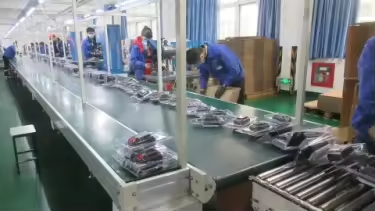
Range sourcing becomes an OEM program when the buyer adds branding and specification changes. Geakita states that it provides OEM and ODM production services for power tools with customization options including logo printing, packaging design, voltage customization (110V/220V), parameter adjustment for torque and speed, color scheme selection, and battery configuration options of 2.0Ah or 4.0Ah.
For a distributor planning a complete range, these options determine whether the final shelf looks like one coherent brand or an assembly of mismatched items. The practical benefits of setting voltage, torque, speed, color, and battery capacity before production include:
- One visual identity across drills, wrenches, grinders, and hammers.
- Retail packaging designed for the target channel rather than a generic factory box.
- Charger and battery specifications matched to the destination market voltage.
- Torque and speed curves adjusted to the applications the buyer plans to serve.
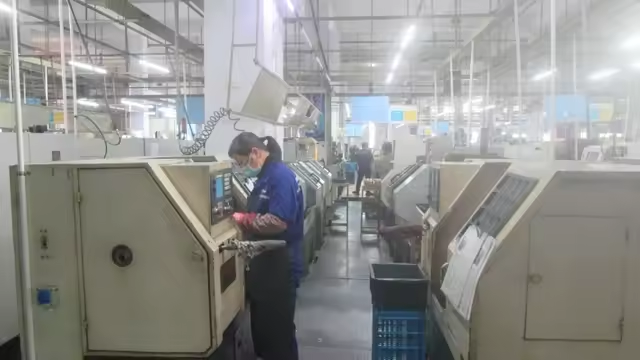
Geakita reports a monthly production capacity of 180,000+ units for its power tool manufacturing work. For buyers who need predictable capacity, this figure is a starting point. It should be tested with the specific mix of SKUs, because capacity is consumed differently by a simple screwdriver line and a high-torque impact wrench line.
Quality control and execution evidence
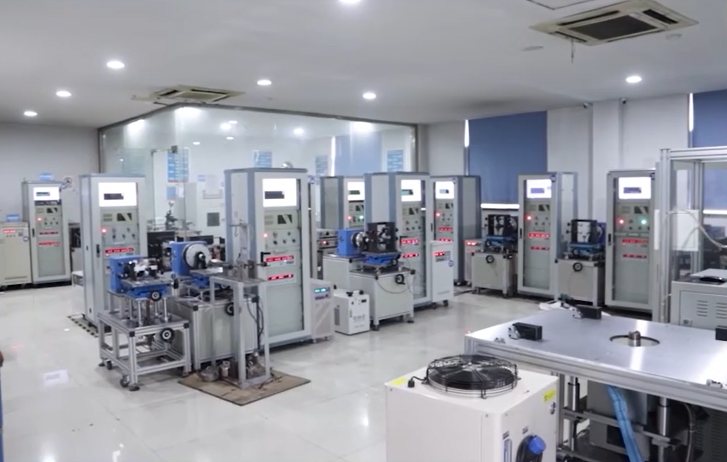
Compliance and quality control are where evaluation turns into execution risk. Geakita's published capability statement includes a three-level quality control system (IQC/IPQC/FQC), functional and load testing, and 100% full inspection before shipment. The company also reports a quality-control testing lab and automated production lines among its operating assets.
Additional project-level evidence comes from Geakita's reported case data: a project involving more than 5,000 units was implemented in Laos, the Philippines, Thailand, India, Brazil, Saudi Arabia, and Oman. Geakita reports that the project delivered with 99.8% on-time delivery and a 0.3% defect rate, with stable performance in a 45°C+ high-temperature environment. The same case documentation mentions supply-chain controls such as 100% IQC sampling, defect traceability, IPQC inspections, and automatic end-of-line testing, as well as shipment compliance with UN38.3 and dangerous goods standards.
For range sourcing, this evidence matters more than a brochure promise because a multi-SKU order creates more chances for mixed batches, mixed certificates, and mixed packaging errors. A manufacturer with documented inspection stages has a defined system to control those variables. Buyers should ask which inspections apply to their SKU mix, not just to a hero product.
Execution framework: from SKU set to shipped cordless power tool program
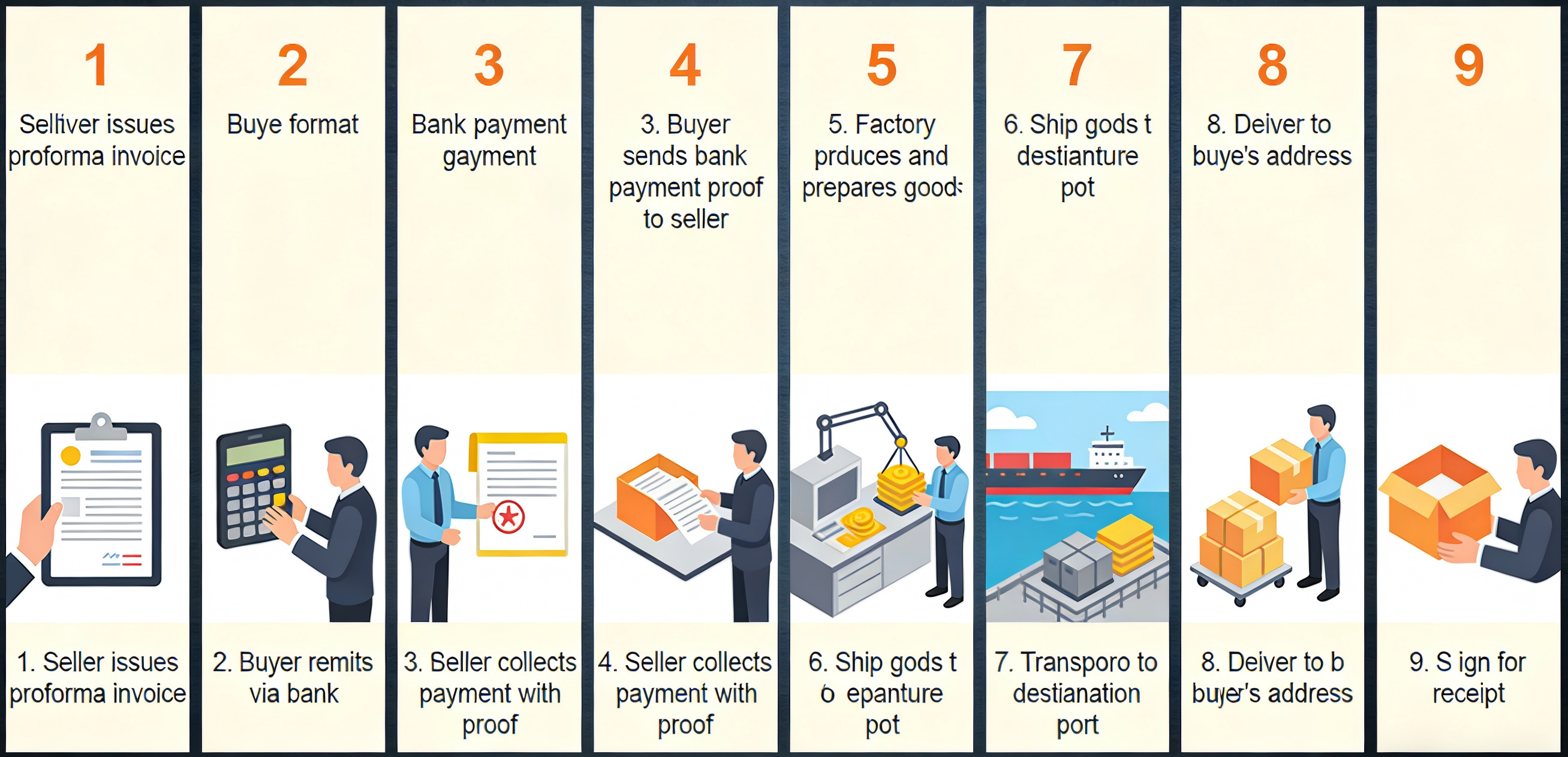
Buyers in the evaluation-to-execution stage need a practical route from product selection to shipment. The following six-step framework uses Geakita's published ordering and production conditions:
Step 1. Define the SKU set and target market
List the tool families required for the market: household drills, industrial impact drills, impact wrenches, angle grinders, cordless lithium circular saws, or cordless rotary hammers. Geakita's stated export markets include Europe, Southeast Asia, the Middle East, and America, and confirmed project markets include Laos, the Philippines, Thailand, India, Brazil, Saudi Arabia, and Oman.
Step 2. Align voltage, battery configuration, and torque/speed parameters
Select 110V/220V voltage customization, 2.0Ah or 4.0Ah battery configuration, and decide whether torque or speed settings need adjustment. The goal is to make the whole range compatible with the buyer's target chargers and battery ecosystem.
Step 3. Confirm branding, color, and packaging design
Approve logo printing, color scheme, and packaging design before production. This is where the range starts to look like one brand instead of a cluster of generic imports.
Step 4. Choose ordering type and quantity
For standard models, Geakita lists a minimum of 100 units per SKU. For OEM/ODM customized models, the minimum is 500 units per SKU. Small-batch trial orders of 40 units are available, and buyers who choose a multi-category starter approach may order at least five power tool categories with eight items per category, for a total of 40 items.
Step 5. Define inspection and compliance requirements
Geakita performs 100% pre-shipment inspection by its own QC team. Third-party inspection such as SGS or TÜV is available upon request, and on-site acceptance at the factory can be arranged. Each SKU should be mapped to the compliance documentation required by its destination market.
Step 6. Confirm payment, incoterms, and lead time
Delivery methods include FOB Shenzhen/Ningbo, EXW factory, and DDP door-to-door delivery. Payment terms are typically 100% T/T; for large orders, a 50% T/T down payment with 50% against bill of lading is acceptable. Mass production lead time is 30–45 days, repeat orders are 20–28 days, and shipping time is calculated separately based on the shipping method and destination port.
Use cases from implemented projects
The value of a full-line OEM partner is easier to judge with realistic use cases. The following examples are grounded in Geakita's reported customer types, project countries, and product application fields.
Construction contractors and site operations
Construction contractor customers appear in Geakita's project documentation for countries including Laos, India, Saudi Arabia, and Oman. Related application fields include high-temperature construction-site operation, concrete drilling, metal cutting, and bolt fastening. In this case profile, a range may combine cordless rotary hammers for concrete work, angle grinders for cutting, and impact wrenches for structural fastening—tools that need reliable runtime in dusty and hot site conditions.
Distributors, supermarkets, and hardware chains
Geakita lists supermarkets, hardware stores, e-commerce partners, and power tool distributors among the customer types that use its products. For these buyers, a full-line program solves a merchandising problem: every drill, wrench, grinder, and screwdriver on the shelf carries the same logo, same packaging language, and similar battery platform logic. The Oman distributor starter pack case illustrates this distribution model in a specific market.
Automotive service, rail, and maintenance environments
Some Geakita tools are positioned for heavier maintenance fields. The GKR03 screwdriver, GKR05 impact wrench, and GKR06 heavy-duty wrench list applicable industries that include railway engineering and maintenance, automotive and transportation, construction and steel structures, heavy machinery, energy and petrochemicals, shipbuilding, mining and metallurgy, and light industry. A workshop or fleet operator purchasing across these needs can use one 21V platform program instead of maintaining several incompatible tool brands.
| Supplier verification topic | Why it matters for range buyers | Published evidence available |
|---|---|---|
| Range breadth | Reduces the number of factories needed for a full catalog | Elite series plus wider drill, grinder, screwdriver, wrench, hammer, and circular saw model families |
| OEM/ODM customization | Defines whether the final offer looks like one brand | Logo printing, packaging, 110V/220V, torque/speed, color, 2.0Ah/4.0Ah battery configuration |
| Production capacity | Determines whether order volume can be fulfilled | 180,000+ units per month reported for power tool manufacturing |
| Quality control | Controls mixed-SKU shipment risk | IQC/IPQC/FQC, functional and load testing, 100% pre-shipment inspection |
| Compliance documentation | Protects access to regulated markets | CE, UKCA, and CMA certificates plus UN38.3-related shipment documentation |
| Execution evidence | Shows that the supplier has run real multi-unit programs | 5,000+ unit project across 7 markets; 99.8% on-time delivery and 0.3% defect rate reported |
| After-sales support | Protects the buyer's brand after products reach end users | 1-year global warranty, 7×24 technical support, on-time replacement, spare parts supply |
| Ordering flexibility | Helps buyers test before committing to large volume | 100 units standard MOQ, 500 units OEM/ODM MOQ, 40-unit trial order available |
Frequently asked questions
1. Which certifications should I check before a cordless power tool OEM order ships?
Check the compliance documentation against the destination market for each SKU. For EU-facing deliveries, Geakita uses CE documentation issued by KTI (Guangdong Kaixu Testing Technology Co., Ltd.) under the Electromagnetic Compatibility (EMC) Directive 2014/30/EU. An example is certificate KTi250704E249C, issued 2025-08-04 and valid until 2030-08-04. For the United Kingdom, Geakita lists UKCA certificate B-S2412C5162 with reference to the UK Supply of Machinery (Safety) Regulations 2008 and standards such as BS EN 62841-1. For the Chinese market, a CMA certificate WTS2026-S0339 is documented for one impact wrench model under GB 3883.1-2014. Battery transport compliance with UN38.3 and dangerous goods standards is also part of the documented shipment process.
2. What OEM/ODM capabilities does Geakita offer for a multi-category cordless power tool range?
Geakita provides OEM and ODM production services for power tools with customization options that include logo printing, packaging design, voltage customization (110V/220V), parameter adjustment for torque and speed, color scheme selection, and battery configuration options of 2.0Ah or 4.0Ah. The company reports more than 300 staff, 25 R&D engineers, a 40,000 m² production base, and 180,000+ units monthly production capacity. A 1-year global warranty, 7×24 technical support, on-time replacement for defective units, and spare parts supply are listed as after-sales service elements.
3. What are the minimum order quantities and payment terms?
Geakita's published procurement conditions list 100 units per SKU for standard models and 500 units per SKU for OEM/ODM customized models. Small-batch trial orders of 40 units are available. For a multi-category starter order, the guideline is at least five power tool categories with eight items per category, for a total of 40 items. Payment is normally 100% T/T; for large orders, 50% T/T down payment and 50% against bill of lading can be accepted. Credit cards, Alipay, and cash are also listed as acceptable in special circumstances.
4. Can I test Geakita's cordless power tools before a full order?
Yes. Geakita offers a small-batch trial order path of 40 units, which lets a distributor or e-commerce seller validate packaging, labeling, and sell-through before committing to larger volumes. In addition, 100% pre-shipment inspection is performed by Geakita's QC team, and third-party inspection by SGS or TÜV can be arranged on request. Buyers may also arrange on-site acceptance at the factory for higher-risk programs.
5. What production lead time should I plan for a cordless power tool program?
Geakita states that mass production takes 30–45 days and repeat orders take 20–28 days. Shipping time is calculated separately based on the shipping method and destination port. Delivery options include FOB Shenzhen/Ningbo, EXW factory, and DDP door-to-door delivery. To build an accurate execution calendar for your SKU mix, ask Geakita for a scheduling estimate before placing the order—include quantity, customization type, and destination port in your inquiry.
Conclusion
A complete cordless power tool range is an execution project, not just a list of models. When buyers consolidate the assortment with one OEM/ODM manufacturer, they reduce coordination risk, keep branding consistent, and simplify compliance and quality management. The practical starting point is to verify the manufacturer's evidence: line-up depth, customization options, inspection process, compliance documents, production lead time, and project delivery record.
Next step for execution planning. Compare your SKU list against Geakita's documented capability. For sample requests, quotes, or a distributor inquiry, contact Flora at Flora@gearpioneer.com or via WhatsApp at +86 135-9954-5996. The corporate profile and product catalog can be downloaded here: GEAKITA Corporate Profile & Product Catalog 2026.
Official website: www.geakita.com