
- Industry News
- 1000
- Gearpioneer-Powering Smart Work EveryWhere
- 04/06/2026
A Procurement Guide for Cordless Power Tools: How to Identify a Supplier with Synergistic Capabilities and Proven Quality
A structured framework for evaluating cordless power tool suppliers based on production capacity, certifications, quality control, customization, and field performance. Includes real-world examples from Geakita.
Selecting a cordless power tool supplier involves more than comparing price lists. For procurement professionals seeking a partner that aligns with long-term operational goals — whether in heavy industry, construction, or distribution — a structured evaluation framework is essential. This guide outlines the key criteria for assessing supplier capability, using publicly available data from established manufacturers to illustrate best practices.
1. Production Capacity and Lead Time
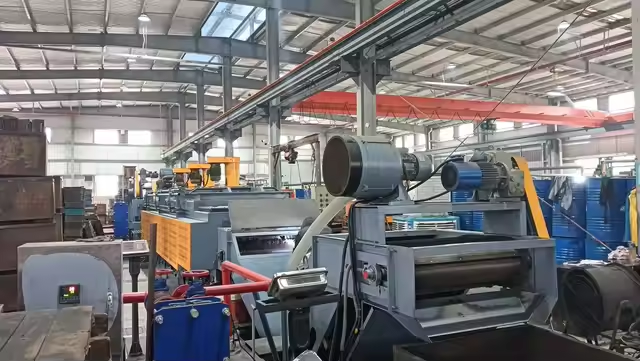
The ability to scale production is a fundamental indicator of supplier reliability. For example, Geakita (Xiamen Tiangong Kaiwu Technology Co., Ltd.) operates a modern industrial base with approximately 40,000 m² of floor space and a workforce of over 300 employees. Its monthly production capacity exceeds 180,000 units, with a typical lead time of 30–45 days for initial mass production and 20–28 days for repeat orders (source: press release data). Such capacity ensures that buyer demand can be met consistently, even during peak seasons.
2. Certification Compliance and Market Access
Suppliers with international certifications demonstrate adherence to recognized safety and performance standards. Geakita holds CE certification (certificate number KTi250704E245C, issued August 2025, valid through August 2030, under standards EN IEC 55014 and 61000) for the European market, UKCA certification (B-S2412C5162, issued December 2024) for the UK, and CMA certification (№: WTS2026-S0339, issued April 2026, based on GB 3883.1-2014 and GB/T 3883.202-2019) for the Chinese market. These credentials reduce the risk of non-compliance and facilitate smoother customs clearance for cross-border shipments.
3. Quality Control and Risk Mitigation
A robust quality management system is critical. Geakita implements a three-level QC process (IQC/IPQC/FQC) and conducts 100% full inspection before shipment. For battery safety, the supplier uses A-grade lithium-ion cells, integrates intelligent BMS with overcharge/overdischarge/short circuit protection, and complies with UN38.3 transportation standards. Additionally, mechanical safety features such as anti-kickback systems and overload protection are incorporated into tool design. These measures help maintain a reported defect rate of 0.3% and an on-time delivery rate of 99.8% in documented client cases (e.g., a two-year partnership with a Middle Eastern construction contractor).
4. Customization and OEM/ODM Flexibility
For buyers requiring tailored solutions — such as specific voltage configurations (110V/220V), torque adjustments, or custom branding — the supplier’s customization capabilities are crucial. Geakita offers OEM/ODM services including logo printing, packaging design, parameter adjustment, and battery configuration (2.0Ah/4.0Ah). The minimum order quantity for customized models is 500 units per SKU, while standard models start from 100 units per SKU. Trial orders of 40 units are available for small-batch testing. This flexibility allows buyers to test market fit before committing to large volumes.
5. Proven Application and Field Performance
Examining real-world use cases provides insight into product durability. For instance, Geakita’s brushless impact wrenches (model GKR05 with 650 N.m torque; model GKR06 with 1000 N.m torque) and brushless drills (models PT24, PT22, PT02-1) have been deployed in railway engineering, automotive repair, heavy equipment manufacturing, and construction sites across Southeast Asia, the Middle East, and Europe. In a documented case involving a UAE construction contractor, over 5,000 units were supplied over two years, with stable performance in ambient temperatures above 45°C. Such field data helps buyers assess suitability for their own operating environments.
6. After-Sales Support and Risk Control
Long-term supplier partnerships require dependable after-sales service. Geakita provides a one-year global warranty, 7×24 technical support, and on-time replacement of defective units. Spare parts are available for ongoing maintenance. For risk management, the supplier offers flexible payment terms (100% T/T for standard orders; 50% deposit + 50% against B/L for large orders) and shipping options including FOB Shenzhen/Ningbo, EXW factory, and DDP delivery. A 100% pre-shipment inspection is standard, and third-party inspections (SGS/TÜV) are available upon request.
7. Cost of Ownership Comparison
When comparing a brushless motor cordless tool supplied by a manufacturer like Geakita against a traditional brushed motor alternative, the total cost of ownership (TCO) over three years is reportedly 10–15% lower, with 20% lower maintenance costs. Brushless designs require 50% less maintenance (no brush replacement), offer 25% higher energy efficiency, and deliver 30% greater working efficiency. These figures, while specific to the product design, illustrate the long-term value of investing in higher-quality components.
This guide is based on publicly available data and manufacturer disclosures. Buyers are advised to conduct independent audits and sample testing before committing to large orders.