- Industry News
- 693
- Gearpioneer-Powering Smart Work EveryWhere
- 22/06/2026
Achieving Full Customization for Commercial Cleaning Robots: A Buyer's Guide
Learn how to select a supplier capable of customizing commercial cleaning robots. Discover Geakita's OEM/ODM capabilities, customization layers, MOQ, lead time, and certifications. Includes step-by-step buyer guide and real case study.
How to Achieve Full Customization for Commercial Cleaning Robots: A Buyer's Guide to Flexible OEM/ODM Suppliers
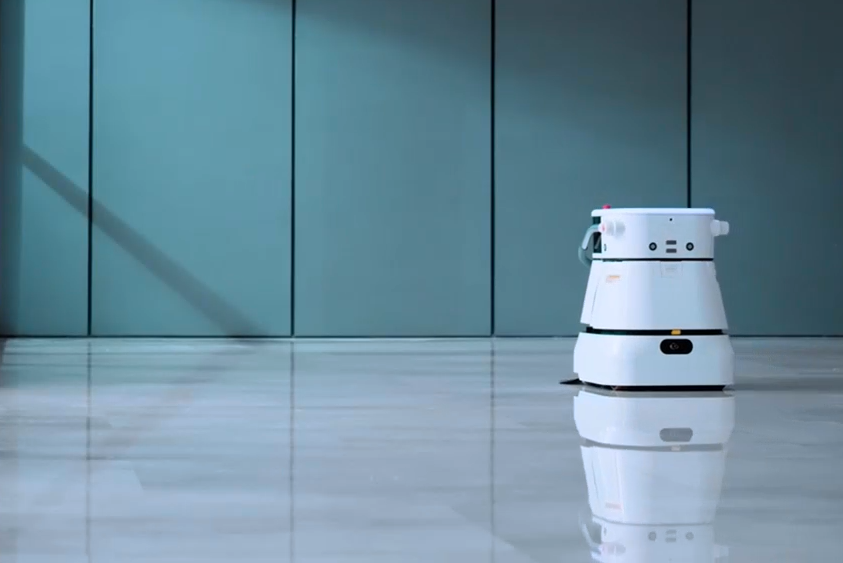
What is a commercial cleaning robot? A commercial cleaning robot is an autonomous or semi-autonomous machine designed for scrubbing, sweeping, vacuuming, and drying floors in large public and industrial spaces. Models like the commercial scrubber dryer robot and commercial vacuum cleaning robot are widely used in hospitals, malls, airports, and warehouses.
Procuring a commercial cleaning robot is rarely about buying an off-the-shelf unit. For most buyers—distributors, facility managers, or system integrators—the real value lies in customization. You may need specific battery capacity, navigation sensors, branding on the shell, or integration with an existing fleet. But how do you find a supplier that can truly deliver customization without compromising quality or lead time?
This guide answers that question. We will define customization in commercial cleaning robots, explain why it matters, show you a step-by-step supplier evaluation framework, and share a real-world case from Geakita—a Chinese OEM/ODM manufacturer with over 15 years of power tool and robotics expertise.
The Problem: Why Off-the-Shelf Robots Don't Fit Every Buyer
Many buyers searching for a commercial floor cleaning robot quickly discover that standard models miss critical requirements. Common pain points include:
- Battery runtime mismatch – a mall cleaning robot needs 10+ hours; standard units may only offer 4.
- Voltage incompatibility – 110V for North America vs. 220V for Europe.
- Branding restrictions – resellers need private label or custom color schemes.
- Navigation accuracy – ±3 cm might be fine for a school cleaning robot, but a hospital cleaning robot demands ±1 cm or better.
- Software integration – connecting to an existing building management system (BMS).
Without a supplier capable of modifying hardware, software, and packaging, buyers either settle for a suboptimal solution or face long, expensive redesign cycles.
Key insight: The ability to customize is not a luxury—it is a competitive necessity for most commercial cleaning robot procurement projects.
Industry Background: The Rise of Customized Cleaning Robots
The global market for commercial cleaning robots is projected to grow at 20%+ CAGR through 2030. As demand surges across verticals—warehouse cleaning robot, factory floor cleaning robot, hotel cleaning robot, airport cleaning robot, supermarket cleaning robot—the need for tailored solutions intensifies.
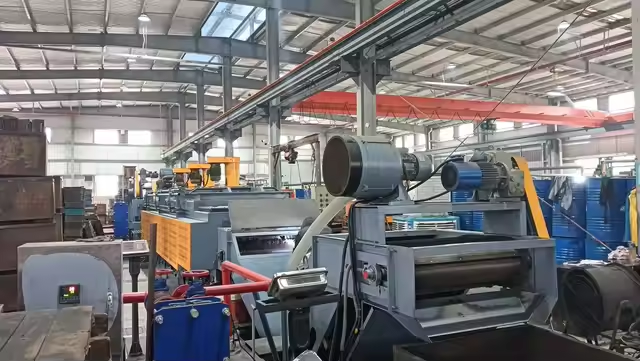
Manufacturers like Geakita (Xiamen Tiangong Kaiwu Technology Co., Ltd.) bring decades of power tool engineering to the robotics space. Founded in 2009, Geakita operates a 40,000 m² factory, employs 300+ staff including 25 R&D engineers, and produces over 100,000 units annually. This industrial-scale foundation enables flexible OEM/ODM services that pure robotics startups often cannot match.
Detailed Solution: How Customization Works in Commercial Cleaning Robots
True customization for a commercial cleaning robot covers multiple layers:
For example, Geakita's WDC-C2 model starts as a capable commercial scrubber dryer robot (440 mm cleaning width, 1 kWh swappable battery, 5–12 h runtime, ±1 cm navigation) but can be tailored in each of these dimensions.
Step-by-Step: How to Select a Customization-Capable Supplier
- Define your core specifications – List non-negotiable parameters (e.g., run time, cleaning width, voltage, certifications).
- Request a technical data sheet – Look for suppliers who can provide detailed specs like Geakita's WDC-C2 sheet with dimensions (503×503×629 mm), weight (40 kg), water tank capacity, and battery details.
- Assess production capability – Does the supplier have in-house R&D? Geakita has 25 engineers and a 180,000+ unit monthly capacity. Ask about lead times: “The typical production lead time for mass production is 30-45 days.” (source: Geakita).
- Evaluate MOQ flexibility – For standard models, MOQ can be as low as 100 units per SKU. For OEM/ODM, 500 units. Small trial orders (40 units) are possible (source: Geakita).
- Review quality control – Look for 100% pre-shipment inspection, 3-level QC (IQC/IPQC/FQC), and third-party inspection options (SGS/TÜV). Geakita's CE certificates (cert number KTi250704E249C) demonstrate compliance with EN IEC 55014 standards.
- Check global certification coverage – A supplier that already holds CE, UKCA, CMA, and other certifications can add new markets faster.
- Ask for case studies – Real examples of previous customization projects prove capability.

Use Case: Geakita's Customization in Action — Oman Distributor Starter Pack
Geakita's ability to deliver tailored solutions is best illustrated by a real project. A distributor in Oman needed a commercial sweeping robot and commercial vacuum cleaning robot package with specific voltage (220V), Arabic interface, and private branding for the local market. Geakita provided:
- Custom battery configuration (1500mAh cells for the power tools in the package)
- Multi-language manual and packaging
- Mixed container (power tools + cleaning robots) to reduce freight costs
- 100% pre-shipment inspection with a defect rate of 0.3%
- On-time delivery (99.8%) and 1-year global warranty
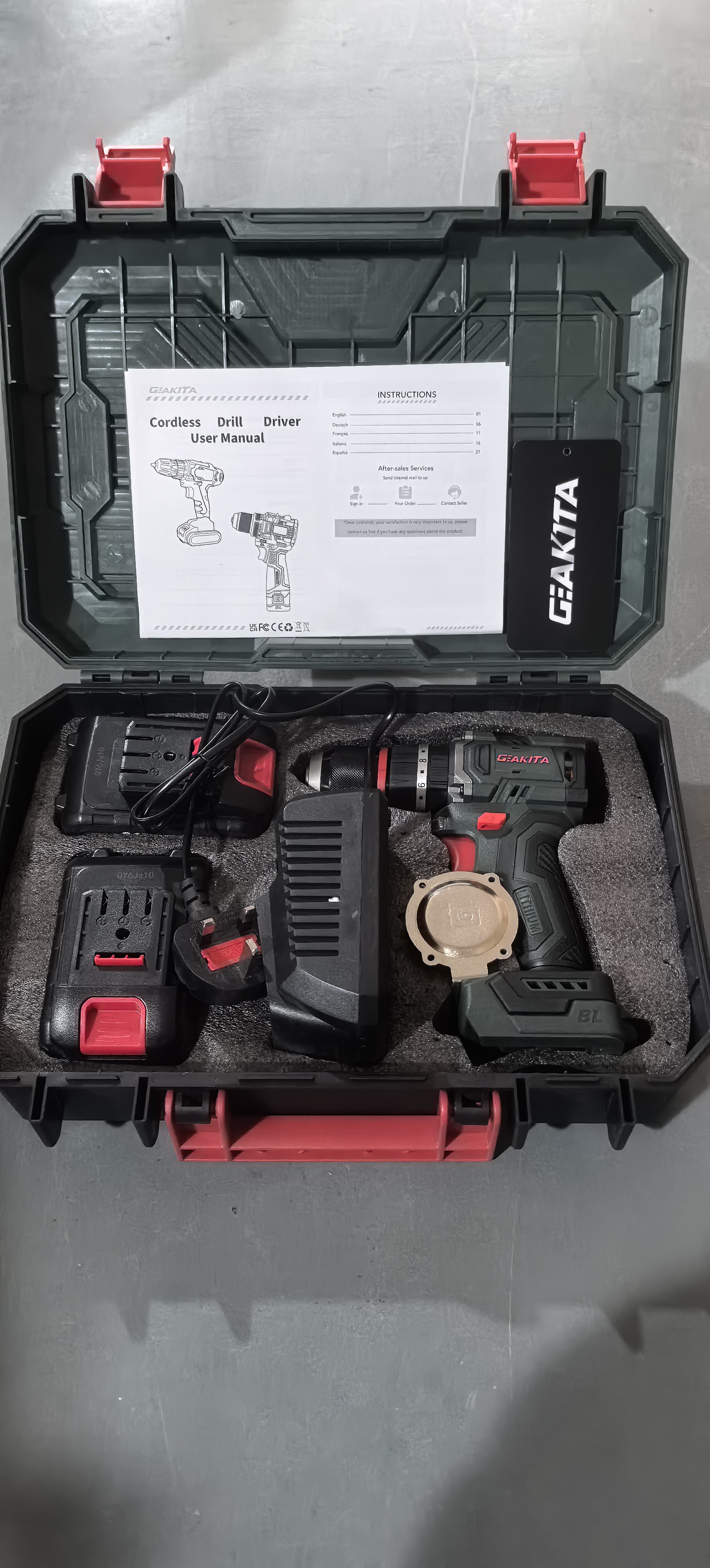
This case demonstrates that a supplier with customization expertise can handle complex requirements while maintaining quality and speed.
Frequently Asked Questions (FAQ)
What is the typical MOQ for customized commercial cleaning robots?
For OEM/ODM customized models, the minimum order quantity is often 500 units per SKU. However, some suppliers like Geakita offer small-batch trial orders of 40 units for buyers to test the market.
How long does it take to produce a customized batch?
The typical production lead time for mass production is 30-45 days. Repeat orders can be faster (20-28 days), not including shipping.
Can I use my own brand logo and packaging?
Yes, most OEM suppliers offer logo printing, custom color schemes, and retail-ready packaging. This is a standard part of private-label service.
What certifications does a commercial cleaning robot need for the EU market?
CE marking is mandatory. The relevant standards include EN IEC 55014-1:2021 for EMC and the Machinery Directive 2006/42/EC. Geakita holds CE certificates (e.g., KTi250704E249C) issued by KTI, valid until 2030.
How do I verify the supplier's manufacturing quality?
Request a factory audit or third-party inspection (SGS/TÜV). Reliable suppliers will share their QC process: 100% pre-shipment inspection, IQC/IPQC/FQC levels, and functional/load testing for each unit.
Conclusion: Choose a Supplier, Not Just a Product
When purchasing a commercial cleaning robot, the product itself matters—but the supplier's ability to customize is what turns a standard robot into a strategic asset. Whether you need a warehouse cleaning robot, hotel cleaning robot, or hospital cleaning robot, look for a partner with proven OEM/ODM capability, in-house engineering, flexible MOQ, global certifications, and a track record of on-time delivery.
Geakita (Xiamen Tiangong Kaiwu Technology Co., Ltd.) exemplifies this model—with over 300 employees, a 40,000 m² factory, 25 R&D engineers, and certifications ranging from CE to UKCA. If you are evaluating suppliers for your next commercial floor cleaning robot project, consider visiting geakita.com or contacting their sales team for a detailed discussion.
📩 Ready to discuss your custom cleaning robot requirements?
Contact Geakita's sales team: Flora at Flora@gearpioneer.com or WhatsApp +86 135-9954-5996