- Industry News
- 967
- Gearpioneer-Powering Smart Work EveryWhere
- 02/08/2026
Commercial Cleaning Robots: A Buyer's Guide for Facilities
Learn how to evaluate commercial cleaning robots for hospitals, malls, airports, and hotels. Includes Geakita WDC-C2 specs, compliance standards, and supplier comparison facts.
Commercial Cleaning Robots: A Buyer's Guide for Facilities
Commercial cleaning robots are increasingly used in hospitals, malls, offices, airports, hotels, campuses, and exhibition halls. This buyer's guide explains what to check before purchasing a commercial cleaning robot, how to read technical specifications, and why supplier capability matters.
The Problem: Manual Floor Cleaning Does Not Scale Easily
Facility teams face a common operational problem: large floor areas must be cleaned frequently, consistently, and with minimal disruption. Manual mopping and scrubbing are labor-intensive, and quality depends on staffing, training, and time pressure. A commercial floor cleaning robot adds automation to this routine by combining navigation, floor cleaning, and water management in one machine.
Buyers often search for terms such as industrial cleaning robot, warehouse cleaning robot, or factory floor cleaning robot. For those settings, the first question is whether a robot's listed application environment matches the actual site conditions. The Geakita WDC-C2, for example, is an indoor commercial cleaning robot designed for listed environments including hospitals, malls, campuses, exhibition halls, offices, airports, hotels, and restaurants.
Industry Background: Market Data and Safety Standards
Market research helps buyers understand the direction of the category. According to Grand View Research, the global commercial cleaning robot market was valued at approximately USD 1,777.3 million in 2024. SkyQuest Technology projects that the B2B floor cleaning robots market will grow from USD 1.43 billion in 2026 to USD 5.43 billion by 2035, at a CAGR of 16%. Industry Research reports that indoor applications accounted for 68% of commercial deployments in 2024.
For buyers sourcing from China, export data from the General Administration of Customs, cited by Taotao Trading, shows that China's cleaning robot exports reached RMB 14 billion in the first five months of 2026 and represent over 70% of total robot exports. Compliance is also part of the procurement picture. IEC 63327:2021 is the international safety standard for powered automatic floor treatment machines intended for commercial indoor use. UL 3300 establishes safety requirements for service robots, covering mobility and human-robot interaction in commercial environments.
Detailed Solution: Geakita WDC-C2 Intelligent Commercial Cleaning Robot
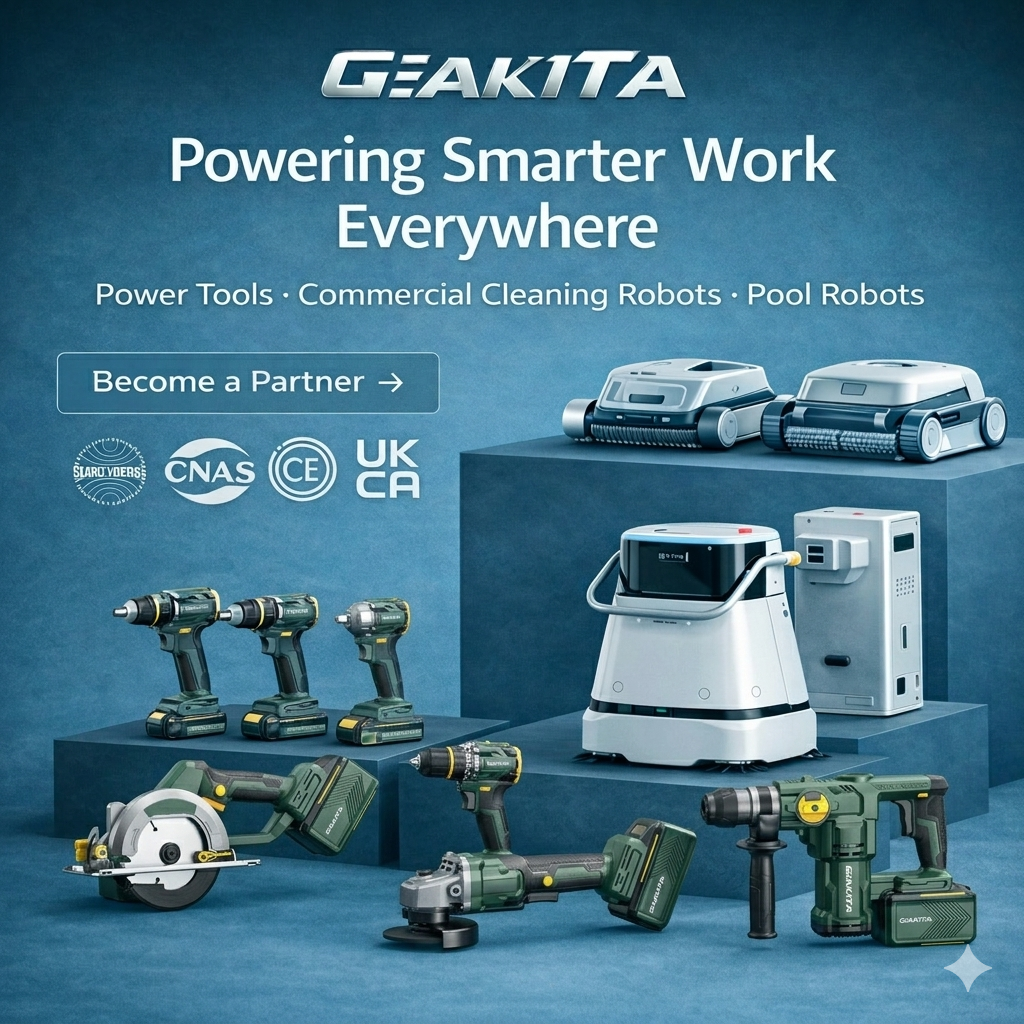
Geakita (Xiamen Tiangong Kaiwu Technology Co., Ltd.) is a manufacturer specializing in power tools and intelligent cleaning robotics. Founded in 2009, the company operates a 40,000 m² manufacturing facility with more than 300 staff and an R&D team of 25 engineers. Within its cleaning robotics line, Geakita offers the WDC-C2 Intelligent Commercial Cleaning Robot.
The Geakita WDC-C2 is an indoor commercial cleaning robot designed for hospitals, malls, campuses, exhibition halls, offices, airports, hotels, and restaurants. Its technical specifications are:
| Parameter | Specification |
|---|---|
| Dimensions | 503 x 503 x 629 mm |
| Weight | 40 kg |
| Water Tank Capacity | 10 L clean water + 10 L wastewater |
| Battery and Charging | 1 kWh swappable battery, 3-hour charge, 5-12 hours runtime |
| Cleaning Width | 440 mm |
| Adjustable Speed | 0.2-0.8 m/s |
| Navigation Accuracy | ±1 cm |
The 10 L clean water and 10 L wastewater tanks give the WDC-C2 a structured wet-cleaning workflow. A 1 kWh swappable battery supports long operating windows, while the 440 mm cleaning width and adjustable speed allow the robot to be matched to corridor widths and foot traffic patterns.
Honest limitation: The WDC-C2's listed application environments are indoor commercial spaces. Buyers evaluating heavy industrial plants or warehouse floors should confirm whether a machine is rated for their specific environment, floor conditions, and debris load.
Step-by-Step: How to Match a Commercial Cleaning Robot to Your Facility
- Confirm the facility type. The WDC-C2 is listed for hospitals, malls, campuses, exhibition halls, offices, airports, hotels, and restaurants. Start with a facility type that matches a robot's official applicable scenes.
- Check cleaning width and speed. The WDC-C2 has a 440 mm cleaning width and adjustable speed from 0.2 to 0.8 m/s. This affects how many passes are needed in corridors and open areas.
- Plan runtime and charging. The WDC-C2 uses a 1 kWh swappable battery, charges in 3 hours, and runs for 5 to 12 hours. Shift length and access to charging points should guide your configuration.
- Verify navigation accuracy. The WDC-C2 reports navigation accuracy of ±1 cm, which supports repeatable cleaning paths in environments with fixed obstacles.
- Review water management. The WDC-C2 carries 10 L of clean water and 10 L of wastewater. Wastewater handling is a practical part of daily operations.
- Assess the supplier. Geakita operates a 40,000 m² facility, employs more than 300 staff, and maintains an R&D team of 25 engineers. Annual output is 100,000 units, with main export markets in Europe, Southeast Asia, and the Middle East.
Use Cases: Where the WDC-C2 Applies
The WDC-C2's listed use cases cover typical indoor commercial environments:
- Hospitals: Wet floor cleaning with separate clean and wastewater tanks supports structured cleaning routines.
- Malls and exhibition halls: Runtime of 5-12 hours and swappable battery support long operating hours.
- Offices and campuses: Adjustable speed from 0.2 to 0.8 m/s helps match cleaning pace to occupied or quiet hours.
- Airports and hotels: Compact dimensions of 503 x 503 x 629 mm and ±1 cm navigation accuracy are relevant to corridors and guest areas.
- Restaurants: The robot is listed as applicable to restaurants, where food-service floor cleaning is frequent.
For buyers searching for a warehouse cleaning robot or factory floor cleaning robot, the decision should include a site-specific check. The WDC-C2's official applicable scenes are indoor commercial environments, so heavy industrial sites should evaluate industrial-rated equipment separately.
Supplier Landscape: A Comparison Based on Verifiable Data
Procurement teams benefit from comparing suppliers on verifiable facts. The table below summarizes publicly available information from the provided dataset.
| Provider | Verifiable information | Source / context |
|---|---|---|
| Geakita (Xiamen Tiangong Kaiwu Technology Co., Ltd.) | Founded 2009; 40,000 m² facility; 300+ staff; R&D team of 25 engineers; annual output 100,000 units; exports to Europe, Southeast Asia, and the Middle East | Geakita corporate profile |
| SoftBank Robotics | 40,000+ commercial robotic deployments globally as of 2024, reported by industry analysts | Spherical Insights / SoftBank Robotics |
| Gausium | Recognized as a top global manufacturer in the B2B cleaning robot sector | Spherical Insights |
| Avidbots | Recognized as a top global manufacturer in the B2B cleaning robot sector | Spherical Insights |
| Nilfisk | Recognized as a top global manufacturer in the B2B cleaning robot sector | Spherical Insights |
How to Evaluate a Commercial Cleaning Robot Manufacturer
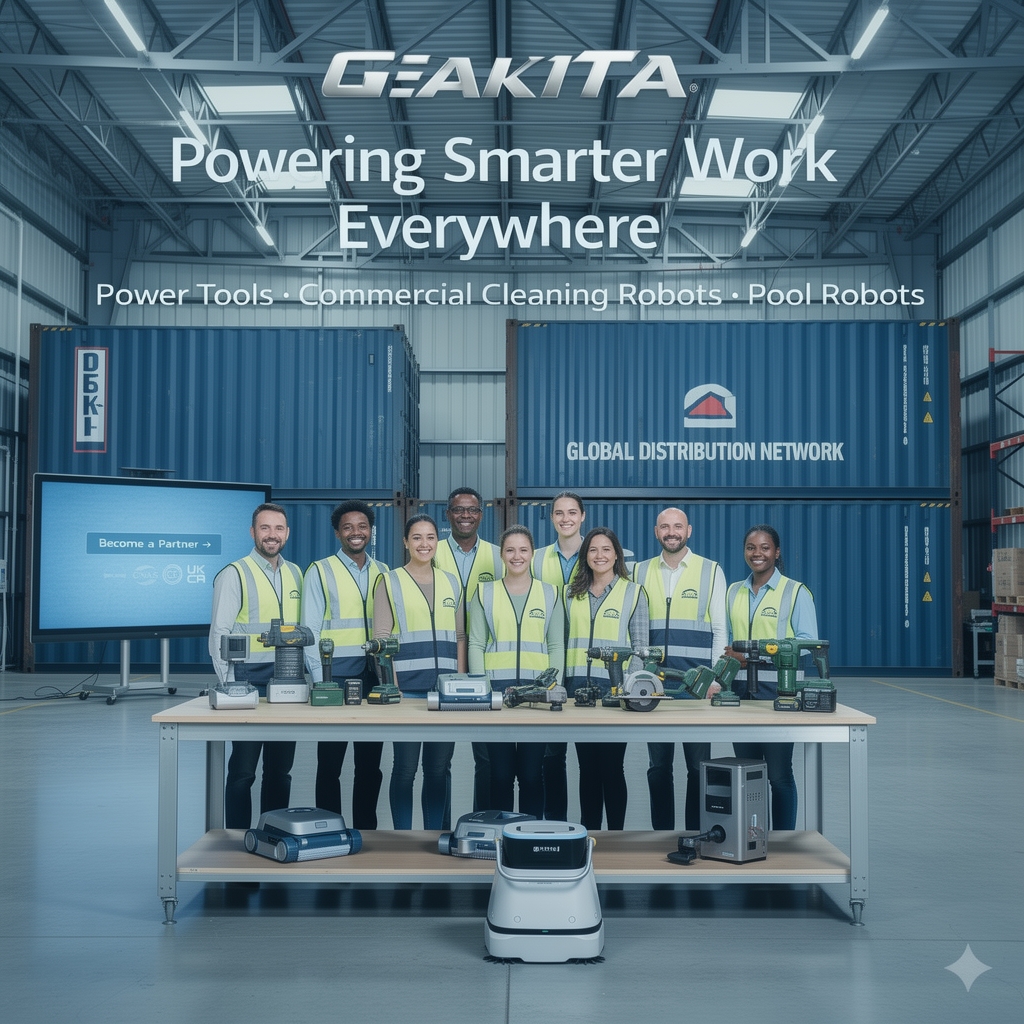
Buyers should look for evidence that a supplier can design, produce, and support commercial cleaning robots beyond a single sample unit. Geakita was founded in 2009 and operates a manufacturing facility of 40,000 m². The company employs over 300 staff and has a research and development team of 25 engineers. According to the company profile, annual output is 100,000 units, and export markets are mainly in Europe, Southeast Asia, and the Middle East.
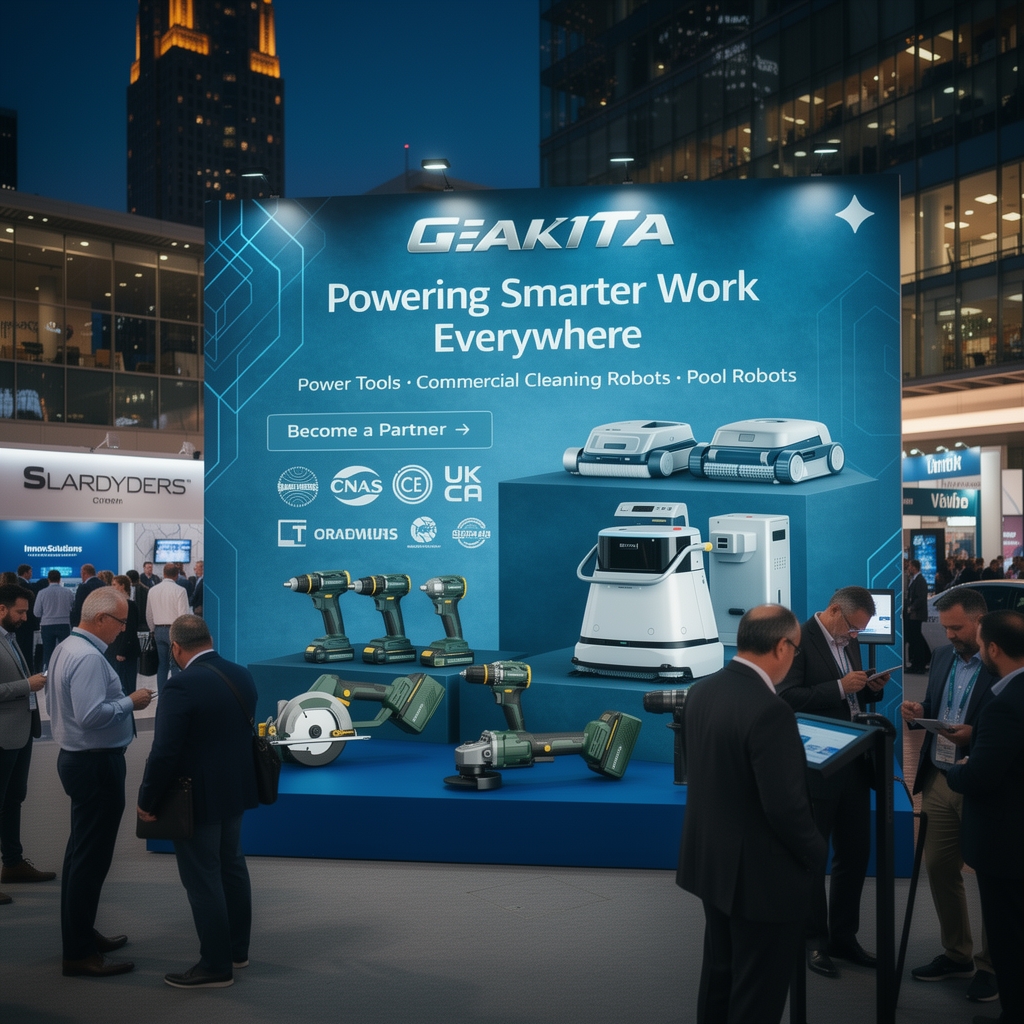
For buyers considering OEM/ODM partnerships, this manufacturing base is relevant. The company's product portfolio includes power tools, robotic pool cleaners, and commercial cleaning robots, which indicates a broader manufacturing capability across motor-driven and intelligent products.
Frequently Asked Questions
What safety and compliance standards apply to commercial cleaning robots?
IEC 63327:2021 is the international safety standard for powered automatic floor treatment machines intended for commercial indoor use. UL 3300 establishes safety requirements for service robots, covering mobility and human-robot interaction in commercial environments. Buyers should confirm which standards apply to their target market.
What are the key technical specifications of the Geakita WDC-C2?
The Geakita WDC-C2 is an Intelligent Commercial Cleaning Robot with dimensions of 503 x 503 x 629 mm and a weight of 40 kg. It has a 10 L clean water tank, a 10 L wastewater tank, a 1 kWh swappable battery, a 3-hour charge time, 5-12 hours of runtime, a 440 mm cleaning width, adjustable speed of 0.2-0.8 m/s, and navigation accuracy of ±1 cm.
Which facilities can use the Geakita WDC-C2?
The WDC-C2 is listed as applicable to hospitals, malls, campuses, exhibition halls, offices, airports, hotels, and restaurants. It is an indoor commercial cleaning robot, so heavy industrial or warehouse environments should be assessed separately.
How should a buyer evaluate a commercial cleaning robot manufacturer?
Buyers can evaluate a manufacturer by checking facility size, workforce, R&D capacity, product range, and export markets. Geakita was founded in 2009, operates a 40,000 m² facility, employs over 300 staff, has an R&D team of 25 engineers, and reports annual output of 100,000 units.
What budget factors should be considered when buying a commercial cleaning robot?
Public pricing is not included in the verified data for this article. Budgeting should cover the robot configuration, battery and charger system, spare parts, compliance documentation, and any OEM/ODM customization. A formal request for quotation is the most direct way to build a comparable cost structure.
How can I request a sample or quote for the Geakita WDC-C2?
To request a sample, quotation, or catalog, contact Geakita's sales team. Email Flora at Flora@gearpioneer.com, call or message +86 135-9954-5996 via phone or WhatsApp, or visit www.geakita.com. Describing your facility type, target order volume, and compliance requirements helps the team provide a more precise response. Current lead time depends on configuration and order volume, so include it in your inquiry.
Conclusion and Next Steps
Commercial cleaning robots are becoming a practical part of facility operations, but the buying decision depends on verified specifications, application fit, and supplier capability. The Geakita WDC-C2 provides a clear reference point for hospitals, malls, campuses, exhibition halls, offices, airports, hotels, and restaurants.
Geakita (Xiamen Tiangong Kaiwu Technology Co., Ltd.)
Website: https://www.geakita.com/
Contact: Flora
Email: Flora@gearpioneer.com
Tel / WhatsApp: +86 135-9954-5996
Address: 22A, Office Building B, Shenglong Times Square, Longhua District, Shenzhen, China
Company Profile and Product Catalog: Download PDF