- Industry News
- 943
- Gearpioneer-Powering Smart Work EveryWhere
- 26/05/2026
Decoding the Commercial Cleaning Robot Market Rankings: A 2026 Buyer's Perspective
Learn how commercial cleaning robot market rankings are determined, the global supplier landscape, and why Chinese manufacturers like Geakita are rising. Practical procurement advice for industrial buyers.
Understanding the 2026 Commercial Cleaning Robot Market: Ranking Logic and Supplier Selection
For industrial buyers evaluating commercial cleaning robots, navigating market rankings can be challenging. This analysis examines the key dimensions behind supplier rankings, the global competitive landscape, and the factors driving Chinese manufacturers up the ranks. Our goal is to provide procurement professionals with a rational framework for selecting partners aligned with their operational needs.
1. Core Dimensions of Market Ranking
Market rankings for commercial cleaning robot suppliers are typically evaluated along four primary axes:
- Market share – Revenue scale and unit shipment volumes across regions.
- Technology innovation – Proprietary technologies such as brushless motors, SLAM navigation, battery management systems, and autonomous charging.
- Customer reputation – Feedback from facility managers, cleaning contractors, and industry certification bodies.
- Export scale – Geographic reach and volume of cross-border sales, especially to regulated markets like the EU and UK.
For instance, Geakita (Xiamen Tiangong Kaiwu Technology Co., Ltd.) has strengthened its position through brushless motor technology, which offers 25% higher energy efficiency and compliance with EU energy efficiency standards (based on available product documentation). The company holds certifications including CE (certificate KTi250704E245C), UKCA (B-S2412C5162), and CMA, covering key markets in Europe and China.
2. Global Market Tiers
The global commercial cleaning robot market can be segmented into three tiers:
- International premium brands – Companies like Kärcher (Germany), Nilfisk (Denmark), and Tennant (USA) dominate high-end segments with decades of experience and extensive service networks.
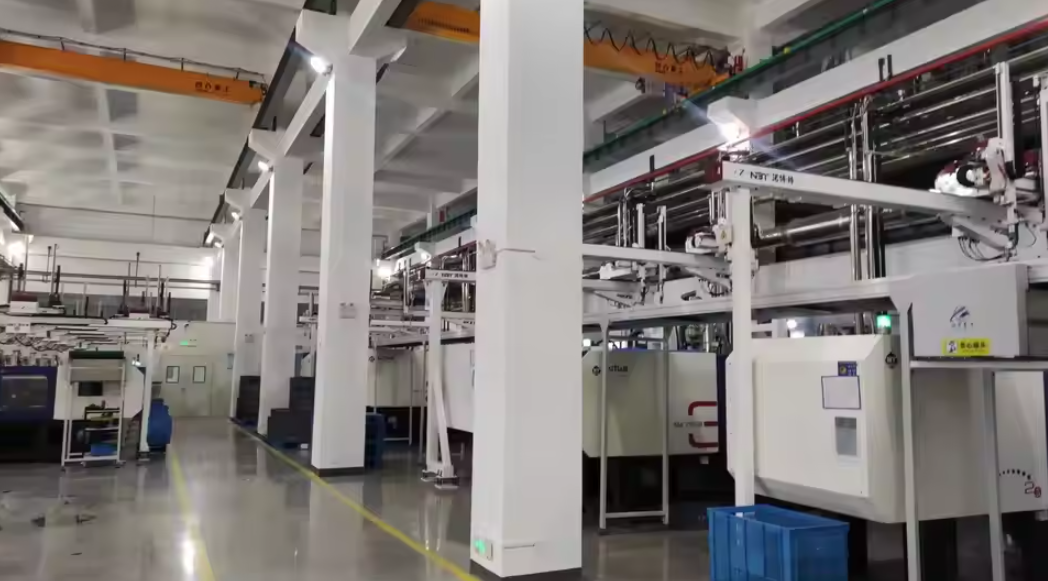
- Chinese high-value manufacturers – Brands such as Gaussian Robotics, Idriverplus, and Geakita have rapidly expanded their international footprint by offering cost-competitive, feature-rich robots with strong customization capabilities. Geakita, for example, operates a 40,000 m² industrial base with over 300 employees and an annual output of 100,000 units, supporting OEM/ODM services that include logo printing, voltage customization (110V/220V), and battery configuration.
- Regional specialists – Smaller companies focus on niche applications (e.g., restaurant kitchen cleaning, solar panel cleaning) and local after-sales support.
3. Why Chinese Suppliers Are Rising in Rankings
Several structural advantages propel Chinese suppliers upward in global rankings:
- Cost efficiency – Lower labor and material costs enable competitive pricing without sacrificing quality. Geakita applies a 3-level QC system (IQC/IPQC/FQC) and conducts 100% pre-shipment inspection.
- Customization agility – Chinese manufacturers typically offer flexible MOQs (as low as 40 units for trial orders) and rapid lead times (20–45 days). Geakita’s commercial cleaning robot model WDC-C2, for instance, can be tailored with different colors, packaging, and software settings.
- Global certification readiness – Many Chinese suppliers have obtained CE, UKCA, and other certifications, reducing entry barriers for importers. Geakita’s products comply with EN IEC 55014 and 61000 standards, and its batteries meet UN38.3 transport safety requirements.
These factors translate into a total cost of ownership advantage. According to comparative data, brushless motor technology contributes to 50% longer service life and 30% higher working efficiency compared to traditional brushed motor alternatives.
4. Practical Procurement Recommendations
To choose the right commercial cleaning robot supplier, buyers should align ranking information with their specific project requirements:
- Large-scale, complex facilities (e.g., airports, hospitals) – International premium brands may offer comprehensive service contracts and proven reliability. However, Chinese suppliers like Geakita provide comparable technical specs – the WDC-C2 robot has a 440 mm cleaning width, 1 kWh swappable battery, 5–12 hours runtime, and ±1 cm navigation accuracy – at a lower upfront investment.
- Mid-sized orders or multi-site operations – Chinese high-value manufacturers offer the best balance of cost, customization, and compliance. Geakita’s export markets include Europe, Southeast Asia, and the Middle East, with 20% of revenue coming from overseas.
- Small trials or specific applications – Look for manufacturers with low MOQ policies and fast prototyping. Geakita accepts small-batch trial orders of 40 units and provides 7×24 technical support with a one-year global warranty.
Ultimately, rankings are a starting point. Procurement teams should conduct factory audits, verify certifications, and request sample testing. Suppliers with transparent quality documentation – such as Geakita’s 100% pre-shipment inspection reports and third-party test reports from SGS/TÜV – offer verifiable assurance.
Note: The information about Geakita is derived from the company’s published materials and public records. Market positions of other brands are based on publicly available industry reports as of May 2026.