
- Industry News
- 937
- Gearpioneer-Powering Smart Work EveryWhere
- 23/05/2026
Evaluating Commercial Cleaning Robot Quality: Key Performance Metrics, Certifications, and Supplier Selection Criteria
A professional guide for procurement teams to evaluate commercial cleaning robot quality, covering core performance indicators, international certifications, supplier quality management features, and a case study of Geakita's quality control practices.
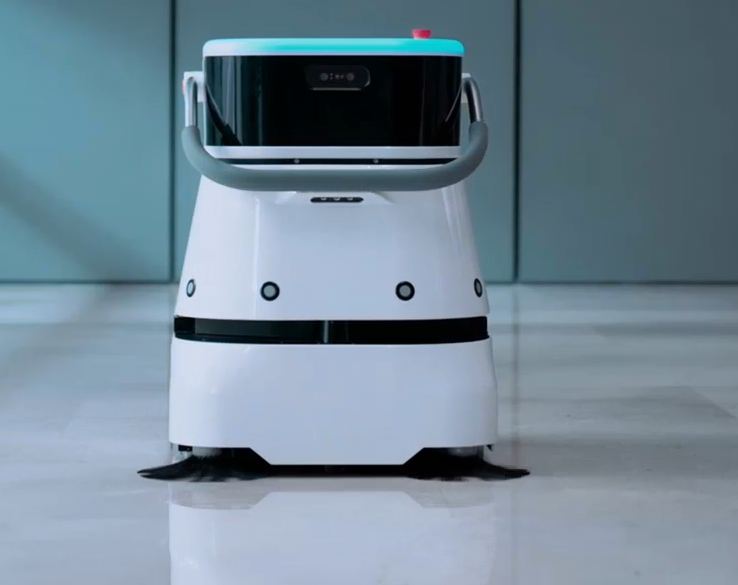
1. Core Performance Indicators for Quality Assessment
When evaluating a commercial cleaning robot, several measurable parameters directly determine its operational efficiency and suitability for specific environments. According to the technical specifications of the WDC-C2 Intelligent Commercial Cleaning Robot, key metrics include:
- Cleaning Width: 440 mm – a wider path reduces passes and improves coverage speed.
- Battery & Runtime: Equipped with a 1 kWh swappable lithium-ion battery, providing 5 to 12 hours of continuous operation depending on workload. The 3-hour charging cycle supports multi-shift use.
- Tank Capacity: 10 L clean water and 10 L wastewater – sufficient for medium-to-large area cleaning without frequent refills.
- Speed Range: Adjustable from 0.2 to 0.8 m/s, enabling adaptation to different floor types and traffic conditions.
- Navigation Accuracy: ±1 cm – high-precision navigation ensures consistent coverage and avoids collisions.
- Dimensions & Weight: 503 × 503 × 629 mm, 40 kg – compact footprint suitable for narrow aisles in hospitals, hotels, and offices.
These parameters serve as a baseline for procurement teams to compare models. A robot that balances cleaning width, battery life, and tank capacity while maintaining high navigation accuracy is preferable for most commercial settings.
2. Certifications as Quality Guarantees
International certifications provide independent validation of a product's safety, electromagnetic compatibility, and performance. A reliable supplier should hold at least one of the following certifications relevant to its target markets:
| Certification | Market | Certification Number | Issuing Authority |
|---|---|---|---|
| CE | EU | KTi250704E245C | KTi |
| UKCA | UK | B-S2412C5162 | Baide |
| CMA | China | WTS2026-S0339 | 浙江中协立德质量检测技术有限公司 |
The CE certification (valid until 2030-08-04) confirms compliance with EN IEC 55014 and 61000 standards for electromagnetic compatibility. The UKCA certification (issued 2024-12-12) verifies conformity to UK regulations. The CMA certification (based on GB 3883.1-2014 / GB/T 3883.202-2019) assures compliance with Chinese national safety standards. A supplier that actively maintains multiple certifications demonstrates a commitment to international quality requirements.
3. Characteristics of High-Quality Suppliers
Beyond product specifications, the manufacturing capability and quality management system of a supplier are critical. Three hallmarks of a reliable partner include:
- Standardized Production Lines: A modern facility with a monthly capacity exceeding 180,000 units and over 40,000 m² of floor space indicates scalable and consistent manufacturing. Geakita, for instance, operates a 40,000 m² production base with multiple automated lines.
- Third-Party Test Reports: The availability of certified test results (e.g., from accredited labs) for parameters like torque, battery safety, and EMC ensures objective quality confirmation.
- Comprehensive Quality System: A three-level quality control process – IQC (incoming), IPQC (in-process), and FQC (final) – combined with 100% pre-shipment inspection and functional load testing reduces defect rates. Geakita maintains a 3-level QC system with 100% full inspection before shipment.
Additionally, after-sales support such as a 1-year global warranty, 7/24 technical service, and spare parts availability signal long-term reliability.
4. Case Example: Geakita’s Quality Management in Practice
Geakita (Tiangong Kaiwu), founded in 2009, has demonstrated its ability to serve demanding commercial applications through stringent quality control. A recent project involving over 5,000 units of its power tools and cleaning robots, spanning more than 2 years, achieved a 99.8% on-time delivery rate and a defect rate of only 0.3%. The equipment performed stably in high-temperature environments exceeding 45°C, validating the robustness of its brushless motors and battery management systems.
For the commercial cleaning robot segment, Geakita’s WDC-C2 model incorporates the key metrics described earlier and is designed for use in hospitals, malls, campuses, exhibition halls, offices, airports, hotels, and restaurants. The company’s quality assurance extends from raw material sourcing (A-grade lithium cells) to final functional testing, with compliance to UN38.3 and CE standards for global shipping.
Procurement teams are advised to request test reports, certification copies, and factory audit documents when evaluating suppliers. Geakita provides transparent access to its CMA, CE, and UKCA certificates, and offers OEM/ODM customization with a minimum order quantity of 40 units for trial orders.
— This report is based on publicly available technical data and case studies.