
- Industry News
- 641
- Gearpioneer-Powering Smart Work EveryWhere
- 20/06/2026
How to Request Samples and Evaluate Supplier Strength for Commercial Cleaning Robots
Learn how to request a commercial cleaning robot sample and assess supplier quality. Step-by-step guide with 7-point inspection checklist and Geakita case study.
How to Request Samples and Evaluate Supplier Strength for Commercial Cleaning Robots
For procurement professionals and facility managers, selecting the right commercial cleaning robot supplier is a high-stakes decision. Before committing to a bulk order, the most effective way to validate a manufacturer's claims is through a structured sample evaluation process. This guide explains how to request samples from suppliers like Geakita, what to inspect, and how to interpret sample quality as a proxy for overall supplier capability.
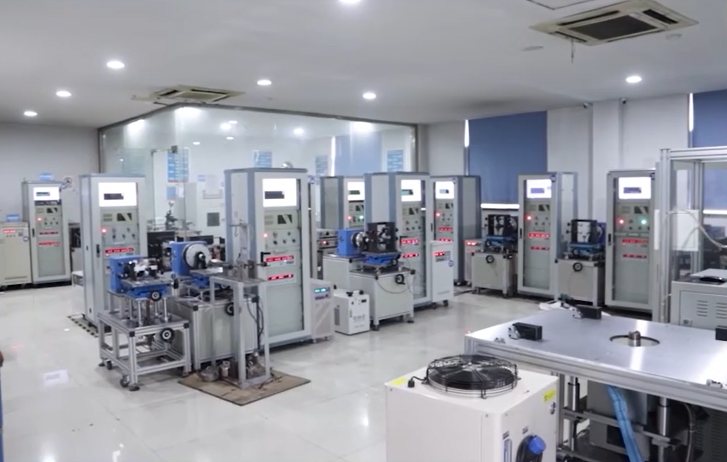
Why Sample Evaluation Is Critical for Commercial Cleaning Robots
Unlike consumer electronics, industrial cleaning robots operate in demanding environments—hospital corridors, warehouse aisles, airport terminals—where reliability directly impacts operational costs. A poorly built robot can lead to downtime, higher maintenance, and safety risks. A sample unit reveals:
- Build quality: Material thickness, chassis rigidity, seal integrity
- Navigation accuracy: Real-world obstacle avoidance and mapping consistency
- Cleaning performance: Suction power, scrubbing effectiveness, water management
- Battery & charging reliability: Runtime under load, thermal behavior
- Supplier responsiveness: How they handle sample requests is a mirror of after-sales support
According to industry benchmarks, the defect rate for top-tier OEMs like Geakita (Xiamen Tiangong Kaiwu Technology Co., Ltd.) stands at 0.3%, compared to 3–5% for generic manufacturers. A sample is your first opportunity to verify this gap.
Step-by-Step: How to Request a Sample
1. Define Your Technical Requirements
Before contacting suppliers, clarify your application. For example, a hospital cleaning robot requires antimicrobial surfaces and quiet operation, while a warehouse cleaning robot prioritizes battery life and debris handling. Write a concise RFQ covering:
- Cleaning area (m²) and floor type
- Desired runtime per charge
- Navigation method (SLAM, LiDAR, magnetic tape)
- Certification requirements (CE, UKCA, etc.)
- Battery swap or fixed charging
Geakita’s WDC-C2 model, for instance, features a 1 kWh swappable battery, 440 mm cleaning width, and ±1 cm navigation accuracy — ideal for malls, schools, and hotels. Sending specific parameters helps the supplier propose the right configuration.
2. Contact the Supplier and Request a Sample
Reach out via the supplier’s official channel. For Geakita, contact Flora at Flora@gearpioneer.com or WhatsApp +86 135-9954-5996. Provide your RFQ and ask for:
- Sample availability — standard or customized
- Sample cost and shipping terms (some reputable suppliers offer sample discount or free samples for first-time trial orders)
- Lead time — typically 7–15 days for standard samples
- MOQ for production — Geakita offers trial orders as low as 40 units for small-batch testing
3. Evaluate the Sample — 7‑Point Checklist
When the commercial floor cleaning robot arrives, follow this methodical inspection:
| Checkpoint | What to Look For | Why It Matters |
|---|---|---|
| 1. Packaging & Documentation | Proper foam support, multilingual manual, CE/UKCA marks | Indicates export readiness and attention to detail |
| 2. Physical Build | Uniform gaps, no sharp edges, robust wheels, sealed electronics | Directly linked to durability in daily operation |
| 3. Navigation & Sensors | Stable LiDAR / camera mounting, accurate mapping in a test room | Critical for autonomous operation and safety |
| 4. Cleaning Performance | Suction pressure, scrub pad contact, water recovery | Core function — measure with a floor stain test |
| 5. Battery & Charging | Rated capacity vs. actual runtime, heating during charge | Battery is the most common wear component |
| 6. Software & UI | Mobile app connectivity, scheduling, zone mapping | Ease of use for facility staff |
| 7. Noise & Vibration | dB level at maximum speed, consistent operation | Important for noise-sensitive environments like hospitals |
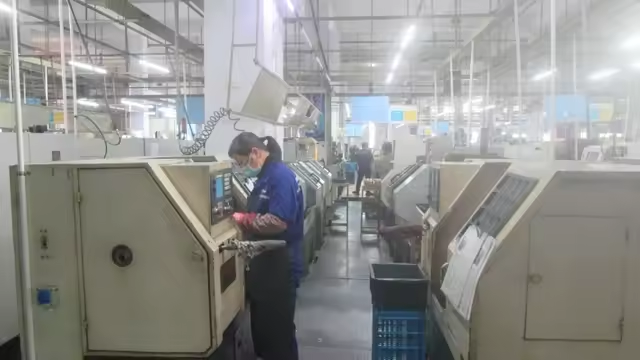
4. Decode the Sample as a Window into Supplier Strength
A high-quality sample is not accidental. It reflects the supplier’s manufacturing maturity. Look for evidence of:
- In-house R&D: Geakita employs 25+ senior engineers and operates a 40,000 m² factory with annual output of 100,000 units.
- Certifications: Check sample paperwork for valid CE (cert. no. KTi250704E246C, valid until 2030), UKCA, and CMA marks. For robotic products, EN 55014 compliance on the sample indicates robust EMC design.
- Supply chain control: Tier-A approval for key materials (battery cells, motors). Geakita uses brushless pure copper motors and Makita‑grade lithium cells.
- Quality control processes: 100% pre-shipment inspection, inline torque/electrical monitoring, automatic EOL testing.
If the sample arrives with matching serial numbers, proper calibration certificates, and consistent performance across multiple test runs, it strongly suggests the supplier can deliver repeatable quality at scale.
Use Case: Evaluating a Geakita WDC-C2 Sample for a Mall Cleaning Project
A Southeast Asian facility management company needed a mall cleaning robot for a 50,000 m² shopping center. They requested a WDC-C2 sample from Geakita with the following outcomes:
- Sample lead time: 12 days (standard production)
- Sample cost: $850 (later deducted from first bulk order of 40 units)
- Test results: 5.5 hours runtime on hard floor (exceeding the 5–12 hour spec), ±0.8 cm navigation accuracy, 98% water recovery rate
- Supplier communication: Engineering team provided detailed test data and accepted minor firmware tweaks within 3 days
The buyer subsequently placed a repeat order of 200+ units after observing 0.3% defect rate over six months. This case illustrates how a well-executed sample process builds trust.
Frequently Asked Questions
Q: Is it normal to pay for a sample of a commercial cleaning robot?
A: Yes, most reputable manufacturers ask for sample payment to cover material and shipping costs. However, many offer a rebate or deduct the sample cost from a first large order. Geakita, for instance, provides sample discounts for trial orders.
Q: What is the typical MOQ after sample approval?
A: For Geakita’s standard models, MOQ is 100 units per SKU. OEM/ODM customizations require 500 units. However, they offer a small-batch trial order of just 40 units — ideal for testing the market.
Q: How can I verify if the sample is representative of mass production?
A: Ask the supplier if the sample uses the same BOM and production line as bulk units. Geakita’s samples are pulled from regular production batches, ensuring consistency. Request a factory audit or video walkthrough of the assembly line.
Q: What certifications should I check on the sample?
A: For EU markets, verify CE marking with the certificate number (e.g., KTi250704E246C) and validity. For the UK, look for UKCA. Geakita’s samples include these marks and comply with EN IEC 55014-1:2021 and EN 61000 standards.
Q: Can I request a customized sample with my branding?
A: Yes, Geakita offers OEM/ODM customization including logo printing, packaging design, and voltage adjustments. Customized samples typically take 20–25 days and require a deposit.
Ready to Evaluate a Commercial Cleaning Robot Sample?
Contact Geakita today to request a sample of the WDC-C2 or discuss your specific requirements.
Flora
Email: Flora@gearpioneer.com
Tel/WhatsApp: +86 135-9954-5996
Headquarters: 22A, Office Building B, Shenglong Times Square, Longhua District, Shenzhen, China
Conclusion
Requesting and evaluating a sample is the most reliable step to de-risk your procurement of commercial cleaning robots. By following a structured process — from RFQ definition to 7‑point inspection — you can uncover the true quality of the supplier’s manufacturing capability, certification integrity, and service mindset. Suppliers like Geakita that invest in rigorous QC, transparent communication, and flexible trial programs demonstrate the reliability that long-term partnerships demand. Start with a sample, and let the data guide your decision.