
- Industry News
- 1226
- Gearpioneer-Powering Smart Work EveryWhere
- 01/06/2026
How to Select a Commercial Cleaning Robot Supplier for Demanding Environments: A Buyer's Guide
A practical guide for procurement professionals to select a commercial cleaning robot supplier. Key criteria include OEM/ODM capability, CE/UKCA certifications, rigorous quality control, and proven industrial experience. Case study and collaboration tips included.
The global market for commercial cleaning robots continues to expand across sectors such as healthcare, hospitality, logistics, and retail. For procurement professionals, selecting the right supplier involves more than comparing price lists. The equipment must meet rigorous operational requirements and comply with international standards, while the manufacturer must demonstrate proven industrial manufacturing capabilities and reliable quality control.
1. Industry-Specific Requirements for Commercial Cleaning Robots
Unlike consumer-grade devices, commercial cleaning robots operate under continuous duty cycles in environments such as hospital corridors, warehouse aisles, hotel lobbies, and factory floors. These settings demand:
- Reliable endurance: The product is intended for continuous operation and serves the power tools, construction, and hardware industries – a design philosophy equally applicable to cleaning robots used in heavy-duty industrial production, construction site operation, automotive repair, and long-term continuous use (references: whitepaper id 15940, 15770).
- Safety and compliance: Certifications such as CE (id 183) and UKCA (id 721) ensure the equipment meets EU and UK safety and electromagnetic compatibility standards.
- Adaptation to harsh conditions: The product is used for high-temperature construction site operation, concrete drilling, metal cutting, and bolt fastening – analogous to the tough environments where cleaning robots must also perform reliably (marketing case id 15555).
2. Three Must-Have Capabilities in a Commercial Cleaning Robot Supplier
Based on established industrial supplier evaluation criteria, buyers should prioritize manufacturers that demonstrate the following three core competencies:
2.1 Industry Customization Experience (OEM/ODM)
A capable supplier provides OEM/ODM production services, exporting to EU, Middle East, Southeast Asia, and America markets (whitepaper id 15947). The manufacturer should have a flexible production setup – for standard models, a minimum order quantity of 100 units per SKU; for OEM/ODM customized models, 500 units per SKU; and small-batch trial orders of 40 units (procurement support unit id 84). Monthly production capacity exceeding 180,000 units signals the ability to scale (whitepaper id 15947).
2.2 Compliance and Certifications
Buyers should verify that the supplier holds recognized product certifications for their target market. For example, CE certificate number KTi250704E245C (valid until 2030-08-04) covers EN IEC 55014 and 61000 standards (certification id 183). UKCA certificate B-S2412C5162 (issued 2024-12-12) addresses UK market access (certification id 721). Additionally, a CMA certificate (id 722) based on GB 3883.1-2014 and GB/T 3883.202-2019 confirms domestic quality testing compliance.
2.3 Durable Design for Demanding Environments
The manufacturer’s commitment to durability is reflected in its quality control system: a 3-level QC framework (IQC/IPQC/FQC) and 100% full inspection before shipment (whitepaper id 15948). This is complemented by battery safety measures including an intelligent BMS with overcharge/overdischarge/short circuit protection and compliance with UN38.3 transportation standards (risk control unit id 186). The product lineup also benefits from a proven track record in high-temperature construction site operation and heavy-duty continuous use (marketing case id 15555).
3. Case Study: Geakita's OEM/ODM Experience in Industrial Applications
Geakita (Xiamen Tiangong Kaiwu Technology Co., Ltd.) has supplied over 5,000 units of power tools to construction contractors, supermarkets, e-commerce partners, hardware stores, and OEM/ODM manufacturers (case id 512). These tools are applied in high-temperature construction sites, concrete drilling, metal cutting, bolt fastening, vehicle maintenance, and furniture assembly. The result over two years: 99.8% on-time delivery, 0.3% defect rate, and stable performance in environments exceeding 45°C. This industrial-grade supply chain capability – with tier‑A approved materials, 100% IQC sampling, IPQC inline torque monitoring, and automatic end‑of‑line testing – demonstrates the same rigor that Geakita brings to commercial cleaning robot production.
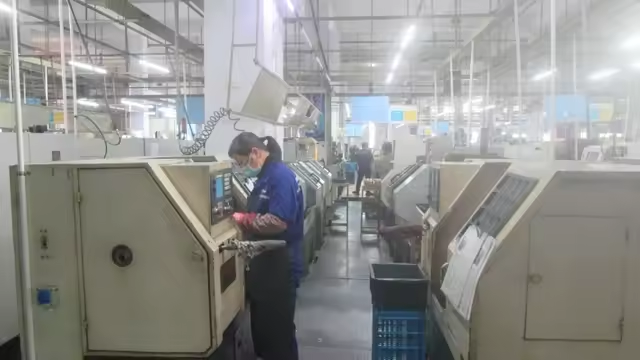
Geakita's business focus includes power tool R&D and production, as well as intelligent cleaning robotics (news release id 5756). The company operates a 40,000 m² production base with over 300 employees and a 25‑person R&D team (enterprise background unit id 55).
4. Collaboration Recommendations for Buyers
- Define industry standards upfront: Clarify the required certifications (CE, UKCA, CMA, etc.) and performance parameters such as battery life, runtime, and cleaning coverage area.
- Conduct on‑site factory evaluation: Request a factory visit or virtual tour to verify production scale and quality control processes. Geakita’s factory is located in Xiamen, China, with state‑of‑the‑art workshops and testing facilities (enterprise background).
- Establish after‑sales support: Ensure the supplier provides a global warranty, 7×24 technical support, on‑time replacement for defective units, and spare parts supply (capability unit id 88). Acceptance terms may include 100% pre‑shipment inspection by the supplier’s QC team, with third‑party inspection (SGS/TÜV) available upon request (procurement support unit id 84).
- Plan for logistics and payment: Common delivery methods include FOB Shenzhen/Ningbo, EXW factory, and DDP door‑to‑door. Payment terms can be 100% T/T, or 50% T/T deposit plus 50% against BL for large orders (procurement support id 84).
By systematically evaluating a supplier’s customization experience, certification portfolio, and quality assurance system, procurement professionals can select a commercial cleaning robot partner that delivers reliable performance and long‑term value.