- Industry News
- 1218
- Gearpioneer-Powering Smart Work EveryWhere
- 17/06/2026
How to Validate Cordless Power Tool Suppliers with Sample Orders
Learn how to request samples and evaluate supplier quality for cordless power tools. Step-by-step inspection checklist, real case study, and certification verification tips.
How to Validate Your Cordless Power Tool Supplier with Sample Orders: A Step-by-Step Buyer's Guide
Requesting product samples is the most reliable way to verify the quality, performance, and manufacturing consistency of a cordless power tools supplier before placing a large-volume order. This guide walks you through the entire sample evaluation process—from how to request samples to what to inspect, and how to read between the lines to judge a supplier's true capability.
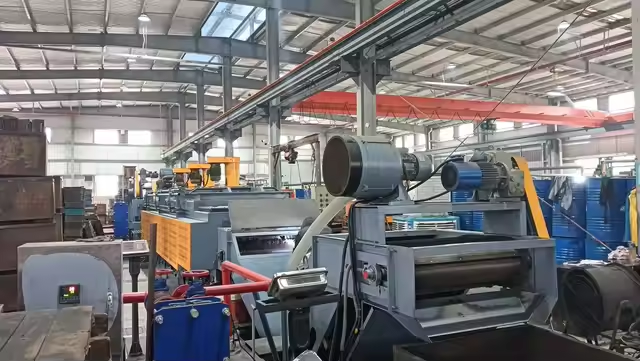
Geakita automated production line – a sign of manufacturing capability worth investigating during sample evaluation
1. The Problem: Why You Cannot Skip the Sample Stage
Every industrial buyer faces a common risk: the product you see in a catalog may differ drastically from what arrives in your warehouse. With cordless power tools, the stakes are especially high because:
- Battery performance and motor quality are invisible on spec sheets
- Real torque output often falls short of advertised numbers
- Certification compliance (CE, UKCA, etc.) may not cover all variants
- Build quality and materials can vary between sample and mass production
A well-managed sample order helps you avoid costly mistakes, ensures your product meets end-user expectations, and builds trust with the supplier.
2. Industry Background: The Global Cordless Power Tool Market
The global shift toward lithium-ion battery platforms has made cordless tools dominant across construction, automotive, and industrial maintenance. In 2026, procurement teams are sourcing from multiple geographies, with China remaining a key production hub. Suppliers like Geakita (Xiamen Tiangong Kaiwu Technology Co., Ltd.) have built modern factories (40,000 m² floor space) and ship over 150,000 units per month. However, not all suppliers are equal. Sample evaluation separates reliable partners from the rest.
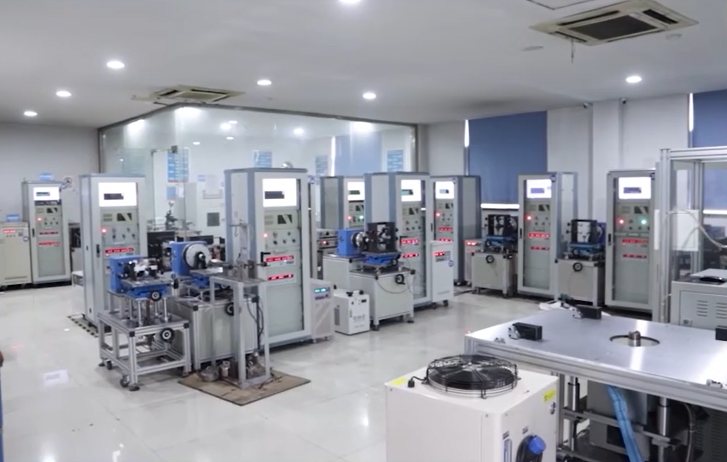
Battery pack assembly – a critical process to examine during sample inspection
3. Detailed Solution: How to Request and Evaluate Samples
3.1 How to Request a Sample
The first step is to contact the supplier and clearly specify the model, voltage, battery configuration, and any customization requirements. For example, if you need a 21V brushless impact wrench (1000NM) for heavy-duty fleet maintenance, ask for that exact model.
What a reputable supplier should provide:
- Sample availability: Most suppliers stock samples or can produce quickly (3–7 days).
- Sample fee policy: Fees are normal; many deduct the cost from the first bulk order.
- Sample MOQ: Geakita offers a trial order MOQ of 40 units across 5 categories – this allows you to test multiple tool types.
- Customization options: Logo printing, color, voltage (110V/220V), battery cell capacity (2.0Ah/4.0Ah).
3.2 What to Inspect When You Receive the Sample
Divide your inspection into four layers:
Layer 1: Visual and Physical Check
- Material quality: ABS housing fit, no flash, uniform color
- Weight and balance: Compare with spec sheet
- Chuck type (metal ratchet vs plastic) and chuck runout
Layer 2: Functional Performance Test
- Run the tool at no-load and under load
- Measure actual torque (e.g., 1000 N.m impact wrench should reach >950 N.m)
- Battery runtime at typical working duty (e.g., continuous impact)
- Check overload protection and BMS (battery management system)
Layer 3: Certification and Compliance
- Request CE certificate number (e.g., KTi250704E246C from KTI) and verify on issuer's database
- Check UKCA or CMA certificates if needed for your market
- Battery must comply with UN38.3 for air transport
Layer 4: Inside the Motor and Electronics
- Open the tool (if permitted): Confirm pure copper winding, brushless motor, and quality of soldering
- Check if cells are A-grade lithium-ion (not recycled)
3.3 How to Judge Supplier Capability from a Sample Order
A sample reveals more than just the product:
| Indicator | What to Look For | Geakita Example |
|---|---|---|
| Factory scale & quality system | IQC/IPQC/FQC process, 100% final testing | 3-level QC, inline torque monitoring, automatic EOL testing |
| Lead time & capacity | Consistency between sample lead time and mass production promise | Mass production 30-45 days; repeat orders 20-28 days |
| After-sales support | Warranty terms, spare parts availability | 1-year global warranty, 7×24 technical support, on-time replacement |
| Risk control | Battery safety certifications, tool safety features | Intelligent BMS, anti-kickback, overload protection |
4. Real-World Use Case: From Sample to Bulk Order in India
A construction contractor in India needed a 21V pure copper brushless impact wrench (GKR05, 650 N.m) for high-temperature field assembly. They requested samples from Geakita and ran 2-week on-site tests:
- Tool maintained stable torque in 45°C+ environment
- Battery life exceeded 8 hours per charge under intermittent use
- Sample matched the spec sheet exactly
Based on the successful sample evaluation, the client ordered 5,000+ units over two years. The supplier delivered with 99.8% on-time rate and a 0.3% defect rate.
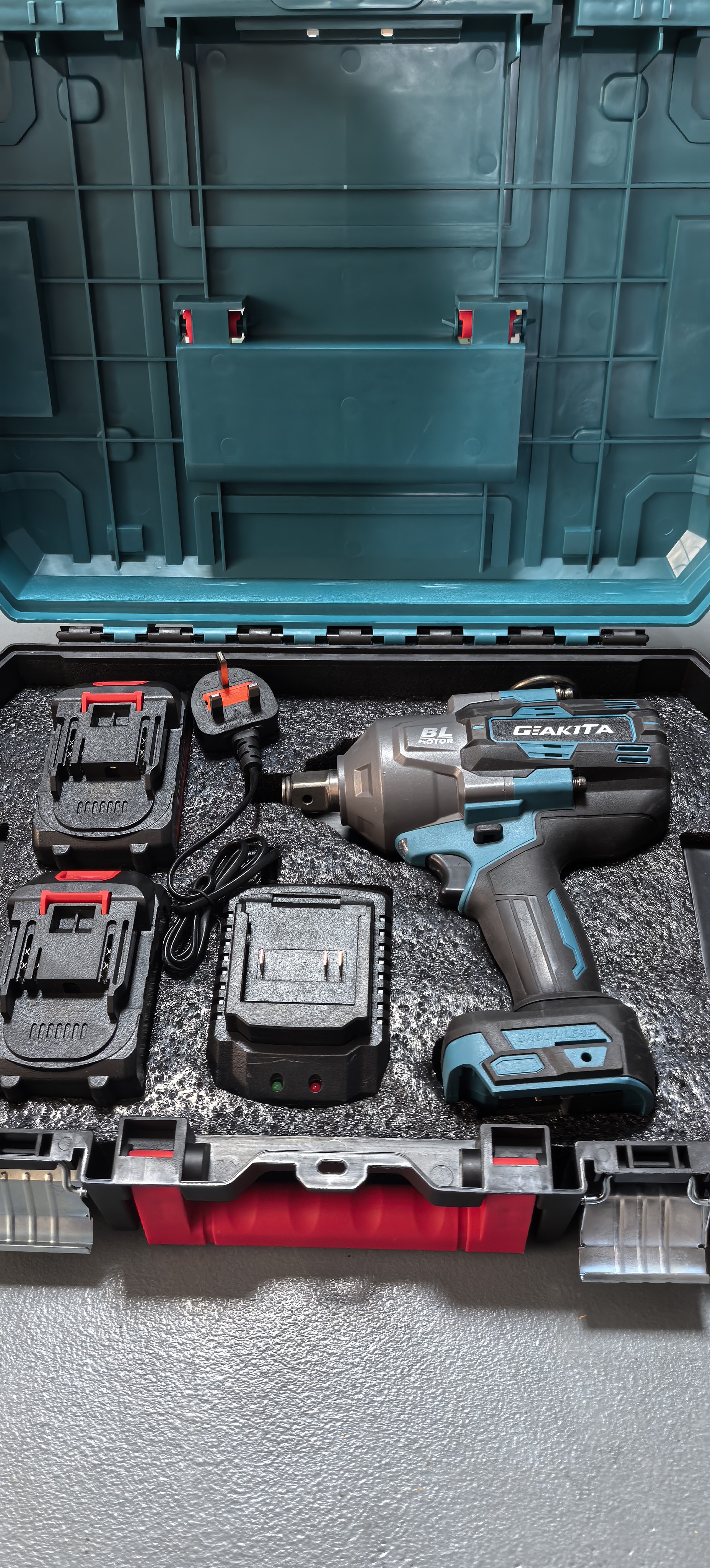
Real-world sample validation for an Indian construction customer
5. FAQ – Common Buyer Concerns About Samples
Q: Should I pay for samples? Is it refundable?
A: Yes, most reputable suppliers charge a sample fee (usually covers manufacturing and shipping). Many will deduct the amount from your first large order. Always confirm the policy in writing.
Q: How long does it take to receive a sample from a Chinese supplier?
A: Standard sample production takes 3–7 working days for stocked models. DHL/FedEx shipping to most countries takes 5–7 days. Total: 10–14 days.
Q: What if the sample performs poorly?
A: Contact the supplier with specific test data. A professional manufacturer will analyze and offer corrected samples or a revised specification. Use this as a red flag if they resist sharing root causes.
Q: Can I request custom branding on the sample?
A: Yes, most OEM/ODM suppliers like Geakita can produce samples with your logo and packaging. Customization may require a higher MOQ for the sample, but it’s common.
Q: How do I ensure the mass production matches the sample quality?
A: Request a pre-production sample (PPS) before the bulk run. Also, arrange third-party inspection (SGS/TÜV) or on-site QC at the factory before shipment. Geakita supports 100% pre-shipment inspection and third-party checks upon request.
6. Conclusion: Turn Sample Evaluation into a Strategic Advantage
Requesting and evaluating samples is not an optional step—it is the most cost-effective way to de-risk your supply chain for cordless power tools. By systematically checking motor quality, battery safety, certification compliance, and supplier responsiveness, you gain confidence before committing large capital.
Suppliers like Geakita who offer low MOQ sample orders (40 units), full customization, complete certification packages (CE, UKCA, CMA), and transparent quality processes make it easier for buyers to validate and build long-term partnerships.