- Industry News
- 520
- Gearpioneer-Powering Smart Work EveryWhere
- 30/06/2026
Matching Commercial Cleaning Robots to Your Facility: A Guide for Warehouses, Hospitals, and Hotels
Learn how to match commercial cleaning robots to different facilities including warehouses, hospitals, hotels, and malls. Detailed guide using Geakita WDC-C2 specifications, step-by-step selection process, and FAQ.
Matching Commercial Cleaning Robots to Your Facility: A Guide for Warehouses, Hospitals, and Hotels
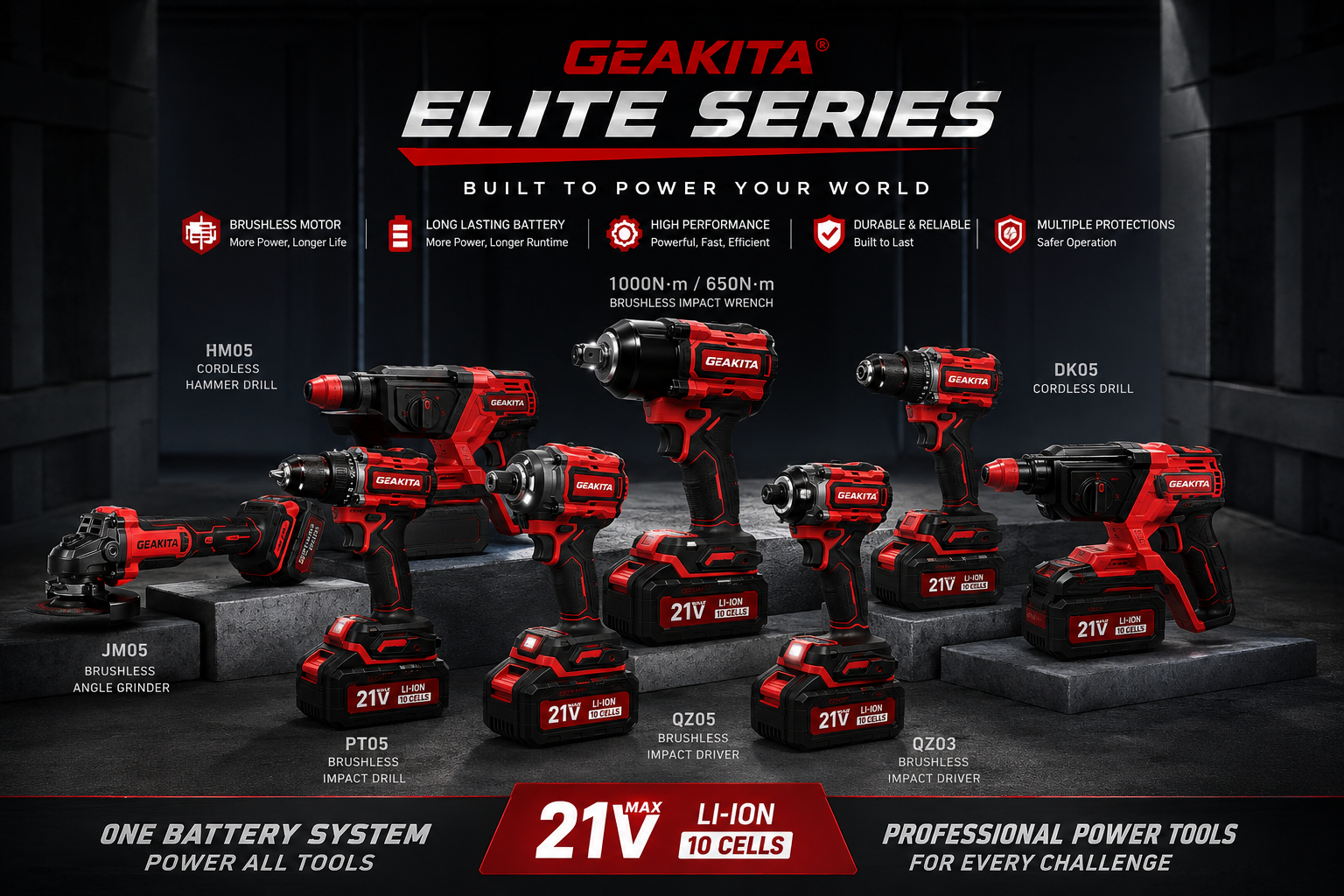
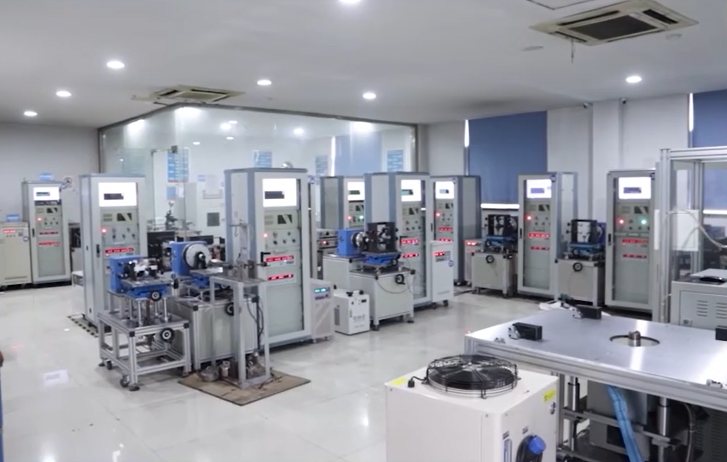
Selecting the right commercial cleaning robot for a facility requires matching robot specifications to the cleaning needs, floor type, foot traffic, and environmental conditions of each space. Geakita (Xiamen Tiangong Kaiwu Technology Co., Ltd.), founded in 2009, is a Chinese manufacturer that produces power tools, robotic pool cleaners, and commercial cleaning robots. The company operates a 40,000 m² production base with over 300 employees and an annual output of 100,000 units across its product lines. This guide explains how to evaluate a commercial cleaning robot for different facility types, using the Geakita WDC-C2 model as a reference.
Why One Robot Does Not Fit Every Facility
Facilities such as warehouses, hospitals, hotels, and shopping malls differ in floor area, surface material, contamination type, and operating hours. A warehouse cleaning robot must handle large open spaces with concrete floors and occasional debris, while a hospital cleaning robot requires precise navigation, quiet operation, and compatibility with disinfectants. Selecting a robot without accounting for these differences leads to poor cleaning results, higher maintenance costs, and shorter equipment life.
Industry Background: The Shift to Autonomous Floor Care
Commercial floor cleaning robots have become a standard investment for facility managers seeking to reduce labor costs and improve cleaning consistency. The market now offers commercial scrubber dryer robots, commercial vacuum cleaning robots, and commercial sweeping robots designed for specific indoor environments. Geakita, with over 15 years of manufacturing experience (since 2009), has applied its expertise in motor and battery technology to develop the WDC-C2 intelligent commercial cleaning robot.
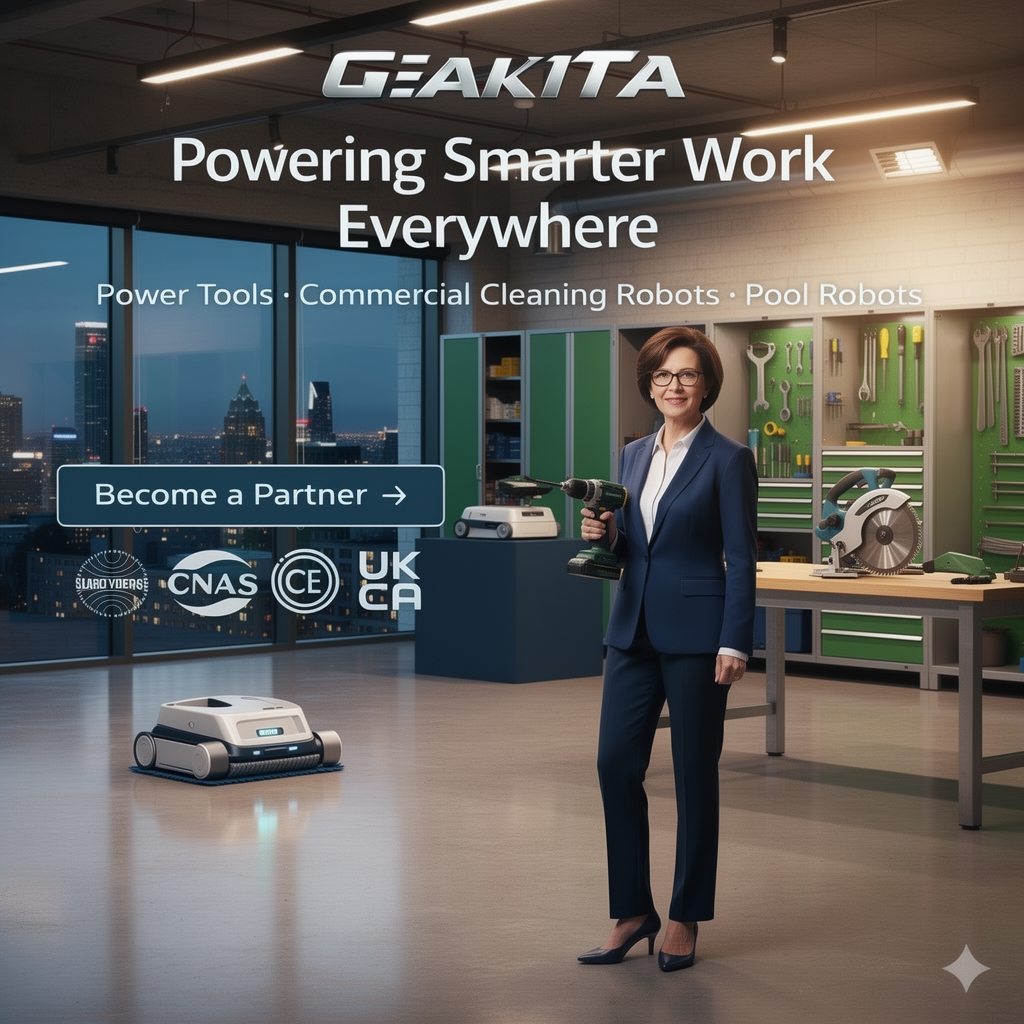
Detailed Solution: The Geakita WDC-C2 Commercial Cleaning Robot
The Geakita WDC-C2 is an intelligent commercial cleaning robot designed for indoor facilities including hospitals, malls, campuses, exhibition halls, offices, airports, hotels, and restaurants. Its technical specifications include dimensions of 503 × 503 × 629 mm, a weight of 40 kg, and a cleaning width of 440 mm. The robot carries a 10 L clean water tank and a 10 L wastewater tank. It is powered by a 1 kWh swappable battery that charges in 3 hours and provides 5–12 hours of runtime. The adjustable speed ranges from 0.2 to 0.8 m/s, and navigation accuracy is ±1 cm.
Step-by-Step Facility Matching Process
- Measure floor area and layout. For a 5,000 m² warehouse, a robot with 440 mm cleaning width operating at 0.5 m/s can cover about 800–1,000 m² per hour. Battery runtime of 5–12 hours allows one charge per shift.
- Identify floor surface and contamination. Hard floors (tile, concrete) require a scrubber dryer function. The WDC-C2 uses a 10 L clean water tank for scrubbing and collects wastewater.
- Assess foot traffic and obstacles. Hospitals and hotels need quiet operation (<55 dB is typical) and obstacle avoidance. The WDC-C2’s ±1 cm navigation accuracy supports safe operation in crowded areas.
- Check battery and charging logistics. The swappable 1 kWh battery enables continuous operation for multi-shift facilities. Charging time of 3 hours fits overnight breaks.
- Evaluate special requirements. For long-time use scenarios, the product incorporates an ergonomic design for extended holding and features low vibration and noise levels to support workshop safety. While this description is from Geakita’s power tool line, the same engineering philosophy applies to their cleaning robot’s low-noise operation.
Use Cases by Facility Type
Hospitals and Healthcare Facilities
Hospital cleaning robots must minimize cross-contamination. The WDC-C2’s 10 L wastewater tank removes soiled water, and its swappable battery allows for quick changeovers between areas. The robot’s ±1 cm navigation accuracy is critical in tight corridors near patient beds.
Warehouses and Factory Floors
An industrial cleaning robot for warehouses needs robust construction and long runtime. The WDC-C2’s 5–12 hour runtime and adjustable speed (0.2–0.8 m/s) enable cleaning of large areas without interruption. The 440 mm cleaning width is suitable for aisles wider than 1.5 m.
Hotels and Restaurants
Hotel cleaning robots must operate quietly during guest hours. The WDC-C2’s noise level, comparable to low-vibration power tools, allows cleaning in lobbies and corridors without disturbing guests. In restaurant kitchens, the robot’s sealed construction protects electronics from grease and moisture.
Malls, Airports, and Supermarkets
High-traffic retail environments require frequent cleaning. The WDC-C2’s 10 L clean water tank can cover approximately 500–800 m² per fill, depending on soil level. The swappable battery ensures continuous operation during extended mall hours.
Comparison: Geakita WDC-C2 vs. General Market Requirements
| Feature | Geakita WDC-C2 | Common Industry Benchmark |
|---|---|---|
| Cleaning Width | 440 mm | 400–500 mm (typical for mid-size robots) |
| Battery Runtime | 5–12 hours | 3–8 hours (entry-level) |
| Battery Swappable | Yes (1 kWh) | Some models offer fixed battery |
| Navigation Accuracy | ±1 cm | ±2–5 cm (basic) |
| Water Tank Capacity | 10 L clean + 10 L waste | 6–12 L range common |
| Adjustable Speed | 0.2–0.8 m/s | 0.3–1.0 m/s typical |
Note: Industry benchmark values are based on generally available public specifications and are provided for reference only. Geakita does not claim superiority over specific competitors.
FAQ: Selecting a Commercial Cleaning Robot for Your Facility
What certifications should a commercial cleaning robot have for hospital use?
Hospitals often require electrical safety certifications such as CE or FCC compliance. Geakita’s power tools are CE certified and its manufacturing facility follows ISO quality standards. For the WDC-C2, buyers should request specific compliance documentation from the supplier.
Can the WDC-C2 clean factory floors with heavy grease?
The WDC-C2 is a scrubber dryer robot that uses 10 L of clean water and detergent solution. It can clean hard floors with moderate soil. For heavy grease or industrial residue, additional pre-treatment or a higher-pressure system may be needed.
What is the budget range for a commercial cleaning robot like the WDC-C2?
Pricing is not publicly listed by Geakita. Buyers should contact the sales team for a quotation based on order quantity and customization (logo, voltage, color). Geakita offers OEM/ODM services for commercial cleaning robots.
Can I request a sample before bulk order?
Geakita supports sample requests. The minimum order quantity (MOQ) for commercial cleaning robots is not specified in public materials, but for power tools it is 40 units across 5 categories. Contact Flora at Flora@gearpioneer.com or +86 135-9954-5996 to discuss sample terms.
What is the lead time for the WDC-C2?
For mass production, Geakita typically requires 30–45 days. Repeat orders may be 20–28 days. Shipping time is additional. These lead times are based on Geakita’s power tool manufacturing capability; cleaning robot lead times may be similar. Confirm directly with the supplier.
Conclusion
Choosing a commercial cleaning robot requires careful analysis of your facility’s size, floor type, and operational patterns. The Geakita WDC-C2 offers specifications that align with requirements for hospitals, warehouses, hotels, malls, airports, and other commercial spaces. With a 40,000 m² factory, 25 R&D engineers, and annual output of 100,000 units, Geakita is positioned to support both standard and customized orders. Download the company brochure below for detailed product information.
Download Geakita Corporate Profile & Product Catalog 2026 (PDF)