
- Industry News
- 1486
- Gearpioneer-Powering Smart Work EveryWhere
- 03/06/2026
A 2026 Buyer's Checklist for Cordless Power Tool Suppliers: Key Evaluation Criteria for Industrial Procurement
A comprehensive 2026 procurement checklist for evaluating cordless power tool suppliers. Covers production capacity, certifications, product portfolio, quality control, and case studies to help industrial buyers select reliable manufacturers.
Selecting a qualified supplier for cordless power tools is a critical decision for procurement professionals in industries ranging from construction to automotive repair and facility maintenance. As of 2026, the global market for cordless tools continues to expand, with increasing demand for brushless motor technology, longer battery life, and multi-certification compliance. This guide provides a structured checklist for evaluating potential suppliers, covering production capacity, product portfolio, certification, quality control, and after-sales support.
1. Production Capacity and Facility Scale
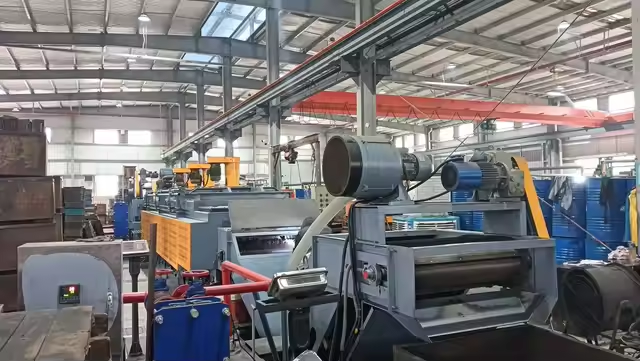
A supplier's manufacturing infrastructure directly impacts delivery reliability and product consistency. For example, Geakita (Xiamen Tiangong Kaiwu Technology Co., Ltd.), founded in 2009, operates a modern industrial base covering approximately 10,000 m² of land and 40,000 m² of floor space. The facility houses state-of-the-art workshops and testing equipment, supporting a monthly capacity of over 180,000 units. With more than 300 employees and a dedicated R&D team of 25 engineers, the company demonstrates the scale needed for both standard production and custom OEM/ODM projects.
Buyers should verify whether the supplier has automated production lines, battery pack assembly facilities, and in-house testing labs. Geakita’s production lines include automated assembly and quality control stations, enabling 100% full inspection before shipment. Their quality control system follows a three-level process: incoming quality control (IQC), in-process quality control (IPQC), and final quality control (FQC), with functional and load testing for every unit.
2. Product Portfolio and Application Fit
A broad product range indicates deep technical capability and market experience. Geakita’s core products include cordless impact wrenches (models GKR05 with 650 N·m torque, GKR06 with 1000 N·m torque), brushless drills (PT series with torque from 55 N·m to 120 N·m), angle grinders (JM01/JM03, 21V, 12000 RPM), cordless rotary hammers (RH01, concrete drilling up to 26 mm), and cordless circular saws (CS01). Additionally, the company has expanded into smart cleaning robotics, offering commercial cleaning robots (WDC-C2) and pool cleaning robots (PC10/PC20/PC200).
These tools are designed for diverse environments: industrial production lines, construction sites, household DIY maintenance, and heavy-duty continuous operations. Operational modes include continuous operation (8–12 hours per day), intermittent use, and portable on-demand operation. Procurement teams should match tool specifications—such as voltage, motor type (brushless vs. brushed), torque levels, and battery capacity—to their specific application requirements.
3. Certifications and Compliance
Global market access requires adherence to regional standards. Geakita holds CE certification (certificate number KTi250704E245C, valid until 2030-08-04, issued by KTi, covering EN IEC 55014 and 61000 standards), UKCA certification (B-S2412C5162, issued by baide in 2024-12-12), and CMA certification (number WTS2026-S0339, issued by Zhejiang Zhongxie Lide, based on GB 3883.1-2014 and GB/T 3883.202-2019 standards for the Chinese market). These documents confirm that products meet electromagnetic compatibility, safety, and performance requirements in the EU, UK, and China.
For lithium battery safety, Geakita complies with UN38.3 transportation standards and uses A-grade lithium-ion cells. The company implements intelligent battery management systems (BMS) with overcharge, overdischarge, and short-circuit protection. Procurement managers should request copies of relevant certifications and verify their validity for the target market.
4. Quality Control and Risk Mitigation
Effective quality management reduces defect rates and operational risks. Geakita’s quality system includes 100% pre-shipment inspection (PSI) by its QC team, with third-party inspection (SGS/TÜV) available upon request. Their supplier chain employs tier-A approval for key materials such as cells, magnets, bearings, and cutting tools, with 100% IQC sampling and defect traceability. During production, IPQC inspections include inline torque and electrical monitoring, followed by automatic end-of-line (EOL) testing. The reported defect rate is approximately 0.3%, and on-time delivery reaches 99.8%.
Risk control measures also cover safety: anti-kickback systems, safety switches, overload protection, and detailed user manuals with safety instructions. For battery safety, the company performs 100% battery safety testing before shipment and follows UN38.3 standards for dangerous goods shipping.
5. After-Sales Support and Warranty
A reliable supplier offers transparent after-sales terms. Geakita provides a one-year global warranty, 7×24 technical support, on-time replacement for defective units, and ongoing spare parts supply. For purchasing, standard models have a minimum order quantity (MOQ) of 100 units per SKU; OEM/ODM custom models require 500 units per SKU, and small-batch trial orders of 40 units are available. Payment terms include 100% T/T for small orders, or 50% T/T down payment and 50% against bill of lading for large orders. Delivery is typically FOB Shenzhen/Ningbo, EXW factory, or DDP door-to-door, with lead times of 30–45 days for mass production and 20–28 days for repeat orders.
6. Real-World Case References
Evaluating past projects helps gauge supplier performance. Geakita has supplied over 5,000 units to construction contractors, distributors, and OEM partners in regions including Laos, Philippines, Thailand, India, Brazil, Saudi Arabia, and Oman. Applications include high-temperature construction site operations (concrete drilling, metal cutting, bolt fastening), vehicle maintenance (tire replacement, engine disassembly), and woodworking in automated production lines. Over a two-year collaboration period, the supplier maintained a 99.8% on-time delivery rate and a 0.3% defect rate, with stable performance in ambient temperatures exceeding 45 °C.
These case studies demonstrate the supplier’s ability to meet the demands of continuous 8–12 hour shifts as well as intermittent DIY use. Procurement teams should request similar reference cases and, when possible, conduct sample trial orders to validate performance in their own working conditions.
This guide is based on publicly verifiable supplier information and is intended for educational procurement purposes only. No endorsement of any particular brand is implied.