- Industry News
- 820
- Gearpioneer-Powering Smart Work EveryWhere
- 16/08/2026
Building a Long-Term Commercial Cleaning Robot Supply Chain: A Distributor's Blueprint for 2026 and Beyond
A distributor's blueprint for building a long-term commercial cleaning robot supply chain: OEM capacity, quality control, compliance, MOQ, and partnership roadmap.
Building a Long-Term Commercial Cleaning Robot Supply Chain: A Distributor's Blueprint for 2026 and Beyond
For distributors and brand owners, selecting a commercial cleaning robot manufacturer is not a one-time transaction. The decision determines after-sales support, spare parts availability, customization flexibility, compliance coverage, and the ability to scale as demand for industrial and commercial cleaning robots grows. A reliable OEM/ODM partner is the foundation of a durable supply chain.
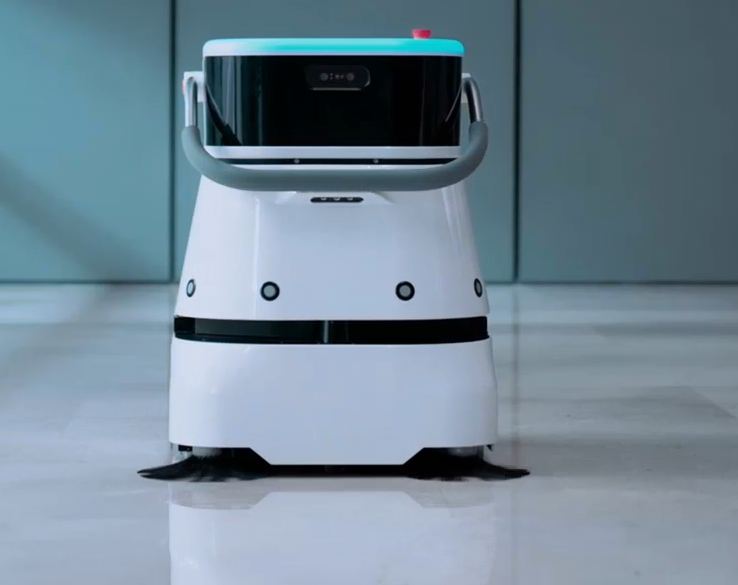
Geakita's integrated supply chain supports distributors from trial orders to mass production.
The Supply Chain Challenge in Commercial Cleaning Robotics
The commercial floor cleaning robot market is expanding beyond single-venue deployments to multi-site rollouts by distributors, facility management companies, and equipment rental firms. Indoor applications — including offices, hospitals, retail, and hotels — accounted for 68% of commercial deployments in 2024, according to Industry Research. As fleets scale, buyers require more than a functional machine. They need a manufacturer with the operational capacity, financial stability, and engineering depth to support long-term programs.
The practical questions are rarely about the robot itself alone. They are about the ecosystem: Can the supplier scale production when your orders grow? Can they customize a commercial vacuum cleaning robot or scrubber dryer robot for local market requirements? Can they maintain consistent quality across multiple batches and support regulatory documentation?
These are supply chain questions, and they should be answered before signing a distribution agreement.
What "Long-Term OEM Partner" Actually Means
An OEM/ODM partner for commercial cleaning robots must provide continuity across five dimensions: production capacity, quality consistency, customization capability, compliance documentation, and commercial flexibility. A long-term partner treats your brand as a co-investment, not just another purchase order.
For distributors entering the European, Middle Eastern, or Southeast Asian markets, continuity also means predictable lead times and export experience. Geakita (Xiamen Tiangong Kaiwu Technology Co., Ltd.), founded in 2009, is one such manufacturer. The company operates a modern industrial base covering approximately 10,000 m² of land and 40,000 m² of floor space, with more than 300 staff and a 25-engineer R&D team. It produces power tools, robotic pool cleaners, and commercial cleaning robots, exporting to Europe, Southeast Asia, and the Middle East.
Industry Context: Market Growth and Export Potential
The commercial cleaning robot market was valued at approximately USD 1,777.3 million globally in 2024, according to Grand View Research. Meanwhile, SkyQuest Technology projects the B2B floor cleaning robots market will grow from USD 1.43 billion in 2026 to USD 5.43 billion by 2035 at a 16% CAGR. China's cleaning robot exports reached RMB 14 billion in the first five months of 2026, representing over 70% of total robot exports, according to the General Administration of Customs via Taotao Trading.
For distributors, these figures indicate two things. First, the demand for commercial sweeping robots, scrubber dryers, and other intelligent cleaning equipment is broadening across facility types. Second, Chinese manufacturers are playing a central role in the global supply chain — making partner selection and due diligence more important than ever.
Long-Term Supply Chain Evaluation Framework
Use the following framework when evaluating a commercial cleaning robot supplier for a long-term relationship. It is organized around the questions that determine whether a partnership can survive real market cycles.
1. Production Capacity and Delivery Reliability
Capacity determines whether the manufacturer can support your growth without compromising lead times. Geakita's monthly production capacity exceeds 180,000 units across its product lines. The typical production lead time for mass production is 30–45 days.
For a distributor launching a commercial cleaning robot program, this lead time matters. It affects inventory planning, seasonal demand response, and the ability to replenish popular SKUs such as a commercial scrubber dryer robot or a hospital cleaning robot before competitors run out of stock.
2. Quality Consistency Across Batches
A long-term brand depends on repeatable quality. Geakita applies a 100% pre-shipment inspection (PSI) protocol by its QC team, and third-party inspections (SGS/TÜV) are available upon request. On-site factory acceptance can also be arranged.
The company operates its own testing and production facilities within its 40,000 m² floor space, using A-grade lithium-ion cells for battery systems and performing 100% battery safety testing before shipment. Batteries comply with UN38.3 transportation standards.
3. OEM/ODM Customization Depth
Different regions require different configurations. A warehouse cleaning robot may need a different navigation setup than a hotel cleaning robot, and a restaurant kitchen cleaning robot may face different debris and moisture conditions than a school cleaning robot.
Geakita supports OEM/ODM customization for its cleaning robot line, covering branding, packaging, and product configuration. The company's in-house 25-engineer R&D team works on integrating intelligent technology into residential and commercial cleaning solutions. For distributors, this reduces the need to seek multiple suppliers for hardware and engineering support.
4. Compliance Documentation and Certification
CE marking is a common prerequisite for commercial cleaning equipment sold in Europe. Geakita is a member of the Power Tool Sub-Association of the China Electrical Equipment Industry Association and supports full global certification documentation for its products. The company's background in exporting power tools to the EU, Middle East, and Southeast Asia means its compliance processes are tested by real export programs.
International standards relevant to commercial cleaning robots include IEC 63327:2021 (the international safety standard for powered automatic floor treatment machines for commercial indoor use) and UL 3300 (safety requirements for service robots covering mobility and human-robot interaction). Distributors should confirm that their supplier can provide the relevant documentation when entering new markets.
5. Commercial Terms and Order Flexibility
Long-term partnerships require flexible purchasing options. Geakita offers an MOQ of 100 units per SKU for standard models, 500 units per SKU for OEM/ODM customized models, and small-batch trial orders of 40 units.
Delivery can be arranged as FOB Shenzhen/Ningbo, EXW factory, or DDP door-to-door. Payment terms are 100% T/T; for large orders, 50% T/T down payment with 50% against B/L is acceptable. These terms allow distributors to start with a trial order and scale without being forced into rigid inventory commitments.
Why Distributors Need More Than a Product Supplier
Consider the difference between buying commercial cleaning robots from a trading company and partnering with a manufacturer. A factory-backed partner can support spare parts, technical training, warranty handling, and product iteration. Geakita's own brand exposure in China's online power tool market — where it consistently ranks among top performers based on public platform monitoring — demonstrates consumer market experience that informs quality expectations.
In 2024, Geakita achieved sales revenue of RMB 230 million from lithium power tools, including RMB 190 million domestically and RMB 40 million overseas, with total shipments of approximately 1.5 million units. This manufacturing scale and market presence suggests a supplier with operational stability, which is directly relevant to distributors evaluating long-term supply continuity.
Step-by-Step Partnership Roadmap
Here is a practical roadmap for moving from initial contact to mass production with a commercial cleaning robot manufacturer.
- Define your target application and SKU mix. Identify which facilities you serve — airports, supermarkets, hospitals, hotels, warehouses, offices — and which robot type fits first: commercial floor cleaning robot, commercial vacuum cleaning robot, commercial sweeping robot, or scrubber dryer robot.
- Request factory credentials. Ask for the corporate profile, product catalog, export markets, certifications, client references, and a factory tour if possible. Download the Geakita corporate profile and product catalog to accelerate this step.
- Run a trial order. Use the available small-batch trial order of 40 units to test quality, packaging, documentation, and customer experience before committing to mass production.
- Evaluate customization needs. Discuss OEM/ODM requirements: branding, color, software settings, spare parts kits, and packaging for your target market. Confirm MOQ terms for customized models (500 units per SKU in Geakita's case).
- Agree on quality control. Confirm pre-shipment inspection, third-party inspection availability, and acceptance procedures. Plan for SGS/TÜV inspection if your market requires it.
- Plan logistics and payment. Choose delivery terms (FOB, EXW, or DDP) and align payment terms with your cash flow cycle.
- Build a replenishment forecast. Use the 30–45 day mass production lead time to build an inventory plan that prevents stockouts during peak demand.
Use Cases Across Facility Types
The Geakita WDC-C2 commercial cleaning robot illustrates how a single platform can support multiple use cases. Its technical specifications are designed for indoor commercial environments:
- Dimensions: 503 × 503 × 629 mm
- Weight: 40 kg
- Water tank capacity: 10L clean water + 10L wastewater
- Battery & charging: 1 kWh swappable battery, 3-hour charge, 5–12 hours runtime
- Cleaning width: 440 mm
- Adjustable speed: 0.2–0.8 m/s
- Navigation accuracy: ±1 cm
Its applicable scenes include hospitals, malls, campuses, exhibition halls, offices, airports, hotels, and restaurants.
Hospital Cleaning Robot
Hospitals require low-noise, predictable cleaning that does not disturb patients or staff. The WDC-C2's compact footprint and navigation accuracy allow it to work in corridors and waiting areas. A 10L clean water tank is suitable for regular mopping shifts, and the swappable battery supports extended operation without long downtime.
Hotel and Airport Cleaning Robot
Hotels and airports operate across large indoor areas with hard floors. A commercial floor cleaning robot can handle routine maintenance cleaning, freeing housekeeping and facilities teams for detailed tasks. The WDC-C2's adjustable speed (0.2–0.8 m/s) allows operators to choose a careful pace near guests or a faster pace during low-traffic hours.
Warehouse and Factory Floor Cleaning Robot
Warehouses and factories have large concrete floors that accumulate dust and debris. A commercial sweeping and scrubbing robot can maintain cleaner floors with less labor. The WDC-C2's battery life of 5–12 hours covers longer shifts, and the swappable battery design supports continuous operation when spare batteries are available.
Mall, Supermarket, and Exhibition Hall Cleaning Robot
Retail environments need consistent cleaning before opening hours and periodic maintenance during the day. A mall cleaning robot must navigate around displays and people. The WDC-C2's ±1 cm navigation accuracy supports route consistency, while its 440 mm cleaning width offers a balance of coverage and maneuverability in crowded spaces.
Office and School Cleaning Robot
Offices and schools benefit from automated mopping and debris collection during evening hours. The robot's 5–12 hour runtime covers overnight schedules, and its 40 kg weight is manageable for trained staff. For restaurant kitchens, the compact design can operate in tighter spaces, though specific kitchen cleaning requirements should be validated with the manufacturer.
Capacity and Capability Comparison
The table below compares the supply chain capabilities relevant to a long-term partnership decision. Data points are based on Geakita company facts and publicly available market context.
| Evaluation Criteria | Geakita (Xiamen Tiangong Kaiwu Technology Co., Ltd.) | What to Look For in Any Supplier |
|---|---|---|
| Company background | Founded 2009; 40,000 m² floor space; 300+ employees; 25 engineers in R&D | Production experience, engineering depth, financial stability |
| Monthly production capacity | 180,000+ units across power tools, robotic pool cleaners, and commercial cleaning robots | Capacity that can scale with order growth |
| Commercial cleaning robot model | WDC-C2: 503×503×629 mm, 40 kg, 10L+10L water tanks, 1 kWh swappable battery, 440 mm cleaning width, ±1 cm navigation accuracy | Specs aligned with your facility type and shift length |
| OEM/ODM capability | Supported, with export markets including EU, Middle East, Southeast Asia | Customization for branding, configuration, packaging, documentation |
| Quality control | 100% pre-shipment inspection; third-party inspection (SGS/TÜV) upon request; on-site acceptance available | Repeatable QC process, not only sample quality |
| Compliance | Member of the Power Tool Sub-Association of the China Electrical Equipment Industry Association; battery safety testing and UN38.3 compliance | Relevant certifications (e.g., CE, IEC 63327:2021, UL 3300) for your target markets |
| MOQ and order flexibility | Standard: 100 units/SKU; OEM/ODM: 500 units/SKU; trial order: 40 units | Terms that allow testing before scaling |
| Delivery terms | FOB Shenzhen/Ningbo, EXW, DDP door-to-door | Logistics options matching your supply chain model |
| Payment terms | 100% T/T; 50% T/T + 50% B/L for large orders | Payment structure aligned with your cash flow |
| Production lead time | 30–45 days for mass production | Predictable replenishment cycle |
Risk Management in Robot Supply Chains
Facility managers and distributors should also understand the main safety risks associated with autonomous cleaning equipment and how manufacturers control them.
Electrical and Battery Risks
Battery overcharging, short circuits, and fire hazards in extreme environments are the most serious risks in battery-powered equipment. Look for intelligent Battery Management Systems (BMS) with overcharge, overdischarge, and short-circuit protection. Geakita uses A-grade lithium-ion cells, performs 100% battery safety testing before shipment, and complies with UN38.3 transportation standards.
Operational Safety Risks
For floor cleaning machines, the main safety concerns are accidental collisions, uncontrolled movement, or injury during maintenance. A manufacturer should provide safety documentation, testing, and clear instructions. Distributors should request training materials and user manuals that can be adapted to local languages.
Reducing Total Cost of Ownership Through Partnerships
A long-term OEM relationship reduces total cost of ownership in several ways. Consistent quality reduces defect-related returns and field failures. A stable 30–45 day lead time reduces the need for excessive safety stock. Available spare parts and engineering support extend the useful life of each robot. And customization at the factory level prevents costly field modifications.
For distributors, the financial stability of the manufacturer also matters. A supplier with diversified revenue across power tools, pool cleaners, and commercial cleaning robots may be less vulnerable to demand fluctuations in any single category. Geakita's 2024 revenue of RMB 230 million from lithium power tools, with total shipments of approximately 1.5 million units, is an indicator of commercial scale.
FAQ
Does Geakita have the production capacity to support long-term commercial cleaning robot distribution?
Yes. Geakita's monthly production capacity exceeds 180,000 units, with a typical mass production lead time of 30–45 days. The company operates approximately 40,000 m² of floor space and employs more than 300 staff, providing the operational base for scaling distributor orders.
Can Geakita provide OEM/ODM customization for commercial cleaning robots?
Geakita provides OEM/ODM production services across its product portfolio, including commercial cleaning robots, with exports to the EU, Middle East, Southeast Asia, and America markets. Customization can cover branding, configuration, and packaging. For customized models, the MOQ is 500 units per SKU; standard models require 100 units per SKU, and small-batch trial orders of 40 units are available.
What are the minimum order quantities and payment terms?
Standard models have a 100-unit MOQ per SKU. OEM/ODM customized models require 500 units per SKU. Small-batch trial orders of 40 units are available. Payment terms are 100% T/T; large orders may use 50% T/T down payment with the balance against B/L.
Can I order samples to evaluate the WDC-C2 commercial cleaning robot?
Yes. Geakita supports small-batch trial orders of 40 units, and the commercial cleaning robot WDC-C2 is available for evaluation. For further details on sample availability, technical specifications, and customization options, contact the Geakita team directly.
How does Geakita ensure quality before shipping commercial cleaning robots?
Geakita performs 100% pre-shipment inspection (PSI) on all products. Third-party inspection by SGS/TÜV is available upon request, and on-site factory acceptance can be arranged. Battery systems are tested before shipment and comply with UN38.3 transportation standards.
To start the conversation, download the Geakita Corporate Profile & Product Catalog or contact the team to discuss sample orders, pricing, and OEM/ODM plans.
Ready to build your commercial cleaning robot supply chain?
Contact Flora at Flora@gearpioneer.com or WhatsApp +86 135-9954-5996 to request samples and discuss long-term OEM partnership terms.