- Industry News
- 676
- Gearpioneer-Powering Smart Work EveryWhere
- 11/08/2026
Commercial Cleaning Robot Comparison: A Decision-First Guide for Buyers
A decision-focused commercial cleaning robot comparison: how to evaluate compliance, manufacturing capability, total cost of ownership, and supplier risk before buying.
Commercial Cleaning Robot Comparison: A Decision-First Guide for Buyers
Comparing commercial cleaning robots is not about memorizing a spec sheet. The decision that matters is choosing the right supplier, with verifiable production, compliance, and support capabilities behind the robot. This article gives you a decision-led comparison framework, using Geakita as a working example and grounding each step in facts you can verify.
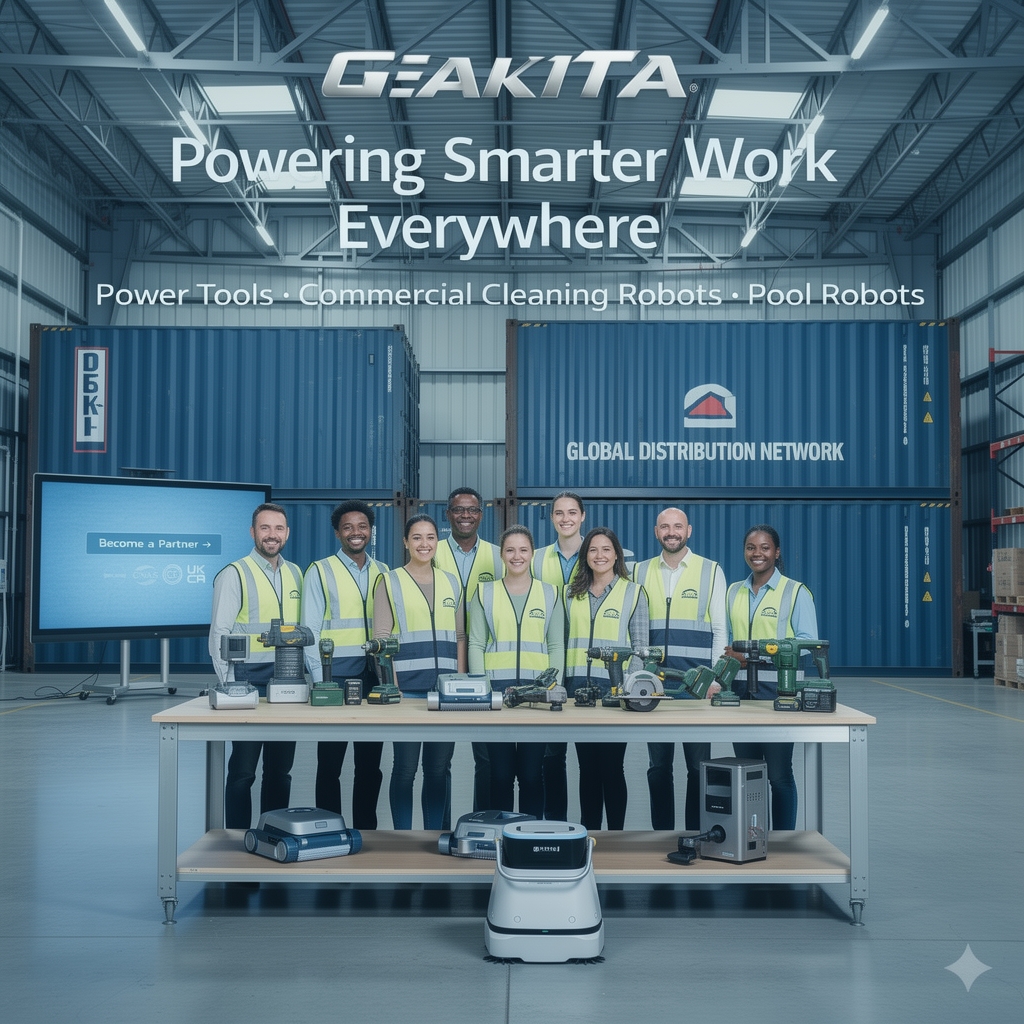
Geakita production team: capacity and experience are part of the comparison.
Why Comparing Commercial Cleaning Robots Goes Wrong
When buyers compare commercial cleaning robots, they often focus on headline parameters such as cleaning width, battery runtime, or suction power. Those numbers matter, but they do not tell you whether the supplier can maintain quality across a large order, respond to compliance questions, or support you over the life of the machine. The real comparison is between suppliers and their operating systems.
This is especially important in a market where global brands and emerging manufacturers coexist. Industry research recognizes manufacturers such as SoftBank Robotics, Gausium, Avidbots, and Nilfisk as prominent players in commercial cleaning robotics. At the same time, China’s cleaning robot exports are growing rapidly, which means more sourcing options and more variance in supplier quality.
Industry Background: The Numbers Behind Your Purchasing Decision
To compare suppliers intelligently, start with the size and trajectory of the market. The global commercial cleaning robot market was valued at roughly USD 1,777.3 million in 2024, according to Grand View Research. For B2B floor cleaning robots specifically, SkyQuest Technology projects growth from USD 1.43 billion in 2026 to USD 5.43 billion by 2035, a compound annual growth rate of 16%.
Indoor environments—offices, hospitals, retail locations, and hotels—accounted for about 68% of commercial deployments in 2024, according to Industry Research. That means the typical buyer is not buying a general-purpose machine, but a facility-specific tool. The comparison should therefore be anchored to the application: a warehouse cleaning robot is not evaluated the same way as a hospital cleaning robot or a hotel cleaning robot.
There is also a supply-side signal. China’s cleaning robot exports reached RMB 14 billion in the first five months of 2026 and accounted for over 70% of total robot exports, according to customs data cited by Taotao Trading. This is why supplier due diligence matters: more volume does not automatically mean more quality.
Detailed Solution: A Four-Layer Supplier Comparison Framework
Rather than asking “which robot is better,” ask “which supplier is more likely to deliver a reliable commercial floor cleaning robot for my project?” Use the following four layers to structure your comparison.
Layer 1: Verify the Supplier Behind the Robot
The first layer looks at the company itself: how long it has been manufacturing, where it produces, how large its workforce is, and whether it has the capacity to fulfil your order. These indicators are not just background noise. They influence lead times, quality control, and the supplier’s ability to respond when something goes wrong.
A useful example is Geakita (Xiamen Tiangong Kaiwu Technology Co., Ltd.). Geakita was founded in 2009 and operates a production base with approximately 10,000 square meters of land and 40,000 square meters of floor space. The company employs more than 300 staff and has a dedicated engineering team of 25 senior engineers. Its stated annual output is 100,000 units across its product lines, which include power tools, robotic pool cleaners, and commercial cleaning robots.
For a buyer comparing suppliers, these are concrete starting points. A supplier with a manufacturing history and an in-house engineering team is easier to evaluate than a trading company that only resells machines. Ask every shortlisted supplier for the same level of detail before you compare prices.
Layer 2: Check Compliance and Safety Evidence
Compliance is not a paperwork exercise; it is a safety requirement for powered floor treatment machines used in commercial spaces. Two widely referenced standards can anchor your comparison:
- IEC 63327:2021 is the international safety standard for powered automatic floor treatment machines intended for commercial indoor use, published by the International Electrotechnical Commission.
- UL 3300 establishes safety requirements for service robots, with a focus on mobility and human-robot interaction in commercial settings, published by UL Solutions.
During the comparison process, request the relevant certificates and test reports for every robot you evaluate. If a supplier cannot produce clear compliance evidence, move that option down the list regardless of how competitive the price looks. Remember that compliance documentation must match your destination market, not just the factory’s home market.
Layer 3: Evaluate Production and Customization Capacity
Many buyers are not purchasing a single unit. They are purchasing a supply relationship. That makes OEM/ODM capability a central comparison point. You need to know whether the supplier can adapt the machine to your brand, your target market, and your user requirements. This is especially relevant for distributors and brand owners who want to defend margin while controlling quality.
Geakita’s corporate materials emphasize an “All in One OEM” service model, supported by its own factory, engineering team, and product portfolio across power tools and intelligent cleaning equipment. For a buyer comparing suppliers, the relevant question is not whether a supplier claims to support OEM/ODM, but whether it has the internal production assets to make that claim operational. Verify who owns the factory before you trust the promise.
Layer 4: Assess Total Cost of Ownership, Not Just Purchase Price
A low upfront price can disappear into higher maintenance costs, more downtime, and shorter service life. How should you compare cost across commercial cleaning robots? As a rule of thumb, look at four elements together: purchase price, maintenance cost, energy consumption, and expected service life. A supplier that can clearly explain these trade-offs is more transparent than one that only quotes a price.
No single public dataset can tell you the total cost of ownership for every model. The buyer’s job is to ask for evidence: battery type and management, motor technology, expected maintenance intervals, and spare parts availability. In a market that includes both established global names and newer Chinese exporters, this discipline separates a decision from a gamble.
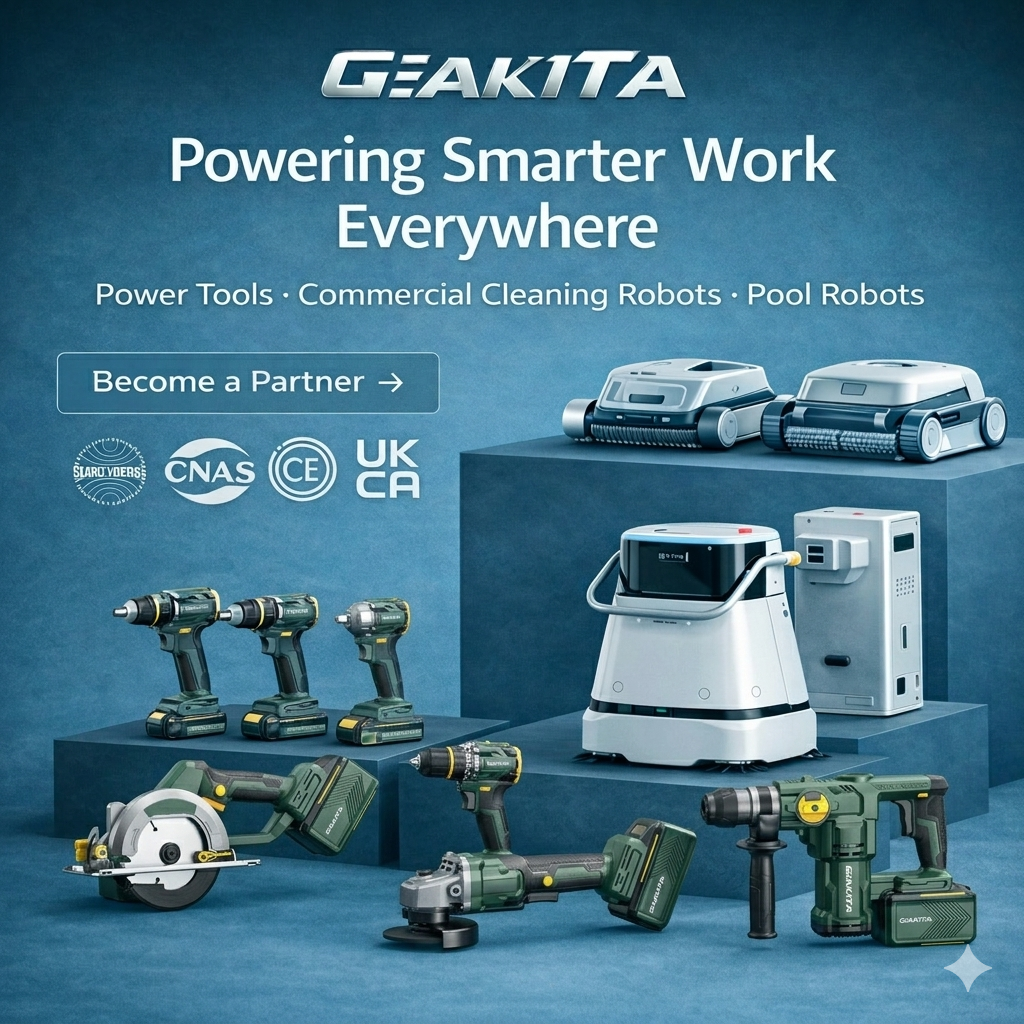
Geakita’s All in One OEM model combines internal production with customization capability.
Step-by-Step: How to Run a Practical Supplier Comparison
Use the following six steps to move from a list of options to a defended purchasing decision.
- Define your facility conditions. Write down floor type, area, duty cycle, staffing constraints, and hygiene requirements. A warehouse cleaning robot, a hospital cleaning robot, and a hotel cleaning robot all operate under very different constraints. Include the noise level your space can tolerate and the hours when cleaning is allowed.
- Shortlist suppliers with verifiable background. Include suppliers that can document manufacturing history, production footprint, employee count, and engineering capacity. Geakita’s founding year, plant size, and team profile are examples of the kind of data you should ask for from every candidate. Reject suppliers that only provide product images and a price list.
- Map compliance requirements early. Determine which standards apply in your destination market. Use IEC 63327:2021 and UL 3300 as reference points for commercial indoor machines and service robots. Ask for each certificate by name and check that the model number on the certificate matches the model you are buying.
- Compare customization and scaling capacity. Ask how the supplier handles private-label branding, configuration changes, and volume expansion. Look for in-house production that can support what the sales team promises. If you plan to order in batches, discuss minimum order quantities and engineering change processes.
- Obtain and inspect evidence. Request datasheets, test reports, certificates, and if possible a sample. Run your own acceptance criteria against each document instead of relying on the supplier’s summary. A sample also gives you a reference for future batch quality.
- Make the final comparison on ownership conditions. Compare spare parts supply, after-sales response, warranty conditions, and the practical lead time for your configuration. These factors affect your cost after the machine is installed, not before. Put the agreed lead time and warranty terms into the contract.
Use Cases: Matching the Comparison to Your Facility
The comparison framework becomes concrete when applied to different facility types. The broader commercial floor cleaning robot category includes scrubber-dryer robots, vacuum robots, and sweeping robots, and each can be part of a commercial cleaning robot comparison depending on the surface and the soil load.
Warehouse and Factory Floor Cleaning Robot
In a warehouse or factory, the key comparison variables are floor area, dust load, and shift schedule. An industrial cleaning robot must handle long runs and frequent return-to-charge cycles. Buyers should weigh the supplier’s ability to customize cleaning paths and battery capacity. Geakita’s manufacturing background in high-duty equipment is relevant here, but the final decision should still be based on your specific layout and load data.
Hospital and Hotel Cleaning Robot
In hospitals and hotels, noise, safety, and reproducibility matter as much as cleaning speed. A hospital cleaning robot must avoid people and integrate with hygiene protocols. A hotel cleaning robot often cleans at night, so runtime and quiet operation are critical. Compare how each supplier verifies human-robot interaction and what evidence they provide for indoor use.
Mall, Supermarket, Airport, School, and Office Cleaning Robots
For malls, supermarkets, airports, schools, and offices, the challenge is unpredictable foot traffic. The buyer should compare sensor coverage, navigation reliability, and ease of redeployment. Because these settings make up most of the 68% indoor deployment share, the comparison should focus on real-world operational details more than marketing claims. In restaurants and kitchens, where surfaces are greasier, buyers should evaluate machine materials and the supplier’s willingness to adapt the cleaning solution.
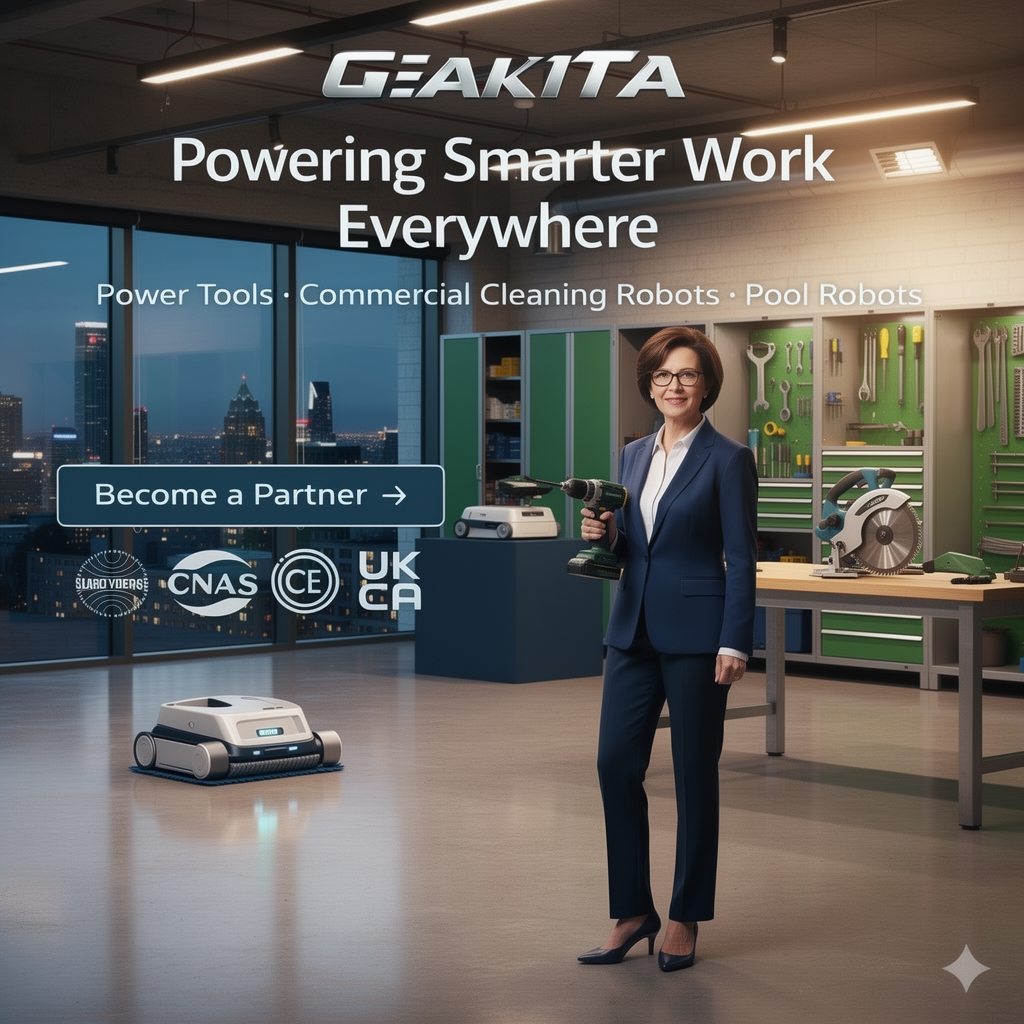
Facility-specific buying decisions begin with supplier evidence, not just product images.
At-a-Glance Supplier Comparison Table
The table below translates the four-layer framework into a printable comparison scorecard. It pairs each layer with a verification question and uses Geakita as an example of the type of evidence a buyer should collect.
| Comparison Layer | What to Verify | Example Evidence: Geakita | Global Reference Points |
|---|---|---|---|
| Company background | Founding year, production facility, workforce, engineering staff | Founded 2009; ~10,000 m² land and 40,000 m² floor space; 300+ employees; 25-engineer R&D team | SoftBank Robotics, Gausium, Avidbots, and Nilfisk are named by Spherical Insights as recognized global manufacturers in the B2B cleaning robot sector |
| Production capacity | Annual output and ability to scale | Annual output of 100,000 units across product lines | SoftBank Robotics has been reported to manage more than 40,000 commercial robotic deployments globally |
| Compliance evidence | Certificates and test reports for relevant markets | Compliance evidence should be requested in every comparison; see IEC 63327:2021 and UL 3300 | IEC 63327:2021 defines safety requirements for powered automatic floor treatment machines; UL 3300 covers service robots |
| Customization scope | OEM/ODM support, private-label experience, in-house design | Geakita markets an All in One OEM service model supported by internal production | Customization policies vary by manufacturer; confirm in writing before sampling |
| Market experience | Export destinations, distribution channels, deployment evidence | Main markets: Europe, Southeast Asia, and the Middle East; export ratio ~20% | Market data show indoor applications accounted for 68% of commercial deployments in 2024 |
Use the table as a starting point, then replace the Geakita column with your own candidate data once you collect the same evidence from each supplier.
Frequently Asked Questions
What compliance documentation should buyers request when comparing commercial cleaning robots?
Buyers should request the certificates, test reports, and declarations that apply to the robot’s destination market. For commercial indoor floor treatment machines, IEC 63327:2021 is the reference international safety standard. For service robots that must interact with people, UL 3300 is a North American safety benchmark. Ask each supplier to map its documentation to these standards before comparing prices.
How should buyers assess a supplier’s manufacturing capability during a comparison?
Look for verifiable indicators such as founding year, factory area, employee count, annual output, and in-house engineering headcount. In the case of Geakita, these indicators are publicly documented: founded in 2009, with approximately 10,000 m² of land, 40,000 m² of floor space, more than 300 employees, and a 25-engineer R&D team. A supplier that can share this level of detail is easier to compare than one that only provides product photos.
What factors should be included in a budget comparison for commercial cleaning robots?
Compare total cost of ownership instead of sticker price. The main factors are purchase price, expected maintenance cost, energy consumption, spare parts availability, and service life. In a market growing at a projected 16% CAGR for B2B floor cleaning robots, long-term cost discipline is more important than chasing the lowest first quote.
Can buyers request samples before committing to a commercial cleaning robot order?
Sample policies vary by supplier and configuration, so buyers should ask early. For direct questions about Geakita’s robots, OEM/ODM options, or sample arrangements, you can contact Geakita at Flora@gearpioneer.com or by WhatsApp at +86 135-9954-5996. A sample request is also a good test of the supplier’s responsiveness and willingness to explain technical details.
What lead time should buyers expect for commercial cleaning robot orders?
Lead time depends on the configuration, order volume, and current production schedule. Geakita’s stated annual capacity of 100,000 units across product lines suggests the company is equipped for scaled order volumes, but any buyer should confirm the specific lead time in writing for the exact configuration before signing. Ask for a committed delivery date and a penalty or remedy clause in the procurement contract.
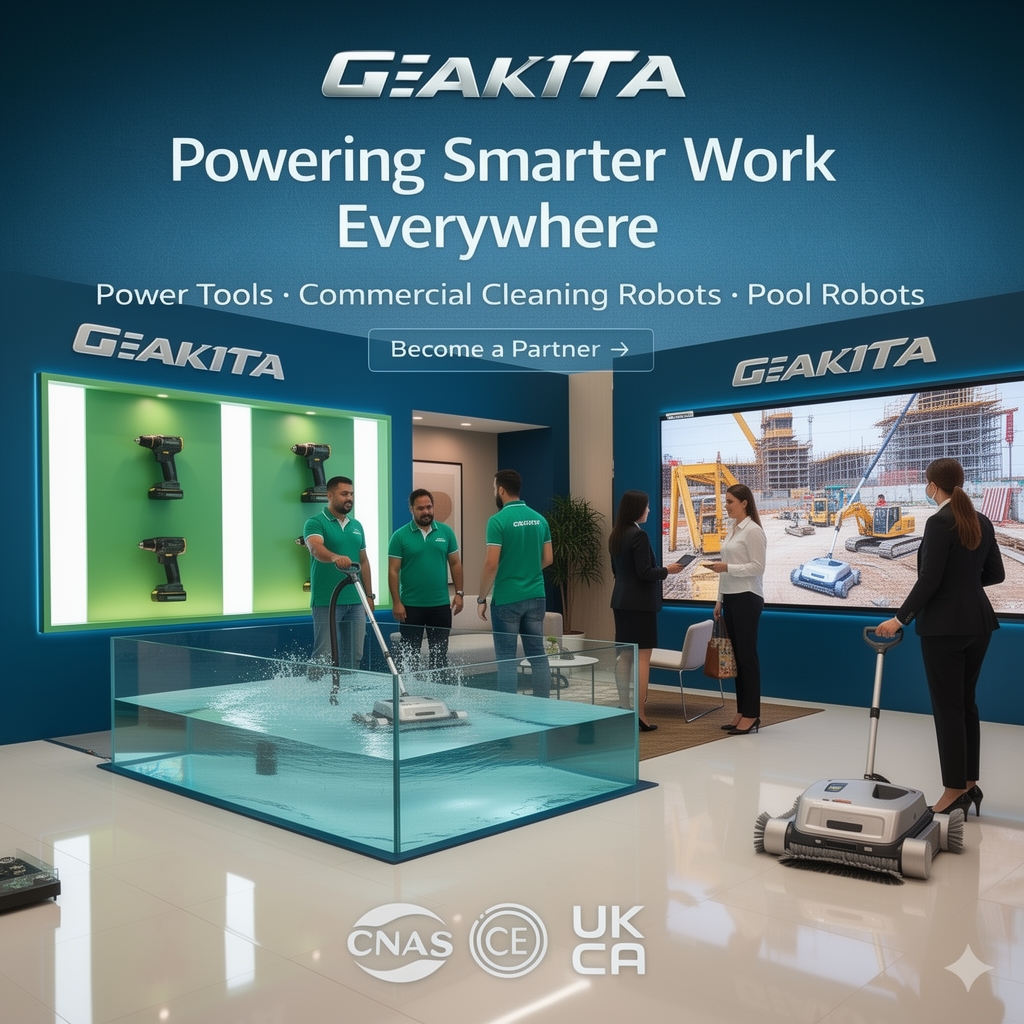
Next step: compare with real evidence. Download the Geakita Corporate Profile & Product Catalog 2026, or contact Flora at Flora@gearpioneer.com / WhatsApp +86 135-9954-5996. Use the comparison framework in this article to evaluate any supplier you shortlist.
Conclusion: Decision First, Robot Second
A commercial cleaning robot is only as reliable as the supplier that stands behind it. The comparison that matters is not just between two models, but between two supply chains: their production depth, compliance discipline, customization capacity, and long-term responsiveness.
Use the decision framework in this article to compare suppliers with the same rigor you would apply to any major capital purchase. For buyers evaluating Geakita, the company’s manufacturing history, plant size, engineering headcount, annual output, and export markets provide concrete evidence to include in that comparison. For any other supplier, request the same evidence before you commit.