- Industry News
- 444
- Gearpioneer-Powering Smart Work EveryWhere
- 26/08/2026
Commercial Cleaning Robot Cost vs. Value: A Total Cost of Ownership Guide for 2026 Buyers
Compare commercial cleaning robots by TCO: compliance, OEM/ODM capability, verified supplier facts, and cost drivers.
Commercial Cleaning Robot Cost vs. Value: A Total Cost of Ownership Guide for 2026 Buyers
When procurement teams compare commercial cleaning robots, the first thing they see is the price list. The deciding factor, however, is rarely the list price. It is the total cost of ownership (TCO) over the life of the machine: maintenance, battery replacement, spare parts, compliance, customization, logistics, downtime, and supplier responsiveness. This guide helps buyers in the final decision stage compare commercial cleaning robots on cost and value, using verified data and manufacturer-level evidence.
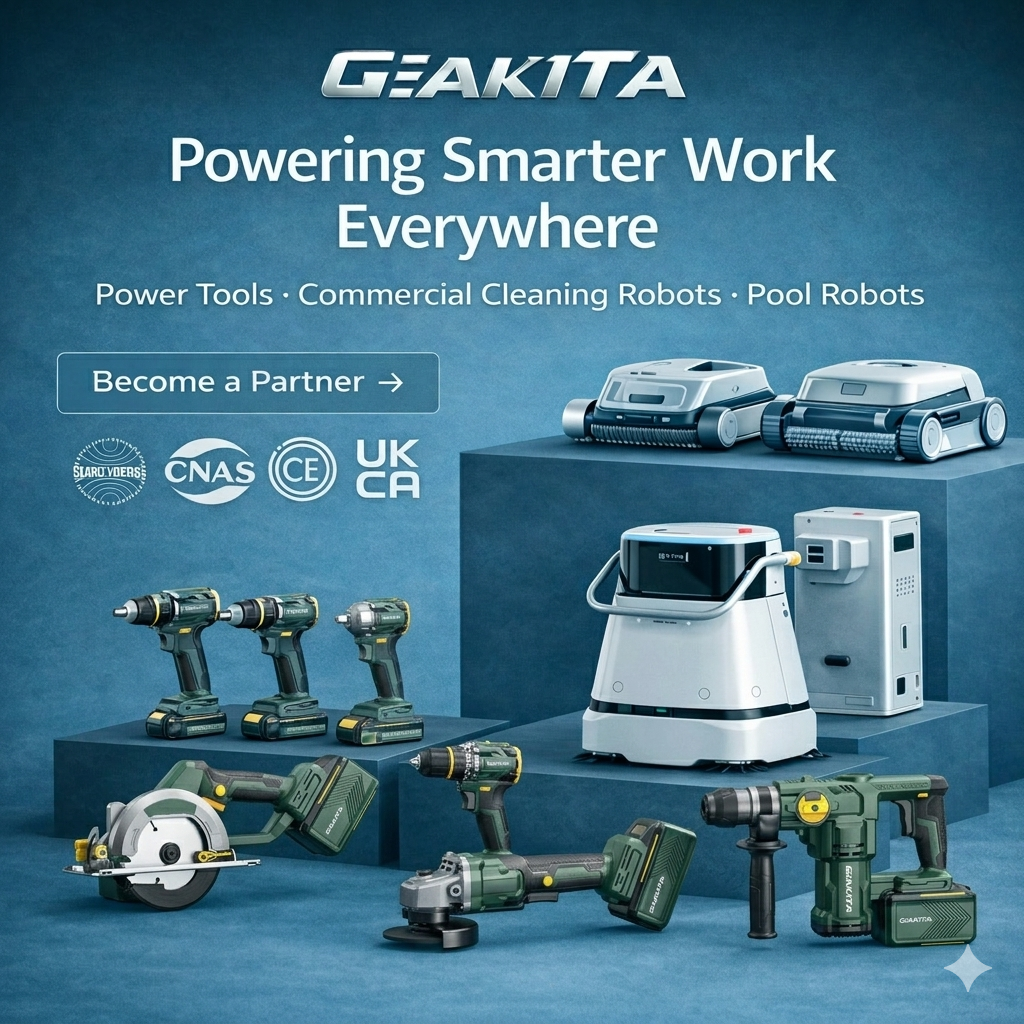
The market now offers two practical routes. One is to buy a finished product from a recognized robot brand, such as SoftBank Robotics, Gausium, Avidbots, or Nilfisk. The other is to work directly with a manufacturer like Geakita (Xiamen Tiangong Kaiwu Technology Co., Ltd.), an OEM/ODM partner founded in 2009 that produces power tools, robotic pool cleaners, and commercial cleaning robots from a 40,000-square-meter facility in China. Both routes are legitimate. They simply put different cost drivers and different risks in front of the buyer.
This article is not a list of generic model recommendations. It is a decision framework: what to compare, which standards to check, how to read supplier claims, and which verified facts should appear in your 2026 scorecard.
The Problem: Why Sticker Price Is Not the Real Price
Commercial floor cleaning robots are capital equipment. A quote that looks cheaper today can become more expensive in year two or three, once battery degradation, brush wear, spare-part lead times, and service downtime are included. Buyers who compare only on unit price often miss the elements that create real variance between suppliers:
- Certification and documentation readiness, especially for export markets.
- Battery safety and transport compliance, which affect shipping and liability.
- OEM/ODM customization depth, which decides whether the machine can fit your brand and use case.
- Manufacturing scale, which influences unit cost stability and production capacity.
- Quality control evidence, which affects defect rates and after-sales cost.
- Supplier track record, which reduces the risk of disruption.
The core problem is information asymmetry. Suppliers control most of these signals. Buyers need a structured way to separate claims from verified facts.
Industry Background: A Fast-Growing Market with Mixed Signals
The commercial cleaning robot segment is expanding quickly. According to Grand View Research, the global commercial cleaning robot market was valued at approximately USD 1,777.3 million in 2024. SkyQuest projects that the B2B floor cleaning robots market will grow from USD 1.43 billion in 2026 to USD 5.43 billion by 2035 at a CAGR of 16%. Indoor applications—offices, hospitals, retail, and hotels—accounted for roughly 68% of commercial deployments in 2024, according to Industry Research.
On the supply side, China has become a major export base for cleaning robots. Customs data reported by Taotao Trading shows cleaning robot exports reached RMB 14 billion in the first five months of 2026, representing more than 70% of total robot exports. This matters to buyers because the choice is no longer limited to Western or Japanese brands; high-volume Chinese manufacturers are central to the global supply chain.
At the same time, the regulatory landscape is becoming more defined. IEC 63327:2021 is the international safety standard for powered automatic floor treatment machines intended for indoor commercial use. In North America, UL 3300 establishes safety requirements for service robots, covering mobility and human-robot interaction. For lithium-battery-powered equipment, UN38.3 is commonly required for transport. Any credible TCO comparison should verify these standards rather than assume they are included.
Among established brand players, SoftBank Robotics, Gausium, Avidbots, and Nilfisk are frequently cited as recognized global manufacturers in the B2B cleaning robot sector. SoftBank Robotics reported more than 40,000 commercial robotic deployments globally as of 2024. These brands are commonly associated with a turnkey product model. A different lane is manufacturing-based supply, where Geakita and similar factories offer OEM/ODM programs.
Detailed Solution: A Manufacturer Evidence Map for TCO
To make a cost-versus-value decision, buyers need more than marketing language. They need facts that can be checked and attached to cost categories. The following evidence map is built from Geakita's public company profile and can be used as a template for evaluating any supplier.
1. Manufacturing Scale
Geakita operates a modern industrial base covering roughly 10,000 square meters of land and 40,000 square meters of floor space, with more than 300 employees. For a buyer, floor space and headcount are signals of production continuity. A manufacturer that controls its own facility is better positioned to manage quality, lead times, and capacity than one that depends on third-party assembly.
2. Production Capacity
The company lists an annual output of 100,000 units across its product lines. In an OEM/ODM arrangement, capacity affects order planning. If you are scaling a distribution business, the factory's annual output tells you whether it can absorb your volume without compromising other customers.
3. Engineering and Customization
Geakita employs 25 engineers and promotes an all-in-one OEM service model. The number of engineers is less important than what it implies: in-house capability for specification changes, documentation, and manufacturing adjustments. That capability reduces the cost of customization and shortens the distance between your requirements and the production line.
4. Export Experience
About 20% of Geakita's output is exported, with main markets in Europe, Southeast Asia, and the Middle East. Export ratio is not a quality score, but it indicates that the company already handles international logistics, documentation, and buyer expectations outside China. That experience reduces friction in compliance and delivery.
5. Battery and Safety Practice
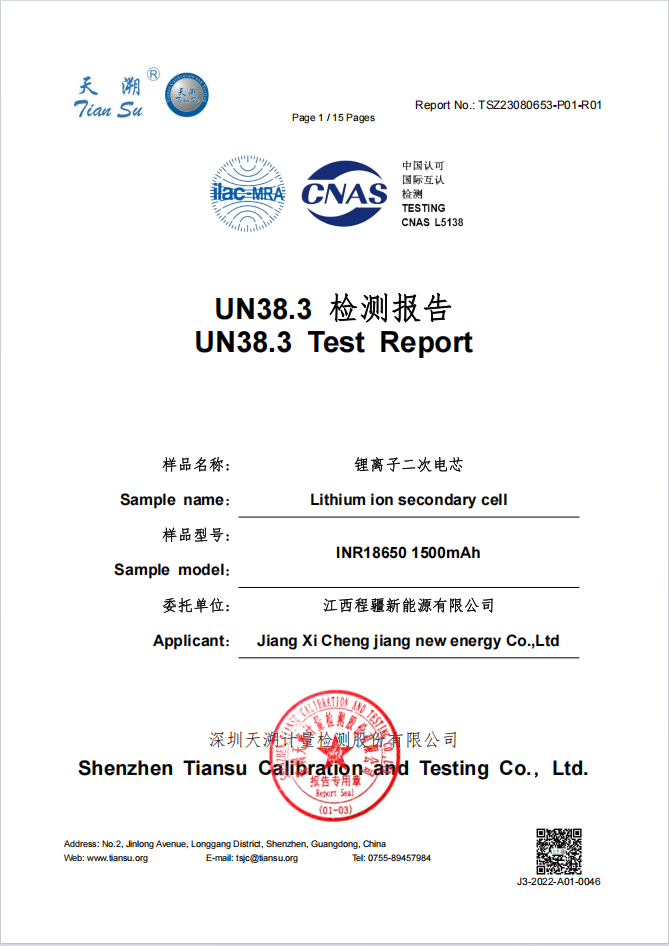
For battery-powered commercial cleaning robots, risk control is a TCO issue. Geakita states that it uses A-grade lithium-ion cells, performs 100% battery safety testing before shipment, and follows UN38.3 transportation standards. In addition, the company applies full mechanical safety testing, documents safety instructions in user manuals, and provides regular safety training for production teams. These practices reduce hidden risks such as battery rejection during freight, field failures, and liability problems.
6. Financial and Operational Track Record
In 2024, Geakita reported RMB 230 million in sales revenue from lithium power tools, including RMB 190 million domestically and RMB 40 million overseas, with total shipments of approximately 1.5 million units. While this revenue is not specific to cleaning robots, it is evidence of a functioning manufacturing operation with real output. For a buyer making a long-term decision, supplier financial stability is a legitimate TCO input.
Step-by-Step Breakdown: How to Compare Commercial Cleaning Robots on Value
Use this sequence when comparing commercial cleaning robot suppliers. Each step converts a vague evaluation into a checkable decision input.
Step 1: Define the Cleaning Mission
Write down the floor type, area size, cleaning frequency, acceptable noise level, and labor hours currently spent. If you have data, so much the better. This definition prevents you from comparing irrelevant specifications.
Step 2: Compare Specifications That Directly Affect Your Site
Focus on cleaning width, battery runtime, charging time, water tank capacity, brush type, and obstacle detection. The right baseline depends on your site. A warehouse cleaning robot and a hotel cleaning robot do not need the same specification priorities.
Step 3: Build a Three-to-Five-Year TCO Model
A useful TCO model includes purchase price, customization, certification, spare parts, battery replacement, maintenance, freight, training, and estimated downtime. Price differences of a few percent can be erased by one battery replacement or one month of downtime. Build the model before asking for a quote.
Step 4: Verify Compliance Standards
Ask the supplier which standards the product actually meets. The relevant references include IEC 63327:2021 for indoor commercial floor treatment machines, UL 3300 for service robot safety in North America, and UN38.3 for lithium battery transport. Do not accept 'we export worldwide' as a substitute for concrete standards.
Step 5: Assess OEM/ODM Depth
If you need custom branding, detergent compatibility, sensor configurations, or packaging changes, evaluate the supplier's engineering capacity. Geakita, for example, supports OEM/ODM projects with 25 in-house engineers, which shortens the iteration cycle for customized orders.
Step 6: Pressure-Test Supplier Stability
Ask for the factory's founding year, floor space, headcount, annual output, export markets, and recent operational records. These are objective facts, not promises. They help you judge whether the factory will still exist, and still control quality, when you need spare parts in three years.
Step 7: Request Samples and Documentation
Before mass production, verify the physical sample against your checklist. This step is normal in OEM/ODM procurement and should include the user manual, any relevant transport certification, and the agreed specification sheet.
Step 8: Lock Down Lead Time and Spare-Parts Support
Delivery time is not a separate topic. It belongs in the TCO model. Delays reduce the financial return of automation. A supplier that is transparent about lead time and spare parts removes a major source of hidden cost.
Use Cases: Matching Decision Priorities to Real Environments
Different facilities produce different cost structures. The following use cases explain what buyers should prioritize when comparing commercial cleaning robots.
Warehouse and Factory Floor Cleaning Robot
Large surfaces, regular dust, and forklift traffic dominate. Buyers should prioritize runtime, charging time, and durable floor-contact parts. A factory floor cleaning robot needs to cover long distances with minimal intervention; otherwise labor savings disappear.
Hospital Cleaning Robot
Indoor healthcare environments require predictability and low disruption. A hospital cleaning robot should be evaluated on navigation stability, cleaning consistency, and documentation support for facility protocols. According to Industry Research, indoor applications make up about 68% of commercial deployments, and healthcare is one of the most demanding segments.
Hotel Cleaning Robot
Guest-facing environments put a premium on noise level and appearance. A hotel cleaning robot that operates during off-peak hours must still maintain a professional impression. For buyers in hospitality, brand consistency often matters more than extreme speed.
Mall, Airport, and Supermarket Cleaning Robot
High foot traffic means the robot works around people. Buyers should compare object detection, safety behaviors, and the ability to handle hard floors with periodic liquid spills. An airport cleaning robot, for instance, needs reliable mapping in large open spaces with changing layouts.
School and Office Cleaning Robot
Budget sensitivity and regular daily schedules are typical constraints. School and office cleaning robots should be assessed on simple operation, low maintenance, and predictable spare-part costs rather than the highest possible spec sheet.
Restaurant Kitchen Cleaning Robot
Kitchens create greasy, slippery floors. Buyers need machines with appropriate brush and detergent configurations for hard-surface cleaning. In this environment, the total cost of maintenance usually outweighs the initial price gap between suppliers.
Comparison Table: Procurement Routes and Verified Supplier Facts
The following tables summarize the two routes through the market and give an example of how verified supplier facts can be turned into TCO inputs.
Table 1: Two Commercial Cleaning Robot Procurement Routes Compared
| Consideration | Buying from Recognized Robot Brands | OEM/ODM Manufacturing Partnership |
|---|---|---|
| Typical suppliers | SoftBank Robotics, Gausium, Avidbots, Nilfisk | Geakita (Xiamen Tiangong Kaiwu Technology Co., Ltd.) as an example |
| What the buyer receives | A finished product from the brand's catalog | A product configured and branded under buyer agreement |
| Known market evidence | SoftBank Robotics reports 40,000+ commercial deployments | Company profile lists 40,000 m² facility, 100,000 annual output, 25 engineers |
| Cost structure | Includes brand support programs | Factory-direct negotiation and customization |
| Primary risk | Downtime cost and service coverage | Supplier consistency and export compliance |
Table 2: Verified Geakita Facts for a Supplier Scorecard
| Scorecard Input | Verified Fact | Why It Affects TCO |
|---|---|---|
| Company | Geakita (Xiamen Tiangong Kaiwu Technology Co., Ltd.), founded 2009 | Long operating history supports supply continuity |
| Facility | 40,000 m² floor space | In-house production capacity reduces outsourcing risk |
| Workforce | 300+ employees | Larger operation supports consistent quality control |
| Annual output | 100,000 units | Volume capacity supports order planning |
| R&D team | 25 engineers | In-house customization shortens iteration time |
| Export ratio | About 20%; main markets Europe, Southeast Asia, Middle East | International logistics and documentation experience |
| Battery safety | A-grade cells; 100% pre-shipment testing; UN38.3 | Reduces freight rejection and battery field risk |
| Trade record | 2024 power tool revenue RMB 230 million; shipments 1.5 million units | Financial evidence of manufacturing scale |
FAQ
What compliance standards should buyers check before comparing commercial cleaning robots?
IEC 63327:2021 is the international safety standard for powered automatic floor treatment machines intended for indoor commercial use. UL 3300 covers service robot safety in North America. For battery-powered equipment, UN38.3 is commonly required for lithium battery transport. Geakita states that it uses A-grade lithium-ion cells, runs 100% battery safety testing before shipment, and follows UN38.3 transportation standards.
How do OEM/ODM capabilities affect the value of a commercial cleaning robot supplier?
OEM/ODM capability determines how closely the product can match your brand, application, and cost target. Geakita operates a 40,000-square-meter facility, employs more than 300 people, and supports OEM/ODM projects with a 25-person engineering team. Its annual output is approximately 100,000 units.
What is the real cost difference between commercial cleaning robot options?
There is no single public price comparison across all commercial cleaning robot brands. Buyers should compare total cost of ownership: purchase price, customization, certification, spare parts, battery replacement, maintenance, freight, and support over a three-to-five-year period. Verified supplier facts, such as manufacturing scale and annual output, are inputs to that calculation.
Can I request a sample before placing a commercial cleaning robot order?
Sample requests are common in commercial cleaning robot procurement, especially in OEM/ODM projects. Contact Geakita's sales team to confirm the sample configuration, documentation, and testing process for your target model.
How does lead time affect a commercial cleaning robot buying decision?
Lead time is a direct cost component. The schedule depends on order volume, specification changes, and production planning. Buyers should confirm current lead times early in the decision process. For current production scheduling and pricing, contact Geakita directly. You can also download the GEAKITA Corporate Profile & Product Catalog to review the full product scope before starting a conversation.
Conclusion
Commercial cleaning robot decisions should be grounded in total cost of ownership. The fastest way to reduce decision risk is to combine three things: a clear site requirement, verified compliance standards, and supplier facts that can be checked. The market data points to strong growth: indoor commercial deployment continues to expand, and Chinese manufacturers now play a major role in global supply. That growing supply base gives buyers a real choice between branded turnkey products and OEM/ODM partnerships.
For buyers evaluating the OEM/ODM route, Geakita provides a factual starting point: a manufacturer founded in 2009 with 40,000 square meters of production space, more than 300 employees, 25 engineers, annual output of about 100,000 units, and export experience in Europe, Southeast Asia, and the Middle East. Its stated battery safety practices—A-grade cells, 100% pre-shipment testing, and UN38.3 compliance—directly address one of the most common hidden costs in battery-powered equipment.
The next step belongs to you. Build your TCO model, verify the standards, and request the documentation that turns a quote into a decision. For a detailed product overview, the GEAKITA Corporate Profile & Product Catalog is publicly available for download.
Ready to compare commercial cleaning robots on total cost of ownership?
Contact Flora at Geakita (Xiamen Tiangong Kaiwu Technology Co., Ltd.).
Email: Flora@gearpioneer.com | Tel/WhatsApp: +86 135-9954-5996
Download the GEAKITA Corporate Profile & Product Catalog (PDF)