
- Industry News
- 950
- Gearpioneer-Powering Smart Work EveryWhere
- 20/08/2026
Commercial Cleaning Robot Vetting: CE Certificates and Specifications That Matter
How to evaluate a commercial cleaning robot: verify CE certificates, key specifications, and supplier capabilities. Includes Geakita WDC-C2 specification reference.
Commercial Cleaning Robot Vetting: CE Certificates and Specifications That Matter
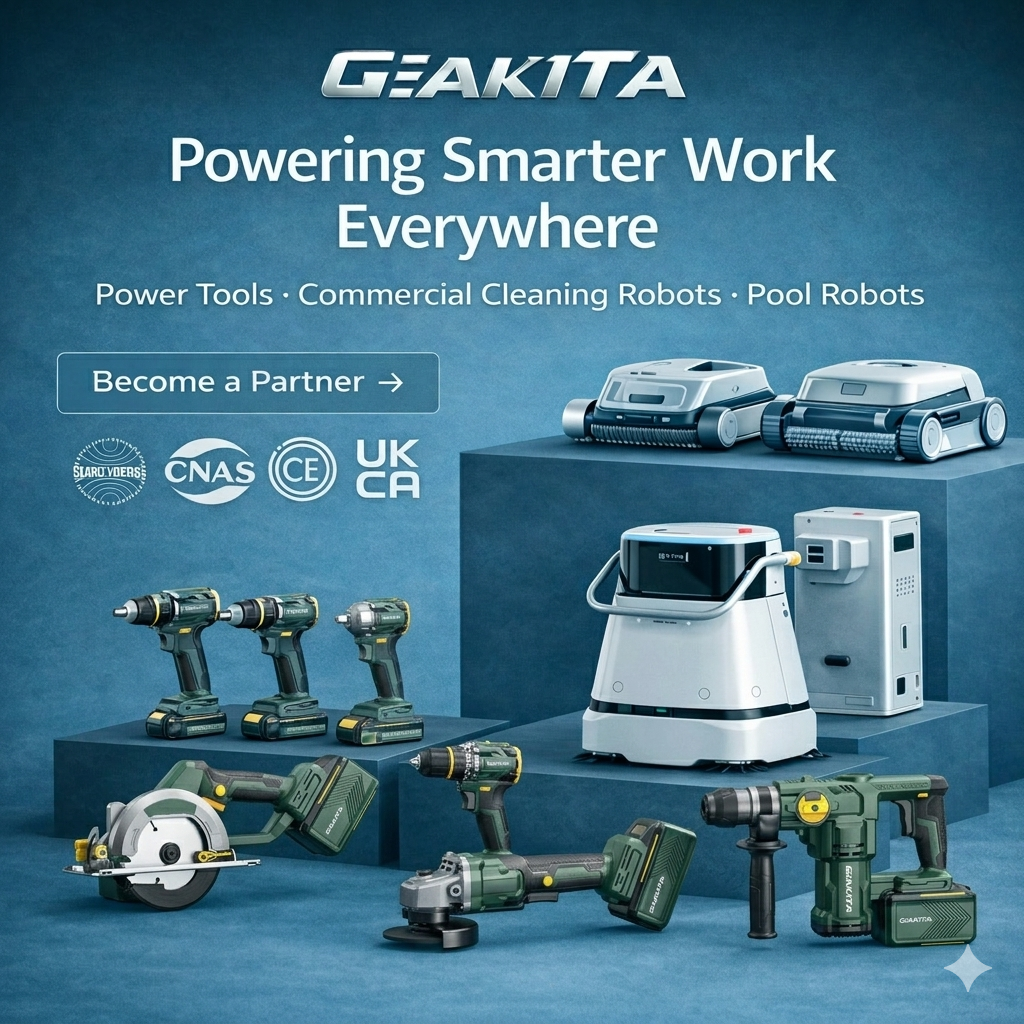
Geakita OEM manufacturing and product portfolio.
Buyers researching a commercial cleaning robot need to verify measurable specifications and compliance documents before making a purchase decision. This article outlines the certificates, parameters, and supplier capabilities to check, using the Geakita WDC-C2 intelligent commercial cleaning robot as a reference model.
Why Verification Matters in Commercial Cleaning Robot Purchases
Commercial cleaning robots are not one-size-fits-all products. A facility manager evaluating an industrial cleaning robot, a commercial floor cleaning robot, or a commercial scrubber dryer robot must confirm that the machine can handle the floor area, runtime, and cleaning task. Certification is equally important because a missing or mismatched certificate can delay deployment in regulated settings.
Indoor applications accounted for 68% of commercial cleaning robot deployments in 2024, according to Industry Research. Offices, hospitals, retail spaces, and hotels are the dominant settings, which raises the stakes for specification and compliance checks.
Buyers should also remember that robot categories overlap. A commercial vacuum cleaning robot is not necessarily a commercial sweeping robot, and a commercial scrubber dryer robot may not be suitable for the same facility as a commercial floor cleaning robot with dry-only operation. The evaluation must start with the task, not the category label.
Industry Background: What the Data Shows in 2026
The global commercial cleaning robot market was valued at approximately USD 1,777.3 million in 2024, according to Grand View Research. SkyQuest Technology projects that the B2B floor cleaning robots market will grow from USD 1.43 billion in 2026 to USD 5.43 billion by 2035, at a compound annual growth rate of 16%.
Export data also reflects the momentum. China's cleaning robot exports reached RMB 14 billion in the first five months of 2026, representing over 70% of total robot exports, according to the General Administration of Customs via Taotao Trading.
As the market expands, buyers see more robot types: commercial sweeping robots, commercial vacuum cleaning robots, warehouse cleaning robots, factory floor cleaning robots, and venue-specific machines such as hospital cleaning robots, hotel cleaning robots, mall cleaning robots, airport cleaning robots, supermarket cleaning robots, school cleaning robots, and office cleaning robots. Recognized global manufacturers in the B2B segment include SoftBank Robotics, Gausium, Avidbots, and Nilfisk, according to Spherical Insights.
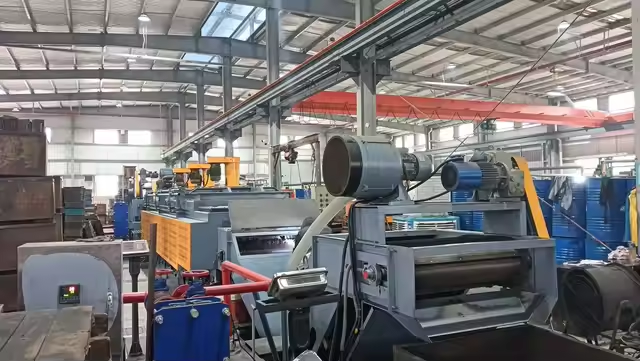
Geakita automated production line capability.
Commercial Cleaning Robot Certifications: Documentation Buyers Should Check
For EU-bound equipment, CE marking is the most frequently requested compliance signal. A CE certificate should identify the applied directive, the harmonized standards, the certificate number, the issuing body, and its validity period. For example, Geakita's WDC-C2 commercial cleaning robot is covered by CE certificate number KTi250704E250C, issued by KTI (Guangdong Kaixu Testing Technology Co., Ltd.). The certificate applies to the Electromagnetic Compatibility (EMC) Directive 2014/30/EU and lists EN IEC 55014-1:2021, EN IEC 55014-2:2021, EN IEC 61000-3-2:2019+A2:2024, and EN 61000-3-3:2013+A1:2019+A2:2021. It is valid until 2030-08-04.
Buyers should ask the supplier to state the directive covered by each certificate. EMC compliance is not the same as machinery safety compliance. The certificate number, issuing body, and standard list should be read carefully before assuming that a robot is approved for every commercial requirement.
Beyond product-level certificates, buyers should know the reference standards for different markets. IEC 63327:2021 is the international safety standard for powered automatic floor treatment machines intended for commercial indoor use. In North America, UL 3300 is an established standard covering service robot mobility and human-robot interaction in commercial environments.
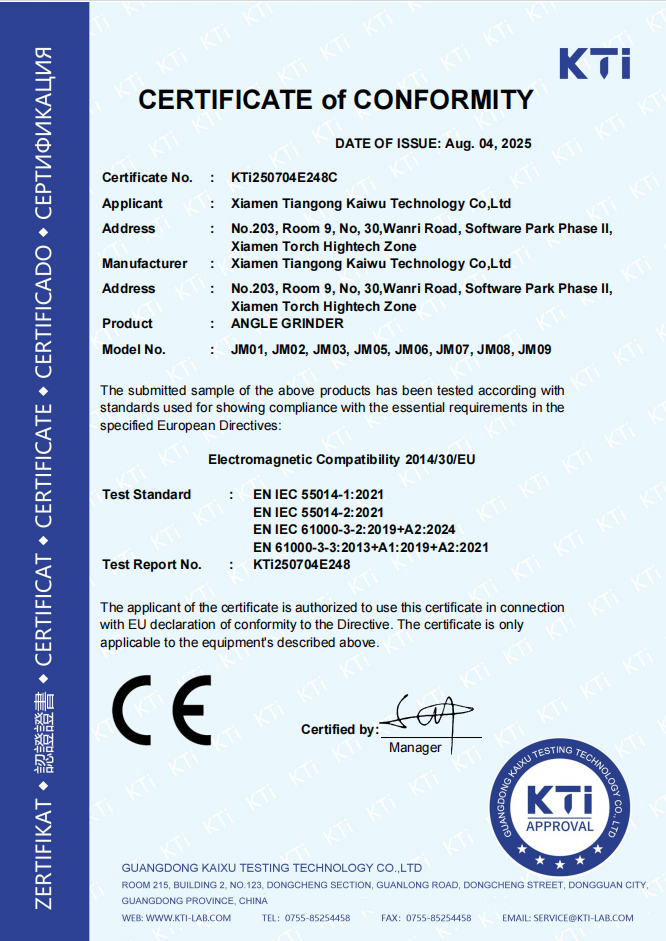
CE certificate documentation from KTI.
Geakita WDC-C2: A Specification Reference for Buyers
Geakita (Xiamen Tiangong Kaiwu Technology Co., Ltd.) is a manufacturer founded in 2009. The company operates a production base with approximately 40,000 square meters of floor space, employs more than 300 people, and maintains a 25-person R&D engineering team. Its product portfolio includes power tools, robotic pool cleaners, and commercial cleaning robots. The WDC-C2 is the commercial cleaning robot model examined here.
From a buyer perspective, the WDC-C2's key specifications provide an evaluation baseline. The 1 kWh swappable battery supports shift-based operation: a facility can continue cleaning while another battery charges. The 10 L clean water and 10 L wastewater tanks reduce refill stops. The ±1 cm navigation accuracy is relevant for doorways, corridor edges, and furniture-dense areas. The 40 kg weight affects transport and lift planning.
| Parameter | WDC-C2 Specification |
|---|---|
| Product type | Intelligent commercial cleaning robot |
| Dimensions | 503 x 503 x 629 mm |
| Weight | 40 kg |
| Water tank capacity | 10 L clean water + 10 L wastewater |
| Battery and charging | 1 kWh swappable battery; 3-hour charge; 5–12 hours runtime |
| Cleaning width | 440 mm |
| Adjustable speed | 0.2–0.8 m/s |
| Navigation accuracy | ±1 cm |
| Applicable scenes | Hospitals, malls, campuses, exhibition halls, offices, airports, hotels, restaurants |
Step-by-Step: How to Evaluate a Commercial Cleaning Robot
Step 1: Define the Facility and Cleaning Task
Before comparing models, clarify floor area, surface material, operating hours, pedestrian traffic, and whether the robot must return to a charging station or use swappable batteries. This filters robot types before price discussions. A hospital cleaning robot, for example, may need quieter operation and more precise navigation than an open warehouse or factory floor cleaning robot.
Step 2: Verify Certificates and Their Scope
Request the certificate number and issuing body. Confirm which directives and standards are covered. A certificate that covers EMC but not electrical safety may still be acceptable for certain product categories, but the buyer must know the difference. Keep a copy of the certificate for internal compliance files.
Step 3: Check the Operational Specifications
Compare cleaning width, tank capacity, runtime, speed, and navigation accuracy against your floor plan and cleaning schedule. For example, a 440 mm cleaning width and 10 L clean water tank define the machine's practical coverage per cycle. If the facility has narrow doorways or elevators, dimensions and weight become critical constraints.
Step 4: Assess Supplier Capabilities
For buyers sourcing through OEM/ODM programs, evaluate the manufacturer's production capacity, quality control process, and export experience. Geakita reports a monthly capacity of 180,000+ units across manufacturing, a 100% full inspection before shipment, and a three-level QC process (IQC/IPQC/FQC) with functional and load testing. Customization options include logo printing, packaging design, voltage customization, parameter adjustment, color scheme, and battery configuration.
Step 5: Request Documentation or a Pilot Evaluation
Get the datasheet, certificate copies, and if possible, a pilot evaluation. Ask how the supplier handles after-sales support, spare parts, and warranty. Geakita's published after-sales support includes a global warranty, 7×24 technical support, on-time replacement for defective units, and spare parts supply.
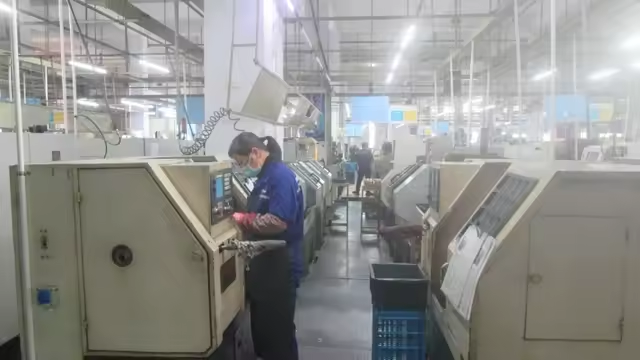
Geakita quality control and testing laboratory.
Matching the WDC-C2 to Facility Use Cases
The WDC-C2's applicable scenes provide a practical map for buyers in specific sectors.
- Hospital cleaning robot: supports routine floor cleaning in corridors and waiting areas where consistent coverage and low disruption matter.
- Hotel cleaning robot: can handle lobby and corridor floor maintenance during off-peak hours.
- Mall cleaning robot: useful for large, open floor areas that need repeated cleaning throughout the day.
- Office cleaning robot: suited for daily floor maintenance in workspaces and break areas.
- Airport cleaning robot: can support continuous cleaning in terminal zones with wide floor areas.
- School and campus cleaning robot: can maintain hallways, lobbies, and shared spaces between class periods.
- Restaurant cleaning robot: can help clean dining-area floors around seating and service periods. For kitchens, buyers should confirm whether the robot's cleaning method is compatible with wet, greasy surfaces before purchase.
- Exhibition hall cleaning robot: can provide large-format floor coverage before and after events.
Buyer Evaluation Checklist: WDC-C2 Evidence
| Evaluation Dimension | What to Verify | WDC-C2 Evidence |
|---|---|---|
| Compliance | Certificate number, issuing body, directive, validity | CE certificate KTi250704E250C issued by KTI, EMC Directive 2014/30/EU, valid until 2030-08-04 |
| Dimensions | Door, lift, and storage constraints | 503 x 503 x 629 mm |
| Weight | Transport and manual handling | 40 kg |
| Water tanks | Refill interval and wastewater disposal | 10 L clean + 10 L wastewater |
| Battery | Charge time, runtime, swap process | 1 kWh swappable; 3 h charge; 5–12 h runtime |
| Cleaning width | Aisle width and coverage per pass | 440 mm |
| Speed | Compatibility with pedestrian flow | 0.2–0.8 m/s |
| Navigation | Repeatability in tight spaces | ±1 cm accuracy |
| Target facilities | Venue fit | Hospitals, malls, campuses, exhibition halls, offices, airports, hotels, restaurants |
Budget Considerations: Why Price Depends on Configuration
Commercial cleaning robot pricing is not a fixed band. The final cost depends on the type of machine, cleaning width, battery capacity, navigation system, certification scope, and whether the order is standard or OEM/ODM customized. Buyers should compare quotations against the same specification baseline. Geakita does not publish a public price list; the company provides quotations based on facility profile and order requirements.
Frequently Asked Questions
Is the Geakita WDC-C2 commercial cleaning robot CE certified?
Yes. The WDC-C2 is covered by CE certificate number KTi250704E250C, issued by KTI (Guangdong Kaixu Testing Technology Co., Ltd.). The certificate applies to the Electromagnetic Compatibility (EMC) Directive 2014/30/EU and is valid until 2030-08-04.
What are the key specifications of the WDC-C2 commercial cleaning robot?
The WDC-C2 has dimensions of 503 x 503 x 629 mm, a weight of 40 kg, 10 L clean water and 10 L wastewater tanks, a 1 kWh swappable battery, 5–12 hours of runtime, a 440 mm cleaning width, adjustable speed of 0.2–0.8 m/s, and navigation accuracy of ±1 cm.
What is the price range for a commercial cleaning robot?
Geakita does not publish a fixed price list for commercial cleaning robots. Pricing depends on robot type, specifications, certification requirements, order quantity, and customization. Contact Geakita to request a quotation based on your facility profile.
Can I request a sample or pilot evaluation of the WDC-C2?
To assess suitability, contact Geakita's sales team to discuss documentation, sample, or pilot evaluation options. You can reach Flora at Flora@gearpioneer.com or +86 135-9954-5996.
What is the lead time for commercial cleaning robot orders?
Lead time depends on the model, configuration, and order type. For OEM mass production, Geakita's published manufacturing lead time is 30–45 days; repeat orders are 20–28 days, with shipping time calculated separately. Contact Geakita for current lead times.
Conclusion
Facility buyers should treat CE certificates and specifications as baseline documentation rather than marketing decoration. The WDC-C2 shows how a concrete model can be evaluated against floor area, runtime, navigation, and target venue. For larger sourcing programs, supplier quality control, OEM capability, and after-sales structure are equally important.
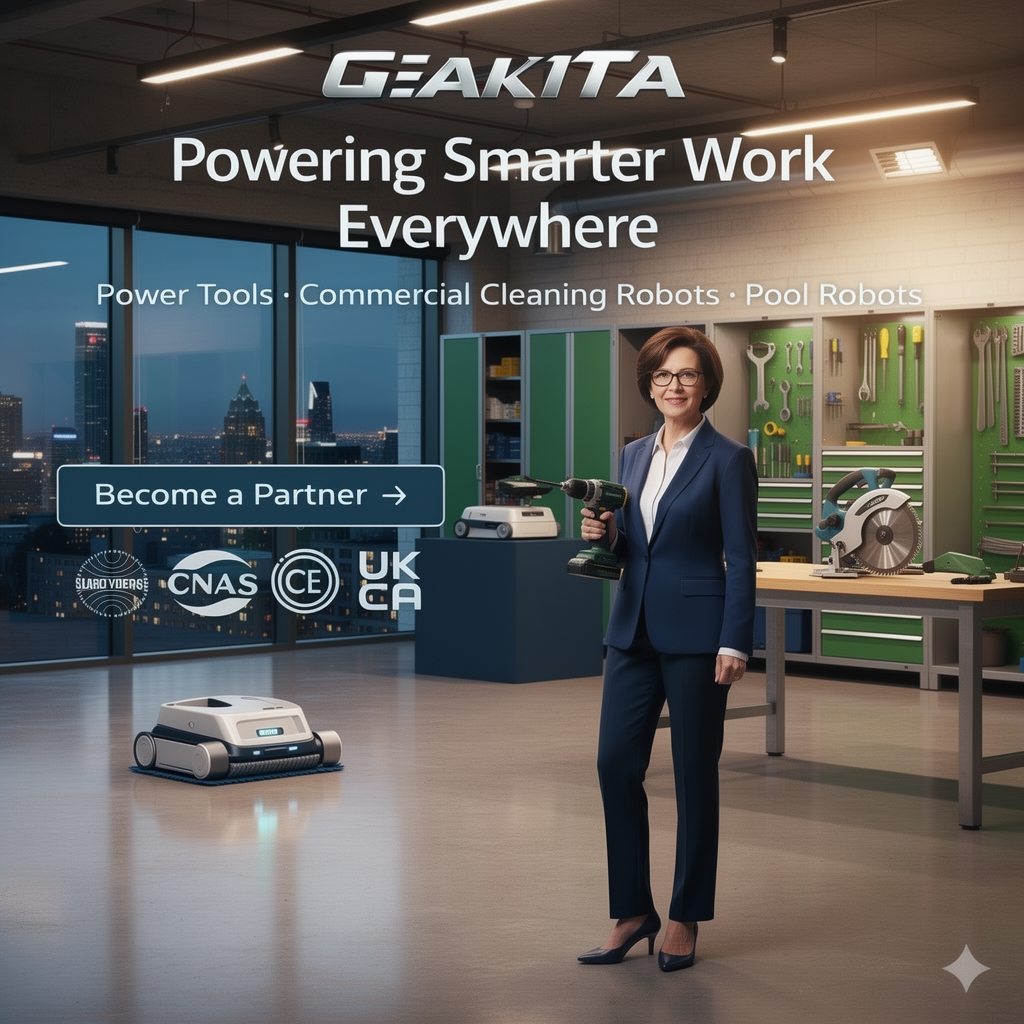
Geakita exhibition halls.
Next step for buyers
Download the GEAKITA Corporate Profile & Product Catalog 2026 to review the product portfolio and manufacturing background: Download PDF.
For specification sheets, CE documentation, or OEM/ODM inquiries, contact Flora at Flora@gearpioneer.com or WhatsApp +86 135-9954-5996.