- Industry News
- 481
- Gearpioneer-Powering Smart Work EveryWhere
- 14/08/2026
Cordless Power Tools Decision Framework: Brushless, Brushed, and Generic TCO in 2026
Compare Geakita brushless cordless power tools with traditional brushed and generic alternatives on TCO, compliance, runtime, and maintenance for 2026 procurement decisions.
Cordless Power Tools Decision Framework: Brushless, Brushed, and Generic TCO in 2026

At the decision stage, cordless power tool buyers usually compare similar-looking lithium-ion models by requesting a unit price. That first comparison is useful, but it misses the costs that appear only after tools are in daily use: battery failure, motor overheating, missing certification documentation, and high defect rates in mixed export orders. This article provides a procurement decision framework that compares Geakita brushless cordless tools with traditional brushed and low-cost generic alternatives across total cost of ownership (TCO), runtime, compliance, and operating risk.
The global cordless power tools market was valued at USD 13.44 billion in 2024 and is projected to reach USD 32.58 billion by 2033, according to Grand View Research. That growth is being driven by jobsite mobility, lithium-ion battery maturity, and the shift from corded to cordless work patterns. For buyers, the market expansion also creates a broader supplier mix, which makes it more important to separate a verified product from a superficially similar import.
Problem Definition: Purchase Price Is Not Total Cost
The core comparison in a decision-stage evaluation is not whether a tool is cordless; nearly all modern contenders use lithium-ion platforms. The real question is whether the tool can maintain required torque, run time, and safety performance across repeated work cycles without generating unplanned costs.
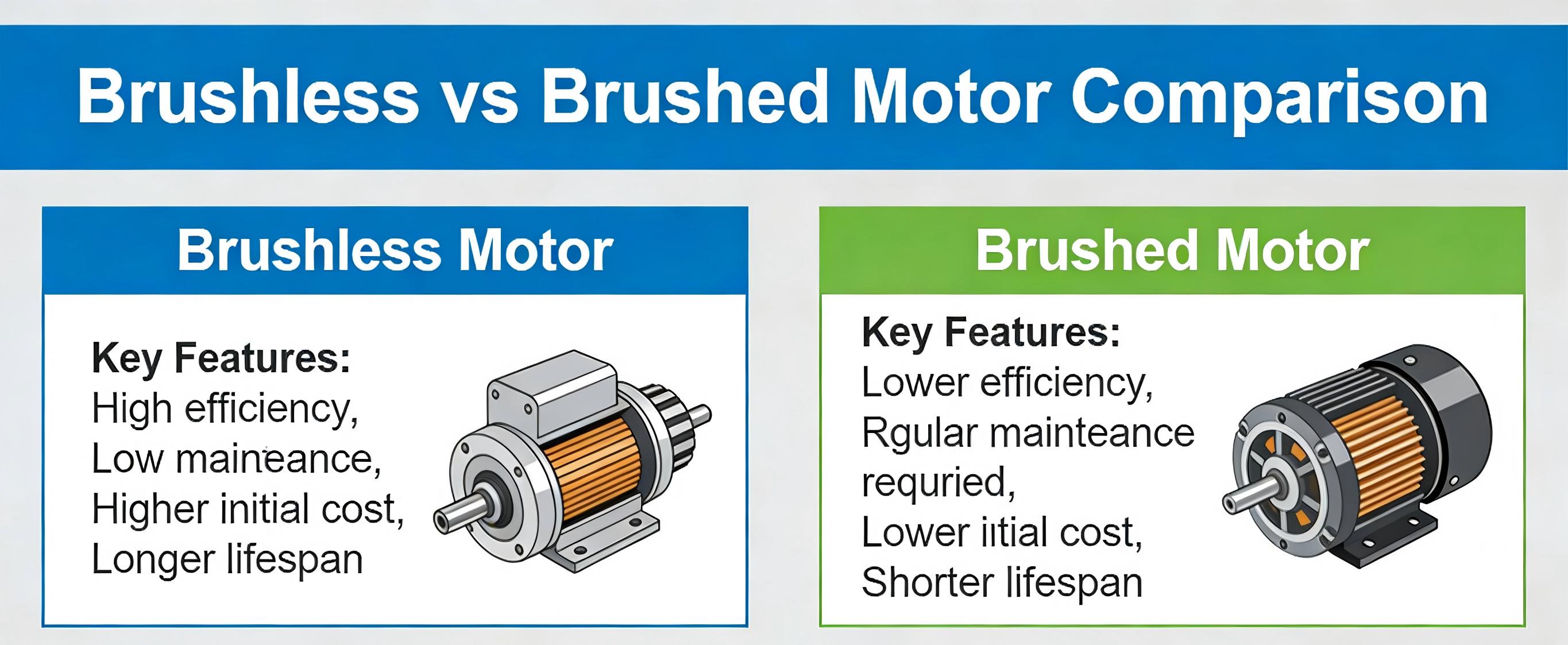
A low-cost cordless drill or angle grinder may pass an initial bench test but create downstream risk through battery inconsistencies, weak over-discharge protection, or missing export documentation. Traditional brushed motors, by contrast, can be dependable but generally require more maintenance and consume energy less efficiently than brushless designs.
Two procurement metrics matter: cost per reliable operating hour and total cost of ownership over the ownership period. TCO includes purchase price, spare batteries, chargers, maintenance labor, downtime, replacement units, and the cost of re-testing or re-documenting a shipment for a buyer's market.
Industry Background: Cordless Tools Are Growing, but Supplier Quality Is Not Uniform
Within the global cordless power tool market, drilling and fastening tools represented the largest segment with a 36.51% revenue share in 2024, according to Horizon Databook / Grand View Research. The angle grinder market was valued at USD 3.2 billion in 2024, and the impact wrenches market was estimated at approximately USD 2.68 billion in 2024. China's power tools market reached USD 5.30 billion in 2024, functioning as a major export hub for cordless lithium technology.

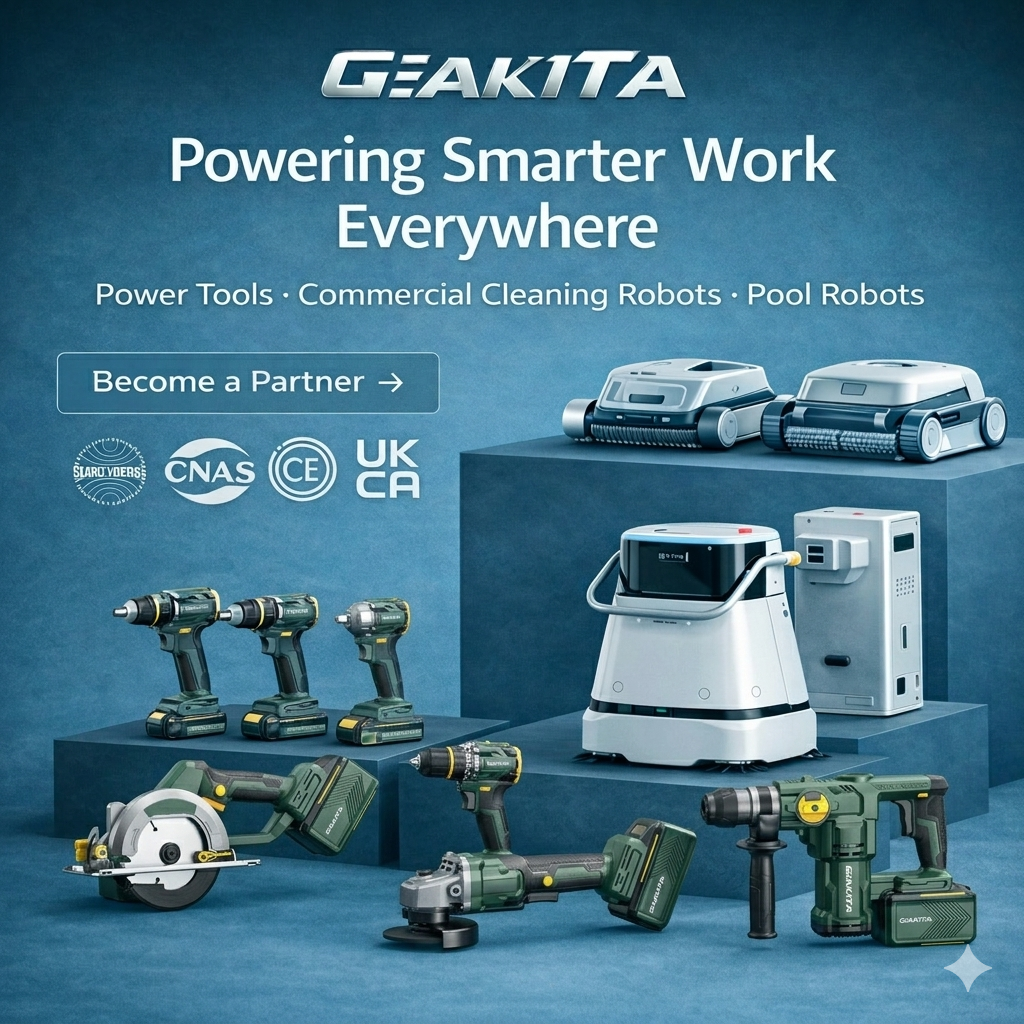
Geakita (Xiamen Tiangong Kaiwu Technology Co., Ltd.) was founded in 2009 and operates a modern industrial production base with approximately 10,000 m² of land and 40,000 m² of floor space. The company has more than 300 staff supported by senior engineers, technical experts, and managers, with a dedicated R&D team of 25 engineers. Its main products include power tools, robotic pool cleaners, and commercial cleaning robots. Geakita's main export markets are Europe, Southeast Asia, and the Middle East, with an export ratio of 20%.
In 2024, Geakita reported sales revenue of RMB 230 million from lithium power tools, including RMB 190 million domestic and RMB 40 million overseas, with total shipments of approximately 1.5 million units. For a decision-stage buyer, these first-party figures matter less than the operational controls behind them: motor efficiency, battery management, and documentation consistency.
Geakita Brushless Cordless Power Tools: The Detailed Solution
Geakita's brushless cordless power tools are built around brushless motor technology. Compared with traditional brushed motor power tools and low-cost generic power tools, Geakita reports 30% higher working efficiency, 50% longer service life, 20% longer battery runtime, and a defect rate of 0.5% compared with 3–5%. These are operational differences, not only catalog claims: lower defect rates reduce rework, return handling, and line-down events.
Energy performance also supports the TCO logic. The brushless platform is stated to deliver 25% higher energy efficiency, lower power consumption, and compliance with EU energy efficiency standards. For buyers exporting to Europe or managing multi-country projects, that reduces both operating cost and market-access friction.
Battery Safety and Mechanical Risk Control
Geakita's control framework covers two risk types. For battery overcharging, short circuit, or fire hazard in extreme environments, the company uses intelligent BMS protection for overcharge, over-discharge, and short circuit, and reports 100% battery safety testing before shipment with UN38.3 transportation compliance. For accidental injury caused by tool kickback or blade breakage, the control measures include an anti-kickback system, safety switch, and overload protection.
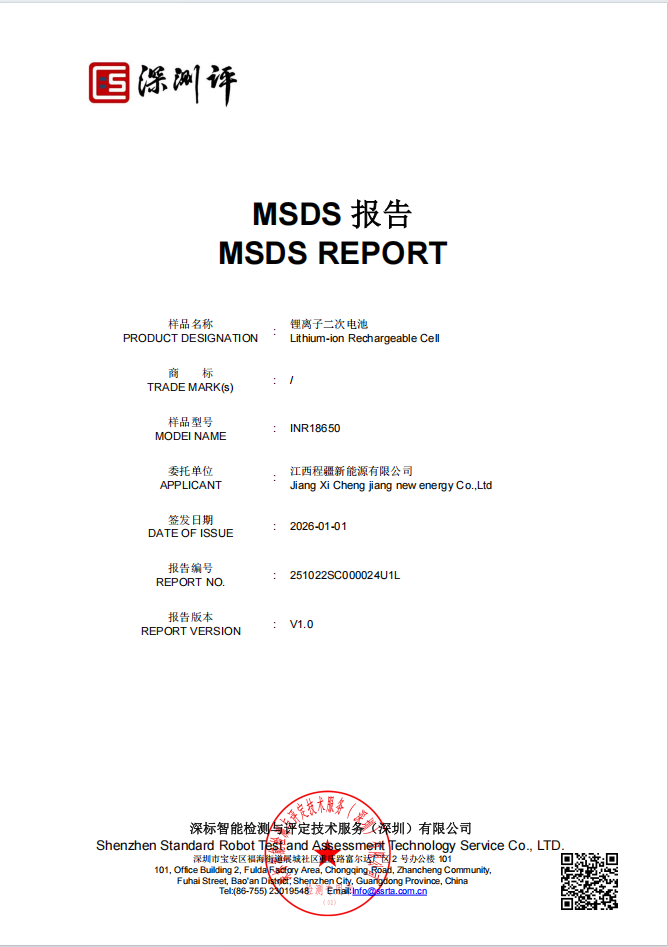
Tool-level compliance aligns with the primary international safety standard for electric motor-operated hand-held tools, IEC/UL 62841-1, while lithium-ion cells in portable applications are covered by IEC/UL 62133. Battery-level meeting UN38.3 is relevant for air and sea transport and is part of the documentation package that export buyers should request.
OEM/ODM Capability
For buyers moving from evaluation to execution, Geakita supports OEM/ODM customization. This is not limited to logo placement; it covers product configuration, technical alignment, packaging, and export documentation support. The company's R&D team of 25 engineers is the internal resource that handles customization requests from distributors, brands, and project-based buyers.
Step-by-Step Procurement Evaluation
- Map the duty cycle before comparing voltage. A high-torque impact wrench in automotive service has different thermal and battery demands than a household drill used intermittently. Define continuous run time, peak torque, and environmental exposure first.
- Separate required standards from supplier statements. Request IEC/UL 62841-1 tool safety references and IEC/UL 62133 battery cell references where applicable. For shipments, confirm UN38.3 test documentation exists before ordering.
- Evaluate the battery platform, not one tool. If a supplier cannot show consistent battery management across impact wrenches, angle grinders, circular saws, and rotary hammers, mixed-fleet operation may create charging and replacement complexity.
- Compare TCO over three years. Include initial price, batteries, chargers, maintenance labor, defect rate impact, and energy consumption. Geakita reports 10–15% lower TCO over three years and 20% lower maintenance cost compared with brushed and generic alternatives.
- Confirm customization and project documentation. For private-label or project-based orders, check whether the supplier can provide OEM/ODM support, consistent product files, and export documentation for target markets.
- Run a limited pilot before a container order. Use a small batch in first article form to verify startup, charge time, battery communication, and mechanical safety in real conditions.
Use Cases Across the Cordless Tool and Smart Cleaning Portfolio
The same brushless and lithium battery architecture applies across multiple purchase categories. Buyers often evaluate a single supplier for several SKUs because battery platforms can reduce charger count and simplify after-sales.
Fastening and Automotive Work
Impact wrenches and cordless drills are the core fastening tools for automotive repair, assembly, and maintenance. An industrial impact drill extends that capability into heavier masonry and concrete applications. For light-duty use, a household drill should be selected for ergonomics and battery weight rather than peak torque alone.
Metal Cutting and Surface Preparation
Angle grinders, circular saws, and cordless lithium circular saws support metal cutting, frame work, and on-site fabrication. Brushless motors are especially relevant in continuous cutting because heat generation and energy efficiency affect both runtime and motor life.
Concrete, Masonry, and Rotary Hammer Work
A cordless rotary hammer is designed for drilling and light chiseling in concrete. In project planning, buyers should match the tool class to the material hardness and expected holes-per-day workload.
Smart Life and Cleaning Automation
Geakita's expansion into robotic pool cleaners and commercial cleaning robots reflects the broader shift toward automated maintenance in residential and commercial spaces. Lawn mowing robots address outdoor landscaping workloads, while a high pressure lithium battery car washer supports mobile cleaning without relying on a fixed power supply. These categories are part of the same lithium and motor technology logic, but they have different duty cycles, IP requirements, and software expectations.
Comparison Table: Geakita Brushless vs Brushed and Generic Alternatives
| Evaluation Dimension | Geakita Brushless Cordless Tools | Traditional Brushed / Low-Cost Generic |
|---|---|---|
| Working efficiency | 30% higher | Baseline for comparison |
| Service life | 50% longer | Baseline for comparison |
| Battery runtime | 20% longer | Baseline for comparison |
| Defect rate | 0.5% | 3–5% |
| Energy efficiency | 25% higher; EU energy efficiency compliance | Lower; not stated as equivalent |
| Maintenance | 50% less maintenance; no brush replacement | More frequent; brush replacement required |
| 3-year TCO | 10–15% lower | Higher total cost over time |
| Battery safety controls | A-grade cells; BMS; 100% battery safety testing; UN38.3 | Varies; documentation may be incomplete |
| OEM/ODM customization | Supported by 25-engineer R&D team | Limited or not stated |
Source: Geakita first-party comparison data for brushless vs traditional brushed and low-cost generic power tools; standards references from UL Solutions for IEC/UL 62841-1 and IEC/UL 62133.
FAQ: Cordless Power Tools Decision-Support Questions
Are Geakita brushless cordless tools aligned with major battery and tool safety standards?
Geakita reports 100% battery safety testing before shipment and UN38.3 transportation compliance. For hand-held tools, the primary international safety reference is IEC/UL 62841-1; for lithium-ion cells and batteries in portable applications, the applicable cell standard is IEC/UL 62133. Buyers should request the relevant documentation for their target market before order confirmation.
Can Geakita support OEM/ODM or project-specific cordless tool configurations?
Yes. Geakita supports OEM/ODM customization covering product configuration, technical alignment, packaging, and export documentation support. The company has an R&D team of 25 engineers and a production base with approximately 40,000 m² of floor space. Its main products include power tools, robotic pool cleaners, and commercial cleaning robots.
How does total cost compare between Geakita brushless tools and cheaper cordless alternatives over three years?
Geakita reports 10–15% lower total cost of ownership over three years and 20% lower maintenance cost compared with traditional brushed and low-cost generic tools. The operational base is 30% higher working efficiency, 50% longer service life, 20% longer battery runtime, and 50% less maintenance because no brush replacement is required.
Can buyers request samples or a quotation before committing to a bulk order?
Buyers should contact Geakita to confirm product selection, sample availability, quotation, and target-market requirements. Email Flora at Flora@gearpioneer.com or use WhatsApp at +86 135-9954-5996 to confirm next steps.
What product categories are available for a mixed distributor or project order?
Geakita's portfolio includes cordless power tools such as impact wrenches, angle grinders, circular saws, cordless drills, industrial impact drills, cordless rotary hammers, and cordless lithium circular saws. It also includes smart cleaning products such as robotic pool cleaners, commercial cleaning robots, lawn mowing robots, and high pressure lithium battery car washers.
Conclusion and Next Step
A cordless power tool decision should not rest on the motor label alone. The more durable comparison is built from verified operating efficiency, battery safety, defect rate, maintenance burden, and documentation readiness. Geakita's brushless cordless tools are structured for buyers that need repeatable performance and lower TCO across export and project-based orders.
For procurement teams ready to move from comparison to execution, review the product catalog and contact Geakita to confirm tools, certifications, and sample availability for your target market.
Geakita contact for sample, quotation, and OEM/ODM inquiry:
Email: Flora@gearpioneer.com
WhatsApp: +86 135-9954-5996
Website: https://www.geakita.com/
Brochure: Download the Geakita Corporate Profile & Product Catalog