- Industry News
- 1188
- Gearpioneer-Powering Smart Work EveryWhere
- 23/08/2026
Cordless Power Tools by Project Environment: A Practical Selection Guide for Buyers
Learn how to match cordless power tools to construction, railway, workshop, and DIY project environments. Geakita's practical selection framework covers specs, compliance, and lead times.
Cordless Power Tools by Project Environment: A Practical Selection Guide for Buyers
Selecting cordless power tools for a project should start with the environment the tools will work in, not only with the tool category. Work sites differ in space, dust, temperature, continuous hours, and the level of torque required. This guide explains how to evaluate project conditions and match them with the right cordless tools, using Geakita's lineup and manufacturing capabilities as a reference.
Global demand for cordless power tools continues to expand. The market was valued at USD 13.44 billion in 2024 and is projected to reach USD 32.58 billion by 2033, according to Grand View Research. Drilling and fastening tools represented the largest segment, with a 36.51% revenue share in 2024. For buyers, this means the range of available cordless platforms is wider than ever, and a structured selection approach is necessary.
Problem Definition: Why Project Matching Fails
Buyers often select tools by comparing maximum torque or price alone. That approach misses the core question: will the tool operate safely and consistently in the project's actual workload? A 650 N.m impact wrench may be right for railway bolt maintenance, while an auto repair shop may need a similar wrench but with different battery endurance. A construction crew drilling concrete needs a rotary hammer, while a furniture assembly line needs a lighter screwdriver with high fastening speed.
The product design must support three operating patterns: continuous operation (8-12 hours per day), intermittent operation for DIY or household use, and portable on-demand operation. Tools also need to perform in environments such as industrial production lines, construction site operations, household DIY maintenance, and heavy-duty continuous operation. Without mapping these conditions first, the buyer may invest in a tool that is either over-specified or under-powered.
Industry Background: The Shift to Lithium, Brushless, and Compliance-Driven Procurement
Cordless power tools have moved from convenience items to primary workhorses in construction, industrial maintenance, and distribution. The global impact wrench market is estimated at approximately USD 2.68 billion in 2024, and the angle grinder market at USD 3.2 billion in 2024, showing the scale of demand for specialized cordless tools. China's power tools market reached USD 5.30 billion in 2024, serving as a major global export hub for lithium technology.
Compliance is another factor in project procurement. IEC/UL 62841-1 is the primary safety standard for electric motor-operated hand-held tools, and lithium-ion cells in power tools must comply with IEC/UL 62133 for secondary cells and batteries. Buyers serving European, Middle Eastern, or North American projects should verify that the manufacturer's battery packs and tools meet these standards or equivalent requirements.
Major global players include Makita, DeWalt, Bosch, and Milwaukee. Within this competitive market, manufacturers like Geakita differentiate through professional-grade production and flexible customization for regional buyers. Geakita also develops robotic pool cleaners and commercial cleaning robots, aligning with the broader shift toward automated solutions in smart life and consumer innovation.
Detailed Solution: Environment-First Selection Using Geakita's Cordless Platform
Geakita, formally Geakita (XiamenTiangong Kaiwu Technology Co., Ltd.), is a professional power tool manufacturer founded in 2009. The company operates a modern industrial base of approximately 40,000 m² of floor space, employs more than 300 staff, and has 25 engineers in its R&D team. Its product portfolio includes power tools, robotic pool cleaners, and commercial cleaning robots, with export markets in Europe, Southeast Asia, and the Middle East.
For project adaptation, Geakita designs tools for environments including industrial production lines, construction site operation, household DIY maintenance, and heavy-duty continuous operation. The products operate in continuous (8-12h/day), intermittent (DIY/household use), and portable on-demand modes. This means the same platform can be configured for different duty cycles.
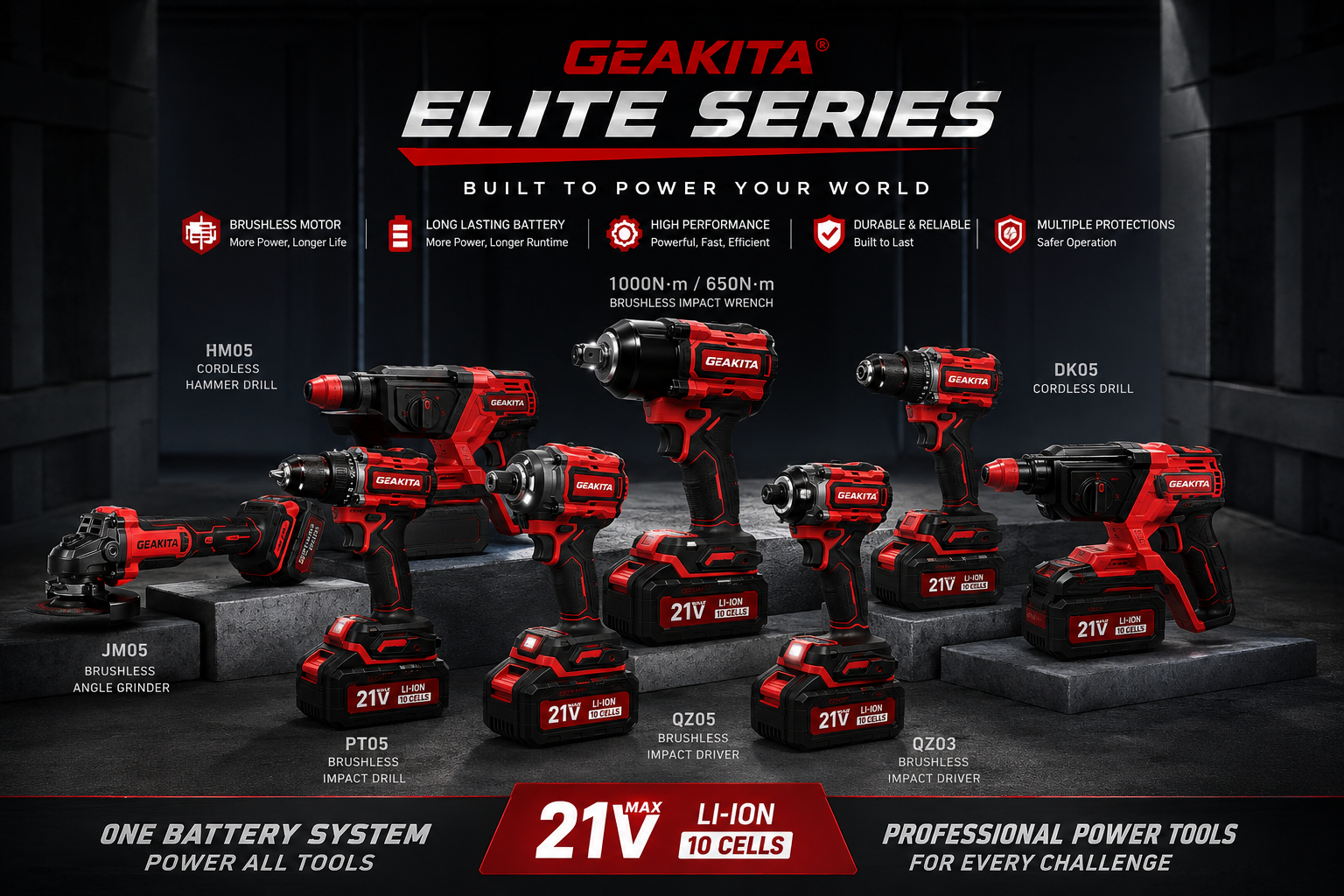
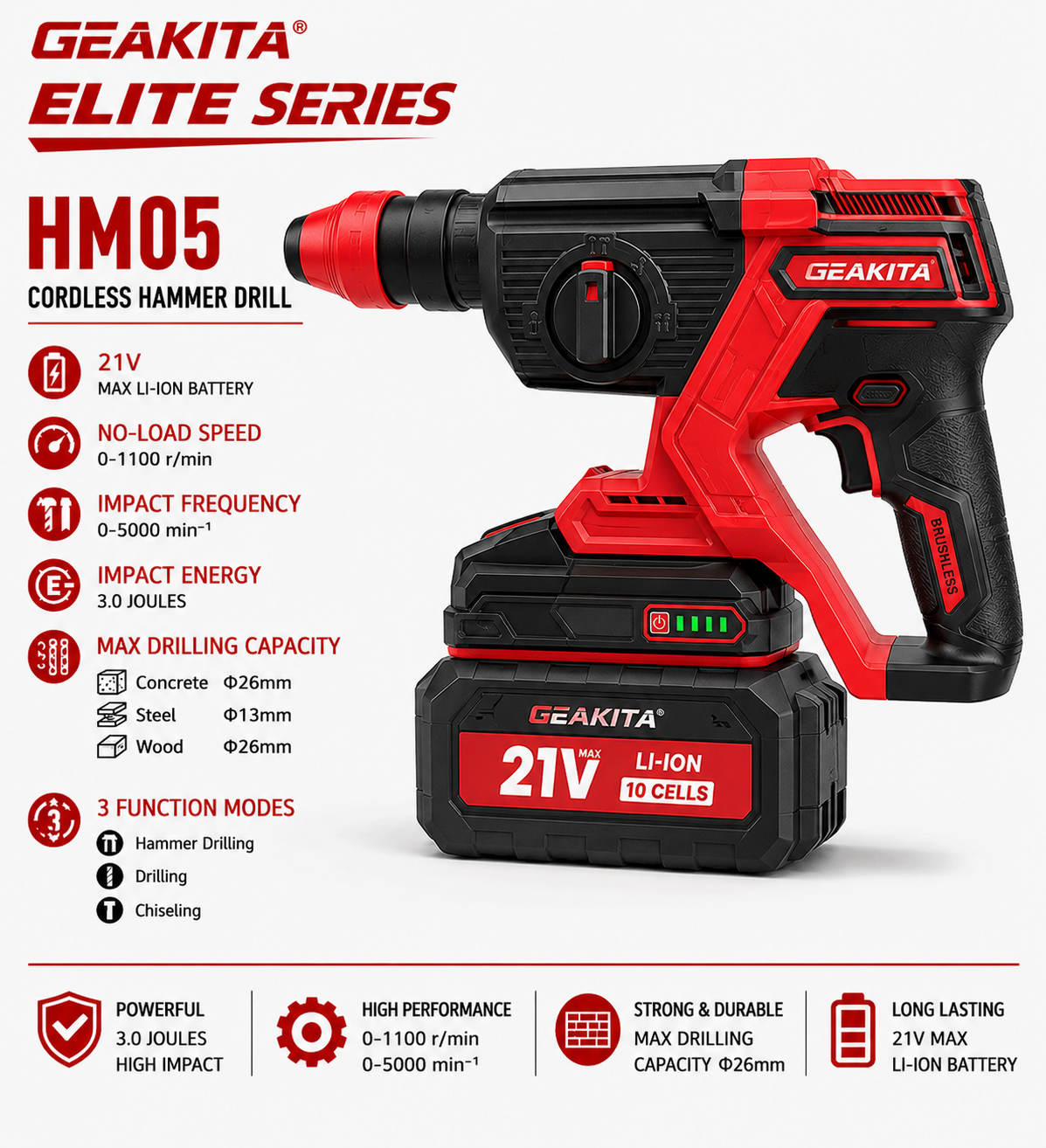
The Geakita Elite series is a good example. It covers impact drills, angle grinders, screwdrivers, impact wrenches, and rotary hammers, all using 21V brushless pure copper motors with 1300-2000mAh battery configurations. Specific models include the PT-05 brushless impact drill, DK-05 16.8V brushless impact drill, JM05 angle grinder, HM05 cordless rotary hammer, QZ03 and QZ05 impact screwdrivers, and 650/1000 N.m impact wrenches. These models share a common battery platform, which simplifies fleet management for distributors and project buyers.
In addition to standard products, Geakita offers OEM/ODM services. Customization includes logo printing, packaging design, voltage customization (110V/220V), parameter adjustment (torque/speed), color schemes, and battery configuration (2.0Ah/4.0Ah). For projects with recurring demand, the MOQ is five tool categories with eight items per category, a total of 40 items. Quality control is based on 100% full inspection before shipment and a three-level QC process (IQC/IPQC/FQC), with functional and load testing.
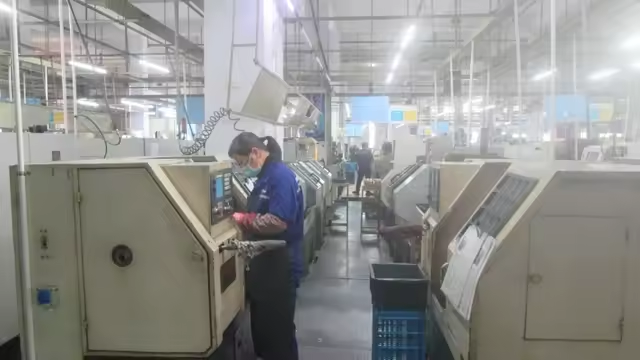
For larger programs, Geakita cites supply chain controls: Tier-A approval for key materials (cells, magnets, bearings, cutting tools), 100% IQC sampling, defect traceability, IPQC inspections, inline torque/electrical monitoring, automatic EOL testing, and OQC sampling with compliance to UN38.3 and dangerous goods standards. In a multi-year project involving more than 5,000 units, the company reports 99.8% on-time delivery and a 0.3% defect rate, with stable performance in 45°C+ high-temperature conditions.
Step-by-Step Breakdown: How to Match Tools to Your Project
Step 1: Define the operating environment and duty cycle
Classify the project as continuous (8-12h/day), intermittent DIY, or portable on-demand. This determines battery capacity, number of batteries, and whether brushless motors are necessary.
Step 2: List required functions
Identify whether the work involves drilling, fastening, cutting, grinding, or impact tightening. Each function maps to a different tool class.
Step 3: Select the tool class and specification level
For example, impact drills handle drilling and fastening; impact wrenches handle high-torque bolt removal; rotary hammers handle concrete; angle grinders handle cutting and grinding.
Step 4: Verify motor and battery configuration
Brushless pure copper motors are common in the Geakita Elite series. Check voltage, cell count, and capacity. Higher torque and longer daily operation require larger battery packs.
Step 5: Confirm certifications and compliance
Ask for safety standards such as IEC/UL 62841-1 and battery standards such as IEC/UL 62133. For air and sea freight, lithium battery transport compliance such as UN38.3 may be required.
Step 6: Evaluate customization, lead time, and support
If the project needs private labeling or voltage adaptation, confirm the manufacturer's customization capabilities and timeframes.
Step 7: Plan for samples, spare parts, and after-sales
Sample testing is recommended before mass order. Confirm global warranty, technical support, and spare parts availability.
Use Cases: Cordless Tools in Real Project Settings
Construction sites and infrastructure
Concrete drilling, metal cutting, and bolt fastening are daily tasks. The HM05 cordless rotary hammer (21V, brushless, 1500-2000mAh*10 cells) is designed for concrete work, while the JM05 angle grinder (21V, 1300mAh*10 cells, brushless) handles cutting and grinding. A Geakita case involving construction and infrastructure reports stable performance in high-temperature environments above 45°C, with a defect rate of 0.3% across a program of more than 5,000 units.
Railway engineering and maintenance
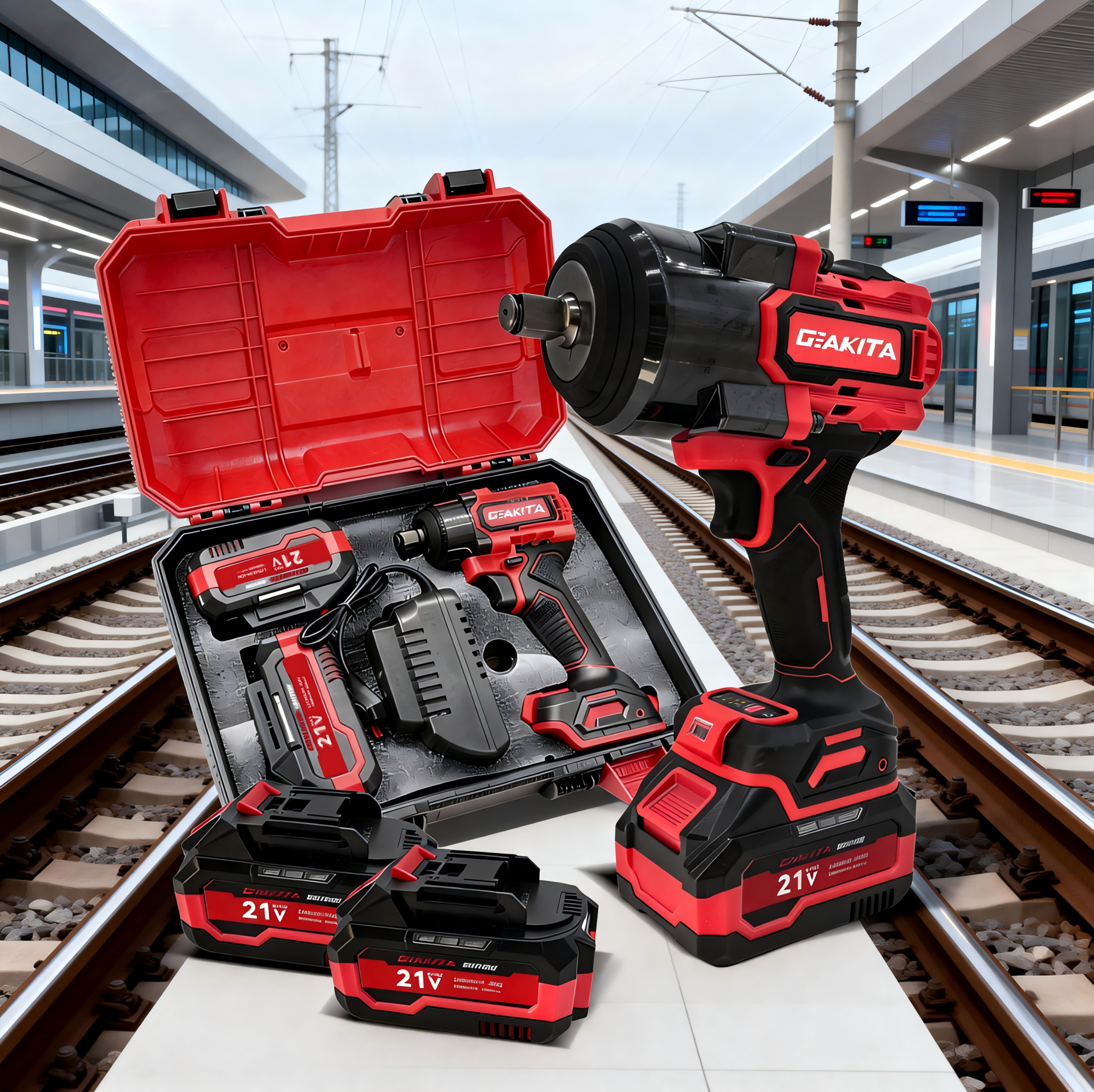
Railway projects need high-torque fastening and reliable portability. The GKR05 pure copper brushless impact wrench delivers an actual torque of 650 N.m with a no-load speed of 0-4000 r/min, suitable for bolt tightening in track and structure maintenance. The GKR03 screwdriver offers three torque levels (35/100/120 N.m) and no-load speeds up to 3000 r/min for light fastening work. Both use 21V lithium-ion battery configurations.
Auto repair and workshops
Impact wrenches are essential for tire changes, suspension work, and engine disassembly. The 650 N.m and 1000 N.m brushless impact wrenches in the Geakita lineup provide high torque in a cordless package. The India auto repair case from Geakita shows the wrench family being used for vehicle maintenance and workshop repair.
Manufacturing assembly lines
Assembly operations require consistent fastening torque and long runtime. The PT24 brushless impact drill provides 150 N.m of actual torque, 24+3 torque settings, and a 2000mAh*15-cell battery configuration. For lighter tasks, the DK-05 16.8V brushless impact drill is suitable for production lines with intermittent fastening needs.
DIY and household maintenance
For household users, lighter brushed or brushless drills such as the 12V 9868 (28 N.m) or the 16.8V DK02 (120 N.m in brushless version) offer sufficient capacity for furniture assembly, shelf mounting, and occasional repairs. They operate in intermittent or on-demand modes.
Comparison Table: Tool Categories vs. Typical Project Functions
| Tool Category | Typical Project Function | Example Geakita Model(s) | Key Specifications |
|---|---|---|---|
| Impact Drill | Drilling, screwdriving, fastening | PT-05, PT24, DK-05 | 16.8V/21V, brushless pure copper, 1300-2000mAh*4-15 cells, up to 150 N.m |
| Impact Wrench | Bolt tightening and removal, vehicle/railway maintenance | GKR05, 650NM, 1000NM | 21V, brushless pure copper, 650-1000 N.m, 0-4000 r/min |
| Angle Grinder | Cutting, grinding, surface preparation | JM05 | 21V, brushless pure copper, 1300mAh*10 cells, 100 mm disc |
| Rotary Hammer | Concrete drilling, chiseling | HM05, RH02 | 21V, brushless pure copper, 1500-2000mAh*10 cells, concrete capacity up to Φ26mm |
| Impact Screwdriver | Screwdriving, light fastening, assembly | QZ03, QZ05, GKR03 | 16.8V/21V, brushless, 1300-1500mAh*10 cells, 35-120 N.m |
| Circular Saw | Wood and panel cutting | CS01 | 21V, brushless pure copper, 1500mAh*10 cells, 21000 r/min |
This table is based on Geakita's current lineup and is intended as a starting point. The final selection should also verify compliance, battery runtime, and after-sales support for the specific project.
FAQ
What safety and battery standards should cordless power tools meet for project use?
For project use, tools should meet the safety requirements of IEC/UL 62841-1, which covers electric motor-operated hand-held tools, and lithium-ion cells should comply with IEC/UL 62133. Buyers should also ask about battery transport compliance, such as UN38.3, especially when shipping lithium products by sea or air.
How do I match cordless tool specifications to my project workload?
Start by defining the environment and operating mode. Continuous operation for 8-12 hours per day demands a higher-capacity battery and a brushless motor; intermittent DIY tasks can use lighter brushed or compact brushless tools. Match torque to fastening requirements, and battery capacity to the daily workload.
What should I consider when budgeting for a cordless tool fleet?
Focus budget on the tool classes that directly support the project's most frequent tasks. For distributors planning a stock program, consider the MOQ and configuration flexibility. Geakita's MOQ is five tool categories with eight items per category, totaling 40 items, which allows a mix of tool types without committing to a single category.
Can I request a sample to test tools in my working conditions before bulk ordering?
Yes. A sample test is a practical way to verify torque, battery life, and ergonomics in your actual environment. Geakita offers OEM/ODM support and can provide technical information for sample evaluation. Contact the Geakita sales team to request a quote or sample for your project.
What are Geakita's lead times for production orders?
For mass production, the lead time is 30-45 days. For repeat orders, the lead time is 20-28 days. Shipping time is calculated separately based on shipping method and destination port.
Conclusion
Cordless power tool selection is most reliable when it follows a project-environment logic: define the duty cycle, identify the functions, match the tool class, verify compliance, and confirm the manufacturer's quality and support systems. Geakita's cordless platform demonstrates this approach with a shared 21V brushless system, OEM/ODM flexibility, and documented quality control for sustained industrial use.
For buyers moving from research to evaluation, the next step is to test the tools in a real project context. Contact Geakita at Flora@gearpioneer.com or +86 135-9954-5996 to discuss project requirements, request samples, or obtain a quotation. You can also review the full product range in the Geakita corporate profile and catalog: Geakita Corporate Profile and Product Catalog 2026.