
- Industry News
- 896
- Gearpioneer-Powering Smart Work EveryWhere
- 30/08/2026
Cordless Power Tools for Field Projects: A Duty-Cycle and Site Guide
How to match cordless power tools to project conditions: duty cycles, environments, Geakita model guidance, compliance standards, and sourcing steps for 2026.
Cordless Power Tools for Field Projects: A Duty-Cycle and Site Guide
For buyers moving from product research into evaluation, the practical question is no longer simply which brand offers a cordless power tool. The more useful question is which cordless power tool should be assigned to each project condition. Geakita’s product range is defined around real operating environments: industrial production lines, construction sites, household DIY maintenance, and heavy-duty continuous operation. This field guide explains how to match Geakita models to those conditions, and what to verify before sourcing.
Why Match a Cordless Power Tool to Its Working Condition?
Project failures in cordless power tools are often caused by a mismatch between tool capability and actual workload. An underpowered drill may overheat on a construction crew, while a 1000N.m impact wrench is unnecessary for light furniture assembly. The risk is not only performance; it is also cost. A buyer who picks the most expensive high-torque model for every job may spend more than the project requires, while a buyer who picks the cheapest model may face delays and replacements.
This is why duty cycle matters. Geakita’s product data describes three operating modes for its cordless tools: continuous operation of 8–12 hours per day, intermittent operation for DIY or household use, and portable on-demand operation. Each mode implies a different tool weight, battery configuration, motor type, and torque requirement. Matching the tool to the mode is the first step in a practical sourcing decision.
Geakita designs its tools for four broad environments: industrial production lines, construction site operation, household DIY maintenance, and heavy-duty continuous operation. This creates a useful selection screen. A buyer can start with the environment, then narrow the choice by task, model, and specification.
The Cordless Power Tool Market in 2026: More Tools, More Working Conditions
Third-party market data helps explain why project-specific selection has become more important. The global cordless power tools market was valued at approximately USD 13.44 billion in 2024 and is projected to reach USD 32.58 billion by 2033. Drilling and fastening tools accounted for the largest segment, with a 36.51% revenue share in 2024. The angle grinder market was estimated at USD 3.2 billion in 2024, and the impact wrench market was estimated at roughly USD 2.68 billion. China’s power tools market reached about USD 5.30 billion in 2024, reflecting its role as a major export hub for cordless lithium technology.
These figures point to a broader trend: cordless tools are no longer limited to one or two job types. They are used on rail lines, in auto repair shops, on scaffolding, in factories, in warehouses, and in homes. At the same time, global brands such as Makita, DeWalt, Bosch, and Milwaukee remain visible in the market, which means a supplier must be able to explain how its own lineup fits specific field conditions rather than competing only on brand name.
A Duty-Cycle and Site Framework for Cordless Power Tools
A reliable cordless tool is not only about voltage. The first thing to define is how the tool will be used each day. Geakita’s product data describes three operating modes:
- Continuous operation (8–12 hours/day): suited for factory assembly lines, construction crews, and maintenance shifts where the tool is in use for most of the working day.
- Intermittent operation (DIY/household): suited for furniture assembly, occasional repairs, and home improvement tasks with long idle periods between uses.
- Portable on-demand operation: suited for field crews, auto repair, railway maintenance, and service calls where the tool is carried to the job and used when needed.
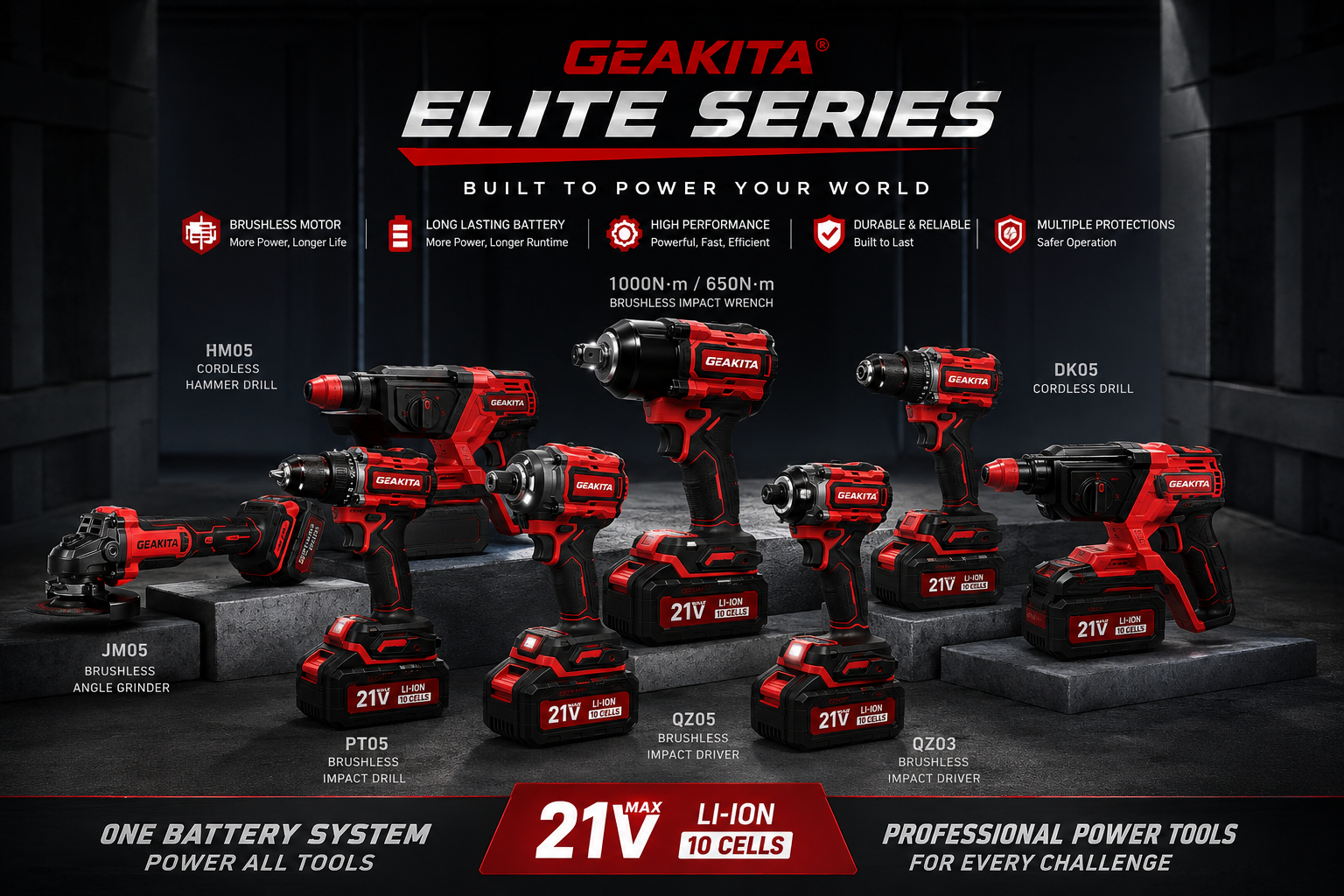
These modes are not theoretical. Geakita designs its cordless lineup for industrial production lines, construction site operation, household DIY maintenance, and heavy-duty continuous operation. The Geakita Elite series alone covers impact drills, angle grinders, screwdrivers, impact wrenches, and rotary hammers, all at 21V with brushless pure copper motors and 1300–2000mAh battery configurations. The Elite series models include DK05, PT05, QZ03, QZ05, JM05, HM05, the 650NM impact wrench, and the 1000NM impact wrench.
The Value of a Shared 21V Platform
For distributors and contractors, a shared platform reduces the number of battery systems that must be stocked. Geakita’s Elite series uses 21V lithium-ion power, brushless pure copper motors, and battery configurations ranging from 1300mAh to 2000mAh with 10 cells in most professional models. This means a buyer can plan a project around one platform while selecting different tool heads for drilling, fastening, grinding, and impact work.
Step-by-Step: Matching a Cordless Power Tool to a Project
Step 1: Define the duty cycle
A contractor running an 8-hour shift needs a different platform than a homeowner drilling a few holes. Heavy-duty jobs such as railway bolting, steel structure work, or continuous assembly benefit from 21V brushless models with 2000mAh cells and high torque. For intermittent DIY work, lighter 16.8V drills such as DK00, DK01, or DK03 are designed for household maintenance and lighter workshop tasks.
Step 2: Identify the material and task
Concrete drilling requires an impact-capable rotary hammer. Geakita’s RH01 cordless rotary hammer is a 21V brushless pure copper model with 2000mAh battery capacity and drilling capacity of Φ26mm in concrete, Φ13mm in steel, and Φ26mm in wood. For steel fastening and bolt removal, the GKR05 impact wrench delivers 650N.m of actual torque, while the GKR06 heavy-duty wrench delivers 1000N.m. For general drilling and screwdriving, impact drills such as the PT24 provide 150N.m of actual torque with a 13mm metal ratchet chuck and 24+3 torque settings.
Step 3: Check the environment
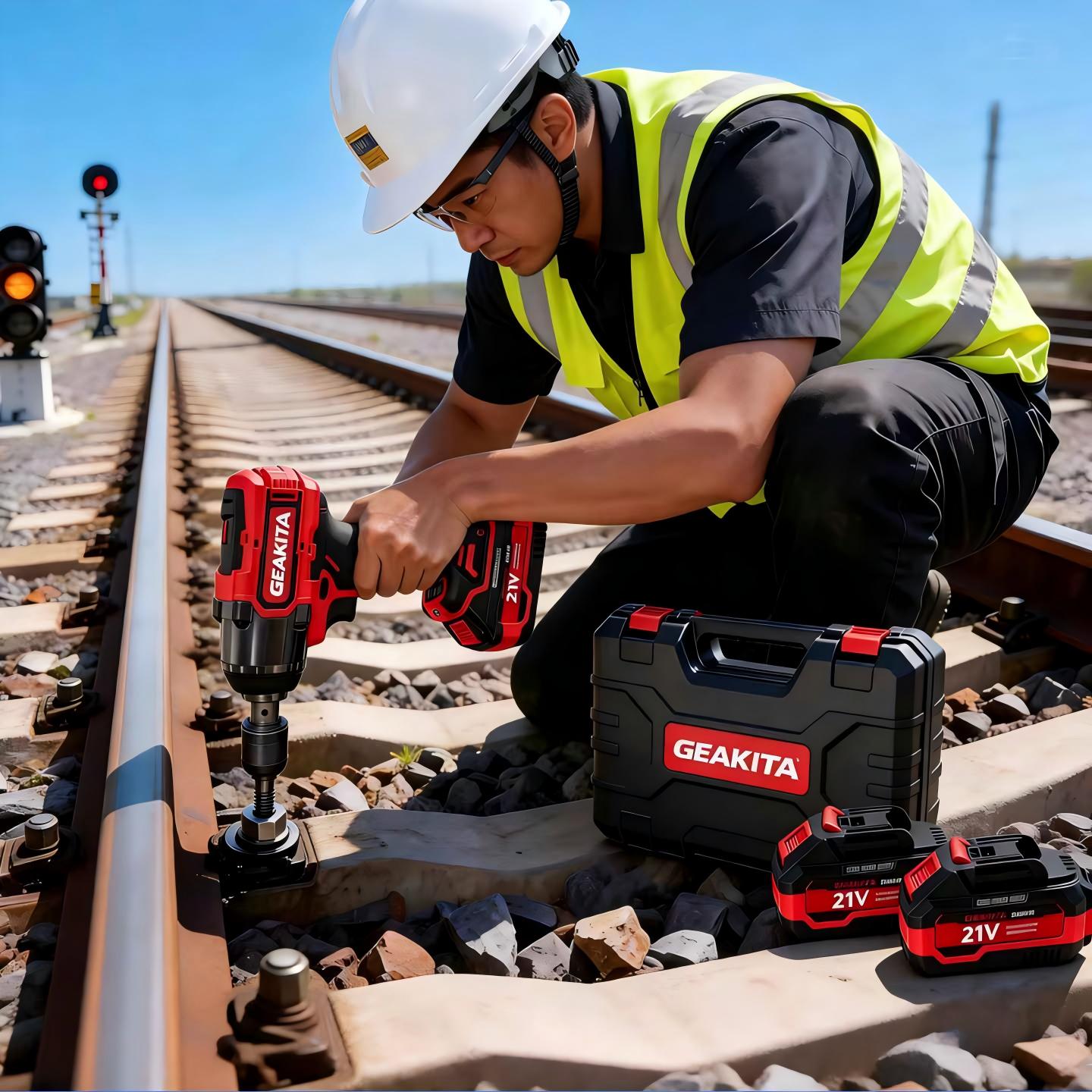
Industrial production lines require tools that can operate continuously. Construction sites require portable tools that can handle concrete, metal, and fastening tasks. Railway maintenance and automotive field service require high-torque impact tools that can be carried to the work point. Geakita’s GKR05 and GKR06 are listed for railway engineering and maintenance, automotive and transportation, construction and steel structures, heavy machinery manufacturing, energy and petrochemicals, shipbuilding and marine engineering, mining and metallurgy, and light industry. This wide list is useful when a single supplier must support several project environments.
Step 4: Compare power, torque, and battery configuration
After defining the task, the specification table becomes a decision tool. A household drill may only need 16.8V, a 10mm chuck, and LED lighting. A construction impact drill should have 21V, a 13mm metal chuck, and 24+3 torque settings. A heavy-duty impact wrench should offer high real torque, such as 650N.m or 1000N.m, and enough battery capacity for sustained work.
Step 5: Define sourcing and customization requirements
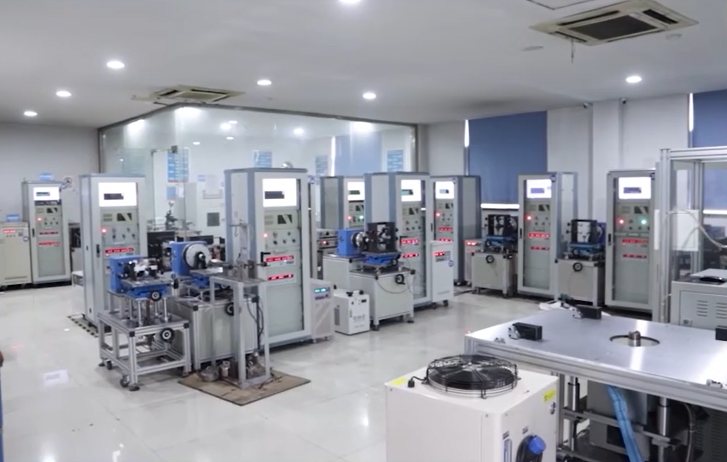
Once the model is selected, buyers should confirm the production terms. Geakita supports OEM/ODM customization including logo printing, packaging design, voltage customization at 110V or 220V, torque and speed parameter adjustment, color scheme selection, and battery configuration from 2.0Ah to 4.0Ah. The company applies 100% full inspection before shipment, a three-level QC process (IQC/IPQC/FQC), and functional and load testing. For distributors, the stated MOQ is at least 5 power tool categories with 8 items per category, for a total of 40 items.
Use Cases: Which Geakita Tools Fit Which Field Conditions
Railway and infrastructure maintenance
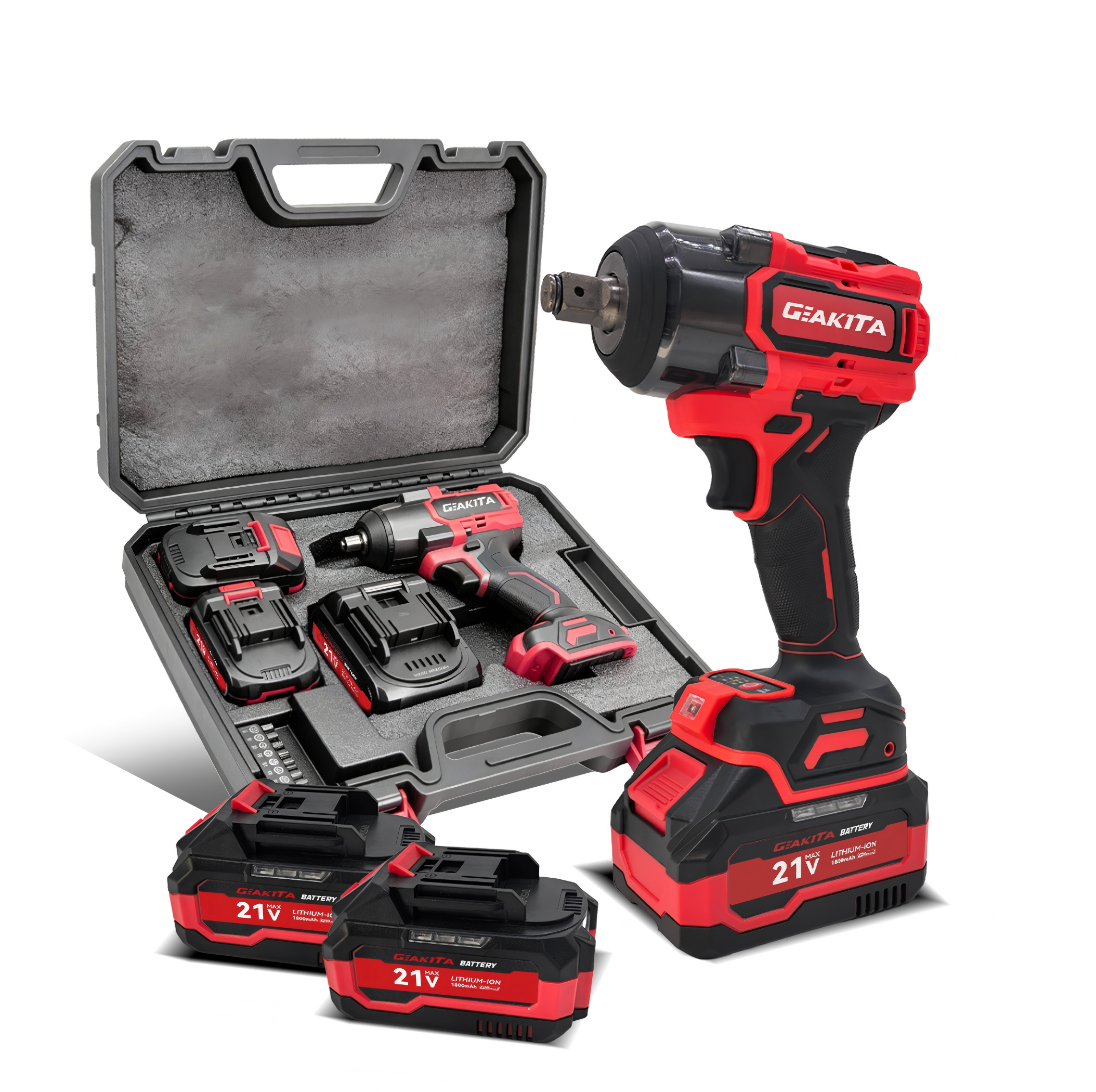
The 21V pure copper brushless impact wrenches GKR05 and GKR06 are listed for railway engineering and maintenance, automotive and transportation, steel structures, heavy machinery, energy, petrochemicals, shipbuilding, mining, and light industry. GKR05 delivers 650N.m of actual torque with a no-load speed of 0–4000 r/min, while GKR06 delivers 1000N.m with a no-load speed of 0–3200 r/min. Both use a Makita 10-cell 2000mAh lithium-ion configuration. These tools are relevant for bolt tightening and loosening on rails, structural steel, and heavy equipment.
Construction and renovation
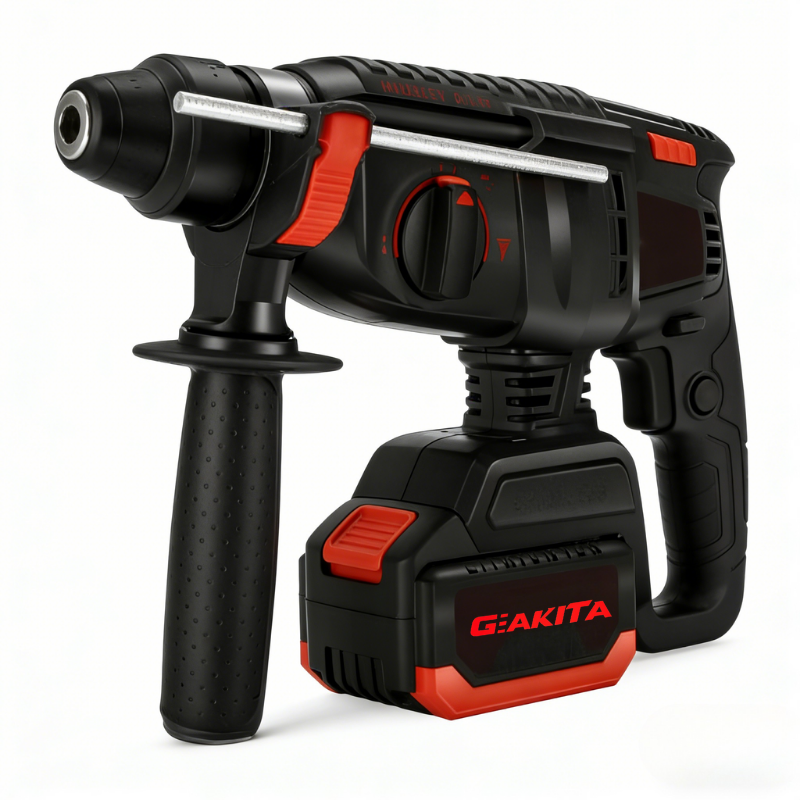
Construction sites combine concrete, steel, wood, and fastening tasks. Geakita’s RH01 cordless rotary hammer supports concrete drilling up to Φ26mm and steel drilling up to Φ13mm. The PT24 impact drill adds 150N.m of torque with a 13mm chuck and 24+3 torque settings. For cutting and grinding, the JM05 21V angle grinder uses a brushless pure copper motor and a 1300mAh battery configuration. In one multi-country supply case, Geakita reported 5,000+ units delivered over 2+ years with 99.8% on-time delivery, a 0.3% defect rate, and stable performance in 45°C+ site conditions.
Auto repair and mobile service
Vehicle maintenance, tire replacement, engine disassembly, and workshop repair often require high-torque impact wrenches and compact screwdrivers. The GKR05 impact wrench is a practical fit for these tasks because it combines 650N.m of torque with a 21V lithium-ion battery and pure copper brushless motor. For lighter fastening work, the GKR03 screwdriver offers three torque levels of 35/100/120N.m and no-load speeds of 1200/2400/3000 rpm.
Factory assembly and workshop production
Continuous assembly work needs tools that can run for long periods without frequent recharging. Geakita’s PT24 impact drill uses 2000mAh × 15 cells, 21V, and 150N.m of actual torque. The 13mm three-jaw metal ratchet chuck and 24+3 torque settings make it suitable for repetitive drilling and screwdriving in a workshop or production line environment.
Household DIY and light maintenance
For household DIY, the main priorities are weight, ease of use, and enough power for common tasks. Geakita’s DK00 cordless drill is an 16.8V brushless model with a 13mm chuck, maximum drilling capacity of 13mm in steel and 60mm in wood, 24 torque settings, LED light, and a weight of 1.6kg. The DK01 and DK03 models are also 16.8V brushless drills with similar household-focused specifications.
Distribution, retail, and e-commerce
Retailers, supermarkets, hardware stores, and e-commerce partners need a range that covers multiple buyer needs. Geakita’s applicable industries include manufacturing, agriculture, retail, supermarkets, e-commerce, hardware stores, and power tool distributors. The Elite series and the broader cordless lineup allow a distributor to stock tools by category rather than by a single project type.
Comparison Table: Tool Type vs. Project Demand
| Tool Category | Typical Project Condition | Geakita Model | Key Specification Example |
|---|---|---|---|
| Impact wrench | Railway, automotive, steel structure, heavy equipment | GKR05 / GKR06 | 650N.m / 1000N.m actual torque; 21V lithium-ion; pure copper brushless motor |
| Rotary hammer | Construction, concrete drilling, renovation | RH01 | 21V brushless pure copper; 2000mAh × 10 cells; concrete Φ26mm |
| Impact drill | Assembly line, workshop, general construction | PT24 | 21V; 150N.m; 13mm metal ratchet chuck; 24+3 torque settings |
| Angle grinder | Metal cutting, grinding, site fabrication | JM05 | 21V; brushless pure copper; 1300mAh × 10 cells |
| Cordless drill | Household DIY, light maintenance | DK00 / DK01 | 16.8V brushless; 13mm chuck; wood drilling up to 50–60mm; LED |
| Screwdriver | Fastening, repair, light assembly | GKR03 / QZ03 | Three torque levels 35/100/120N.m; 21V or compatible platform |
Frequently Asked Questions
What safety and battery standards should I verify before importing cordless power tools?
For electric motor-operated hand-held tools, IEC/UL 62841-1 is the primary safety standard. For lithium-ion cells used in portable power tools, IEC/UL 62133 is the relevant cell and battery standard. Destination-specific requirements such as CE, UL, INMETRO, or FCC may also apply. Buyers should request the relevant certificate from the manufacturer before confirming a project order.
Can Geakita cordless power tools support 8-hour daily operation on a job site?
Yes. Geakita product data defines three operating modes: continuous operation of 8–12 hours per day, intermittent operation for DIY or household use, and portable on-demand operation. The tools are designed for industrial production lines, construction site operation, household DIY maintenance, and heavy-duty continuous operation.
What is the minimum order for a first project purchase or market trial?
The stated MOQ is at least 5 power tool categories, 8 items per category, for a total of 40 items. With a monthly production capacity of 180,000+ units, Geakita can schedule first orders around project timelines. Mass production lead time is 30–45 days, while repeat orders typically take 20–28 days.
Can Geakita customize cordless power tools for specific project or market needs?
Yes. Geakita supports logo printing, packaging design, voltage customization at 110V or 220V, torque and speed parameter adjustment, color scheme selection, and battery configuration from 2.0Ah to 4.0Ah. This makes the lineup suitable for OEM/ODM projects where distributors need market-specific branding or voltage requirements.
How long does production take after order confirmation?
Mass production takes 30–45 days. Repeat orders usually take 20–28 days. Shipping time is calculated separately based on shipping method and destination port. Buyers should include this lead time when planning a project start date.
Final Sourcing Note: Match the Tool to the Work, Not the Other Way Around
The gap between tool capability and field condition is a common source of project delay. Geakita’s cordless lineup is organized around duty cycles and environments, not only around model numbers. Once a buyer defines continuous, intermittent, or on-demand use, and the environment where the tool must run, the correct model and specification become easier to identify.
For contractors, distributors, and OEM buyers, the sourcing process should include three checks: compliance verification, model-to-task matching, and production lead time confirmation. Geakita covers these steps with model-level specifications, OEM/ODM customization, 100% full inspection before shipment, and a stated lead time of 30–45 days for mass production.
Next step: Download the 2026 Corporate Profile & Product Catalog to review Geakita’s cordless power tool lineup, factory data, and OEM/ODM capabilities. For project-specific inquiries, contact Flora at Flora@gearpioneer.com or visit Geakita’s website. Geakita is based in Xiamen, China, and serves buyers in Europe, Southeast Asia, the Middle East, and other export markets.