
- Industry News
- 1129
- Gearpioneer-Powering Smart Work EveryWhere
- 26/08/2026
Cordless Power Tools for Regulated Markets: What to Verify Before You Source in 2026
Use this 2026 cordless power tools sourcing reference to verify specs, certifications, QC, and lead time before you evaluate a manufacturer.
Cordless Power Tools for Regulated Markets: What to Verify Before You Source in 2026
Buyers evaluating cordless power tools now need more than torque and speed: they need model-level specifications and current certification documents. This article is a 2026 sourcing reference built around Geakita as a manufacturer example. It explains which parameters matter, what compliance paperwork to request, and how to connect technical data with export-market requirements.
Problem Definition: Why Spec Sheets and Certifications Do Not Always Match
When a cordless power tool project moves from research to evaluation, the conversation changes from “is it cordless?” to “which voltage, torque, battery architecture, and certificate applies to the exact model?” Many procurement teams get stuck at this stage because:
- A certificate may cover a brand series but not every model in that series.
- Voltage alone does not reveal motor quality, battery cell configuration, or rated torque.
- Quality-control claims are hard to compare without inspection levels, defect traceability, and test conditions.
- Customs clearance and retailer onboarding can be delayed when the certificate name, model number, or market scope does not match the shipment.
The practical result is that buyers need a verification framework, not just a product catalog. The rest of this guide provides that framework using traceable facts from Geakita and public industry data.
Industry Background: The Cordless Market Is Growing With Compliance Pressure
According to Grand View Research, the global cordless power tools market was valued at USD 13.44 billion in 2024 and is projected to reach USD 32.58 billion by 2033. Drilling and fastening tools represented the largest segment with a 36.51% revenue share in 2024, according to Horizon Databook / Grand View Research. That is why cordless drills, impact drills, and screwdrivers are central to most sourcing plans.
The accessory and specialist categories are also expanding. One market estimate places impact wrenches at approximately USD 2.68 billion in 2024. The global angle grinder market was valued at USD 3.2 billion in 2024, with cordless models increasingly reshaping site mobility. In China, the power tools market reached USD 5.30 billion in 2024, reinforcing the country’s role as an export hub for cordless lithium technology.
With more SKUs entering cross-border programs, safety and battery standards matter. IEC/UL 62841-1 is the primary safety standard for electric motor-operated hand-held tools. Lithium-ion cells in power tools are commonly expected to comply with IEC/UL 62133 for portable applications. Global Market Insights lists Makita, DeWalt, Bosch, and Milwaukee as major market players, which means challenger brands must compete on specification clarity, certification coverage, and manufacturing control.
Detailed Solution: Using Geakita as a Specification and Compliance Reference
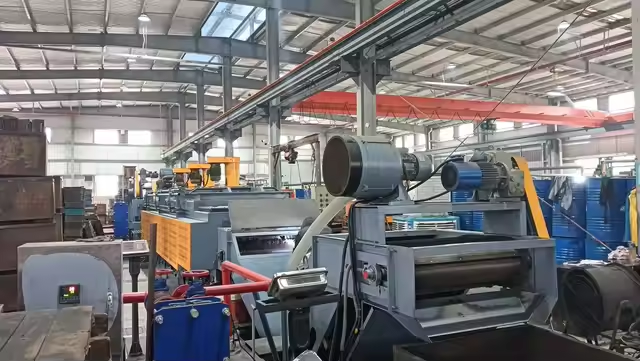
Geakita, legally Xiamen Tiangong Kaiwu Technology Co., Ltd., is a power tool manufacturer founded in 2009. The company operates from a production base in Xiamen with approximately 40,000 m² of floor space and a team of more than 300 staff, including 25 engineers. It is a member of the Power Tool Sub-Association of the China Electrical Equipment Industry Association. Its main cordless categories include 21V and 16.8V impact drills, impact wrenches, angle grinders, screwdrivers, rotary hammers, and circular saws. The company also produces robotic pool cleaners and commercial cleaning robots. In 2024, Geakita reported RMB 230 million in sales revenue from lithium power tools.
For buyers in the Research and Evaluation stage, Geakita is useful as a reference because its cordless lineup connects three things: electrical parameters, mechanical limits, and export-market compliance.
Compliance Files: CE, UKCA, and CMA
Geakita holds CE certificates issued by KTI under the Electromagnetic Compatibility Directive 2014/30/EU. For example, certificate KTi250704E249C, issued on 2025-08-04 and valid until 2030-08-04, relates to the Geakita Elite series and several impact wrench models. For the UK market, Beide Compliance Laboratory issued UKCA certificate B-S2412C5162 covering a multi-functional electric hand drill, valid through 2027-12-12. In China, Zhejiang Zhongxie Lide Quality Testing Technology Co., Ltd. issued CMA certificate WTS2026-S0339 for the GKR05 heavy-duty impact wrench under GB 3883.1-2014, with an issue date of 2026-04-02.
Always request the model-specific certificate. A certificate may list only certain models, and an expired certificate is not an acceptable compliance document for a new order.
| Certification | Market | Example Document | Issuing Body | Validity / Issue |
|---|---|---|---|---|
| CE (EMC) | EU | KTi250704E249C | KTI | 2025-08-04 to 2030-08-04 |
| UKCA | UK | B-S2412C5162 | Beide Compliance Laboratory | 2024-12-12 to 2027-12-12 |
| CMA | China | WTS2026-S0339 | Zhejiang Zhongxie Lide | Issued 2026-04-02 |
Parameter Reference Across Cordless Tool Categories
Below is a parameter reference table built from verified product facts. It is designed to help buyers compare categories without relying on vague marketing language.
| Tool Category | Representative Models | Motor | Voltage / Battery | Key Mechanical Limit |
|---|---|---|---|---|
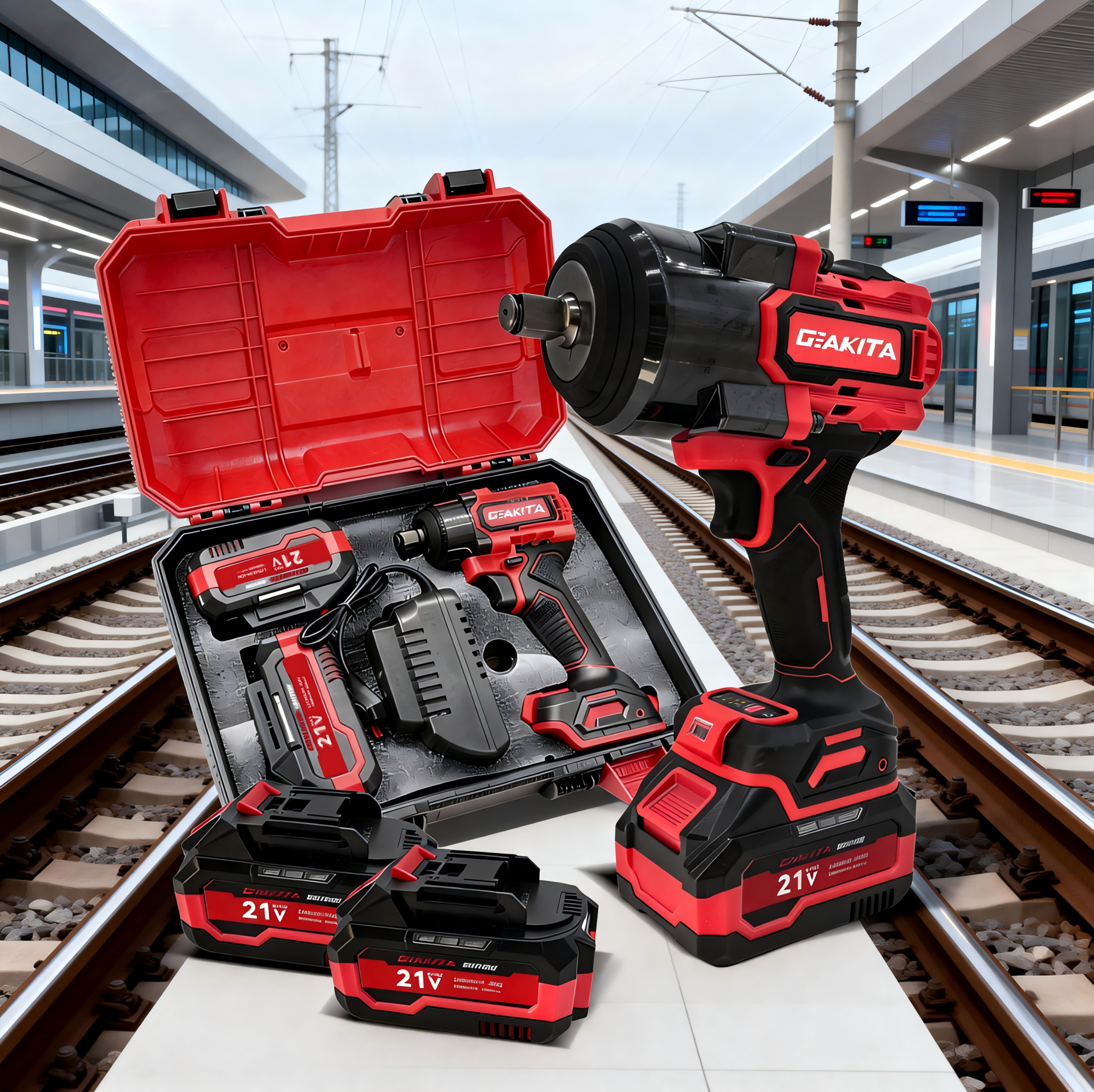
| Impact wrench | GKR05, Geakita Elite 650NM | Brushless pure copper | 21V, 2000mAh * 10 cells | 650 N.m actual torque; 0-4000 r/min |
| Heavy-duty wrench | GKR06 | Brushless pure copper | 21V, 2000mAh * 10 cells | 1000 N.m actual torque; 0-3200 r/min |
| Impact drill | PT24, PT22, PT20, PT12 | Brushless pure copper | 21V, 1300-2000mAh * 10-15 cells | 13mm chuck; 24+3 torque settings; PT24 up to 150 N.m |
| Cordless drill | DK00, DK01, DK02, DK03 | Brushless | 16.8V | 13mm chuck; 24+3 torque settings; up to 120 N.m |
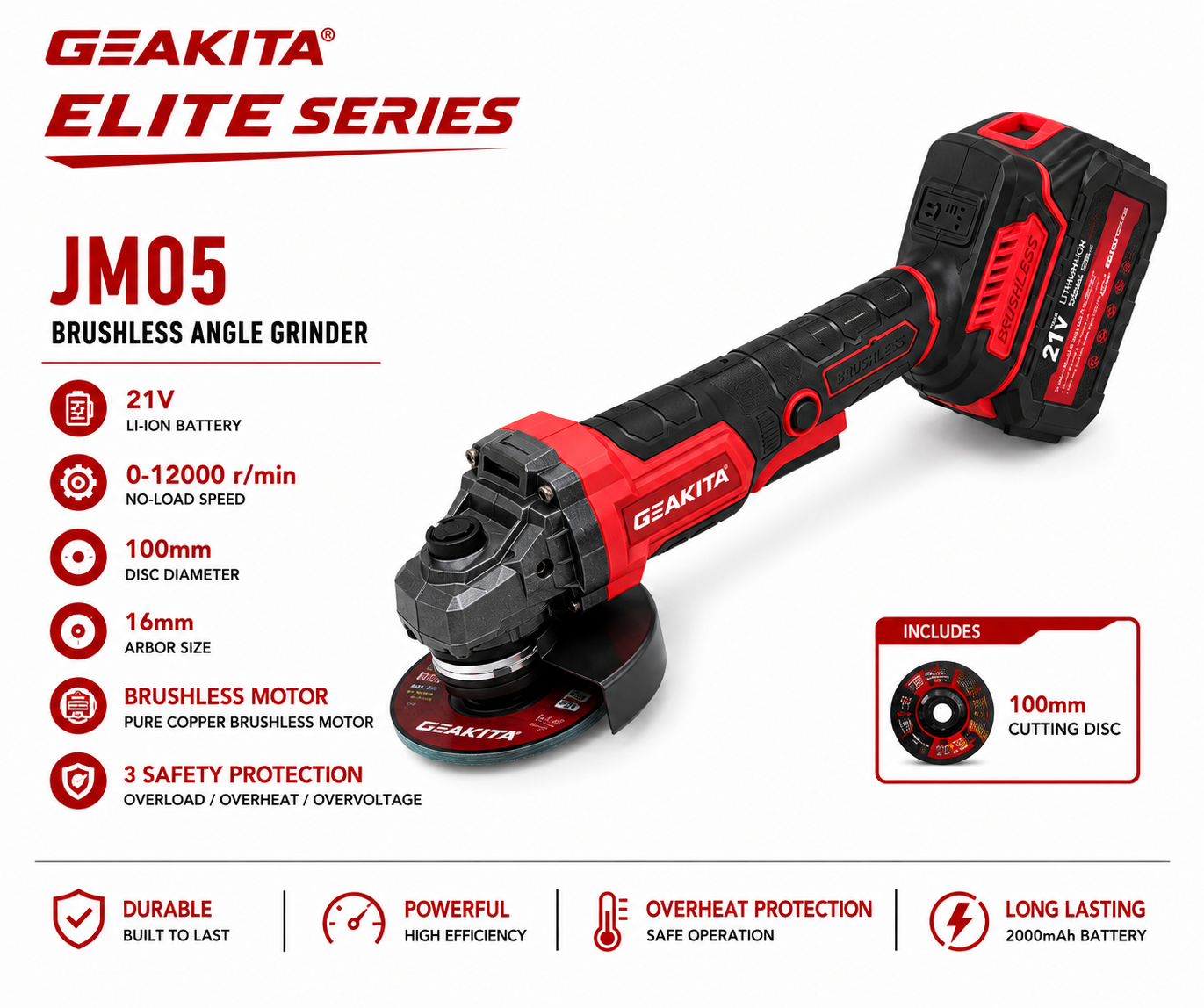
| Angle grinder | JM05, JM03 | Brushless pure copper on JM05 | 21V, 1300mAh * 10 cells | 100mm cutting disc; 12,000 RPM on JM03 |
| Rotary hammer | HM05, RH01, RH02 | Brushless pure copper | 21V, 1500-2000mAh * 10 cells | Concrete Φ26mm; steel Φ13mm; wood Φ26mm |
| Circular saw | CS01 (WQG01) | Brushless pure copper | 21V, 1500mAh * 10 cells | No-load speed 21,000 r/min |
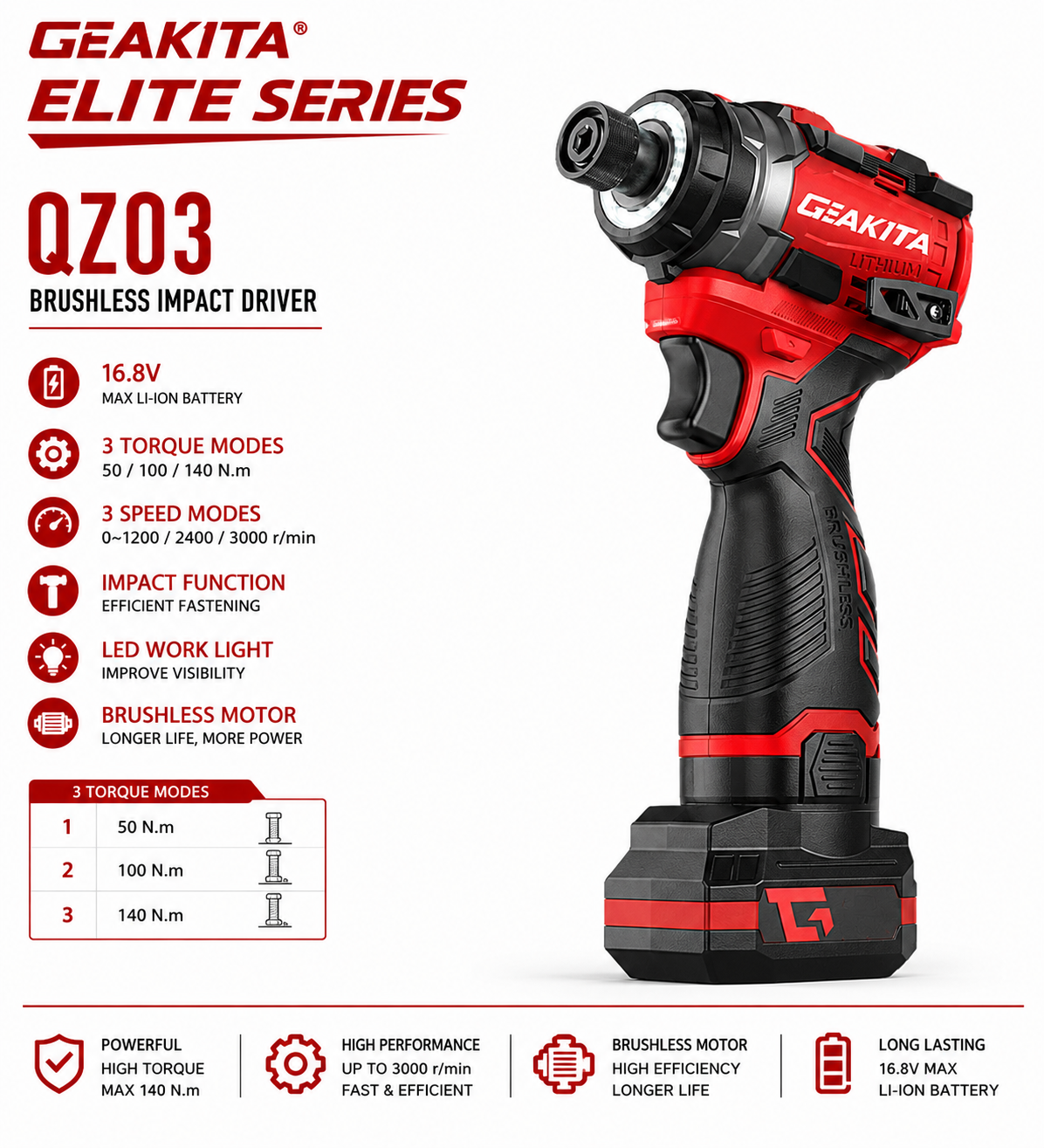
| Impact screwdriver | QZ01, QZ02 | Not specified as brushless in source data | 16.8V | 35/100/120 N.m torque; 0-3000 r/min |
This table is not a substitute for a model-specific datasheet. It is a starting point for asking the correct questions before adding a SKU to a program.
Step-by-Step Breakdown: How to Evaluate a Cordless Power Tool Before Committing
Step 1: Screen for Market Approval First
Identify the destination market before comparing torque or price. For the EU, ask for the CE declaration and the exact certificate number. For the UK, request UKCA documentation. Check whether the model number appears on the certificate and whether the certificate is still valid. Geakita’s CE certificates, for example, were issued under KTI with a validity period that buyers should verify for each relevant model.
Step 2: Verify Electrical Architecture
Cordless power tools are systems, not just tools. Check rated voltage, battery capacity, cell count, and motor type. A 21V brushless pure copper motor is not the same as a 21V brushed motor. In Geakita’s lineup, models such as the PT24 and GKR05 use brushless pure copper motors, while some entry-level drills use brushed pure copper motors. That distinction affects efficiency, service life, and runtime.
Step 3: Match Mechanical Limits to the Job
Torque, chuck diameter, no-load speed, and drilling capacity determine whether the tool can perform the task. For example, the GKR05 impact wrench provides 650 N.m actual torque and a no-load speed of 0-4000 r/min, which matters for fastening and loosening heavy bolts. The RH01 rotary hammer has concrete drilling capacity of Φ26mm, which is useful for masonry and anchoring work. If a spec sheet does not state the mechanical limit clearly, ask for the exact value.
Step 4: Inspect Quality Control and Traceability
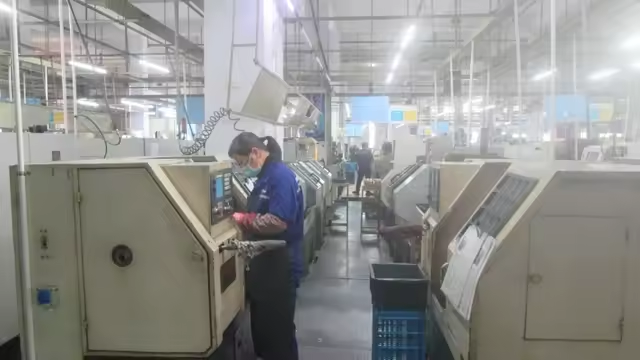
Compliance documents are only one part of evaluation. Buyers should also check how the factory controls quality during mass production. Geakita’s capability records include 100% full inspection before shipment and a 3-level QC process: IQC, IPQC, and FQC. Case data also references Tier-A approval for key materials, inbound sampling, defect traceability, automatic end-of-line testing, and compliance with UN38.3 and dangerous goods standards. These details matter because they affect consistency across large orders.
Step 5: Review OEM/ODM Constraints Before Budgeting
Customization changes the product cost structure. Geakita supports logo printing, packaging design, voltage customization such as 110V/220V, parameter adjustment, color scheme changes, and battery configuration choices. The stated MOQ is purchase of at least five power-tool categories with eight items per category, for a total of 40 items. Mass production lead time is 30-45 days; repeat orders are 20-28 days. Shipping time is calculated separately. These constraints should be part of the evaluation, not deferred to the final purchase order.
Use Cases: Where Cordless Power Tool Parameters and Certifications Matter Most
Construction Contractors in Hot-Climate Markets
Construction work requires constant drilling, cutting, and fastening under demanding conditions. Geakita case data reports that a multi-year program involving more than 5,000 units achieved 99.8% on-time delivery, a 0.3% defect rate, and stable performance in environments above 45°C. For buyers evaluating suppliers, this kind of operational data is more useful than a single product picture.
Auto Repair Workshops
Vehicle maintenance, tire replacement, and engine disassembly require high torque in short bursts. Impact wrenches such as the 650 N.m GKR05 or the 1000 N.m GKR06 are relevant examples for workshop evaluation. The ability to move between sockets and fasteners without a compressor is one reason cordless tools are now common in auto repair environments.
Hardware Stores and E-Commerce Distributors
Distributors need a range that covers drilling, fastening, cutting, and grinding. Geakita’s product application unit lists manufacturing, retail, supermarkets, e-commerce, hardware stores, and power tool distributors as relevant channels. A combination of cordless drills, impact drivers, angle grinders, and rotary hammers gives distributors overlapping battery systems and more complete selling stories.
Frequently Asked Questions
Which certifications does Geakita hold for cordless power tools?
Geakita holds CE certificates issued by KTI under EMC Directive 2014/30/EU for multiple cordless models, including the Geakita Elite series and impact wrenches. UKCA and CMA certificates are also available for specific models. Because certificates expire and apply only to listed model numbers, request the current certificate for the exact SKU before placing an order.
What specifications should I check when evaluating cordless power tools?
Check rated voltage, motor type, battery configuration, torque, chuck diameter, no-load speed, and drilling or cutting capacity. Voltage alone does not explain performance. For example, a 21V brushless pure copper motor with 2000mAh and 10 cells is a different system from a 21V brushed motor with lower cell capacity.
Can Geakita customize cordless power tools for different markets and price points?
Yes. Geakita supports logo printing, packaging design, voltage customization such as 110V/220V, torque and speed adjustment, color scheme changes, and battery configuration choices. These options allow buyers to align a product with a target market and retail positioning without using a generic one-size-fits-all model.
What is Geakita’s minimum order quantity for cordless power tools?
The MOQ is purchase of at least five power-tool categories, with eight items per category, for a total of 40 items. For sample requests, contact Geakita directly. A sample is the fastest way to check product handling, finish, packaging, and documentation before a larger commitment.
What are typical lead times for Geakita cordless power tool orders?
Mass production lead time is 30-45 days. Repeat orders are 20-28 days. Shipping time is calculated separately and depends on the shipping method and destination port. If you need a quotation or current model-level certification files, contact Flora at Flora@gearpioneer.com or WhatsApp +86 135-9954-5996.
Conclusion: Use Verified Data as Your Evaluation Baseline
Regulated-market sourcing for cordless power tools is a data exercise. The tools that survive evaluation are the ones with clear model-level specifications, current certification documents, documented quality control, and realistic commercial terms. Geakita provides a practical reference for this exercise because its product data includes voltages, motor types, battery architecture, torque values, certification numbers, and manufacturing capability.
Use the tables in this article as a checklist. Then ask for sample-specific documentation and verify the certificate for each SKU you plan to order. For a current product overview, Geakita’s corporate profile and product catalog can be downloaded here: GEAKITA Corporate Profile & Product Catalog 2026.
Next step
Contact Flora for current specs, certification files, sample requests, or a quotation: Flora@gearpioneer.com | WhatsApp +86 135-9954-5996 | Geakita official website