
- Industry News
- 660
- Gearpioneer-Powering Smart Work EveryWhere
- 15/07/2026
Matching a Commercial Cleaning Robot to Your Facility: A Scenario-Based Selection Guide
A guide for facility managers and procurement professionals on selecting the right commercial cleaning robot based on application scenario. Compare the Geakita WDC-C2 for hospitals, hotels, warehouses, malls, and more.
Matching a Commercial Cleaning Robot to Your Facility: A Scenario-Based Selection Guide
Selecting the right commercial cleaning robot for your facility goes beyond comparing specifications. The optimal choice depends on how the robot performs in your unique environment—be it a hospital, hotel, warehouse, or shopping mall. This guide helps procurement professionals and facility managers match a commercial floor cleaning robot to their specific scenario, using the Geakita WDC-C2 Intelligent Commercial Cleaning Robot as a reference model.
Why Facility Type Matters
Different commercial spaces impose distinct demands on a commercial scrubber dryer robot or commercial vacuum cleaning robot. A hospital requires quiet, disinfection-friendly operation and narrow aisle navigation, while a warehouse prioritizes long runtime and durable construction. Without aligning robot capabilities to the facility, performance suffers and return on investment drops.
The Challenge: One Size Does Not Fit All
Buyers often struggle to compare specifications across multiple industrial cleaning robot models without a clear framework for evaluation. Critical parameters like cleaning width, battery life, navigation accuracy, and maintenance accessibility must be weighed against the specific workload and environment of each site. This guide provides a structured method to evaluate commercial sweeping robot and scrubber options for different applications.
Geakita's WDC-C2: A Versatile Platform
Geakita (Xiamen Tiangong Kaiwu Technology Co., Ltd.), founded in 2009, is a professional manufacturer with over 300 employees and a 40,000 m² production base. The company's commercial cleaning robot, model WDC-C2, is an intelligent cleaning robot designed for a wide range of commercial environments including hospitals, malls, campuses, exhibition halls, offices, airports, hotels, and restaurants.
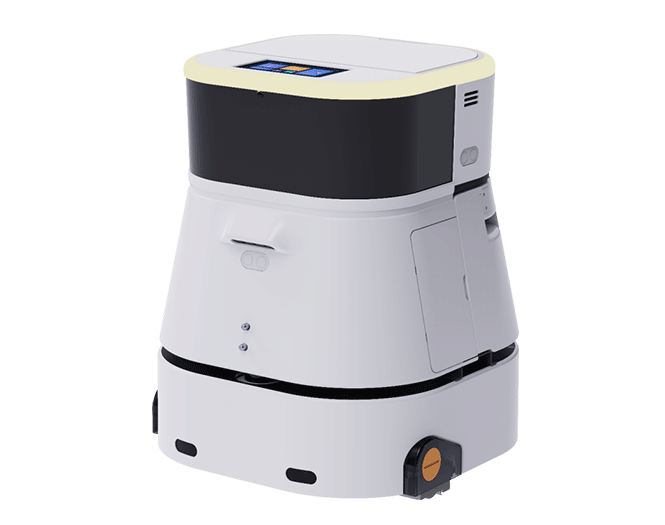
Key Specifications (from product datasheet)
- Dimensions: 503 × 503 × 629 mm
- Weight: 40 kg
- Water tank capacity: 10L clean water + 10L wastewater
- Battery: 1 kWh swappable, 3-hour charge, 5–12 hours runtime
- Cleaning width: 440 mm
- Adjustable speed: 0.2–0.8 m/s
- Navigation accuracy: ±1 cm
The robot is built to operate in continuous (8–12h/day), intermittent, and portable on-demand operation modes. Special requirements for workshop safety—such as ergonomic design for long-time holding and low vibration & noise level—are incorporated into the robot's engineering.
Step-by-Step Selection Framework
Step 1: Assess Facility Layout and Area
Map the total floor area, aisle widths, and obstacle density. For tight corridors or narrow doorways, robots with compact dimensions (like the WDC-C2's 503×503 mm footprint) and high navigation accuracy (±1 cm) are essential.
Step 2: Identify Floor Type and Cleaning Requirements
Hard floors (tile, concrete, vinyl) require robust scrubbing and drying, whereas carpets demand deep vacuuming. The WDC-C2 uses a dual-tank system (clean + wastewater) and a 440 mm cleaning width, suitable for hard floors in commercial environments.
Step 3: Determine Autonomy and Runtime
Facilities needing 8+ hours of cleaning per shift should prioritize robots with swappable batteries and long runtime. The WDC-C2's 1 kWh battery delivers 5–12 hours of operation with a 3-hour recharge cycle, and its battery is swappable for continuous deployment.
Step 4: Evaluate Navigation and Environmental Adaptability
Dynamic environments (e.g., airports, shopping malls) demand reliable SLAM navigation and obstacle avoidance. The WDC-C2 achieves ±1 cm navigation accuracy and operates at adjustable speeds from 0.2 to 0.8 m/s.
Step 5: Plan for Maintenance and Support
Look for suppliers that offer spare parts supply, technical support, and warranty. Geakita provides after-sales service including a global warranty, 7×24 technical support, and on-time replacement for defective units, as well as spare parts supply.
Use Cases by Facility Type
Hospital Cleaning Robot
Hospitals require quiet operation and frequent disinfection cycles. The WDC-C2's low noise and vibration levels support a safe, non-disruptive environment. Its 10L clean water tank handles medium-sized wards and corridors effectively.
Hotel Cleaning Robot
Hotels benefit from the robot's compact size to navigate guest rooms and narrow hallways. The swappable battery allows continuous cleaning across multiple floors without downtime.
Warehouse and Factory Floor Cleaning Robot
Large industrial spaces require long runtime and durable construction. The WDC-C2's 5–12 hour runtime and 440 mm cleaning width cover significant area per shift, while the ±1 cm navigation ensures systematic coverage without missing spots.
Mall and Supermarket Cleaning Robot
Retail environments need cleaning during off-hours. The robot's adjustable speed (0.2–0.8 m/s) and high-accuracy navigation allow it to clean while avoiding customers and displays, making it a practical mall cleaning robot and supermarket cleaning robot.
Comparison: Facility Requirements vs. Robot Capabilities
| Facility Type | Key Requirement | WDC-C2 Feature | Match |
|---|---|---|---|
| Hospital | Low noise, narrow aisles | Low vibration/quiet, 503mm width | High |
| Hotel | Multi-floor cleaning, compact size | Swappable battery, 40 kg weight | High |
| Warehouse | Long runtime, large area | 5–12h runtime, 440mm cleaning width | High |
| Airport | Dynamic obstacles, high traffic | ±1cm navigation, 0.2-0.8m/s speed | High |
| Office | Quiet, furniture avoidance | Adjustable speed, SLAM navigation | High |
Frequently Asked Questions
1. Does the Geakita WDC-C2 comply with international safety and quality standards?
2. Can the WDC-C2 handle different floor types like tile, concrete, and low-pile carpet?
3. What is the typical price range for a commercial cleaning robot like the WDC-C2?
4. Can I request a sample or trial before committing to a large order?
5. What is the lead time for the WDC-C2 and other Geakita commercial cleaning robots?
Conclusion
Choosing the right commercial cleaning robot requires aligning robot specifications with your facility's unique operational demands. The Geakita WDC-C2 offers a versatile platform that performs well across hospitals, hotels, warehouses, malls, airports, and offices. Its compact size, long runtime, high navigation accuracy, and low noise make it a strong candidate for most indoor commercial environments.
For more detailed technical specifications, customization options, and a quotation, download the Geakita corporate profile and product catalog: Download Catalog