
- Industry News
- 998
- Gearpioneer-Powering Smart Work EveryWhere
- 14/08/2026
Scenario-Based Commercial Cleaning Robot Selection: Matching Geakita WDC-C2 to Your Facility
A scenario-first guide to matching the Geakita WDC-C2 commercial cleaning robot to hospitals, malls, airports, hotels, offices, and restaurants. Includes specs, evaluation steps, and supplier capability assessment.
Scenario-Based Commercial Cleaning Robot Selection: Matching Geakita WDC-C2 to Your Facility
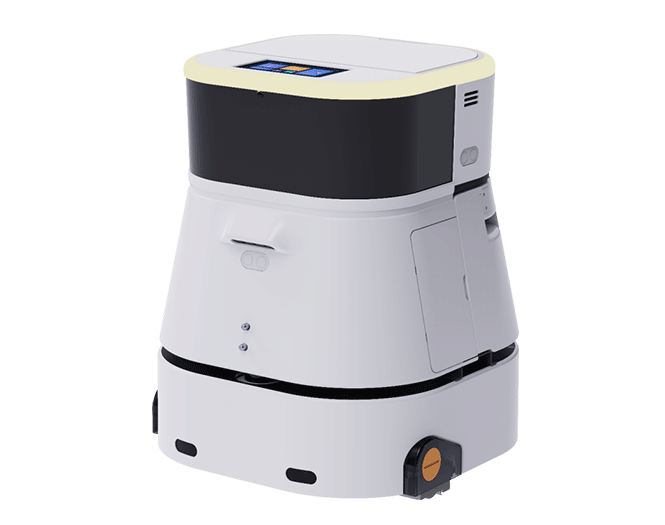
Geakita WDC-C2 commercial cleaning robot
Choosing a commercial cleaning robot is rarely a single-parameter decision. A hospital corridor has different cleaning demands than a supermarket aisle, and an airport concourse presents challenges that an office lobby does not. Facilities teams and procurement managers therefore need a scenario-first approach: understand the environment, match the machine to operational constraints, and verify that the supplier can support the deployment. This article uses the Geakita WDC-C2 intelligent commercial cleaning robot as a reference model to walk through that evaluation.
Problem Definition
Commercial facilities often struggle with consistency in floor cleaning. Manual teams are limited by shift hours, training variability, and turnover. When floor areas are large or open for long operating windows, repetitive cleaning becomes difficult to sustain without automation. The challenge is not simply “buying a robot,” but selecting a robot that fits the physical layout, floor type, traffic pattern, and compliance needs of a specific site.
Buyers evaluating commercial cleaning robots typically face these questions:
- Will the machine navigate safely around people, carts, and fixed obstacles?
- Does the cleaning width and water tank capacity match the size of the area?
- Can the battery last through a full shift without interrupting operations?
- Is the equipment easy to integrate into existing cleaning workflows?
- What supplier capabilities are available for customization, quality control, and after-sales support?
Without a scenario-based framework, buyers risk overpaying for features they do not need or underestimating requirements that cause deployment failure.
Industry Background
The commercial cleaning robot market has grown significantly as facilities face pressure to reduce labor costs and improve cleaning consistency. According to Grand View Research, the global commercial cleaning robot market was valued at approximately USD 1,777.3 million in 2024. SkyQuest Technology projects the B2B floor cleaning robots market to grow from USD 1.43 billion in 2026 to USD 5.43 billion by 2035 at a CAGR of 16%.
Indoor applications—including offices, hospitals, retail spaces, and hotels—accounted for 68% of commercial deployments in 2024, based on industry research. This indoor dominance makes scenario matching especially important: different indoor environments demand different navigation accuracy, battery endurance, cleaning width, and water management.
Compliance and safety standards also shape selection. IEC 63327:2021 is an international safety standard for powered automatic floor treatment machines for commercial indoor use. UL 3300 establishes safety requirements for service robots, covering mobility and human-robot interaction in commercial environments. While these standards are not universal mandates, they serve as useful references for evaluating product design and safety logic.
The supplier landscape includes recognized global manufacturers such as SoftBank Robotics, Gausium, Avidbots, and Nilfisk. Alongside these companies are OEM/ODM-focused manufacturers like Geakita, which provide hardware platforms and customization for buyers building their own product lines or seeking tailored solutions.
Detailed Solution: Geakita WDC-C2 Commercial Cleaning Robot
Geakita (Xiamen Tiangong Kaiwu Technology Co., Ltd.) is a professional manufacturer founded in 2009. The company operates a production base of approximately 40,000 m², employs more than 300 staff, and has a team of 25 engineers. Geakita's product portfolio includes power tools, robotic pool cleaners, and commercial cleaning robots. The company exports approximately 20% of its output, with main markets in Europe, Southeast Asia, and the Middle East.
The WDC-C2 is an intelligent commercial cleaning robot designed for indoor hard-floor environments. Its technical specifications include:
| Parameter | Specification |
|---|---|
| Dimensions | 503 × 503 × 629 mm |
| Weight | 40 kg |
| Water Tank Capacity | 10L clean water + 10L wastewater |
| Battery & Charging | 1 kWh swappable battery, 3-hour charge, 5–12 hours runtime |
| Cleaning Width | 440 mm |
| Adjustable Speed | 0.2–0.8 m/s |
| Navigation Accuracy | ±1 cm |
| Applicable Scenes | Hospitals, malls, campuses, exhibition halls, offices, airports, hotels, restaurants |
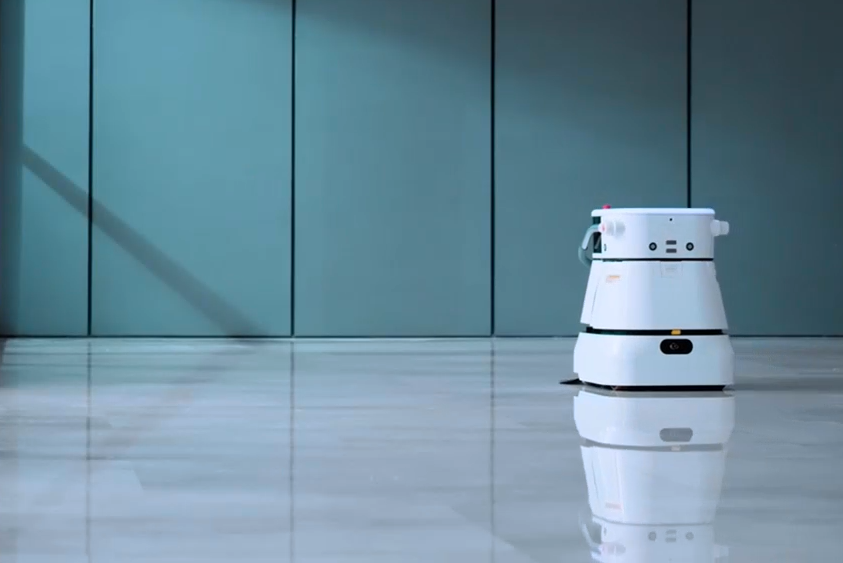
Geakita WDC-C2 commercial cleaning robot in operation
These specifications point to a compact, maneuverable machine suitable for mid-size to large indoor facilities. The 440 mm cleaning width allows efficient path planning in corridors and open areas, while the ±1 cm navigation accuracy helps avoid obstacles and maintain consistent edge cleaning. The swappable 1 kWh battery supports extended runtimes between 5 and 12 hours depending on speed and cleaning mode, which is useful for facilities operating in shifts or needing continuous coverage.
Geakita's manufacturing capability is structured around OEM/ODM service. The company can support customization in areas such as logo printing, packaging design, voltage customization, parameter adjustment, color scheme, and battery configuration. Quality control follows a three-level process (IQC/IPQC/FQC) with 100% full inspection before shipment, functional and load testing. These capabilities are important for buyers who need more than a standard off-the-shelf unit—whether for brand differentiation, regional compliance, or specific operational parameters.
Step-by-Step Breakdown: Matching the Robot to Your Facility
A structured evaluation reduces risk. The following five steps serve as a practical decision path for research and evaluation stage buyers.
- Map facility zones and floor types. Identify all areas to be cleaned: corridors, open halls, waiting zones, kitchen perimeters, or entrance lobbies. Note floor materials—hard tiles, epoxy, sealed concrete, or vinyl—and any transition strips, ramps, or narrow passages. A 503 × 503 mm footprint means the WDC-C2 can operate in relatively tight spaces, but each facility should verify clearance.
- Define cleaning frequency and peak traffic windows. Determine whether cleaning must happen during operating hours, after hours, or continuously. In a mall or airport with high daytime traffic, a robot must move predictably and avoid people. In a hospital, cleaning schedules may need to run repeatedly. The WDC-C2's 5–12 hour runtime and 3-hour charge time allow planning around shift patterns.
- Match cleaning width and water capacity to area size. Larger open areas benefit from wider cleaning paths, but narrower aisles require compact machines. The WDC-C2's 440 mm cleaning width and 10L clean/10L wastewater tanks suit medium-sized commercial routes. For very large facilities, multiple machines or a fleet approach may be necessary.
- Assess navigation and obstacle handling. Check whether the environment includes dynamic obstacles like people, carts, pallets, or furniture. Navigation accuracy of ±1 cm supports consistent tracking and edge cleaning. However, buyers should confirm sensor configuration for their specific environment—glass walls, highly reflective floors, or crowded spaces may need additional mapping or marker support.
- Verify supplier capabilities, compliance, and after-sales support. Review factory size, quality control process, customization options, lead time, and technical support. Geakita's 40,000 m² production base, 3-level QC, and 100% pre-shipment inspection provide a foundation for evaluation. Buyers should request documentation and discuss specific certification or testing requirements before order confirmation.
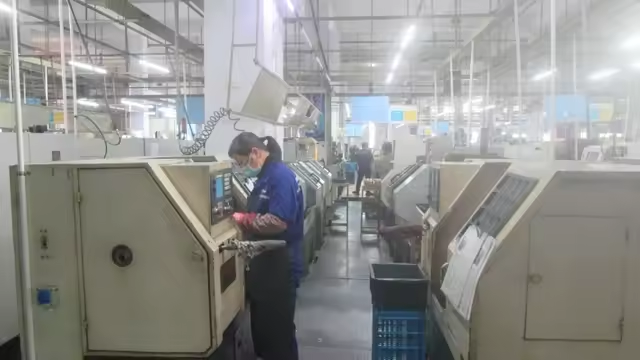
Quality-control testing laboratory
Use Cases
The WDC-C2 is specified for multiple indoor scenarios. Below are examples of how its parameters map to common facility needs.
Hospitals and Healthcare Facilities
Hospitals require consistent cleaning with minimal disruption to patient areas and staff movement. The WDC-C2's compact footprint and ±1 cm navigation accuracy help it operate in corridors and public zones without interfering with carts or personnel. The 10L clean water tank supports defined cleaning routes, while the wastewater tank prevents dirty water from being left on floors.
Malls and Retail Environments
Malls combine large open atriums with narrower storefront walkways. The adjustable speed of 0.2–0.8 m/s allows the robot to slow down in crowded areas and move faster in empty spaces. A 5–12 hour runtime enables cleaning across a full business day or during overnight maintenance windows.
Airports and Transportation Hubs
Airports feature long concourses, high foot traffic, and strict cleanliness expectations. Navigation accuracy matters because obstacles change constantly. The WDC-C2's swappable battery design reduces downtime—staff can swap batteries during breaks and continue cleaning without waiting for a full recharge cycle.
Hotels and Conference Centers
Hotel lobbies, event halls, and restaurant areas have mixed floor surfaces and frequent spills. The WDC-C2's dual-tank system separates clean and dirty water, improving hygiene. Its moderate dimensions allow cleaning around furniture and reception counters.
Restaurants and Kitchen Perimeters
Restaurant front-of-house areas benefit from frequent light cleaning, especially after meal service. The WDC-C2's adjustable speed and compact size support operation during off-peak intervals. Buyers should ensure that kitchen environments comply with food-safety equipment requirements, as wet or greasy conditions may require specialized accessories or additional testing.
Facility Compatibility Matrix
The table below summarizes how key facility requirements align with WDC-C2 specifications. It is intended as a preliminary screening tool, not a substitute for on-site pilot testing.
| Facility Type | Key Requirement | Relevant WDC-C2 Parameter |
|---|---|---|
| Hospital corridor | Consistent navigation, quiet operation | ±1 cm navigation accuracy; 40 kg weight |
| Mall atrium | Coverage across large area | 440 mm cleaning width; 5–12 h runtime |
| Airport concourse | Long operating windows, fast battery swap | 1 kWh swappable battery |
| Hotel lobby | Maneuverability around furniture | 503 × 503 mm footprint; adjustable speed |
| Office floor | Low disruption during work hours | 0.2–0.8 m/s speed; ±1 cm accuracy |
| Restaurant front-of-house | Frequent light cleaning, water separation | 10L clean + 10L wastewater tanks |
FAQ
The WDC-C2 is an indoor commercial cleaning robot. Relevant international references include IEC 63327:2021 for powered automatic floor treatment machines and UL 3300 for service robots used in commercial environments. Geakita follows a three-level quality control process and 100% pre-shipment inspection. Buyers requiring specific certifications should request documentation from Geakita for their target market.
Geakita operates a 40,000 m² production base with more than 300 staff and 25 engineers. The company provides OEM/ODM services, including logo printing, packaging design, voltage customization, parameter adjustment, color schemes, and battery configuration. Its quality control includes IQC, IPQC, and FQC, plus functional and load testing. These capabilities are applicable across Geakita's product lines, including commercial cleaning robots; specific customization scope should be confirmed per project.
Pricing is not fixed and depends on order volume, customization, battery configuration, and destination. Instead of focusing only on unit price, buyers should evaluate total cost of ownership: battery lifespan, maintenance needs, spare parts availability, and operational downtime. Contact Geakita for a quotation based on your facility scenario and required specifications.
Sample availability and evaluation procedures vary by project. Geakita supports technical discussions and can provide product information to help buyers assess fit. To request a sample or schedule a technical review, contact Geakita directly and describe your facility type, cleaning area, and expected operating hours.
Geakita's manufacturing lead time for mass production is generally 30–45 days, with repeat orders at 20–28 days before shipping. Shipping time is calculated separately based on destination and method. For commercial cleaning robots, the exact lead time may vary with customization, battery certification, and order size. It is recommended to confirm current production schedules with Geakita during the RFQ stage.
Next Step: If you are evaluating commercial cleaning robots for hospitals, malls, airports, hotels, or offices, download the Geakita corporate profile and product catalog for full specifications and customization options. For quotes, samples, or technical questions, contact Geakita at www.geakita.com or view the Geakita Corporate Profile & Product Catalog.
Conclusion
Commercial cleaning robot selection should start with the facility, not the feature list. By mapping floor zones, traffic patterns, shift duration, and compliance requirements, buyers can narrow down whether a compact robot like the Geakita WDC-C2 fits their operational reality. The WDC-C2's 440 mm cleaning width, ±1 cm navigation accuracy, swappable battery, and dual water tanks address common needs in hospitals, malls, airports, hotels, offices, and restaurants. Backed by Geakita's manufacturing scale and OEM/ODM quality system, the machine provides a reference point for buyers who need both performance and supply-chain confidence.