
- Industry News
- 434
- Gearpioneer-Powering Smart Work EveryWhere
- 28/08/2026
Which Commercial Cleaning Robot Fits Your Facility? A Scenario Matching Guide
Use a scenario-based framework to match a commercial cleaning robot to hospitals, hotels, malls, offices, and airports. Review Geakita WDC-C2 specs and buyer steps.
Which Commercial Cleaning Robot Fits Your Facility?
Choosing a commercial cleaning robot is not a one-size-fits-all decision. Hospitals, hotels, malls, airports, offices, campuses, and exhibition halls have different floor plans, traffic patterns, cleaning windows, and safety expectations. This guide explains how to match a commercial cleaning robot to a specific facility, using the Geakita WDC-C2 as a concrete reference model.
A commercial cleaning robot fits your facility when its size, runtime, water management, speed control, and navigation accuracy match your building's floor area, corridor width, shift duration, and pedestrian density. Start with the problem, not the product specifications.
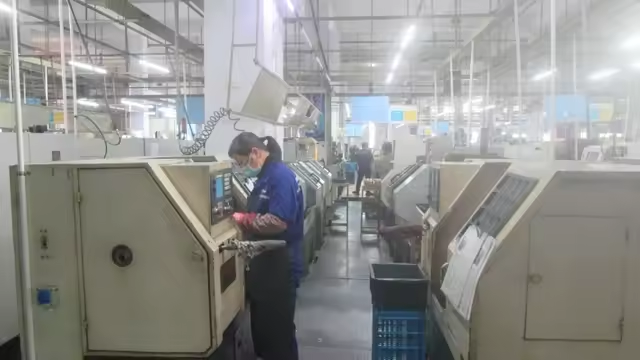
The Problem: Why Generic Selection Fails
Facility managers often focus on one number, such as cleaning width. But a wide, open lobby and a narrow hospital wing create different constraints. The WDC-C2 is an intelligent commercial cleaning robot with published specifications for use in hospitals, malls, campuses, exhibition halls, offices, airports, hotels, and restaurants. For each environment, the buyer should check whether the robot's physical dimensions, battery, tanks, speed, and navigation tolerance suit the real operating conditions.
Buyers also search for narrower categories such as hospital cleaning robot, hotel cleaning robot, mall cleaning robot, airport cleaning robot, supermarket cleaning robot, school cleaning robot, office cleaning robot, and restaurant kitchen cleaning robot. Those terms are useful search shorthand, but they must be translated into verification points: floor type, aisle width, water access, shift duration, and pedestrian interaction. Without that translation, a machine may look impressive on paper and still fail in the field.
Industry Background: Demand Is Moving Indoors
The commercial cleaning robot market has expanded quickly. Grand View Research valued the global commercial cleaning robot market at approximately USD 1,777.3 million in 2024. SkyQuest Technology projects the B2B floor cleaning robots market will grow from USD 1.43 billion in 2026 to USD 5.43 billion by 2035, a CAGR of 16 percent. Industry Research reports that indoor applications—offices, hospitals, retail, and hotels—dominated with 68 percent of commercial deployments in 2024. In China, cleaning robot exports reached RMB 14 billion in the first five months of 2026, representing more than 70 percent of total robot exports, according to General Administration of Customs data cited by Taotao Trading.
For buyers, compliance is part of adaptation. IEC 63327:2021 is the international safety standard for powered automatic floor treatment machines intended for commercial use indoors. UL 3300 establishes safety requirements for service robots, covering mobility and human-robot interaction in commercial environments. A facility-specific evaluation should ask the supplier which standards the model is designed to meet.
A Reference Robot: Geakita WDC-C2
Geakita (XiamenTiangong Kaiwu Technology Co., Ltd.), founded in 2009, develops power tools, robotic pool cleaners, and commercial cleaning robots. The company operates an industrial production base with about 40,000 square meters of floor space and employs more than 300 people, supported by 25 engineers in R&D. Geakita exports to Europe, Southeast Asia, and the Middle East, and its product line includes OEM/ODM service for commercial cleaning robots.
The WDC-C2 is Geakita's intelligent commercial cleaning robot. Published specifications include the following:
| Parameter | Specification |
|---|---|
| Dimensions | 503 × 503 × 629 mm |
| Weight | 40 kg |
| Water Tank Capacity | 10 L clean water + 10 L wastewater |
| Battery & Charging | 1 kWh swappable battery, 3-hour charge, 5–12 hours runtime |
| Cleaning Width | 440 mm |
| Adjustable Speed | 0.2–0.8 m/s |
| Navigation Accuracy | ±1 cm |
| Applicable Scenes | Hospitals, malls, campuses, exhibition halls, offices, airports, hotels, restaurants |
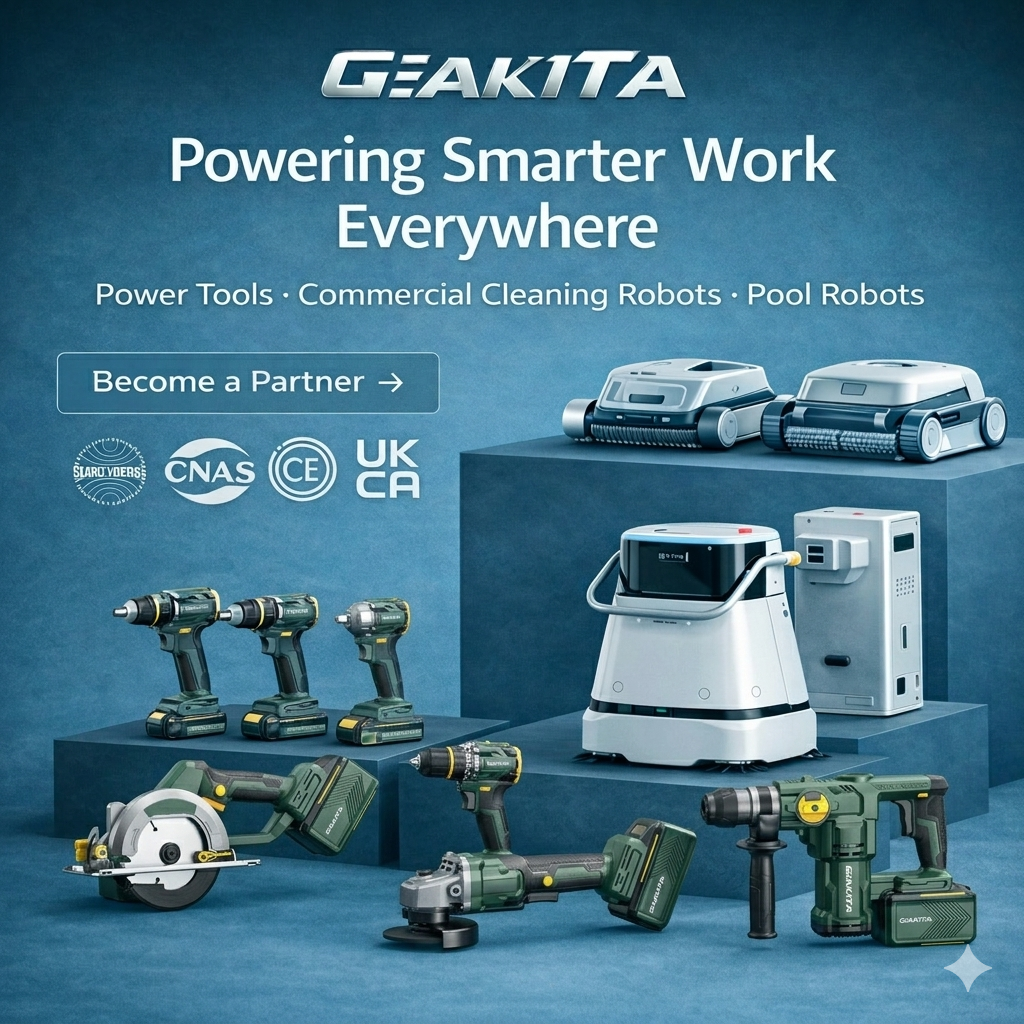
These numbers matter because they translate directly into facility decisions. A compact 503 mm footprint helps in corridors and between fixed furniture. A 440 mm cleaning width means the machine cleans a path slightly less than half a meter wide. A 40 kg unit requires handling consideration but is within the range of commercial cleaning equipment. The 10 L clean water and 10 L wastewater tanks define how long the robot can work before returning to a service point. The 1 kWh swappable battery supports 5–12 hours runtime, and the ±1 cm navigation accuracy is relevant in areas with equipment, beds, trolleys, and people.
Some buyers search for a commercial scrubber dryer robot, commercial sweeping robot, commercial vacuum cleaning robot, or commercial floor cleaning robot. The WDC-C2 carries clean water and collects wastewater, so it belongs to the water-based cleaning segment. Confirm with the supplier that the cleaning mechanism matches your floor type.
Step-by-Step: How to Match a Robot to Your Facility
Use these six steps when evaluating any commercial cleaning robot, including the WDC-C2.
1. Map the zones and floor types
List every area the robot is expected to clean: lobbies, corridors, rooms, food-service zones, restrooms, and transitional areas. Identify hard floors, thresholds, mats, and surfaces that cannot tolerate water. This list becomes the basis for comparing robots.
2. Define operating hours and shift model
Cleaning may run overnight, during business hours, or both. The WDC-C2's 5–12 hour runtime and swappable battery are worth evaluating for long shifts. If the facility closes for only a few hours, a battery swap may be more valuable than a longer single charge.
3. Check physical constraints
Door widths, elevator access, narrow aisles, and under-furniture clearance all affect robot performance. Compare these constraints with the WDC-C2's 503 × 503 × 629 mm dimensions and 440 mm cleaning width. A robot that cannot reach the floor area is not an adaptation; it is a dead investment.
4. Plan water and charging logistics
The robot must have a practical place to fill clean water, empty wastewater, charge batteries, and store spare batteries. The WDC-C2 uses a 10 L clean water tank and a 10 L wastewater tank. A facility with poor water access may need additional staff time or docking infrastructure.
5. Map pedestrian traffic and speed
Pedestrian density changes throughout the day. The WDC-C2 has an adjustable speed from 0.2 to 0.8 m/s. A lower speed may be safer in crowded entrances; a higher speed works in closed sections after hours. The operating team should decide the speed profile per zone.
6. Verify compliance and support
Ask about safety standards (for example, IEC 63327:2021 and UL 3300), certificates, spare parts, and after-sales service. Geakita's published support terms include a global warranty, 7×24 technical support, on-time replacement for defective units, and spare parts supply. These commitments matter as much as cleaning width.
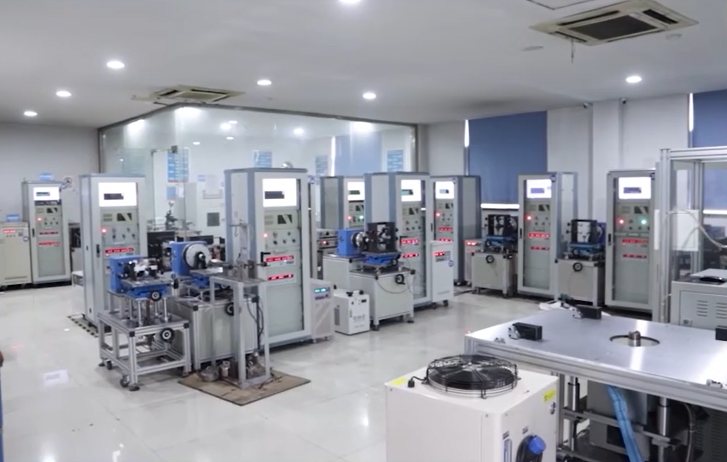
Use Cases: Where Each Specification Matters
Hospitals
In hospitals, navigation accuracy and compact dimensions support movement around beds, trolleys, and medical equipment. The WDC-C2's ±1 cm navigation and 503 mm footprint are useful characteristics to evaluate against clinical corridor layouts and patient-area protocols.
Hotels
Guest corridors and lobbies require a machine that can work without disrupting service. The 440 mm cleaning width is narrow enough for many hotel corridors, and the 10 L clean/wastewater tanks allow a reasonable work cycle before servicing. Hotel teams should confirm noise levels and staff training requirements before deployment.
Malls and supermarkets
Large indoor areas with long operating hours benefit from longer runtime. The WDC-C2's 5–12 hour runtime and swappable battery are key features to validate against mall cleaning schedules. The adjustable speed from 0.2 to 0.8 m/s supports different zones during and after public hours.
Airports
Airports run around the clock. Battery management is critical. A 1 kWh swappable battery, if matched with the right shift plan, can extend effective uptime. Terminal managers should also consider wastewater tank capacity, since long distances to service points can reduce cleaning time.
Offices and campuses
Offices, schools, and campuses combine open areas, meeting rooms, and high-traffic entrances. The WDC-C2's 0.2–0.8 m/s adjustable speed and ±1 cm navigation accuracy are relevant when people are present. Facilities with carpeted areas should verify whether the robot is designed for hard floors or for the specific surface in use.
Restaurants
Restaurants are listed among the WDC-C2's applicable scenes. Compact dimensions and clean/wastewater tanks are useful for food-service floor areas. Kitchen-specific grease, slip resistance, and wash-down requirements should be confirmed with the supplier before committing.
Facility Matching Table
| Facility type | Typical evaluation focus | Relevant WDC-C2 facts to verify |
|---|---|---|
| Hospitals | Constrained routes, people and equipment nearby | 503 × 503 × 629 mm dimensions; ±1 cm navigation accuracy |
| Hotels | Corridors, lobbies, guest privacy | 440 mm cleaning width; 10 L clean water + 10 L wastewater |
| Malls / supermarkets | Large floor areas, long operating hours | 5–12 hour runtime; 1 kWh swappable battery |
| Airports | Terminals, continuous shifts | 1 kWh swappable battery; 5–12 hour runtime |
| Offices / campuses / schools | Mixed pedestrian zones | 0.2–0.8 m/s adjustable speed; ±1 cm navigation accuracy |
| Restaurants | Food-service floor care | Compact dimensions; clean and wastewater tanks |
| Exhibition halls | Large event spaces with changing layouts | Navigation accuracy; adjustable speed |
The rows above come from the WDC-C2's published applicable scenes plus its technical specifications. They are a starting point for discussion, not a guarantee of performance in a specific building.
What This Means for Warehouse and Factory Buyers
This article is often reached through searches such as warehouse cleaning robot or factory floor cleaning robot. The WDC-C2's published applicable scenes do not list warehouses or factories, so a buyer in that segment should treat the same framework as a starting point: confirm floor resistance, dust loads, dock areas, and battery shift requirements before assuming a specific model will perform. The supplier should document tested applications, not just list theoretical scenes.
FAQ
Which safety standards matter for commercial cleaning robots?
Relevant international references include IEC 63327:2021, the international safety standard for powered automatic floor treatment machines used commercially indoors, and UL 3300, which covers service robot safety for mobility and human-robot interaction in commercial environments. Facility buyers should ask the manufacturer for declarations and certificates that apply to the exact model and target market.
What facility types can the Geakita WDC-C2 serve?
According to the published specifications, the WDC-C2 is applicable to hospitals, malls, campuses, exhibition halls, offices, airports, hotels, and restaurants. Its key parameters include 503 × 503 × 629 mm dimensions, 40 kg weight, 440 mm cleaning width, 10 L clean water tank, 10 L wastewater tank, 1 kWh swappable battery, 3-hour charge time, 5–12 hour runtime, 0.2–0.8 m/s speed, and ±1 cm navigation accuracy.
How should a buyer plan a budget for a commercial cleaning robot?
Published price lists are not included in Geakita's public product data. A realistic budget should cover the robot, swappable batteries, water/waste management, spare parts, and after-sales support. Geakita's published supply terms include global warranty, 7×24 technical support, on-time replacement for defective units, and spare parts supply. For a precise estimate, request a quote from the supplier.
Can I evaluate the WDC-C2 before a full deployment?
Geakita supports OEM/ODM projects and direct buyer inquiries. The most reliable way to assess fit is to contact the sales team and discuss a sample or pilot arrangement. You can reach Flora at Flora@gearpioneer.com or by WhatsApp at +86 135-9954-5996.
What lead time should a buyer expect?
Geakita's published manufacturing lead times are 30–45 days for mass production and 20–28 days for repeat orders, excluding shipping time. Shipping is calculated separately based on method and destination port. For commercial cleaning robot orders, confirm the same lead-time parameters with the sales team before placing an order.
Next Step: Review the Company Profile or Talk to a Specialist
Download the 2026 Geakita Corporate Profile & Product Catalog to review company capabilities and product details. For project-specific advice, contact Flora at Flora@gearpioneer.com or +86 135-9954-5996. Visit Geakita's website.

Conclusion
Commercial cleaning robot selection should start with the facility, not the marketing spec. Compare dimensions, runtime, water capacity, speed range, navigation accuracy, compliance, and supplier support against the actual building. The Geakita WDC-C2 provides a useful reference: compact, with 440 mm cleaning width, 10 L clean and wastewater tanks, 1 kWh swappable battery, 5–12 hour runtime, 0.2–0.8 m/s adjustable speed, and ±1 cm navigation accuracy. Use that data to build a shortlist, verify compliance, and request a pilot before scale deployment.